Isaac Newton

Isaac Newton
Born 1642 • Died 1727
It was because of his inventions and theories which later become the foundation of modern science which we see even today. The achievements he had from optics to astronomy to mathematics, those are so many which gained him this 2nd place at the list of most influential people.
Rank
#2
Influence
99
Field
Scientist
Editorial Overview
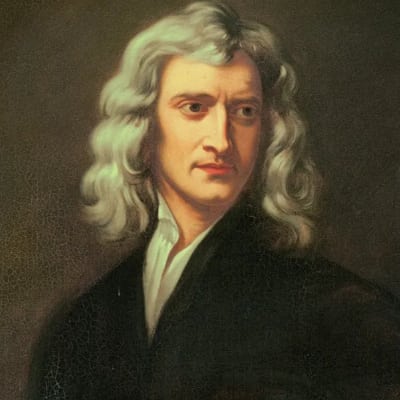
Born in 1642, Isaac Newton was nearly destined for a life of farming before his intellectual curiosity led him to Cambridge University. At just 21 years old, he began a period of independent research that would fundamentally rewrite the laws of nature. During the Great Plague of 1665, while London faced the shadow of death, Newton retreated to his family home and laid the foundation for Calculus, his 'mathematical language' for a moving world. His reach extended far beyond pure numbers; he transformed optics by proving white light is a rainbow of colors and defined the invisible forces of the universe through his Laws of Motion and Universal Gravitation. From hunting counterfeiters at the Royal Mint to deciphering biblical prophecies, Newton’s tireless mind sought a single truth: that the universe follows a strict, mathematical clockwork. It is this legacy of precision that earns him the #2 spot on our list of the most influential people in history.
Influence Meter
99
Measured on a 100-point scale
Foundation of Modern Science
It All Started With Math
Mathematics
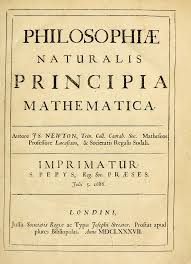
Mathematically Calculating how the world works was one of the main passions of Newton which eventually became the foundation of almost all of his scientific discoveries and some theories in other fields. Calling him a super hero in the world of numbers will not be wrong with his ability to design formulas for quickly calculating massive expansions in numbers. Calculus was his master piece. At the age of 24 he invented Integral Calculus while he was stuck at home due to Great Plague during 1665 - 1666. So these 2 years, when London was facing Death, basically laid the foundation for becoming “Sir Isaac Newton”. It was the most important achievement of his life and footing of the modern mathematics even until today.
The Language of Change
Measuring the Moving World
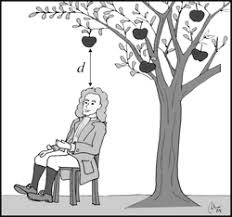
Static Maths (like area of still Triangle) didn’t impress Newton, he was more interested in life and moving things. Wanted to measure change, like “speed of a falling apple - because it is changing speed constantly during the fall”. Normal math, at the time, couldn’t catch it. So he invented calculus, slicing time and motion into infinite small pieces called “Fluxions (meaning ‘changes’)”. And he was capable to calculate the exact change of rate in speed of a “falling apple”. After that, he could calculate the rate of change of anything - curves, paths, even planets speed in the solar system. Calculus was what we could safely call “Newton’s Language”.
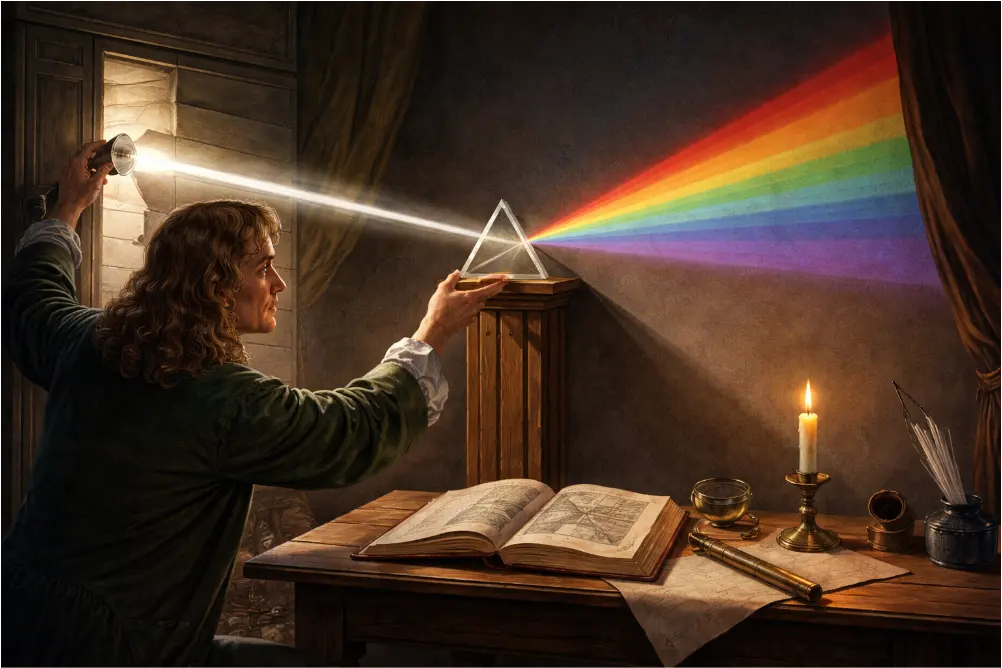
A prism to prism magic, sitting in a dark room, passing a beam of light, splitting it to many, passing it again, folding it as one. A proof of scientific poetry by Newton
Optics
The Science of Light
Prism experiment actually proved what he said about white light that we observe in our daily lives is actually a combination of all colors of Rainbow. It shifted the human perspective of physical world laying the theory - “objects have no colors instead it reflect only the relevant color from white light and absorb others”. So the grass looks green because it reflects green color from white light and absorbs all other colors. This whole concept was the reason of “Reflecting Telescope Invention”.
1668 Invention
From Galileo to Newton
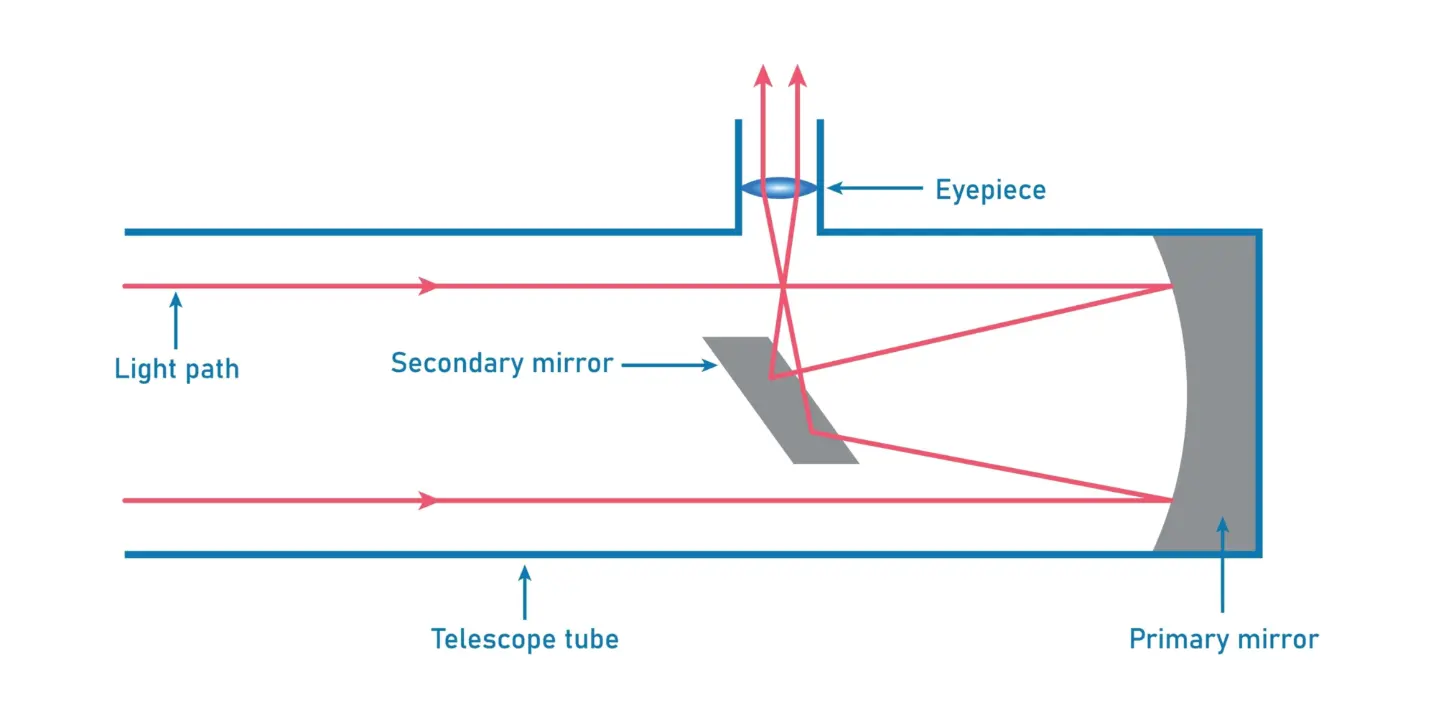
1668, Galileo’s Refracting Telescope to Newton’s Reflecting Telescope (still being used in many astronomical observations like “Hubble Space Telescope”) was the result of his studies and excellent experiments on light properties of reflection and refraction. This invention turned light from mystery to a measureable science as he already found out about the bending properties of light when passing through glass causing the blurry scenes. He took this understanding to next level by solving the problem, resulted in a telescope much smaller in size with more clear scenery.
Physics
The 3 Laws of Newton
Inertia, Force and Action / Reaction are the fore foundation of the Universe Rulebook. Its due to his interest in Mechanics that we are able to build such a machines with precise calculations which can even fly.
First Law
An object will remain at rest or in uniform motion unless acted upon by an external force.
- Concept: Resistance to Change
Second Law
Force is equal to mass times acceleration (F = ma).
- Equation: F=ma
Third Law
For every action, there is an equal and opposite reaction.
- Symmetry: Opposite Forces
Precision
F = ma
The common factor in all these laws was his aptitude towards calculation of change, in this case, calculate the Force. Using his already refined abilities of cooking formulas, used the same process in this case by first assigning the words to variables of a problem like Mass (m), Acceleration (a) and Force (F) and putting numbers on the variables and performing calculation experiments, he eventually proved that Force is equal to mass times acceleration (Second Law of Motion). The person who already had invented calculus, this thought process probably seemed natural to him that if he put a number to object’s mass and measure how fast it changed the speed then he could find out the invisible force behind it. This was Newton’s greatest shorthand ever “F = ma”.
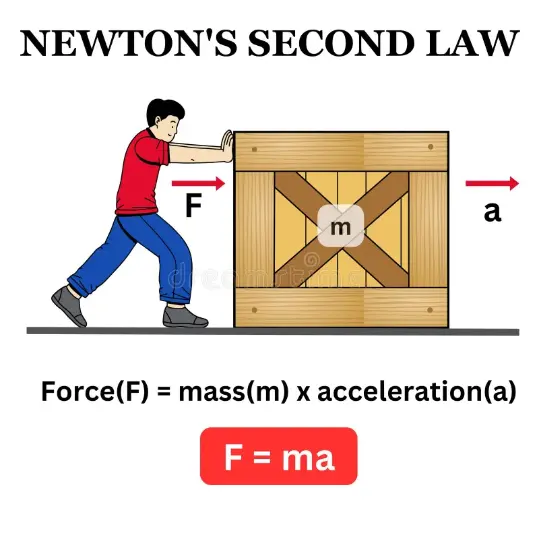
2nd Law Applied
It allowed us to calculate exactly how much weight a Bridge can hold or how much gunpowder is needed to throw a metal ball to an exact specific distance.
At that time, it was a direct jump from 360px to 4K in terms of clarity.
Astronomy - The 4th Law
The Law of Universal Gravitation
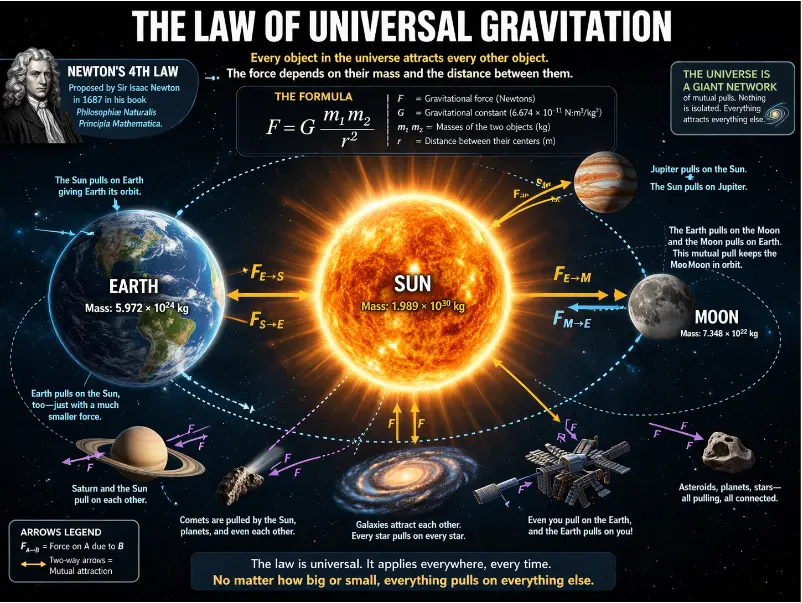
The Law of Universal Gravitation - applied his math and physics skills focusing on Gravity, he explained that how the whole Universe is in balance mathematically on the basis of this Universal Force that every object has. Its not specific to Earth or Ground, instead, its related to Mass (matter) of an object. The more stuff (matter) an object has, the harder it pulls. He explained that all these objects in universe earth, planet, moon, sun and others are made in perfect ratio of matter and contains the perfect necessary amount of pull force to keep this universe intact and functional. He also explained that distance between objects affects gravitational force. The more away you are from an object the weaker the gravitational force is.
Alchemy (Chemistry)
The Science of Elements
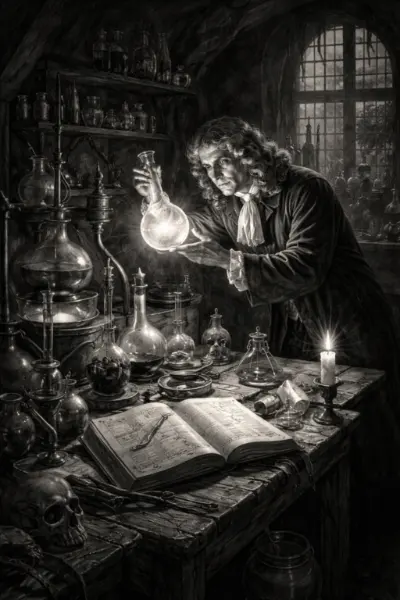
This was another side of Newton’s life where he wanted the cure of all diseases, wanted to live longer (forever may be), but didn’t change his working principle. He approached it with science not with magic. The science of elements - laboratory work, mixing elements, transforming them and his work was not a complete waste of time but it explained that combining elements in a specific patterns produce results. He was obsessed with “mercury” calling it the seed of all metals, spent hundreds of hours in those experiments with chemicals which likely caused the “nervous breakdowns” he had later in life.
Theology (Religion)
The Master Clockmaker
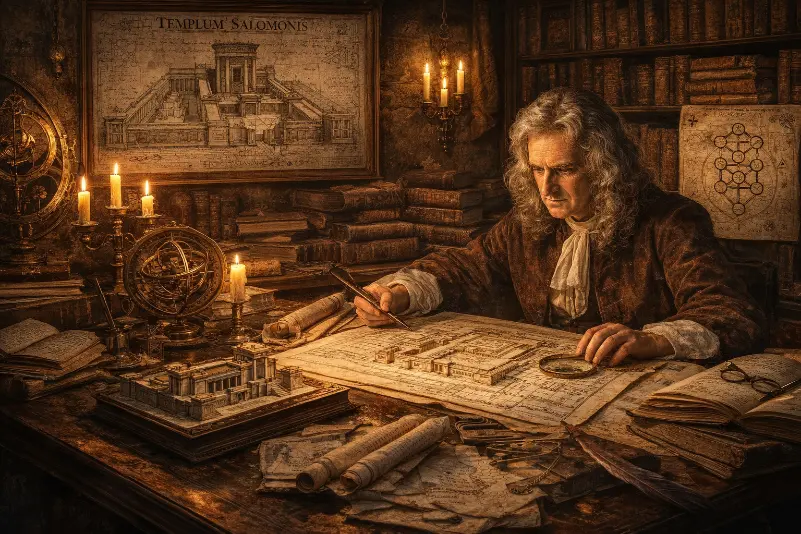
Newton’s study was enormous - open minded - a strong reader of Bible and Religious Scriptures specially obsessed with Book of Daniel and Book of Revelation, finding hidden clues of God’s Puzzle. it might surprise you that Newton wrote more about Church History and Bible than he wrote about Math and Physics. Explaining that these elegant laws of gravity and motion were a strong proof of a “Master Clockmaker”. He also tried to calculate the “End Times” and predicted by calculations that the world would not end before the year 2060. He spent 100s of hours studying dimensions of Temple of Solomon described in Bible which he believed that the floor plan of temple was the “map” of universe.
Economics
Master of the Royal Mint
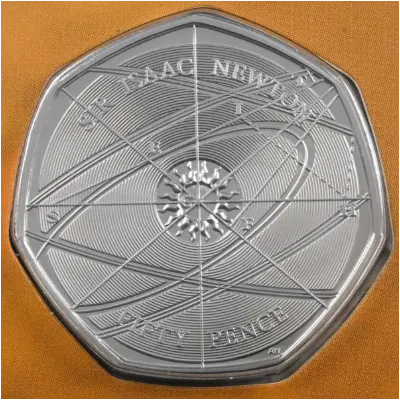
A mind and body that never stopped working. He took on a new interest at age of 53 in 1696 - A Public Service job at Royal Mint, the institution responsible for making England’s coins. He played a role in the massive recall of silver coins in country and oversaw the complete process of melting down all silver and introduced “milled edges” on coins to prevent coin clipping. In 1717, England was shifted to Gold Standard from Silver because of his issued report on fixed exchange rates of Gold and Silver.
Newton Investigated Currency Counterfeiting
He played detective and interviewed over 100 suspects of currency counterfeiting. Eventually tracked down the most famous counterfeiter William Chaloner.
Written Works
Books by Isaac Newton
The published legacy of Isaac Newton, ranging from the foundational laws of the universe to his deep investigations into light and ancient history.
Philosophiæ Naturalis Principia Mathematica
The laws of motion and universal gravitation.
- Latin
- 1687
- Hardcover
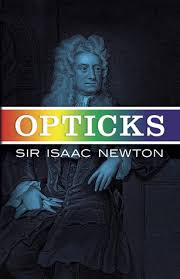
Opticks
A treatise of the reflections, refractions, inflections and colours of light.
- English
- 1704
- Illustrated
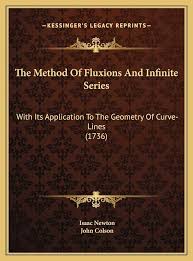
The Method of Fluxions
Newton's formal introduction to the system of Calculus.
- Calculus
- 1736
- Posthumous
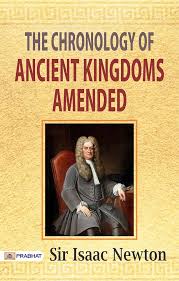
The Chronology of Ancient Kingdoms Amended
An attempt to rewrite the timeline of ancient civilizations.
- History
- 1728
- Analysis
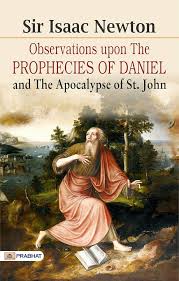
Observations upon the Prophecies of Daniel
Mathematical and logical interpretations of biblical prophecy.
- Theology
- 1733
- Scripture
Conclusion
The King of Science
From quiet halls of Cambridge to the Heart of London at Royal Mint and then elected as the President of Royal Society, the world’s most prestigious scientific group. He came out as science King and ruled it for 24 years and ensured that his scientific methods became the standard for all Europe.
Related Publications