The Epstein Files: Named Is Not the Same as Accused
3.5 Million Pages Released — and Appearing in Them Proves Nothing on Its Own
- The Disclosure: The volume and composition of material actually published.
- What's Withheld: Material redacted or withheld under permitted exemptions.
- The Mandate: The legislation that compelled the release.

Visual Intelligence by FactsFigs.com
US Department of Justice
Data Source: DOJ Disclosures

Overview
The Justice Department has published roughly 3.5 million pages of Epstein-related records under the Epstein Files Transparency Act, including more than 2,000 videos and 180,000 images. The largest single tranche, over 3 million pages, was released on 30 January 2026.
The disclosure was mandated by legislation that passed the House 427 to 1 and cleared the Senate by unanimous consent — a level of agreement almost unheard of in recent American politics.
The most important thing to understand about this material is a distinction that gets lost immediately in public discussion. Being named in an investigative file, appearing in a contact list, or being mentioned in correspondence establishes that a person's name occurs in a document. It establishes nothing else.
With millions of pages that essentially nobody has read in full, and enormous public appetite for names, the conditions for misinformation are close to ideal. Understanding what these documents can and cannot establish is the difference between reading them usefully and being misled by claims about them.
What Was Actually Released
The Act required the Justice Department to publish unclassified records relating to the investigation and prosecution of Jeffrey Epstein, including materials concerning Ghislaine Maxwell, flight and travel records, and individuals named or referenced in the investigations.
The main disclosure came on 30 January 2026, comprising over 3 million responsive pages together with more than 2,000 videos and 180,000 images. Combined with earlier tranches, total production reached approximately 3.5 million pages.
That is a volume no individual can meaningfully review. For comparison, a person reading continuously at a normal pace would need several years to get through it. Every public claim about what the files contain is therefore based on a partial reading, a search, or someone else's summary.
The Law That Forced It
The Epstein Files Transparency Act passed the House of Representatives by 427 votes to 1 on 18 November 2025. The Senate passed it the following day by unanimous consent, and it was signed into law.
A 427-1 margin is remarkable in a legislature where routine measures divide along party lines. Whatever else it indicates, it reflects an assessment across the political spectrum that the existing level of disclosure was insufficient.
The Act gave the attorney general 30 days to publish the records — a deliberately short window designed to prevent the disclosure being managed into irrelevance through delay.
The First Deadline Was Missed
The Justice Department released an initial batch of files on 19 December 2025 and did not release all responsive material by the statutory deadline.
That initial release drew substantial criticism for the extent of its redactions, with many documents heavily obscured and hundreds of pages blacked out entirely. Further material followed over subsequent weeks before the January production.
This sequence matters for interpreting the record. Compliance was partial and staged rather than immediate, which means claims about what was 'in the files' from any particular date may refer to different material than the same claim made later.
What's Redacted and Why
Approximately 200,000 pages were redacted or withheld on the basis of various privileges — roughly 6% of the total production.
The permitted grounds are specific. The Department may withhold personal information identifying victims, and material whose release would jeopardise an active federal investigation. Both are conventional exemptions with clear justification: victims of sexual abuse have a strong interest in not being publicly identified, and disclosure can genuinely compromise ongoing prosecutions.
Redaction is nonetheless the point at which transparency legislation meets institutional discretion, and the same exemptions that protect victims can shield other things. That roughly 94% was published is a meaningful figure; that the 6% withheld is determined by the department being scrutinised is a structural limitation worth naming.
Named, Mentioned, Accused, Charged
The single most consequential thing a reader can do with this material is keep four categories distinct. They are routinely collapsed into one, and the collapse is where reputational harm occurs.
Four very different things
- Named in a document:A person's name appears somewhere in the files — in an address book, a schedule, a message, an investigator's note. This establishes only that the name was recorded.
- Mentioned by a witness:Someone said something about a person during an interview. Witness statements vary enormously in reliability and are frequently untested.
- Accused of wrongdoing:A specific allegation of misconduct has been made against a named individual, whether or not it has been examined.
- Charged or convicted:A prosecuting authority assessed the evidence as sufficient, or a court determined guilt. This is the only category that constitutes a legal finding.
Why Volume Creates Disinformation
A disclosure of this size has a property that smaller ones do not: it cannot be verified by ordinary readers, which makes false claims about it unusually difficult to refute.
If a document set runs to fifty pages, anyone can check an assertion in minutes. At 3.5 million pages, a claim that a particular name appears in a particular context is effectively unfalsifiable for most people. Fabricated lists and invented quotations circulate freely because checking them requires resources and search access most readers lack.
Genuine transparency and effective disinformation therefore arrive together. The same release that allows journalists and researchers to establish facts also supplies an unlimited supply of plausible-sounding claims that no individual can quickly disprove — and the emotional charge of the subject ensures they travel.
How to Check a Claim About the Files
Anyone encountering an assertion about what the files show can apply a few checks that filter out most fabrications.
Practical verification
- Ask for the document:Genuine findings cite a specific document with an identifier. Claims that reference 'the files' generally cannot be located.
- Check which category it is:Does the claim assert a name appears, or that a person did something? These require entirely different evidence.
- Look for the original, not a screenshot:The records are published by the Justice Department. Material that exists only as an image circulating on social platforms has not been verified.
- Be suspicious of tidy lists:Investigative files are messy. A clean, ranked list of names is a strong indicator that someone compiled it rather than found it.
- Check whether reporting followed:Newsrooms with legal exposure and document access are checking these files continuously. A significant genuine finding does not stay confined to social media.
What Documents Can and Cannot Establish
Investigative files are working material, not conclusions. Understanding what they are changes how much weight their contents can carry.
They contain tips that were never substantiated, names investigators checked and eliminated, allegations from sources later found unreliable, and speculation recorded because recording it was the investigator's job. Inclusion in an investigative file frequently means someone was ruled out.
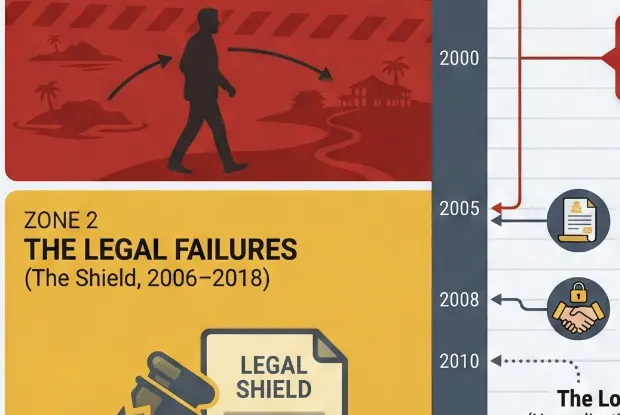
This is precisely why prosecutions require evidence tested in court rather than documents assembled during an inquiry. The 2008 non-prosecution agreement and the subsequent judicial finding that prosecutors violated the Crime Victims' Rights Act are established facts because courts determined them. A name in a file has been through none of that process.
Who the Disclosure Is Actually For
Beneath the public appetite for names sits a narrower and more defensible purpose, and it is worth keeping in view.
The people with the strongest claim on this material are the victims, who spent years being told less than they were entitled to know — and whom a federal court found had been actively misled about the 2008 agreement. Disclosure is, among other things, a partial remedy for that.
The second purpose is institutional. The documented failures in this case were governmental — a report that produced no investigation for a decade, an agreement extending immunity to unnamed parties, a concealment a court found unlawful. Records held by the institutions that failed are the only way to examine how it happened.
Both purposes are served by careful reading and undermined by speculation. Every fabricated claim that circulates makes the genuine findings easier to dismiss, which is the outcome that most benefits anyone who would prefer this record not to be examined.
Conclusion
Roughly 3.5 million pages are now public because Congress voted 427 to 1 to compel their release. That is a genuine and unusual act of transparency, and about 200,000 pages remain redacted or withheld under exemptions determined by the department being scrutinised.
The distinction that matters most is the one most easily lost. Being named in an investigative file establishes that a name was recorded. It does not establish accusation, and it certainly does not establish guilt. Investigative files routinely contain people who were checked and eliminated.
The volume that makes this disclosure valuable also makes it exploitable. No individual can read 3.5 million pages, so claims about their contents are difficult to verify and easy to invent — and each fabrication makes the documented findings easier to wave away.
This article describes the disclosure process and how to evaluate claims about it. It makes no allegation against any individual. Appearing in these records is not evidence of criminal conduct, and only charges and convictions represent legal findings.
Data Source and Attribution
DOJ DisclosuresH.R.4405 (Congress.gov)DOJ Press Release
Disclosure volumes, release dates, media counts and redaction figures come from Department of Justice announcements regarding compliance with the Epstein Files Transparency Act. Legislative details, including the House vote of 427-1 on 18 November 2025, Senate passage by unanimous consent and the 30-day statutory deadline, come from the congressional record for H.R.4405. No individual is named or characterised in this analysis, and no claim is made about the contents of specific documents beyond the published totals.
FactsFigs reviews, cleans, and cross-checks every source dataset before shaping it into a data story. Each visualization is created and designed in FactsFigs Design Studio — an internal tool developed and owned by FactsFigs — and is the original work of a FactsFigs author, not an AI-generated copy of any existing graphic. Individual assets within a visual may or may not be produced with AI tools, but the design of the visual itself is solely FactsFigs' own.
This content is for information only and is not legal advice. It does not allege criminal conduct by any individual, and inclusion in investigative records is not evidence of wrongdoing.
2026-07-20
Weekly Updates
Subscribe for the FactsFigs Weekly Brief
Signals, charts, and data stories delivered every week.
More Intelligence
Other Popular Topics
Additional signals from the FactsFigs intelligence feed.


Meta Bought Manus for Over $2 Billion in Ten Days
Pakistan Floods 2025: 6.9 Million Affected, 1,006 Dead