Aristotle

Aristotle
Born 384 BC • Died 322 BC
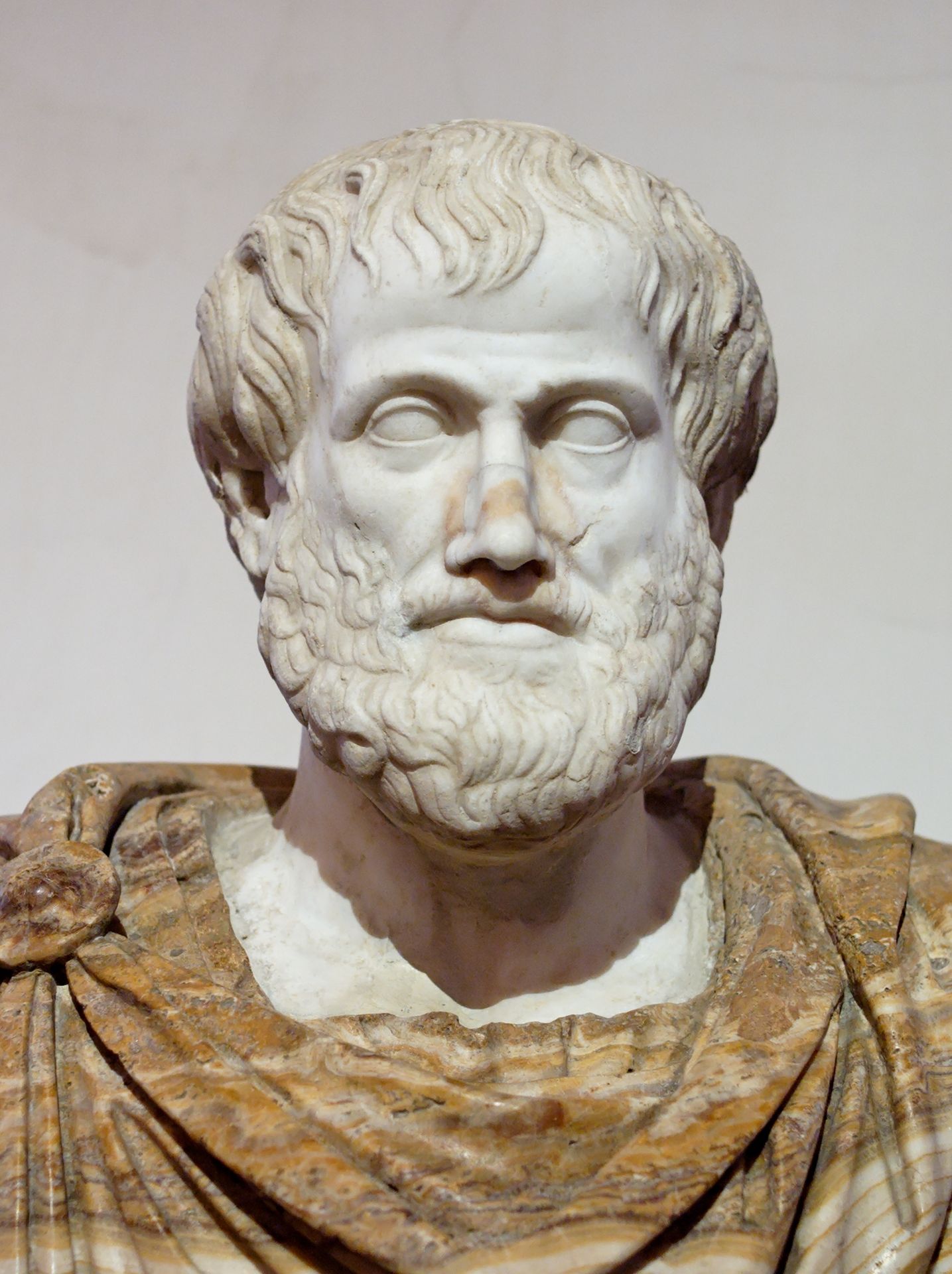
Aristotle (384-322 BC) was a Greek philosopher and polymath whose surviving works span logic, physics, biology, ethics, politics, and literary theory. Educated for two decades at Plato's Academy, he later tutored the teenage Alexander the Great before founding his own school, the Lyceum, in Athens. His systematic method of inquiry and his vast body of writing became, through later Islamic and Christian scholarship, one of the central foundations of Western thought for nearly two millennia. Michael Hart ranked him 13th among history's most influential people.
Rank
#13
Influence
88
Field
Philosopher
Historical Perspective
Aristotle was born in 384 BC in Stagira, a small city in the Chalcidice peninsula of northern Greece, the son of Nicomachus, court physician to the Macedonian king Amyntas III. At around age 17 he traveled to Athens to study at Plato's Academy, remaining there for some twenty years, until Plato's death in 348-347 BC, after which he left the city and spent several years at Assos and on the island of Lesbos conducting early biological research. In 343-342 BC, King Philip II of Macedon summoned Aristotle to tutor his thirteen-year-old son, the future Alexander the Great, a role he held for roughly two to three years. Aristotle returned to Athens in 335 BC and founded his own school, the Lyceum, where his habit of walking while lecturing gave his followers the name 'Peripatetics,' from the Greek for 'walking around.' He spent twelve years there producing or refining most of the roughly thirty-one treatises that survive under his name, covering logic, natural science, metaphysics, ethics, politics, rhetoric, and poetics. When Alexander died in 323 BC, anti-Macedonian sentiment in Athens put Aristotle at risk, and he fled to his mother's family estate at Chalcis, on the island of Euboea, reportedly saying he would not let Athens 'sin twice against philosophy' - a reference to the city's earlier execution of Socrates. He died at Chalcis in 322 BC of natural causes. Michael Hart ranked Aristotle 13th in The 100, crediting the extraordinary breadth of his surviving work and its multi-century dominance over Western and Islamic philosophy and science.
Influence Meter
88
Measured on a 100-point scale
A single body of work that organized nearly every known field of inquiry
c. 367-347 BC
Twenty Years at Plato's Academy
Born in 384 BC in Stagira, on the coast of northern Greece, Aristotle arrived in Athens around age 17 to join Plato's Academy, where he remained as student and later teacher for roughly two decades - long enough to absorb, and eventually to sharply criticize, his teacher's theory of Forms. When Plato died around 348-347 BC, Aristotle left Athens, spending about three years at Assos on the coast of Asia Minor, where he conducted early philosophical and marine-biology research, before moving to the island of Lesbos for roughly two more years, collaborating there with his future successor, Theophrastus.
It was during these years away from Athens that Aristotle's characteristic method took shape: close, direct observation of the natural world - dissecting marine animals, cataloguing their anatomy and behavior - paired with systematic classification, an approach that would later make him, in the eyes of many historians of science, the first person to treat biology as a rigorous empirical discipline rather than a branch of speculative philosophy.
Athens
Student, Then Critic, of Plato
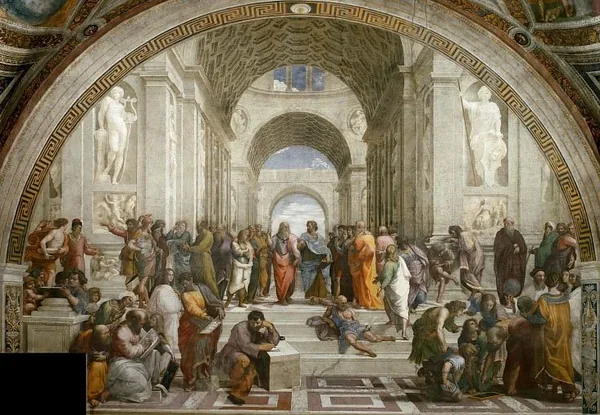
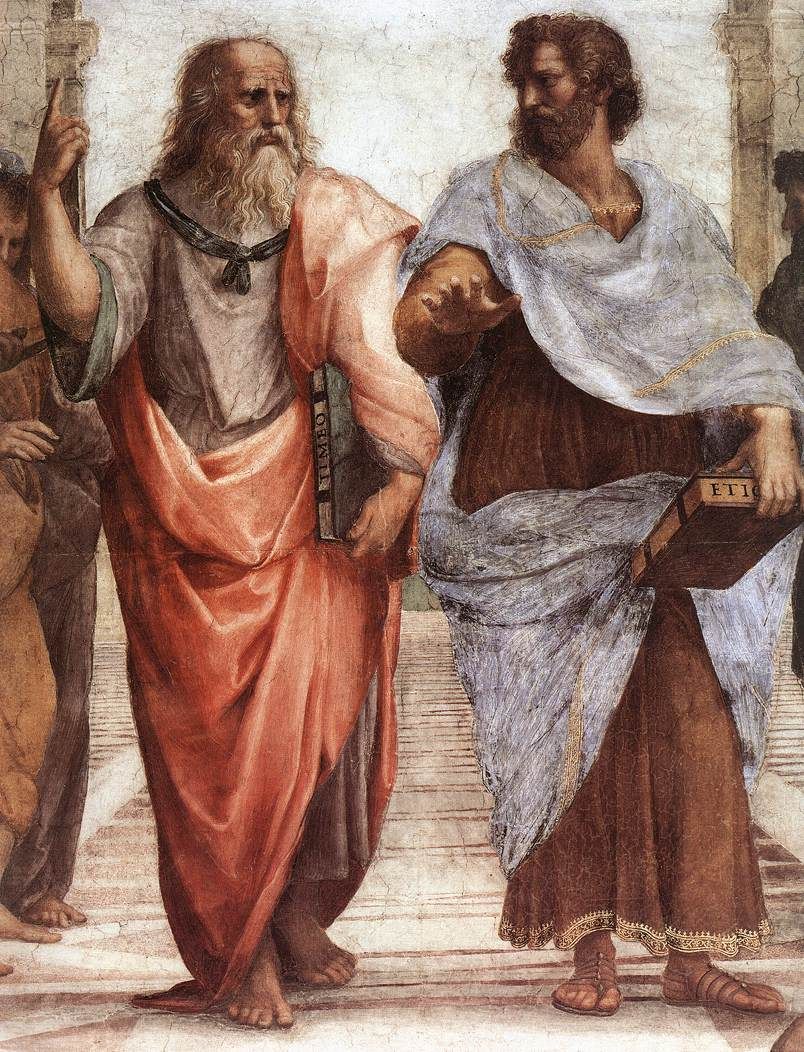
Raphael's 1509-1511 fresco The School of Athens later imagined the two philosophers together at the center of the ancient world's assembled thinkers: Plato pointing upward, toward his theory of abstract, eternal Forms, and Aristotle gesturing outward and downward, toward the observable, physical world. The composition captures a real philosophical split. Aristotle spent nearly twenty years absorbing Plato's teaching at the Academy, but he came to reject the idea that abstract Forms existed independently of physical things, arguing instead that the essence of a thing is inseparable from the thing itself - a shift in emphasis, from the ideal to the empirical, that would define the rest of his work.
343-340 BC
Tutor to a Future Conqueror
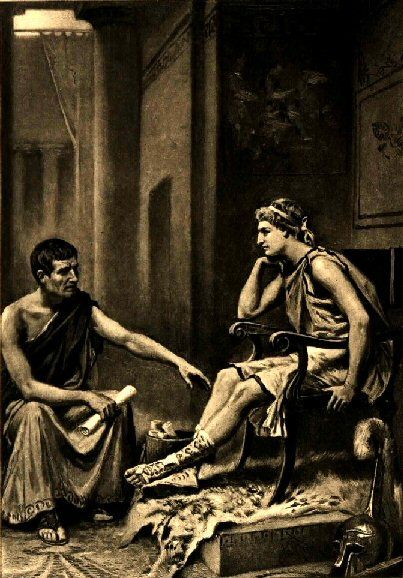
In 343 or 342 BC, King Philip II of Macedon invited Aristotle to the royal court at Pella to tutor his thirteen-year-old son, Alexander - the future Alexander the Great. The tutoring relationship most likely lasted only two to three years before Alexander, at sixteen, returned to Pella and was appointed regent of Macedon by his father, though later ancient sources debate exactly how long it continued. Aristotle is thought to have introduced the young prince to Homer, ethics, politics, and natural science; Alexander is said to have carried an annotated copy of the Iliad, reportedly a gift from his tutor, throughout his later military campaigns.
Aristotle is widely credited as the first person to attempt a systematic biological classification of the natural world. In his Historia Animalium and related zoological works, he described and classified roughly 500 species of animals by their behavior and physical structure, insisting that in the study of nature 'credit must be given to observation rather than to theories, and to theories only insofar as they are confirmed by the observed facts' - a methodological commitment historians of science regard as a direct ancestor of the modern empirical method.
Surviving Treatises, In Detail
The Breadth of Aristotle's Writing
Roughly thirty-one authentic treatises survive, organized loosely by later editors into the fields below.
The Organon
A collection of six treatises - including the Categories and Prior and Posterior Analytics - that founded the formal study of logic and deductive reasoning (the syllogism).
- Field: Logic
Physics and Metaphysics
Physics examines change, motion, and causation in the natural world; Metaphysics investigates being and existence itself, giving the field its modern name.
- Field: Natural philosophy
Nicomachean Ethics
Aristotle's most influential ethical work, centered on the idea of eudaimonia (human flourishing) achieved through virtuous habit and the 'golden mean.'
- Named for: His son, Nicomachus
Politics
An analysis of the ideal and practical forms of the city-state (polis), grounded in his belief that 'man is by nature a political animal.'
- Field: Political theory
Poetics
The earliest surviving work of Western literary theory, analyzing tragedy, plot structure, and catharsis in Greek drama.
- Field: Literary theory
Chronology
From Stagira to the Lyceum
Aristotle's life moved between Athens, the Macedonian court, and exile, shaping both his philosophy and his legacy.
323-322 BC
Exile and Death
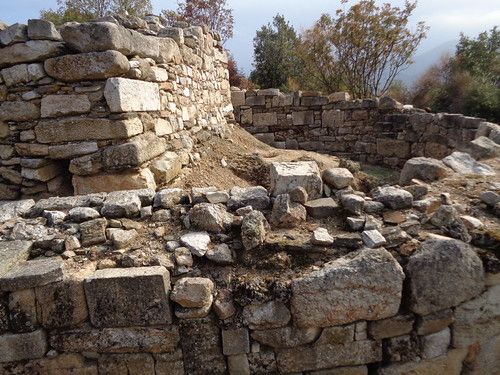
When Alexander the Great died suddenly in 323 BC, anti-Macedonian feeling in Athens turned against Aristotle, a longtime associate of the Macedonian royal court. Facing a charge of impiety brought by the priest Eurymedon, Aristotle chose to leave the city rather than stand trial, reportedly remarking that he would not give Athens the chance to 'sin twice against philosophy,' recalling the city's execution of Socrates roughly seventy-five years earlier. He withdrew to his mother's family estate at Chalcis, on the island of Euboea, where he died later that same year, 322 BC, of natural causes. Tradition holds that his remains were eventually returned to his native Stagira for burial, and a modern monument and altar mark the traditional site of his tomb there today.
8th-13th Centuries
From Baghdad to the Medieval University
Much of Aristotle's work reached the medieval world through Islamic scholarship. Beginning with Al-Kindi in the 9th century, Arabic translators and commentators preserved, translated, and expanded on Aristotle's texts; the philosopher Ibn Rushd (known in the Latin West as Averroes) wrote such extensive commentaries on Aristotle in 12th-century Cordoba that he became known simply as 'the Commentator.' These Arabic texts and commentaries were translated into Latin during the 12th and 13th centuries, introducing a fuller Aristotle to Christian European scholars for the first time in centuries.
The Dominican friar Thomas Aquinas undertook the major synthesis of this newly recovered Aristotelian philosophy with Christian theology, citing Aristotle so consistently and respectfully in his Summa Theologica that he referred to him simply as 'the Philosopher' - a title that stuck. That synthesis made Aristotelian logic and natural philosophy the backbone of medieval European university education for centuries, a dominance so complete that early modern scientists such as Francis Bacon and Rene Descartes explicitly framed their new experimental methods as a break from unquestioning reliance on Aristotle's authority.
Written Works
Key Works by Aristotle
Aristotle's surviving treatises, largely lecture notes rather than polished publications, cover an unusually wide span of subjects.
Legacy
Why Number Thirteen
Michael Hart ranked Aristotle 13th in The 100, just behind Moses in most editions of the list and just ahead of Euclid, crediting the sheer scope of his surviving work - logic, physics, biology, ethics, politics, and literary theory all systematized under a single method of inquiry - and its unmatched multi-century hold over Western and Islamic philosophy, transmitted through the Lyceum, Islamic commentators, and medieval Christian scholasticism alike.
That same authority eventually became something the scientific revolution had to push against: when Galileo, Francis Bacon, and Rene Descartes urged their contemporaries to test claims about nature by direct experiment rather than by appeal to inherited texts, Aristotle's writings were the primary inherited authority they meant. Few thinkers in history have been influential enough first to define a field and later to become the very orthodoxy that a scientific revolution defined itself against.
Related Publications