Moses

Moses
Born Traditionally 13th century BC • Died Traditionally 13th century BC, Mount Nebo
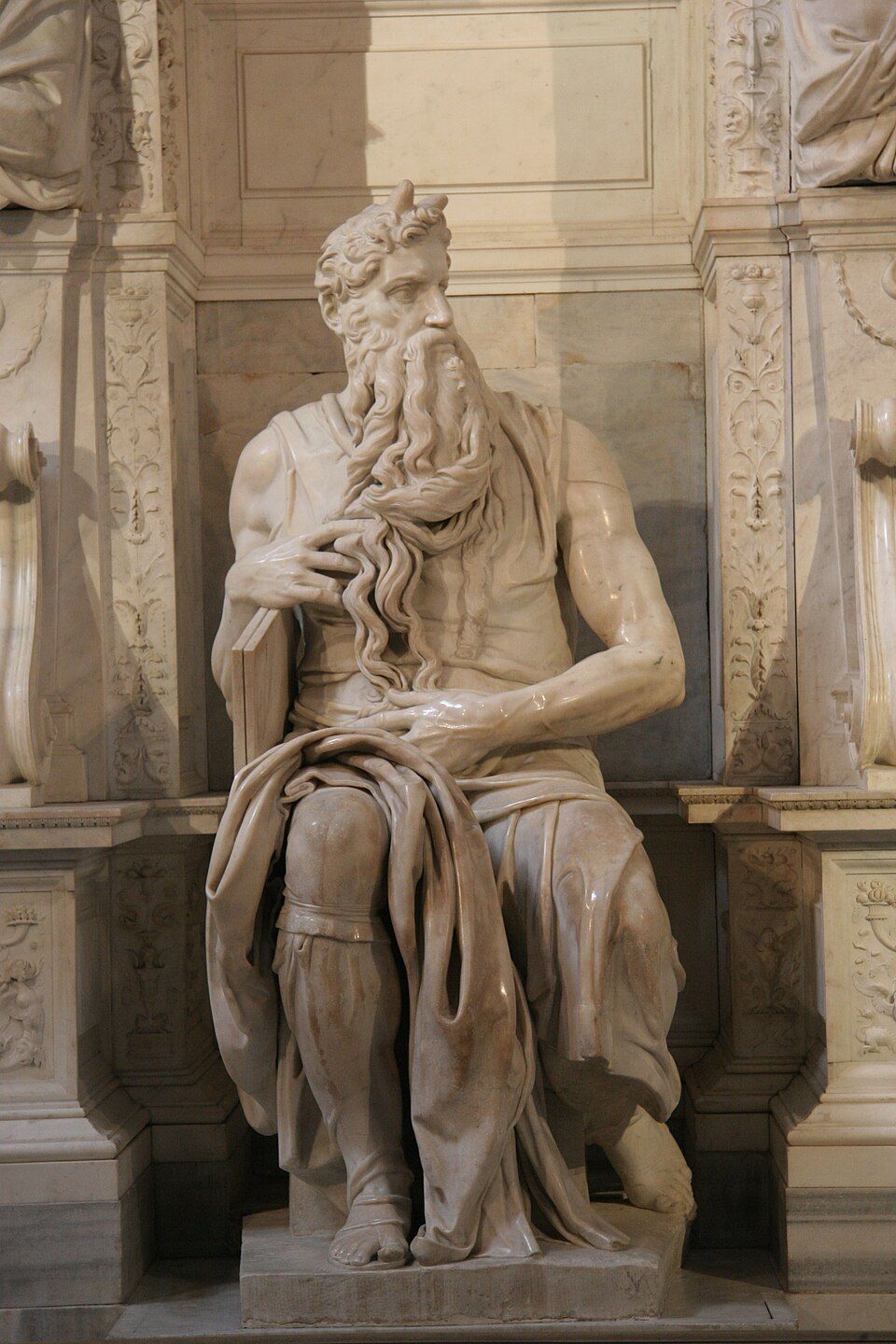
Moses is the central figure of the Book of Exodus, traditionally placed in the 13th century BC: a Hebrew raised in Pharaoh's household who fled to Midian, returned to confront Egypt over the enslavement of his people, and led the Israelites out of bondage, across the sea, and to Mount Sinai, where he received the Ten Commandments and the Law that would define Israel as a covenant people. Revered in Judaism as the greatest of the prophets, honored in Christianity, and venerated in Islam as the prophet Musa - named in the Quran more often than anyone else - Moses stands at the origin point of three world religions. Michael Hart ranked him 15th among history's most influential people.
Rank
#15
Influence
86
Field
Religious Leader
Historical Perspective
According to the Book of Exodus, Moses was born to Hebrew parents, Amram and Jochebed, at a time when Egypt's Pharaoh had ordered all newborn Hebrew boys drowned in the Nile; his mother hid him in a basket among the riverside reeds, where Pharaoh's own daughter discovered and adopted him, raising him within the Egyptian court. As an adult, Moses killed an Egyptian overseer who was beating a Hebrew slave and fled across the Sinai peninsula to Midian, where he married Zipporah, daughter of the priest Jethro, and lived as a shepherd. There, at Mount Horeb, he encountered God in the form of a burning bush that was not consumed by its flames, and was commanded to return to Egypt and demand the Israelites' release. After a series of plagues struck Egypt, Pharaoh let the Israelites go; Moses led them across the Red Sea, traditionally described as parting to let them pass, and on to Mount Sinai, where he received the Ten Commandments and the broader body of Law that forms the core of the Torah. The Israelites then spent forty years wandering the wilderness before reaching the edge of Canaan; Moses himself, according to the narrative, was permitted only to view the Promised Land from Mount Nebo before his death there, traditionally recorded at age 120, without ever entering it. Because the events described are traditionally set around the 13th century BC and no independent inscription or artifact naming Moses has been found, most scholars today treat the historical existence of an individual Moses, and the scale of the Exodus itself, as unresolved rather than confirmed - while the religious and legal traditions attributed to him remain foundational regardless. Michael Hart ranked Moses 15th in The 100, crediting his role as the founding lawgiver of Judaism and, through it, a formative influence on Christianity and Islam.
Influence Meter
86
Measured on a 100-point scale
A lawgiver at the shared root of Judaism, Christianity, and Islam
Traditional Narrative
From the Nile to Midian
The Exodus narrative opens with an Egyptian Pharaoh's order that all newborn Hebrew boys be drowned in the Nile, an attempt to suppress a growing enslaved Israelite population. Moses's mother, Jochebed, hid her infant son in a reed basket along the riverbank; Pharaoh's own daughter found the child, adopted him, and raised him within the Egyptian royal household - placing the future liberator of the Israelites, in the narrative's central irony, inside the very palace that had ordered his people's children killed.
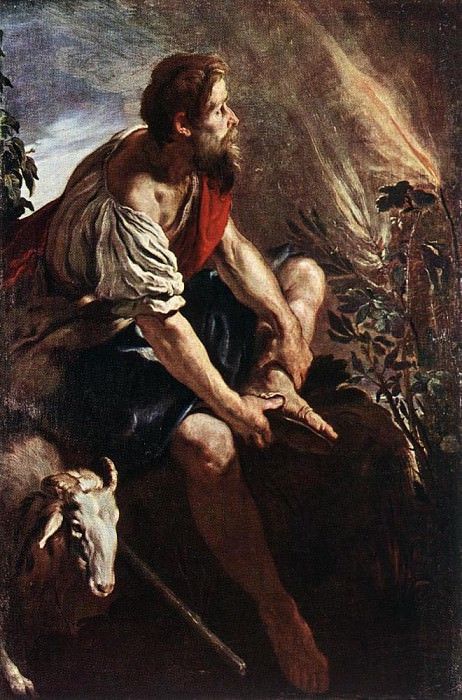
As an adult, Moses killed an Egyptian overseer he saw beating a Hebrew slave, and, fearing punishment, fled across the Sinai peninsula to the land of Midian. There he married Zipporah, daughter of the Midianite priest Jethro, and spent years as a shepherd - a quiet interlude the narrative treats as preparation for the far larger role that followed, when God is described as appearing to him in a bush that burned without being consumed, at Mount Horeb, and commanding him back to Egypt.
Mount Horeb
The Burning Bush
While tending Jethro's flock near Mount Horeb, Moses is described as seeing a bush ablaze yet not consumed by the fire, and hearing from within it the voice of God, who identifies himself by the name YHWH and instructs Moses to return to Egypt and demand the release of the enslaved Israelites. The episode establishes Moses's prophetic commission and introduces the divine name central to later Jewish theology; artists across the centuries, including the Italian Baroque painter Domenico Fetti in this early-17th-century work, have repeatedly returned to the scene as the moment an ordinary shepherd was called into a role that would reshape the religious history of the ancient Near East.
Mount Sinai
The Ten Commandments and the Law
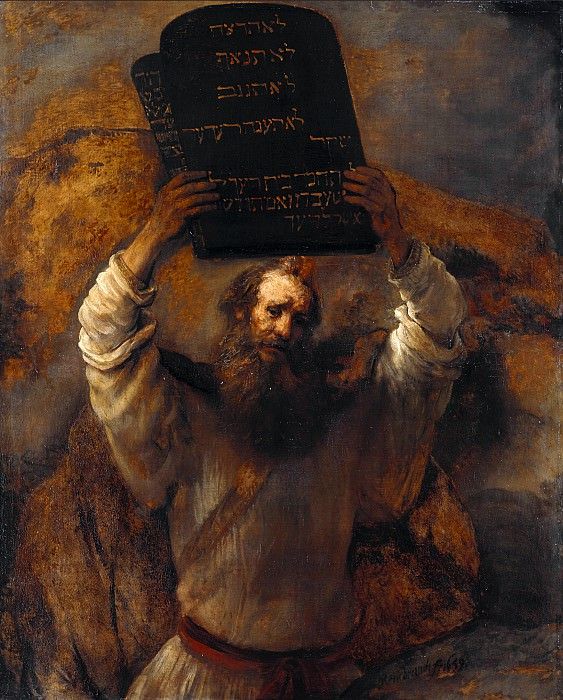
After leading the Israelites out of Egypt and across the Red Sea, Moses brought them to Mount Sinai, where, according to the narrative, he ascended the mountain and received the Ten Commandments inscribed on stone tablets, along with the broader body of law - covering worship, ethics, and civil conduct - that forms the core of the Torah, the first five books of the Hebrew Bible. The Dutch painter Rembrandt's 1659 canvas, commonly known as Moses with the Ten Commandments, depicts Moses holding the tablets aloft, capturing the moment tradition treats as the founding legal and covenantal act of Israel as a distinct people bound to God by shared law rather than only by descent.
In Islamic tradition, Moses - known as Musa - is mentioned in the Quran more often than any other individual, his name and life narrated across 136 references. He is counted among the Ulul Azm, the five 'Prophets of Strong Will' considered the greatest messengers in Islam alongside Noah, Abraham, Jesus, and Muhammad, and holds the unique title Kalimullah, 'the one spoken to by God,' referencing the tradition that God addressed him directly rather than only through an intermediary angel.
The Exodus Narrative, In Detail
Key Episodes of Moses's Story
The Book of Exodus traces a sequence from enslavement to covenant that later Jewish, Christian, and Islamic tradition all treat as foundational.
The Ten Plagues
A series of escalating disasters described as striking Egypt until Pharaoh agreed to release the Israelites.
- Count: 10 plagues
Crossing the Sea
The Israelites cross the Red (or Reed) Sea on dry ground as they flee Egypt, traditionally described as parting before them.
- Destination: Sinai
The Ten Commandments
Moses receives the Ten Commandments and the wider Law on stone tablets atop Mount Sinai.
- Text: Foundational to the Torah
Forty Years in the Wilderness
The Israelites wander the desert for a generation before reaching the edge of Canaan, the Promised Land.
- Duration: 40 years
Death on Mount Nebo
Moses views Canaan from Mount Nebo but dies there at a traditional age of 120, without entering the Promised Land.
- Traditional age: 120
Chronology
From Egypt to the Edge of Canaan
The traditional Exodus narrative moves through birth, flight, calling, liberation, and covenant across roughly a lifetime.
The Exodus
Crossing the Sea
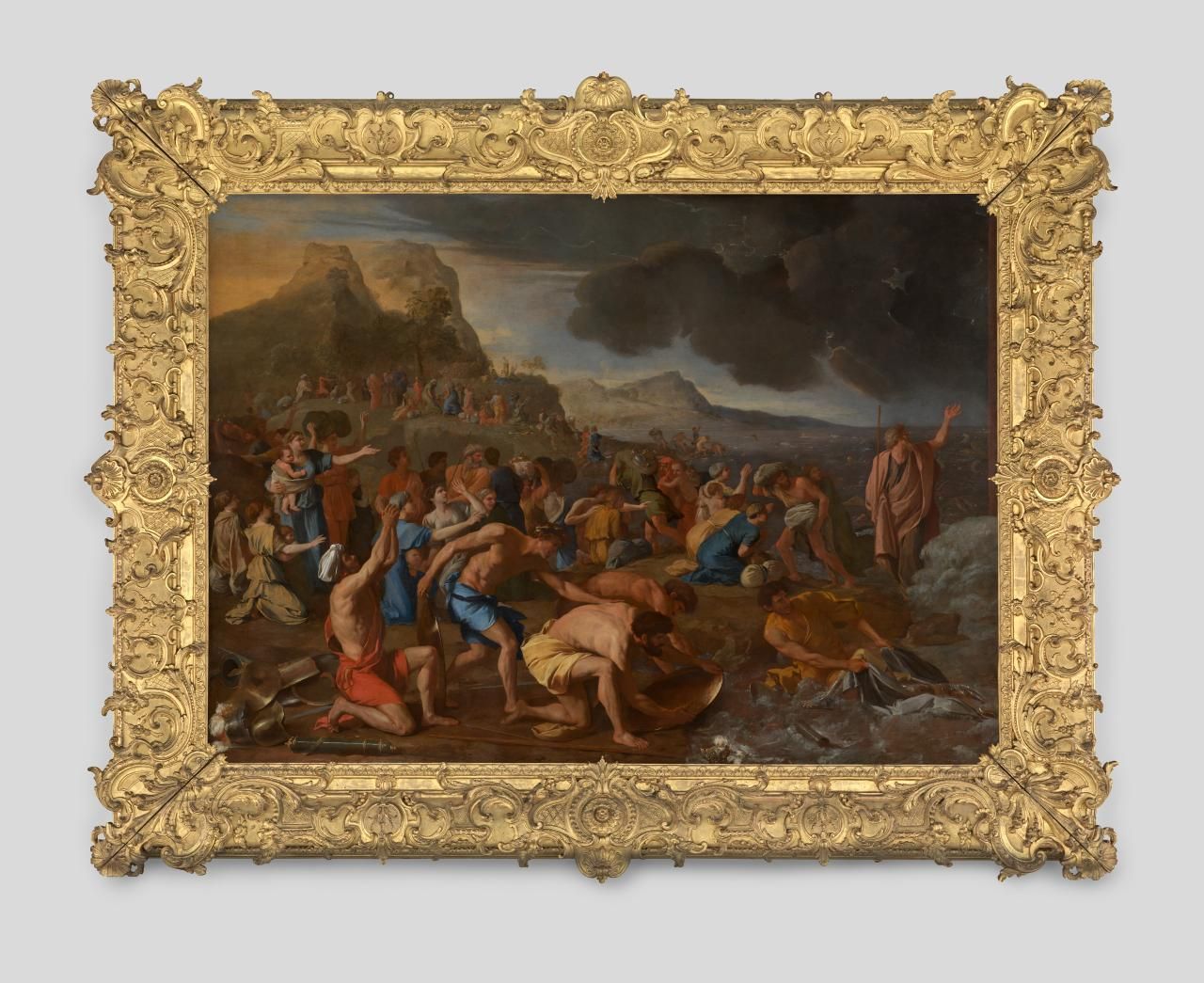
The crossing of the sea marks the narrative turning point of Exodus: pursued by Pharaoh's army after finally being allowed to leave, the Israelites are described as passing through the parted waters on dry ground, which then close again over the pursuing Egyptian force. The French classical painter Nicolas Poussin's 1633-34 canvas, The Crossing of the Red Sea, renders the moment as a scene of both deliverance and chaos - drowning soldiers alongside a fleeing, jubilant people - and the episode has remained one of the most frequently depicted scenes in the entire biblical tradition, cited across Judaism, Christianity, and Islam alike as the definitive act of liberation from slavery.
Religious Tradition
Lawgiver of the Torah
Jewish tradition has long attributed authorship of the Torah - the Pentateuch, or first five books of the Hebrew Bible - to Moses himself, a belief formalized by the medieval philosopher Maimonides in the 12th century as the eighth of his Thirteen Principles of Faith: 'I believe with perfect faith that the entire Torah presently in our possession is the one given to Moses.' This doctrine of Mosaic authorship went essentially unquestioned by Jewish and Christian scholars alike until the European Enlightenment, when systematic textual analysis led most modern biblical scholars to conclude the five books were compiled from multiple sources over centuries - a conclusion that remains a matter of religious versus historical-critical dispute rather than settled consensus, and one that does not diminish the central role Moses continues to play in both Jewish law and identity.
Whatever the compositional history of the text, the figure of Moses as lawgiver - the person through whom the covenant and legal code binding Israel to God was traditionally delivered - has functioned for roughly three thousand years as the foundation of Jewish religious law, ethical teaching, and communal identity, radiating outward into the Christian Old Testament and the Quranic account of Musa alike.
Religious Legacy
Moses Across Three Traditions
Moses occupies a distinct but related role in each of the three Abrahamic faiths.
Legacy
Why Number Fifteen
Michael Hart ranked Moses 15th in The 100, crediting him as the founding lawgiver of Judaism - the figure through whom the Torah, the Ten Commandments, and Israel's covenantal identity are traditionally understood to have been given - and, through Judaism's foundational relationship to both Christianity and Islam, a figure whose reach extends across all three of the world's major Abrahamic faiths.
That reach persists independent of the unresolved historical debate over the Exodus itself: whether or not archaeology ever confirms the scale of events described in the biblical account, the legal, ethical, and narrative traditions attributed to Moses have shaped religious law, moral instruction, and communal identity for roughly three thousand years, for billions of people across three continents and three religions - a durability few other individual figures in this ranking can claim.
Related Publications