Louis Pasteur

Louis Pasteur
Born 27 December 1822 • Died 28 September 1895
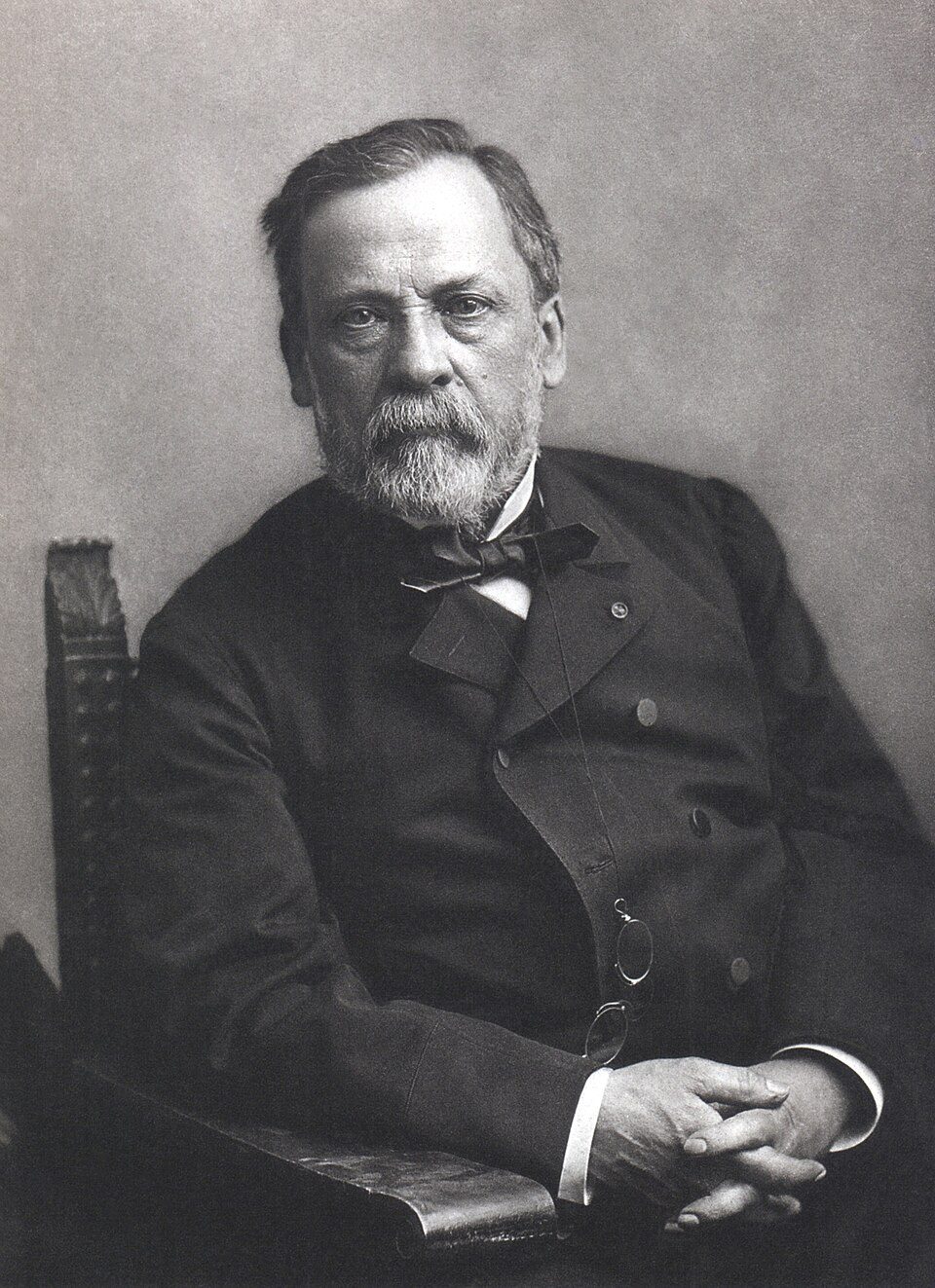
Louis Pasteur (1822-1895) was a French chemist and microbiologist whose experiments disproved spontaneous generation, established germ theory as the foundation of modern medicine, and produced vaccines for chicken cholera, anthrax, and rabies. Michael Hart ranked him 11th among history's most influential people for a body of work that transformed public health, food safety, and the practice of medicine worldwide.
Rank
#11
Influence
90
Field
Scientist
Historical Perspective
Born on 27 December 1822 in Dole, France, Louis Pasteur trained as a chemist at the Ecole Normale Superieure in Paris, where in 1848, at age 25, he made his first major discovery: that tartaric acid crystals come in two mirror-image forms, founding the field of molecular chirality. His attention turned to fermentation and decay in the 1850s, and in 1864 his famous swan-neck flask experiments demonstrated that microorganisms in the air, not spontaneous generation, caused broth to spoil - a result that finally settled a centuries-old scientific debate and helped establish germ theory. Pasteur's germ theory led directly to pasteurization, the heat-treatment process he developed to kill spoilage microbes in wine and later milk, and to a series of vaccines: for chicken cholera in 1879, for anthrax in a celebrated public trial at Pouilly-le-Fort in 1881, and, most famously, for rabies, which he first used to treat a human patient, nine-year-old Joseph Meister, on 6 July 1885. The overwhelming public response to the rabies vaccine funded the Pasteur Institute, which opened in Paris in November 1888 and remains a leading center for infectious disease research today. Pasteur died on 28 September 1895 near Paris. Michael Hart ranked him 11th in The 100, judging his germ theory and preventive vaccination to be among the most consequential ideas in the history of medicine.
Influence Meter
90
Measured on a 100-point scale
Germ theory and vaccination that rewrote the rules of medicine
1844-1857
A Young Chemist's First Breakthrough
Pasteur entered the Ecole Normale Superieure in Paris to study chemistry, and it was there, in 1848 at age twenty-five, that he made his first significant discovery. Examining crystals of tartaric acid and its mirror compound paratartaric acid under a microscope, he noticed that the crystals came in two distinct, mirror-image shapes. By painstakingly separating the two forms by hand and testing them in solution, he showed that each type rotated polarized light in a different direction - establishing the concept of molecular chirality, or 'handedness,' and laying groundwork for the field of stereochemistry.
The discovery brought Pasteur early scientific renown and a professorship, first at Strasbourg and then at the University of Lille, where his work increasingly turned toward fermentation and the biological processes underlying everyday industry - the questions that would occupy the rest of his career.
1864
Disproving Spontaneous Generation
For centuries, many scientists believed in spontaneous generation - the idea that living organisms, including microbes, could arise directly from non-living matter. In 1864, Pasteur devised an elegant test: he boiled nutrient broth in flasks with long, curved 'swan necks' that allowed air to reach the liquid while trapping dust and airborne microbes in the bend of the tube. The broth remained sterile indefinitely, but as soon as a flask's neck was broken or tilted to let contaminated air or dust reach the liquid directly, microbial growth appeared within days. The experiment conclusively disproved spontaneous generation and demonstrated that microorganisms in the environment, not any spontaneous process, were responsible for fermentation and decay - a foundational result for germ theory.
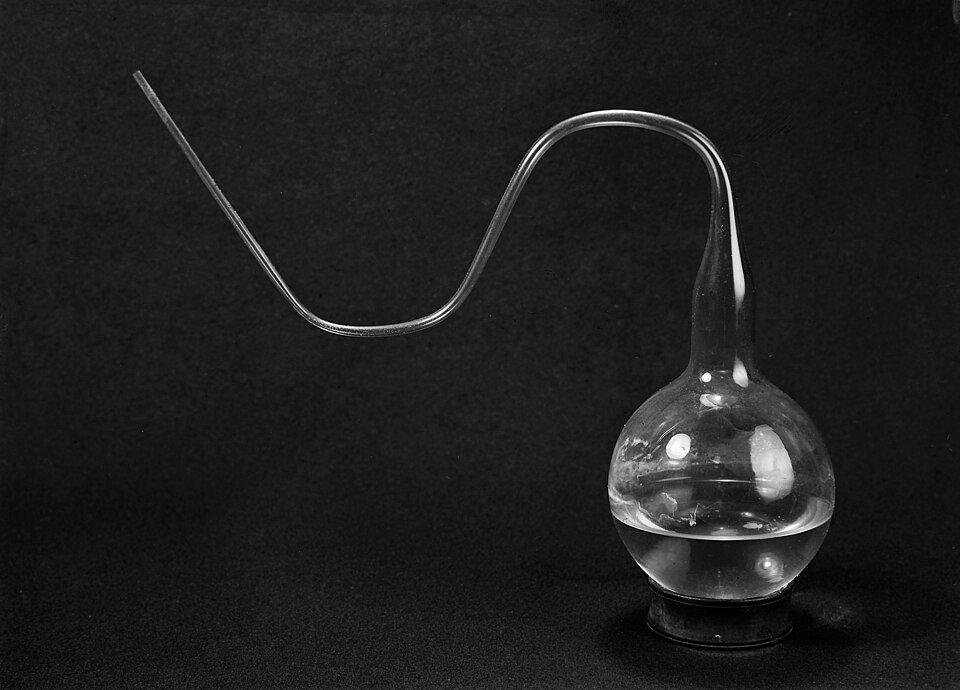
Pasteur did not work in isolation to build germ theory - fellow scientists Robert Koch in Germany and Joseph Lister in Britain independently advanced related ideas about microbes and antisepsis around the same period. But it was Pasteur's swan-neck flask experiments, still cited in biology textbooks today, that delivered the most publicly persuasive demonstration that germs, not spontaneous generation, cause fermentation and, by extension, disease.
1879-1885
Three Vaccines, Three Diseases
Pasteur applied his germ theory directly to disease prevention, developing weakened, or attenuated, versions of disease-causing microbes that trained the body's defenses without causing full-blown illness.
Chicken Cholera Vaccine
Discovered that an accidentally weakened culture of the chicken cholera bacterium protected birds from later infection, establishing the principle of attenuated vaccines.
- Animal: Poultry
- Principle: Attenuation
Anthrax Vaccine Public Trial
At Pouilly-le-Fort, near Melun, vaccinated 24 sheep, 1 goat, and 6 cows, then exposed all animals, plus unvaccinated controls, to live anthrax; every vaccinated animal survived and most unvaccinated animals died.
- Animals vaccinated: 31
- Outcome: Public validation
Rabies Vaccine, First Human Use
Treated nine-year-old Joseph Meister, bitten fourteen times by a rabid dog, with a course of thirteen injections of increasingly concentrated attenuated rabies virus over ten days; Meister never developed rabies.
- Patient age: 9
- Injections given: 13
1885
The Rabies Vaccine and Joseph Meister
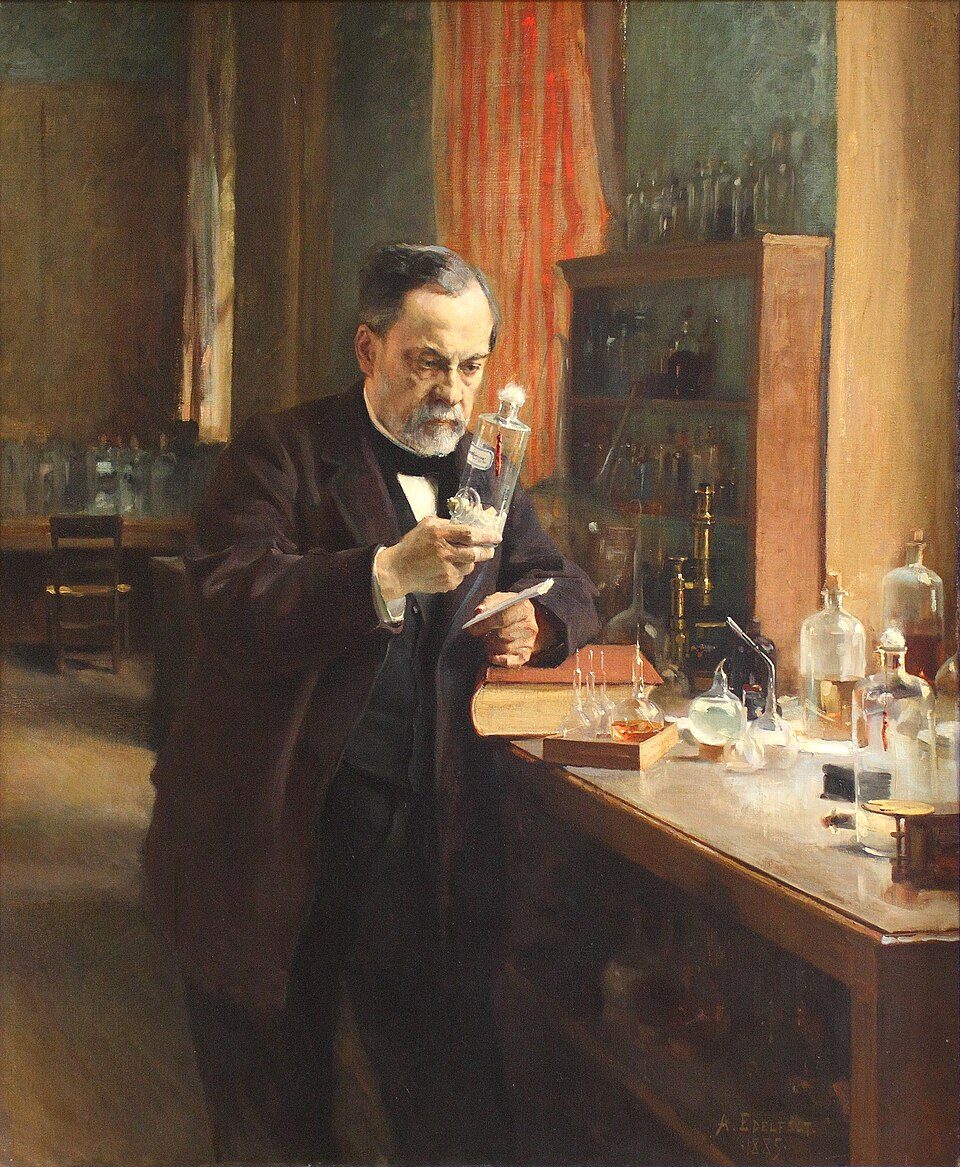
Rabies terrified nineteenth-century Europe as an almost universally fatal disease once symptoms appeared. Working with his assistants, including Emile Roux, Pasteur developed a weakened rabies preparation by drying infected rabbit spinal cords. On 6 July 1885, though not a licensed physician himself, Pasteur - assisted by Dr. Jacques-Joseph Grancher - administered the treatment to Joseph Meister, a boy savaged by a rabid dog, giving thirteen injections of increasingly virulent virus over ten days. Meister survived without developing rabies, becoming the first person successfully vaccinated against the disease. News of the cure spread rapidly, and patients bitten by rabid animals began arriving in Paris from across Europe seeking treatment, providing both the human proof of concept and the public support that funded the Pasteur Institute a few years later.
Chronology
From Crystals to Vaccines
Pasteur's career moved from pure chemistry to the biological questions that would define modern microbiology and preventive medicine.
Everyday Legacy
Pasteurization
Beyond vaccines, Pasteur's most widely felt legacy is the process that bears his name. Investigating why wine and beer sometimes spoiled or soured, he found that heating the liquid to a specific temperature for a short time killed the spoilage microorganisms without ruining the product's taste. First applied commercially to wine in the 1860s at the request of Emperor Napoleon III to protect the French wine industry, pasteurization was later extended to milk and other perishable foods, and remains a standard food-safety process used worldwide more than a century and a half later.
The same underlying insight - that unseen microorganisms, not spontaneous chemical change, drive fermentation and spoilage - connects Pasteur's earliest crystallography work to his food-safety innovations and his vaccines, making him one of the few scientists whose research reshaped both the medicine cabinet and the dinner table.
Pasteur's scientific reputation was not without controversy. The bacterium behind chicken cholera was actually isolated by veterinarian Henri Toussaint, who shared samples with Pasteur; and the attenuated anthrax vaccine used at Pouilly-le-Fort was, according to Pasteur's own private notebooks (only published in the 1970s), based on a chemically killed preparation pioneered by rival scientist Jean-Joseph Henri Toussaint, which Pasteur's team adapted without full public credit at the time.
Written Legacy
Key Publications by Pasteur
Pasteur's research memoirs, delivered to the French Academy of Sciences, documented each stage of his work from crystallography to vaccination.
Institutional Legacy
The Pasteur Institute
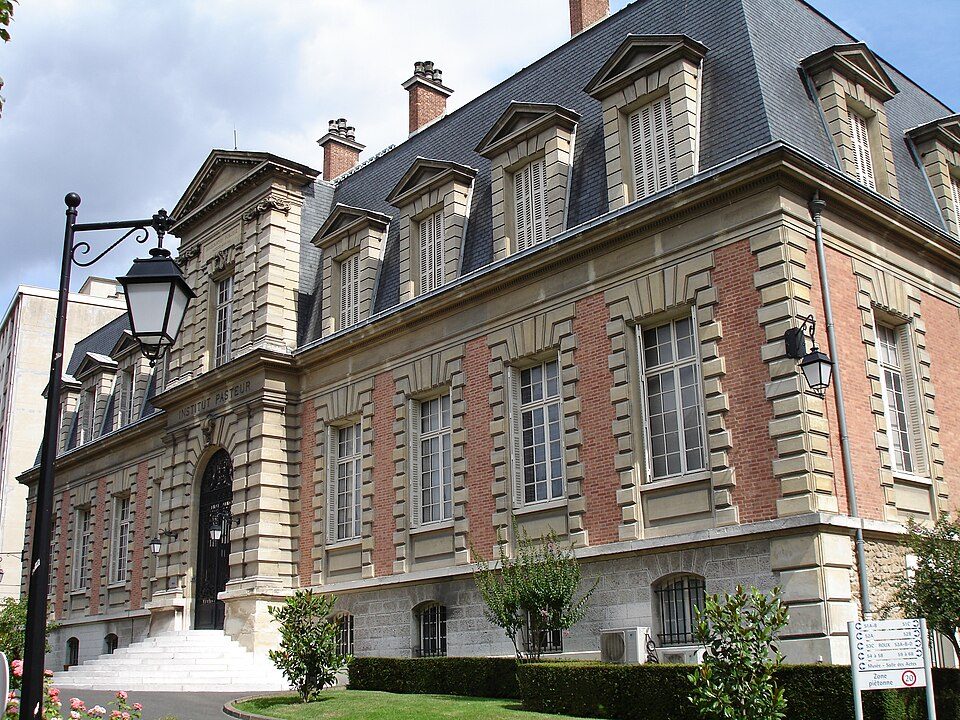
Public donations from across Europe and beyond, inspired by the success of the rabies vaccine, funded the construction of a dedicated research and treatment center in Paris. The Pasteur Institute was formally inaugurated on 14 November 1888, with Pasteur, by then in declining health following a stroke in 1868, serving as its founding director. The Institute trained generations of microbiologists, several of whom went on to win Nobel Prizes, and its international network of affiliated institutes remains active in infectious disease research and vaccine development today, including work on diseases from diphtheria and tuberculosis in Pasteur's own era to HIV and COVID-19 more recently.
Legacy
Why Number Eleven
Michael Hart ranked Pasteur 11th in The 100, placing him just behind Einstein and ahead of Galileo, on the strength of germ theory and the vaccination principle - ideas that, once established, could be applied to disease after disease by scientists who followed him. Where many figures on Hart's list are credited with a single invention or discovery, Pasteur's influence lies in a method: the insight that specific, identifiable microorganisms cause specific diseases, and that a weakened form of the same microorganism can train the body to resist it. That method underlies essentially all vaccine development that followed, from diphtheria antitoxin in the 1890s to the vaccines developed against measles, polio, and COVID-19 in the twentieth and twenty-first centuries.
Pasteur died on 28 September 1895 at Villeneuve-l'Etang, near Saint-Cloud, having lived to see his germ theory transform surgery, food preservation, and medicine, and having given his name - via pasteurization - to a process performed billions of times a day in kitchens and dairies around the world.
Related Publications