Augustus Caesar

Augustus Caesar
Born 23 September 63 BC • Died 19 August AD 14
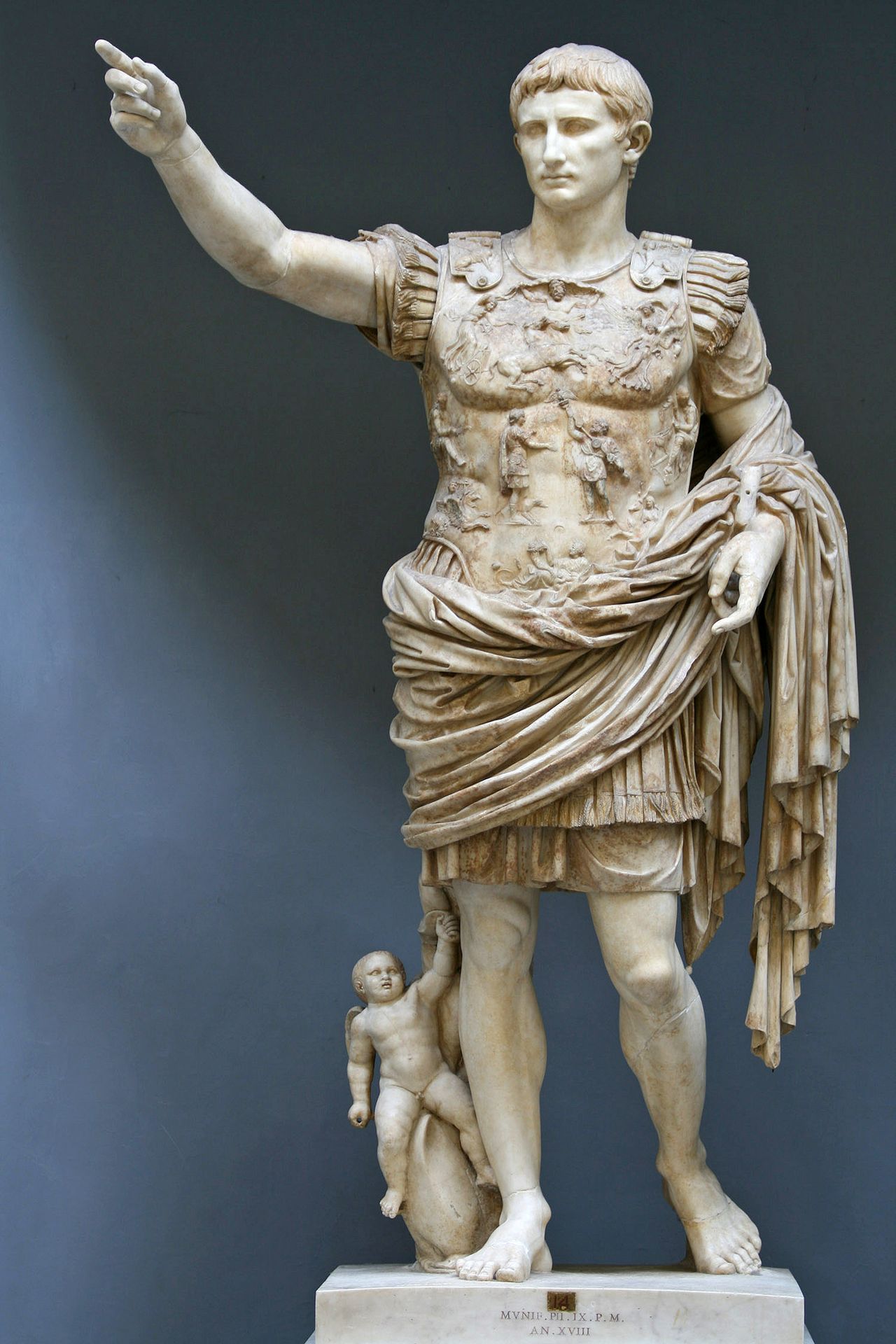
Born Gaius Octavius, Augustus was the great-nephew Julius Caesar named as his heir - inheriting a claim to power he turned into total victory after defeating Mark Antony and Cleopatra at the Battle of Actium in 31 BC. In 27 BC the Roman Senate granted him the title Augustus, 'the revered one,' an act that traditionally marks the end of the centuries-old Roman Republic and the beginning of the Roman Empire. Over a 40-year reign as Rome's first emperor, he rebuilt the city, reformed its army and administration, and inaugurated the Pax Romana, roughly two centuries of relative peace across the Roman world. Michael Hart ranked him 18th among history's most influential people.
Rank
#18
Influence
83
Field
Ruler
Historical Perspective
Born Gaius Octavius on 23 September 63 BC, the man who would become Augustus was an 18-year-old grand-nephew of Julius Caesar when Caesar was assassinated in 44 BC, having secretly named the young Octavius as his primary heir. Adopting his great-uncle's name as Gaius Julius Caesar Octavianus, Octavian formed the Second Triumvirate with Mark Antony and Marcus Lepidus on 27 November 43 BC, a five-year dictatorial pact to avenge Caesar and reconstitute the Roman state, which soon fractured into rivalry between Octavian and Antony. That rivalry ended at the Battle of Actium on 2 September 31 BC, a naval engagement off the coast of Greece in which Octavian's fleet under his general Marcus Agrippa - roughly 400 ships and 80,000 infantry - defeated the combined forces of Antony and Cleopatra, who commanded around 500 ships and 70,000 infantry; both Antony and Cleopatra died by suicide within a year. With sole control of Rome, Octavian moved carefully rather than declaring outright monarchy: on 16 January 27 BC the Senate granted him the honorific title Augustus, 'the revered one,' a title of religious rather than explicitly political authority that nonetheless marked the effective end of the four-and-a-half-century-old Roman Republic and the start of the Roman Empire, with Augustus as its first emperor. Over the roughly 40 years of his reign, Augustus founded the Principate - a system of one-man rule dressed in the preserved forms of republican institutions - reformed the army into a standing professional force, established the Praetorian Guard as his personal security, created Rome's first police and fire services, and, according to his own account, nearly doubled the size of the empire, extending effective Roman influence from Britain to the borders of India through conquest and alliance alike. This 40-year peace across the Roman world, the Pax Romana, coincided with an ambitious building program that led Augustus to boast, as recorded by the historian Suetonius, that he had found Rome a city of brick and left it a city of marble - a claim modern archaeology suggests was more rhetorical than literally comprehensive, but one that captures the scale of his transformation of the capital nonetheless. Augustus died on 19 August AD 14, succeeded by his stepson Tiberius in a transition that confirmed hereditary imperial succession as the new norm of Roman politics. Michael Hart ranked Augustus 18th in The 100, crediting him with founding the Roman Empire and stabilizing a state that had been consumed by nearly a century of civil war.
Influence Meter
83
Measured on a 100-point scale
The heir who ended the Republic and founded the Roman Empire
44 BC
Caesar's Chosen Heir
Gaius Octavius was born on 23 September 63 BC, the great-nephew of Julius Caesar, and was only 18 when Caesar was assassinated in Rome in 44 BC. Caesar's will, read after his death, revealed that he had secretly named the young Octavius as his primary heir - a claim to Caesar's name, estate, and political legacy that the teenager, now calling himself Gaius Julius Caesar Octavianus, moved quickly and ruthlessly to convert into real power.
On 27 November 43 BC, Octavian formalized an alliance with two of Caesar's other loyalists, Mark Antony and Marcus Lepidus, forming the Second Triumvirate: a five-year dictatorial commission granted by law to avenge Caesar's murder and stabilize the Roman state. The alliance held together only as long as its members had a common enemy; once Caesar's assassins were defeated, rivalry between Octavian and Antony for control of Rome became inevitable.
2 September 31 BC
The Battle of Actium
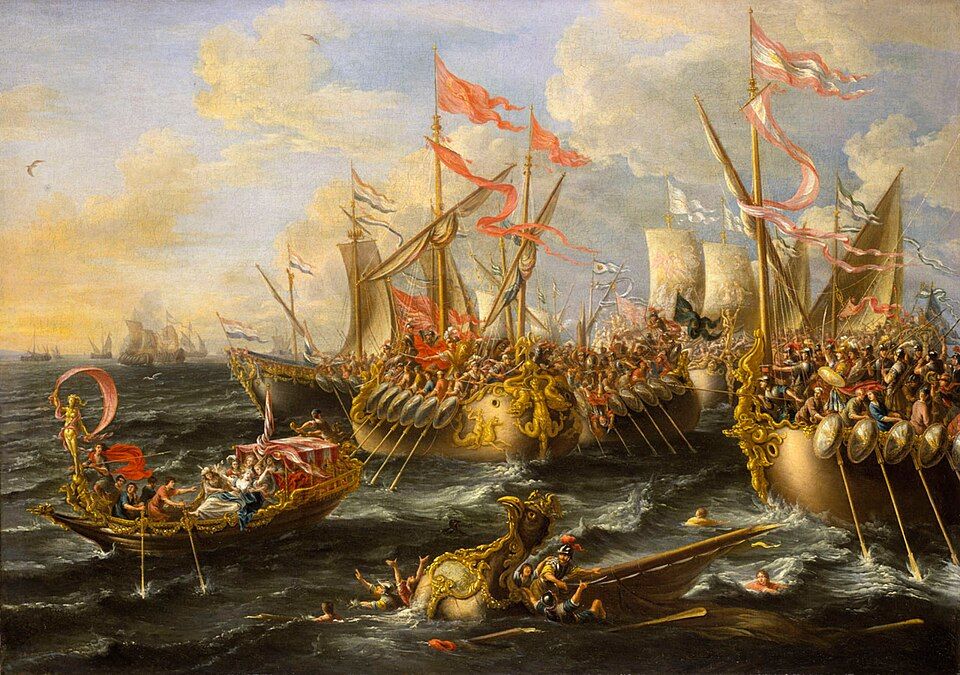
The rivalry between Octavian and Mark Antony, by then allied with and married to the Egyptian queen Cleopatra, culminated in a decisive naval battle off Actium, on Greece's western coast, on 2 September 31 BC. Octavian's fleet, roughly 400 ships and 80,000 infantry under the command of his general Marcus Agrippa, defeated the combined forces of Antony and Cleopatra, who fielded around 500 ships and 70,000 infantry. Both Antony and Cleopatra fled to Egypt and died by suicide within the following year, leaving Octavian in undisputed control of the entire Roman world - the moment this 1672 painting by Laureys a Castro, held at the National Maritime Museum in London, sought to capture centuries later.
On 16 January 27 BC, the Roman Senate granted Octavian the new title Augustus, meaning 'the revered one' - a title of religious rather than explicitly political authority. Historians conventionally treat this moment as the end of the nearly 500-year-old Roman Republic and the beginning of the Roman Empire, with Augustus as its first emperor.
The Pax Romana
An Altar to Peace
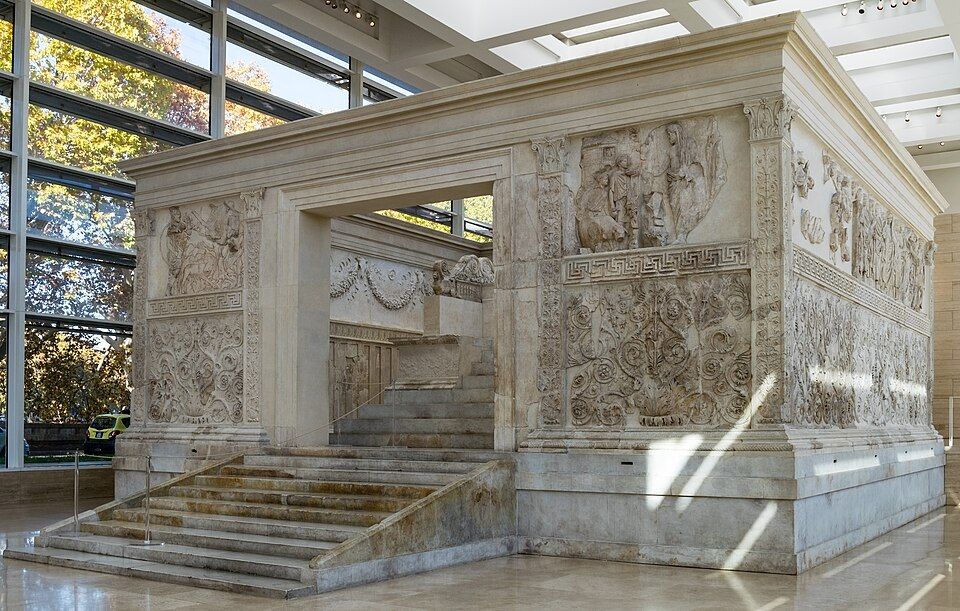
Augustus's roughly 40-year reign inaugurated the Pax Romana, a stretch of comparative peace across the Roman world unmatched in the century of civil war that preceded it. The Ara Pacis, or Altar of Peace, commissioned by the Senate in 13 BC to celebrate Augustus's safe return from campaigns in Spain and Gaul, remains the clearest physical monument to that claimed achievement - an intricately carved marble altar whose reliefs of the imperial family and Roman ritual life were designed to present the emperor's rule as a source of stability and divine favor rather than raw military conquest.
Building an Empire
Augustus's Key Reforms
Augustus used his 40-year reign to convert military supremacy into durable state institutions, several of which shaped Roman government for centuries.
The Principate
A system of one-man rule preserved beneath the outward forms of republican institutions like the Senate and consulship.
- Title: Princeps / Augustus
The Praetorian Guard
A personal security force of nine cohorts of roughly 500 men each, three of which were stationed in Rome.
- Cohorts: 9
The Vigiles
Rome's first organized fire brigade and night police, formed of seven cohorts of 1,000 freedmen after a major fire.
- Cohorts: 7
Census and Citizenship
Augustus's Res Gestae records Roman citizen counts rising from 4.06 million in 28 BC to 4.94 million by AD 14.
- Citizens (AD 14): 4.94 million
Chronology
From Octavius to Emperor
Augustus's rise from an 18-year-old heir to Rome's first emperor unfolded over roughly two decades of alliance, war, and careful political consolidation.
Rebuilding Rome
A City of Marble
According to the Roman biographer Suetonius, Augustus claimed late in his reign that he had 'found Rome a city of brick and left it a city of marble' - a line summarizing an extensive building program that included the Forum of Augustus and its Temple of Mars Ultor, the Ara Pacis, restorations of older temples, and improvements to the city's roads and water supply. Modern archaeological analysis, notably by scholar Diane Favro, has found that only a modest proportion of Augustan Rome's buildings were actually converted from brick to marble, and many of those conversions would have been difficult to notice from street level - suggesting the boast was as much calculated political messaging as literal architectural fact.
Exaggerated or not, the claim reflected a real shift in priorities: Augustus used building projects, alongside more concrete reforms like a standing professional army, an official road and postal relay system, and Rome's first fire brigade (the vigiles, formed after a major fire in AD 6), to present his rule as the source of Rome's renewed order and prosperity after a century of civil war.
Enduring Legacy
What Augustus Left Behind
The institutions and precedents Augustus established shaped Rome, and much of the Mediterranean world, for centuries after his death.
Legacy
Why Number Eighteen
Michael Hart ranked Augustus 18th in The 100, crediting him with ending nearly a century of Roman civil war and founding the imperial system of government that would rule the Mediterranean world, directly or through its institutional descendants, for centuries afterward. Where Julius Caesar had supplied the military and political shock that broke the Republic, Hart's assessment credits Augustus with the harder and less glamorous work of building something durable in its place.
That durability is the core of his historical significance: the Pax Romana his reign inaugurated allowed trade, infrastructure, law, and Latin culture to spread and consolidate across an empire stretching from Britain to the edges of the Middle East, laying groundwork - administrative, linguistic, and legal - that outlasted the Western Roman Empire itself and continued to shape European and Mediterranean civilization for centuries after Rome's political power had receded.
Related Publications