St. Paul

St. Paul
Born c. 5 CE • Died c. 64/67 CE
St. Paul (c. 5 - 64/67 CE), born Saul of Tarsus, was a Pharisee and persecutor of early Christians who, after a conversion experience on the road to Damascus, became Christianity's most important missionary and theologian, authoring much of the New Testament and shaping the faith's spread across the Roman world.
Rank
#6
Influence
95
Field
Religious Leader
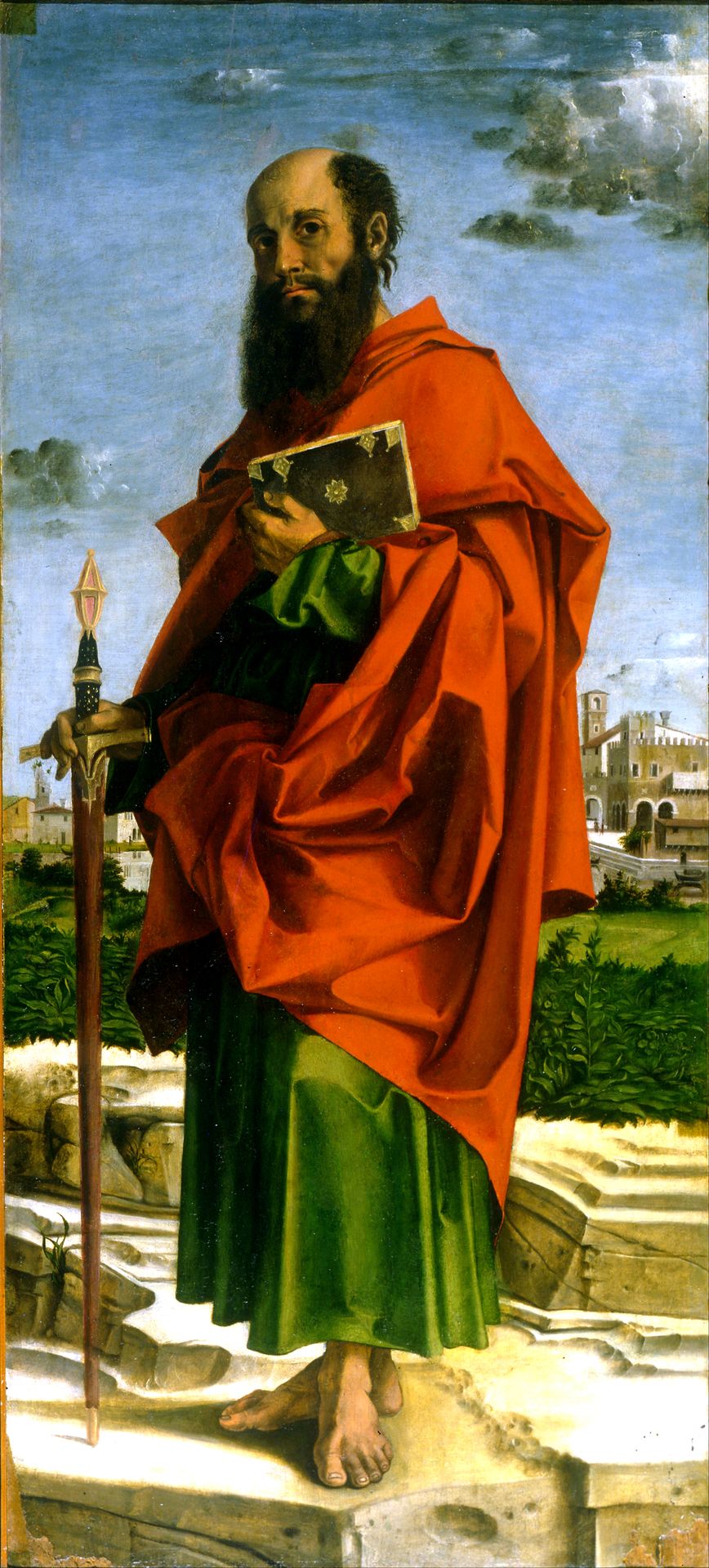
Historical Perspective
Born a Roman citizen around 5 CE in the Cilician city of Tarsus, Saul was raised in a devout Jewish family of the tribe of Benjamin and trained in Jerusalem as a Pharisee under the noted teacher Gamaliel. He was, by his own account, a zealous persecutor of the earliest Christians, present at the stoning of the martyr Stephen, until a vision of the risen Jesus on the road to Damascus converted him around 33-36 CE. Renamed Paul, he spent the next three decades traveling roughly 20,000 kilometers across the eastern Roman Empire on missionary journeys, founding churches from Asia Minor to Greece, and writing letters that became the theological backbone of Christianity: 13 of the New Testament's 27 books carry his name. Where Jesus supplied the movement's ethical core, historian Michael Hart argues it was Paul who built its theology, drove its expansion beyond Judaism to the Gentile world, and authored the bulk of its founding literature, earning him the #6 place on Hart's ranking of the most influential people in history.
Influence Meter
95
Measured on a 100-point scale
Architect of Christian theology and the driving force behind its spread
Profile Chapter
A Pharisee Born in Tarsus
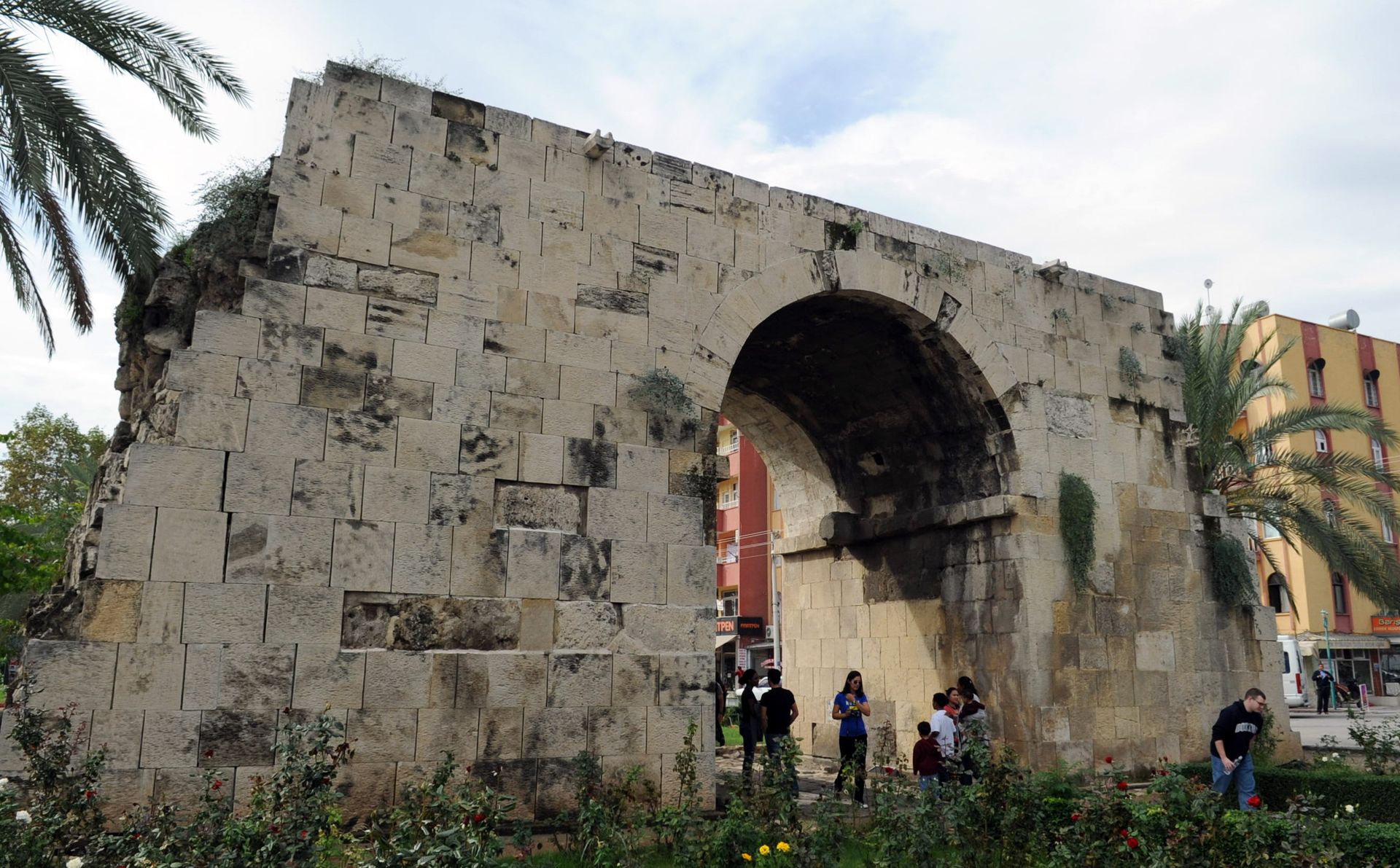
Saul was born around 5 CE in Tarsus, a prosperous Hellenistic city in the Roman province of Cilicia, and inherited Roman citizenship from birth, a status few provincial Jews held. Raised in a devout family of the tribe of Benjamin, he was sent to Jerusalem to study under Gamaliel, one of the most respected rabbis of the era, and emerged a strict Pharisee, well versed in Jewish law and, by his own description, a tentmaker by trade. This combination of Jewish religious training, Greek education, and Roman legal standing later gave him a rare ability to move between Jewish, Greek, and Roman worlds as a missionary.
c. 33-36 CE
Persecutor to the Damascus Road
Before his conversion, Saul was an active persecutor of the earliest followers of Jesus, and the Book of Acts places him at the stoning of Stephen, traditionally regarded as Christianity's first martyr. While traveling to Damascus to arrest Christians there, he reported experiencing a blinding vision of the risen Jesus, a moment historians date to roughly 33-36 CE based on his own letters. Blinded for three days, he was healed and baptized by a Damascus disciple named Ananias, then withdrew to Arabia and Damascus for a period before beginning his new mission, this time to spread rather than suppress the faith he once fought.
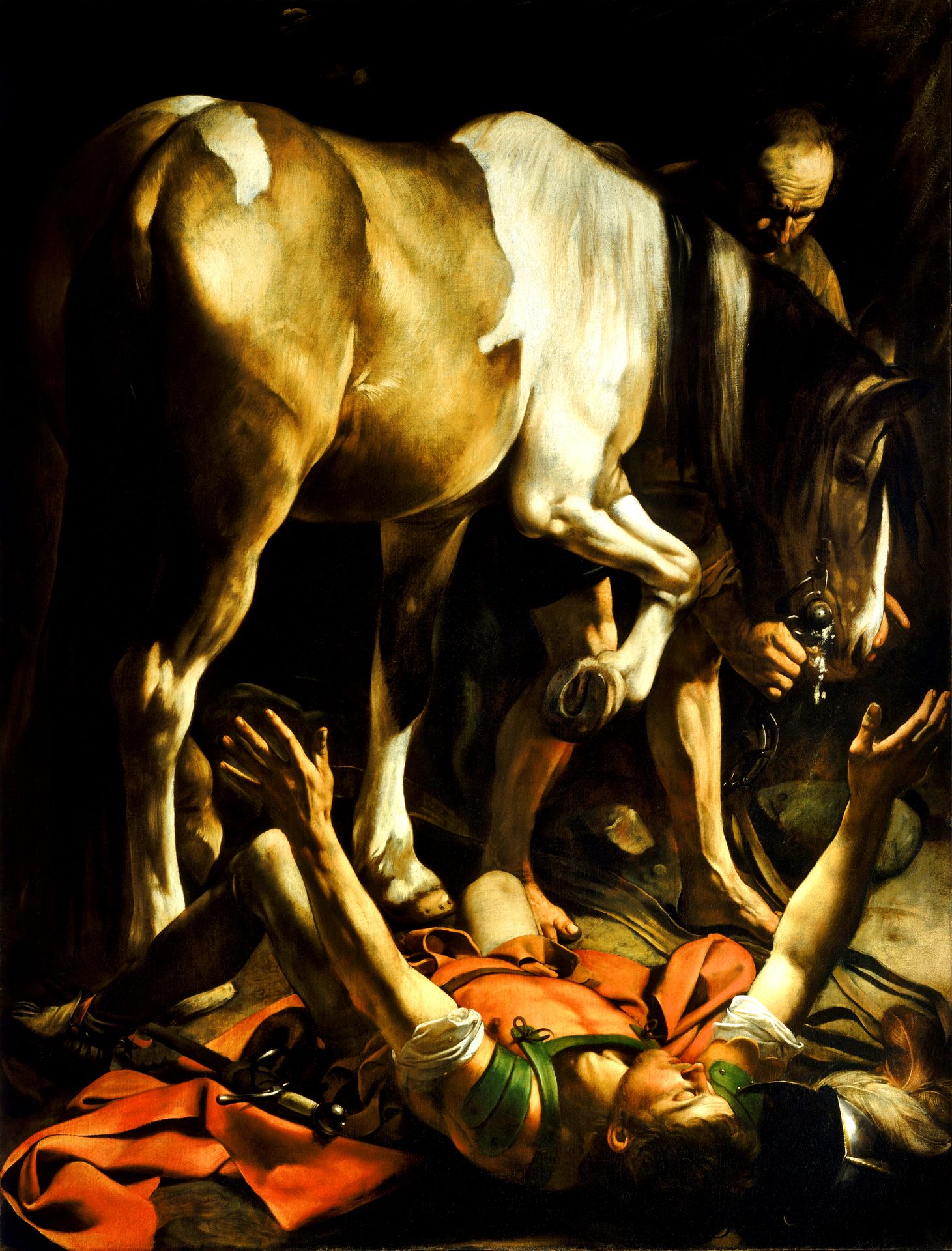
Paul's conversion is dated by scholars to roughly 33-36 CE, calculated backward from time references in his own letters rather than from Acts. After his sight was restored, he was baptized by a disciple named Ananias in Damascus, then spent time in Arabia before returning to Damascus to begin preaching.
Chronology
The Missionary Life of Paul
Paul's three decades of ministry moved from a single conversion experience to a network of churches spanning the eastern Roman Empire, reconstructed from Acts of the Apostles and his own letters.
53-57 CE
Three Years at Ephesus
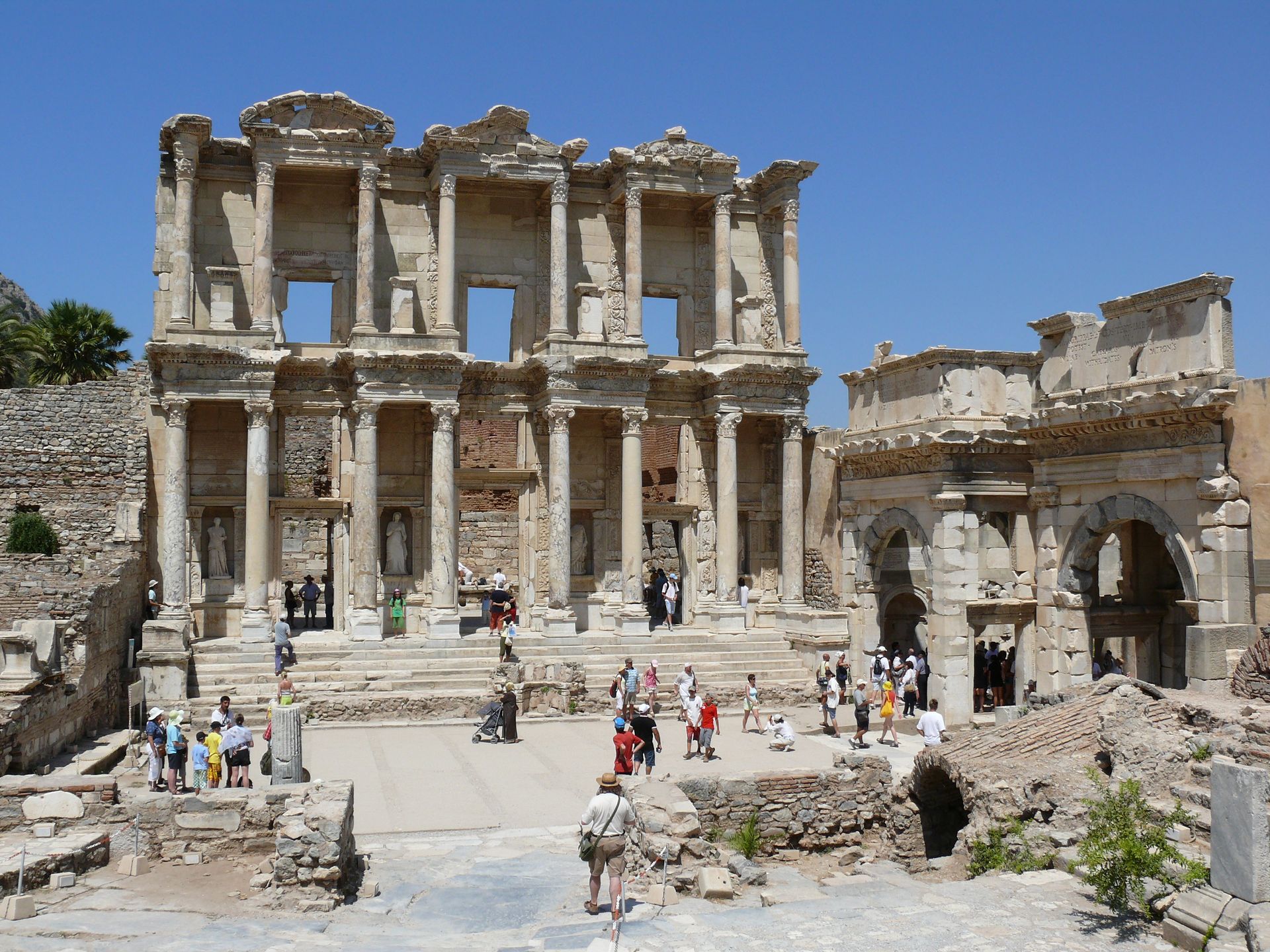
During his third missionary journey Paul settled for nearly three years in Ephesus, then one of the largest cities of Roman Asia Minor, using it as a base to teach daily and dispatch letters and envoys across the region. Acts records that his preaching against the city's idol trade provoked a riot led by silversmiths who profited from selling shrines of the goddess Artemis, illustrating both the reach of his ministry and the friction it caused with the Greco-Roman religious economy. It was likely from Ephesus, or shortly after leaving it, that Paul wrote major letters including 1 Corinthians, before moving on through Macedonia and Greece toward Jerusalem.
Across his documented missionary journeys, Paul is estimated to have traveled more than 12,000 kilometers by land and over 8,000 kilometers by sea, roughly 20,000 kilometers in total across the eastern Mediterranean, mostly on foot and by ship, without any of the transport infrastructure of later eras.
Primary Sources
The Letters That Built a Theology
Thirteen of the New Testament's 27 books are traditionally attributed to Paul, making him the most prolific contributor to the Christian canon. Modern scholarship treats seven of these as undisputed, written directly by Paul to specific churches or individuals, while the authorship of the remaining six is debated among historians.
1 Thessalonians
Widely regarded as the earliest surviving Christian document of any kind, written from Corinth to encourage a young congregation facing persecution.
- Written: c. 50-51 CE
- Status: Earliest New Testament book
Romans
Paul's most systematic statement of his theology, written to a church he had not yet visited, laying out his doctrine of justification by faith.
- Written: c. 57 CE
- Theme: Justification by faith
1 and 2 Corinthians
Written to the church Paul founded at Corinth, addressing internal division, ethics, spiritual gifts, and the resurrection of the dead.
- Written: c. 53-55 CE
- Addressed to: Corinth
Galatians
A forceful defense of salvation through faith rather than adherence to Jewish law, central to Paul's argument for a law-free Gentile mission.
- Written: c. 49-55 CE
- Argument: Faith over Mosaic law
Disputed and Pastoral Letters
Ephesians, Colossians, 2 Thessalonians, 1 and 2 Timothy, and Titus carry Paul's name in the New Testament, but most modern scholars consider some or all of them written later by his followers.
- Count: 6 of 13 letters
- Scholarly view: Disputed or pseudepigraphical
The Council of Jerusalem, c. 49 CE
Apostle to the Gentiles
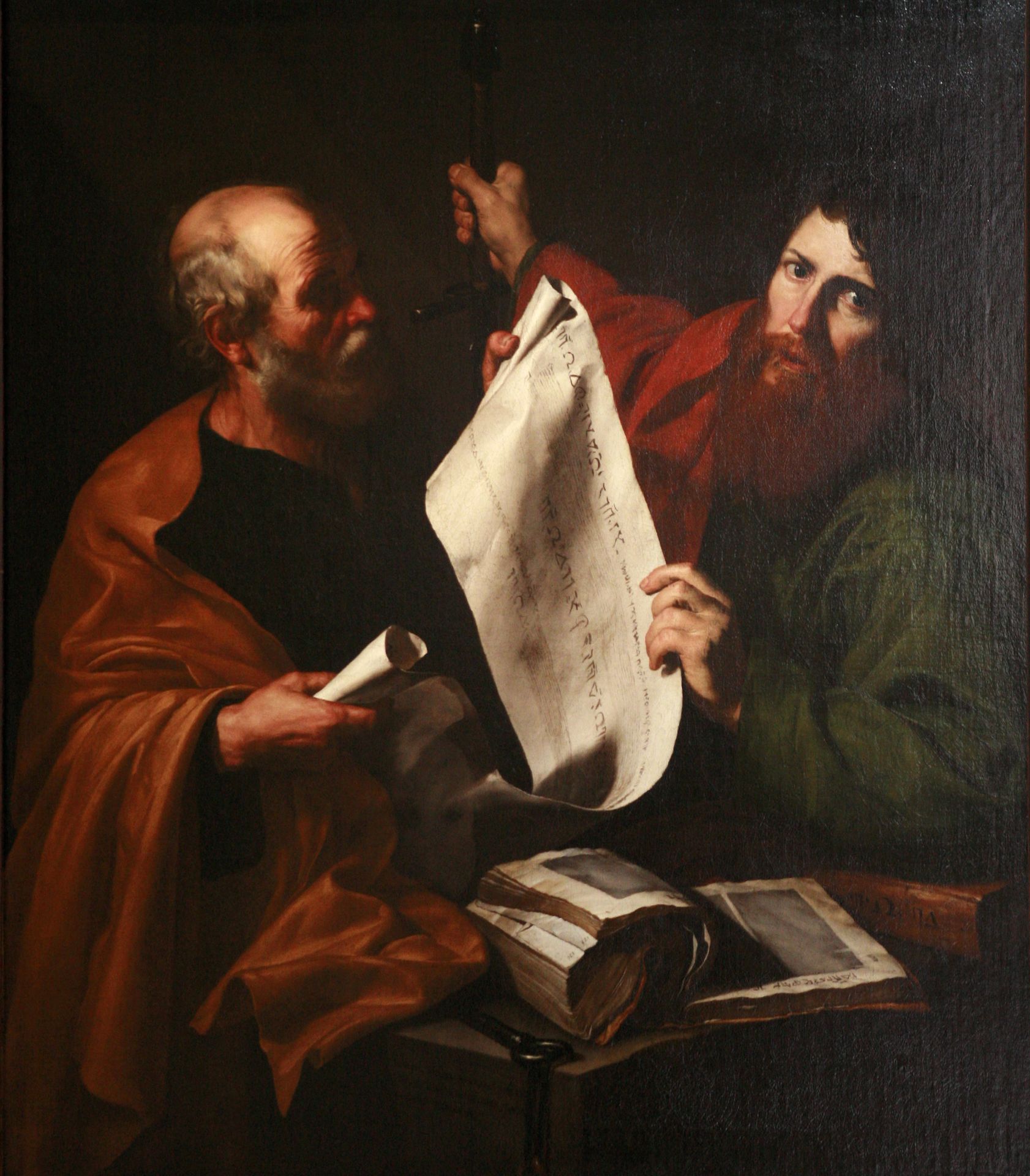
Around 49 CE, Paul traveled to Jerusalem to settle a dispute that threatened to split the young movement: whether non-Jewish converts had to be circumcised and follow Jewish law to become Christians. Meeting with the Jerusalem apostles Peter and James, Paul argued successfully that Gentile believers should be admitted on the basis of faith alone. The council's decision, recorded in both Acts and Paul's own letter to the Galatians, was the single most consequential turning point in setting Christianity on a path to become an independent, universal religion rather than a sect within Judaism.
Theological Contribution
Justification by Faith
Paul's letters gave Christianity much of its distinctive theological vocabulary: justification by faith rather than obedience to religious law, salvation as a matter of divine grace, and the church described as the 'body of Christ' with believers as its interconnected members. These were not simply devotional ideas but load-bearing arguments, worked out in real disputes with real congregations, that later shaped how Christians understood sin, salvation, and community.
The influence of this theology reached far beyond Paul's own century. Centuries later, thinkers such as Augustine of Hippo built core doctrines of grace and free will on Pauline texts, and the 16th-century Reformation led by Martin Luther drew directly on Paul's letter to the Romans to argue that faith, not religious works, justified a believer before God, a claim that split Western Christianity into Catholic and Protestant traditions that persist today.
57-62 CE
Arrest, Appeal to Caesar, and Rome
In 57 CE, at the end of his third missionary journey, Paul returned to Jerusalem where his presence provoked a riot in the Temple and led to his arrest by Roman authorities. He was held in custody in Caesarea for about two years before, invoking his Roman citizenship, he formally appealed his case to the emperor, a right reserved for citizens. The journey to Rome that followed included a shipwreck off Malta described in Acts, and once in the capital Paul spent roughly two more years under a lenient form of house arrest, still permitted to receive visitors, teach, and write letters, according to the closing chapters of Acts.
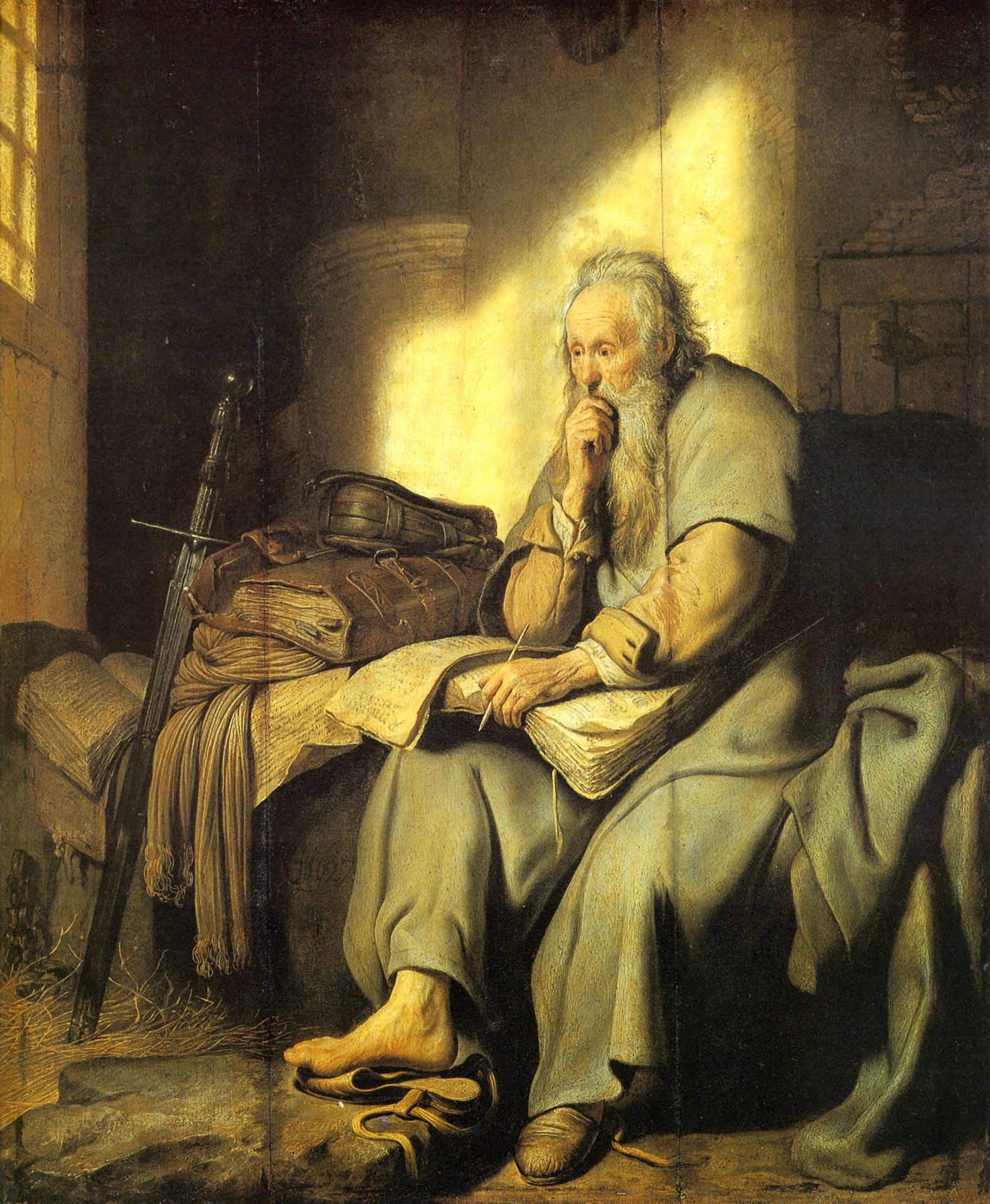
Church tradition holds that Paul was executed in Rome under Emperor Nero, sometime between 64 and 67 CE, possibly amid the persecutions that followed the Great Fire of Rome in 64 CE. Because he was a Roman citizen, tradition holds he was beheaded rather than crucified, the fate tradition assigns to his fellow apostle Peter.
Global Reach Today
Shaping a World Religion
Thirteen of the New Testament's 27 books carry Paul's name, more than any other contributor to the Christian canon, and his undisputed letters remain the earliest surviving Christian writings, composed before any of the four Gospels reached their final form. Nearly two thousand years later, the faith he helped carry beyond Judaism into the Gentile world is the largest religion on Earth: according to the Pew Research Center, there were roughly 2.3 billion Christians in 2020, about 28.8% of the world's population.
That reach traces back in large part to decisions Paul made and arguments he won: to admit Gentiles without requiring circumcision, to frame salvation as available through faith rather than law, and to put those arguments in writing that has been read continuously for two thousand years.
Legacy
Why Number Six
In Michael Hart's ranking of the 100 most influential people in history, Paul is placed sixth, immediately behind Jesus at third. Hart's reasoning divides the credit for Christianity between the two men: while Jesus supplied its central ethical and moral teaching, Hart argues it was Paul who did the work of building Christian theology, acting as its principal missionary and proselytizer, and authoring a large portion of the New Testament that would carry the faith's message forward.
Paul never met Jesus during his ministry and had actively persecuted his followers, yet his decision to fight for a law-free Gentile mission at the Council of Jerusalem, and the theological framework he built to justify it, is what allowed a small Jewish movement to become, within a few centuries, the dominant religion of the Roman Empire and, eventually, the largest faith in the world.
Related Publications