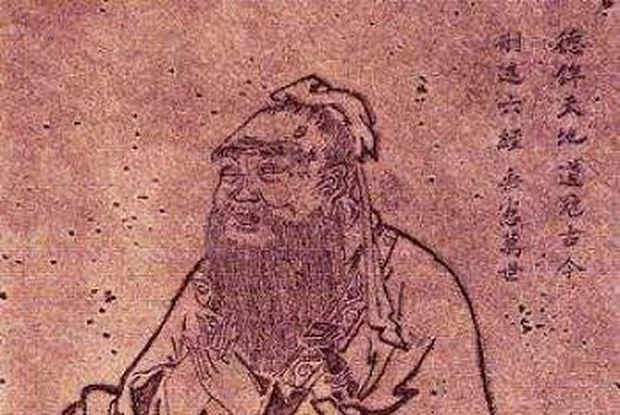
Ts’ai Lun

Ts’ai Lun
Born c. 50-62 CE • Died 121 CE
Ts'ai Lun (Cai Lun, c. 50-121 CE) was a Chinese court eunuch of the Eastern Han dynasty who in 105 CE refined a process for making paper from tree bark, hemp waste, old rags, and fishing nets. The innovation replaced bamboo slips and silk as the standard writing surface, spread slowly across the world over the following centuries, and in Michael Hart's ranking made him the most influential inventor in history.
Rank
#7
Influence
94
Field
Inventor
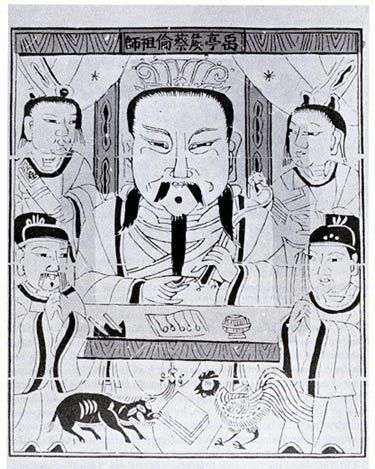
Historical Perspective
Almost nothing is recorded of Cai Lun's early life beyond his birth around 50-62 CE to a poor family in Guiyang Commandery, in present-day Hunan province. By about 75 CE he had entered service at the imperial court in Luoyang as a chamberlain, rising over the following decades through the ranks of the eunuch bureaucracy to become Zhongchang shi, one of the highest offices open to a court eunuch, and later overseer of the palace workshops that manufactured weapons and tools for the emperor. It was in that role, in the first year of the Yuanxing era (105 CE), that he submitted to Emperor He a refined method for making paper from the inner bark of trees, hemp waste, old rags, and discarded fishing nets - materials far cheaper than the silk and heavier than the bamboo and wooden slips then used for writing. The resulting product, sometimes called 'Marquis Cai's paper', earned him wealth, the title of marquis, and a small fief at Longting. His fortunes reversed after the death of Empress Dowager Deng: implicated in an earlier court intrigue, he was ordered in 121 CE to answer to the Ministry of Justice and, rather than face trial, bathed, dressed in fine silk robes, and took his own life by poison. Historian Michael Hart ranked him 7th in his 1978 book The 100, placing him above Johannes Gutenberg, Christopher Columbus, Albert Einstein, and Charles Darwin, on the reasoning that a workable, affordable paper was the more foundational invention - printing itself, after all, depends on having something to print on.
Influence Meter
94
Measured on a 100-point scale
Refined the affordable writing surface that made mass record-keeping, scholarship, and eventually printing possible

Profile Chapter
A Eunuch of the Eastern Han Court
Cai Lun's family background is recorded only as poor, with no details of his childhood surviving. He arrived at the Han court in the capital Luoyang by around 75 CE, entering as a chamberlain under Emperor Ming and continuing as Xiao Huangmen, an imperial messenger, under Emperor Zhang. By 88 CE he had been elevated to Zhongchang shi, a salaried rank of 2,000 shi and among the highest offices a court eunuch could hold, and shortly after was named Shangfang Ling, overseer of the palace workshops that produced weapons, tools, and other implements for the imperial household - the position from which he would turn his attention to papermaking.
105 CE
Bark, Rags, and Fishing Nets
Forms of paper had existed in China since at least the 2nd century BCE, made mostly from hemp fiber and used more for wrapping and padding than writing. Cai Lun's contribution, submitted to Emperor He in the first year of the Yuanxing era (105 CE), was a refined and standardized process using the inner bark of trees such as mulberry, together with hemp waste, old rags, and discarded fishing nets, pulped and pressed into thin, durable, and comparatively cheap sheets. The resulting paper quickly displaced the bulky bamboo and wooden slips and the far more expensive silk that Han-dynasty scribes had relied on, and became known in his honor as 'Marquis Cai's paper' after he received his noble title.
114-121 CE
Honor, Court Intrigue, and a Forced End

In 114 CE Cai Lun was rewarded for his service with the title of marquis and enfeoffed as lord of Longting, a fief of some 300 households. His standing at court did not protect him for long: years earlier he had reportedly been involved, on the emperor's grandmother's orders, in a court intrigue connected to the death of Consort Song, grandmother of Emperor An. When Emperor An came to the throne and revisited the affair, he ordered Cai Lun to report to the Ministry of Justice in 121 CE. Rather than face the ministry's judgment, Cai Lun bathed, dressed in his finest silk robes, and ended his own life by drinking poison. He was buried near his fief at Longting, in what is now Yang County, Shaanxi Province, where his tomb and an accompanying shrine were designated a Major Historical and Cultural Site by China's State Council in 2006.
Chronology
The Life of Cai Lun
The documented milestones of Cai Lun's career, reconstructed from the Book of the Later Han and modern historical scholarship.
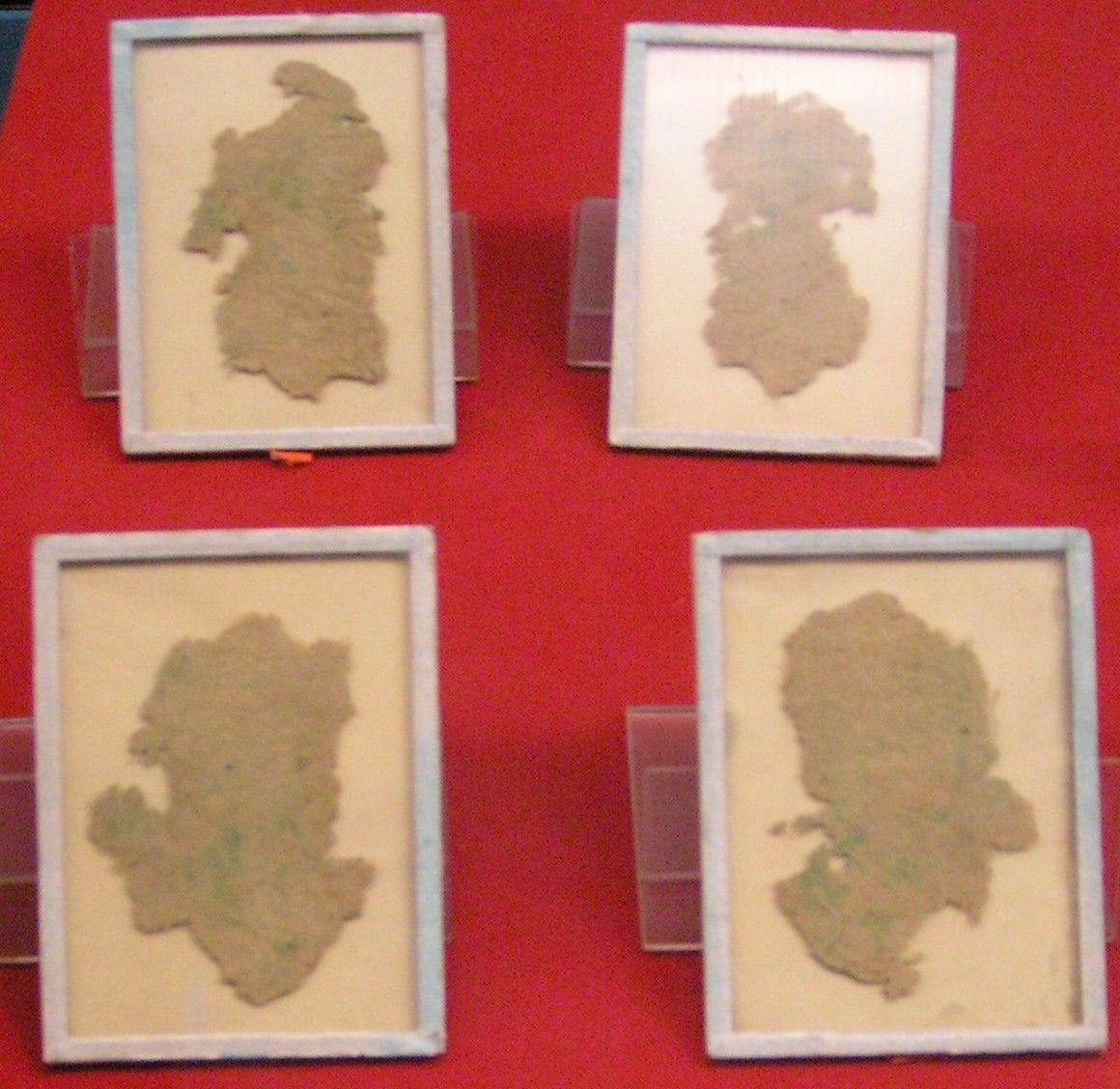
Cai Lun is traditionally remembered as paper's inventor, but archaeology has complicated that title: a paper fragment likely used as part of a map, found at Fangmatan in Gansu province, has been dated to as early as 179-141 BCE, and other Han-era fragments have been found at Dunhuang and elsewhere. Cai Lun's documented achievement was not inventing paper from nothing but standardizing, in 105 CE, a cheaper and more durable process using bark, hemp waste, rags, and fishing nets - the version of paper that then displaced older writing materials on a mass scale.
The Innovation
A Recipe Built from Waste
Before Cai Lun's process spread, Han-dynasty China wrote primarily on bamboo or wooden slips bound into bulky, heavy scrolls, or on silk, a material fine enough for writing but too expensive for everyday use. Cai Lun's insight was recipe rather than raw invention: combining the inner bark of trees with hemp waste, old rags, and discarded fishing nets meant the process turned material that would otherwise be thrown away into a lightweight, foldable, and comparatively cheap writing surface.
That combination of low cost and light weight is what let paper spread through Chinese bureaucracy, scholarship, and eventually religious and commercial life in the centuries after 105 CE, gradually replacing both the unwieldy bamboo slip and the costly silk roll as the medium of record for one of history's most document-intensive civilizations.
The 105 CE Formula
What Went Into Han Paper
Cai Lun's process combined four low-cost, largely discarded materials into a pulp that could be pressed and dried into sheets, replacing the writing materials that had come before.
Tree Bark
The inner bark of mulberry and other trees supplied the main cellulose fiber for the pulp.
- Role: Main fiber source
- Cost: Low; widely available
Hemp Waste
Offcuts and waste from hemp processing added further durable plant fiber to the pulp mixture.
- Source: Hemp textile production waste
Old Rags
Discarded cloth rags contributed additional fiber, a practice that would remain central to papermaking in Asia and later Europe for over a thousand years.
- Later use: Standard European papermaking input until the 1800s
Fishing Nets
Worn-out fishing nets, made of hemp or similar plant fiber, were pulped alongside the other waste materials.
- Material: Plant-fiber cordage
Bamboo and Wooden Slips
The bulky, heavy writing medium of the pre-paper Han bureaucracy, bound with cord into scrolls; paper gradually displaced it over the following centuries.
- Displaced by: Cai Lun's refined paper
700-1200 CE
Paper's Slow Journey West
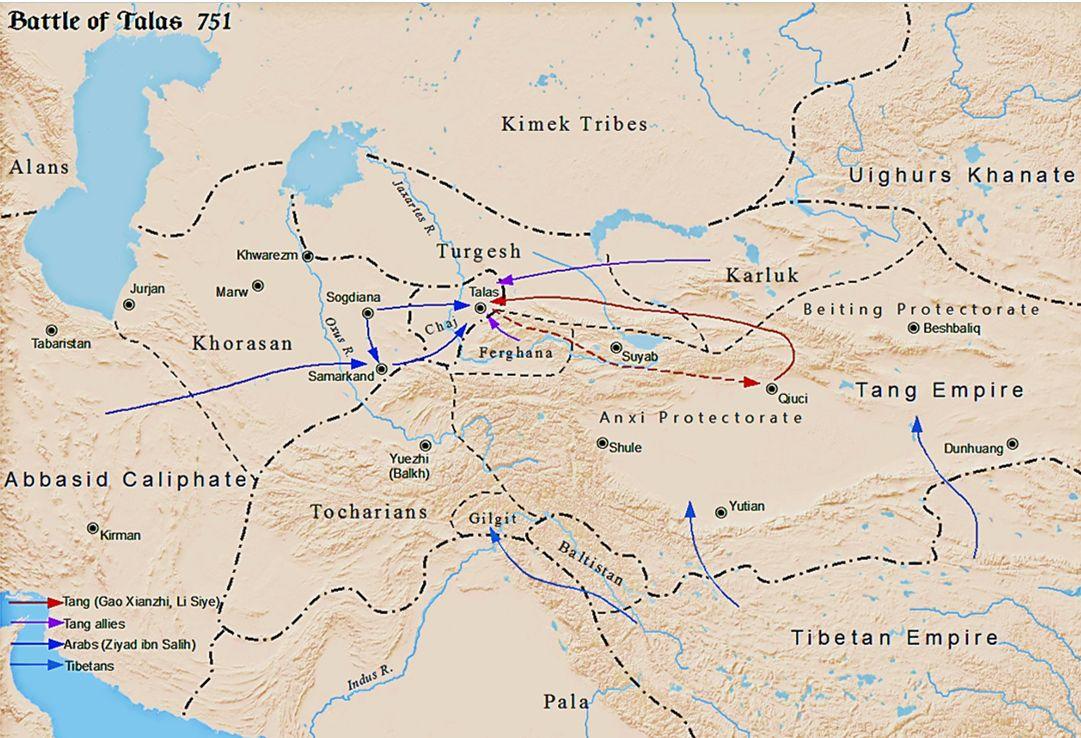
Papermaking technology spread only gradually beyond China. It reached the Silk Road oasis city of Samarkand by around 700 CE, traditionally said to have arrived with Chinese papermakers captured after the Battle of Talas in 751 CE, fought between Tang Chinese and Abbasid Arab forces in Central Asia, though scholars note the craft may have been diffusing into the region before that battle as well. From Samarkand, papermaking moved on to Baghdad by the 8th century and to Damascus, Egypt, and Morocco by the 10th century. Export of Middle Eastern paper into Byzantium and parts of Europe began in the 10th and 11th centuries, but the craft itself was not established in Spain and Italy until the 12th century - nearly a thousand years after Cai Lun refined the process in Luoyang.
Global Reach Today
An Invention Still Underpinning Modern Life
Nearly two thousand years after Cai Lun refined it, the writing surface he helped standardize remains a foundation of the modern world in forms he could not have imagined: according to industry data compiled by Statista, global production of paper and paperboard exceeded 400 million metric tons in 2023, spanning everything from packaging and printing paper to hygiene products, with packaging grades alone accounting for roughly 259 million metric tons of that total.
Long before that industrial scale was reached, the affordability of paper relative to silk or bamboo was itself a democratizing force: it lowered the cost of copying and preserving texts, supported the growth of the Chinese imperial examination system's paperwork, and, once the technology reached the Islamic world and then Europe, provided the writing surface without which Gutenberg's printing press - ranked one place below Cai Lun by Michael Hart - would have had nothing to print on at any scale.
Legacy
Why Number Seven
In Michael Hart's The 100: A Ranking of the Most Influential Persons in History, Cai Lun is placed 7th, ahead of Johannes Gutenberg, Christopher Columbus, Albert Einstein, and Charles Darwin. Hart's ranking system rewards actions that most changed the course of history rather than personal greatness, and by that measure he judged a workable, low-cost paper more foundational than the press that would later print on it: movable type printing, global exploration, and modern science all depended on having an affordable medium to record and transmit information in the first place.
Cai Lun's own life ended in disgrace and forced suicide, a fate common enough among Han court eunuchs caught on the losing side of palace politics. But the recipe he standardized in 105 CE outlived the dynasty that employed him by more than a millennium, spreading slowly west along the Silk Road until it reached Europe and, centuries later, met Gutenberg's press - pairing two of history's most consequential inventions into the print culture that followed.
Related Publications