Adam Smith

Adam Smith
Born baptised 5 June 1723 • Died 17 July 1790
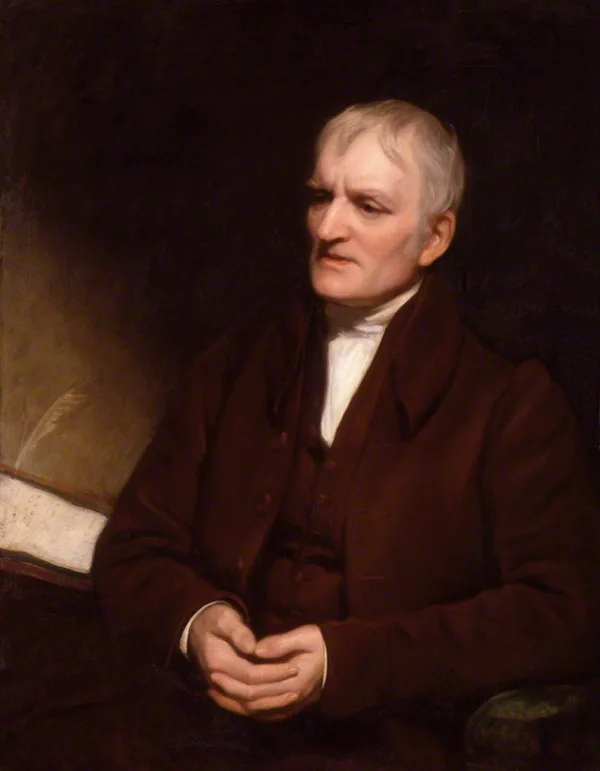
Adam Smith was a professor of moral philosophy, absent-minded to the point of legend - he once fell into a tanning pit while explaining the division of labour, and reportedly walked fifteen miles in his dressing gown. He published two books in thirty-one years. The second of them, appearing in the same year as the American Declaration of Independence, took the ordinary business of buying and selling and showed that it constitutes a system with laws of its own, which no one designed and no one directs. Every economist since has been arguing inside the space he opened.
Rank
#30
Influence
84
Field
Philosopher and Economist
Historical Perspective
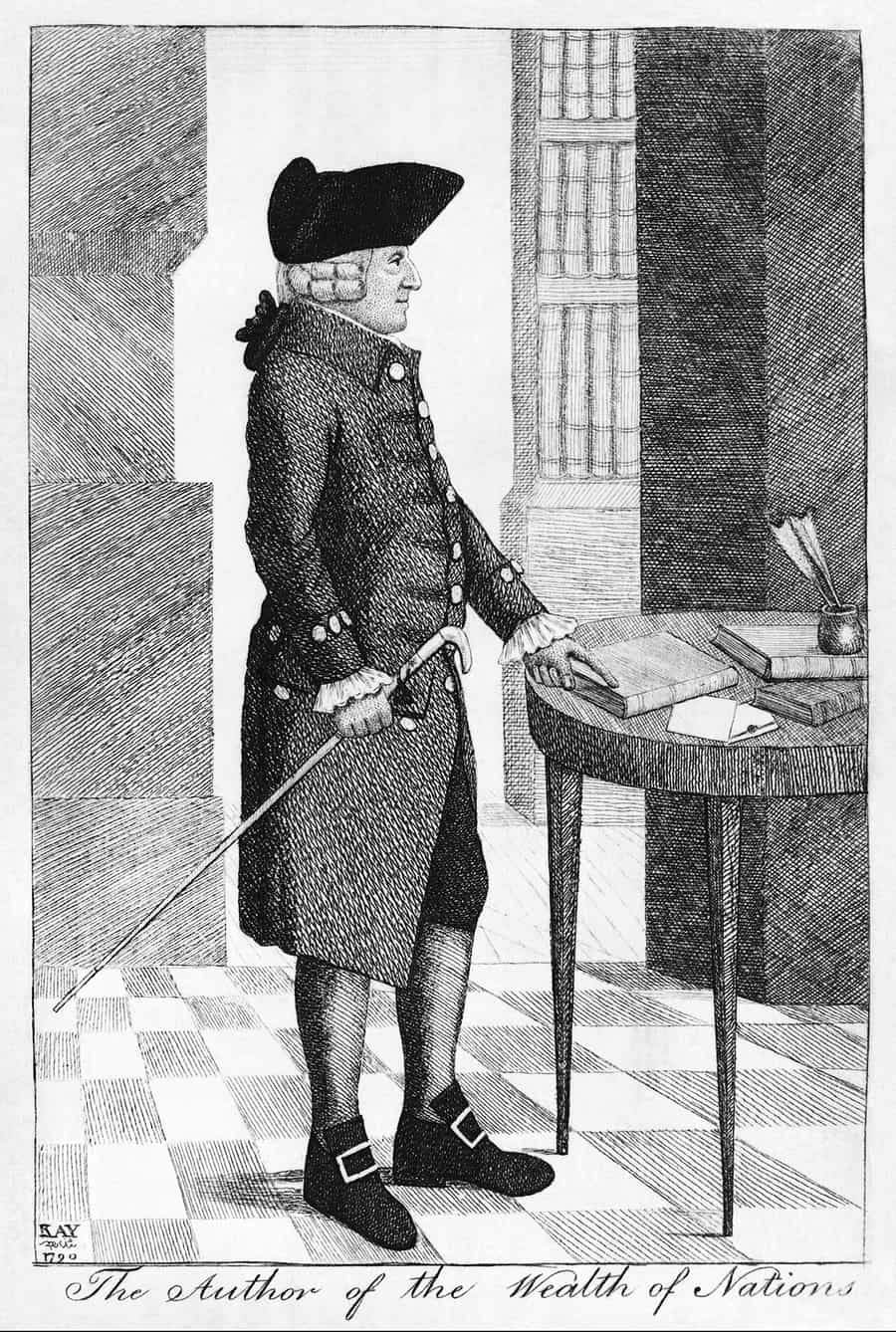
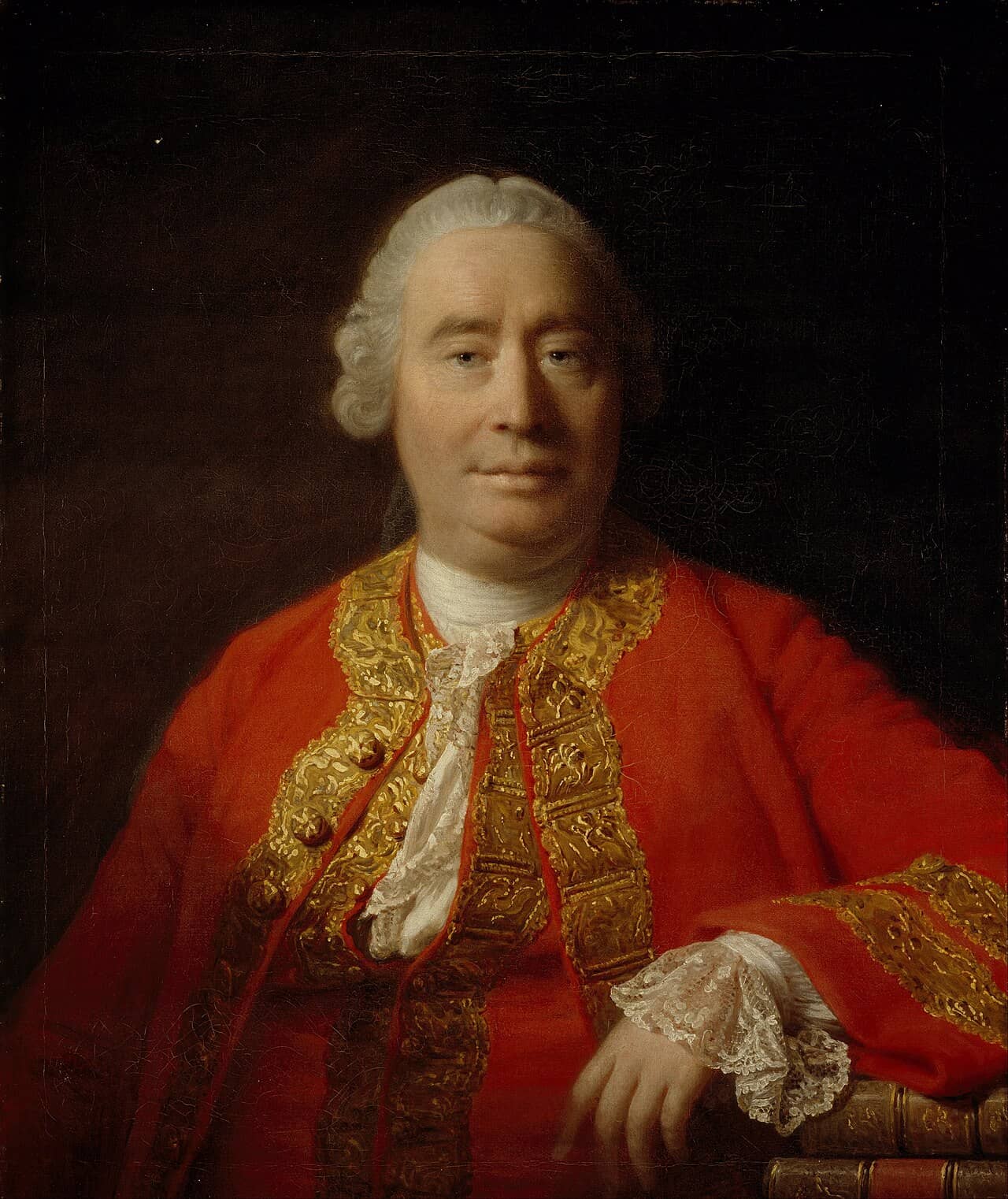
Adam Smith was baptised on 5 June 1723 at Kirkcaldy in Fife, the posthumous son of a customs official, and was raised by his mother, to whom he was devoted for her whole long life. He entered the University of Glasgow at fourteen, where Francis Hutcheson taught him moral philosophy, and went on to Balliol College, Oxford, on a scholarship, which he found so intellectually dead that he later used it as an example of what happens to institutions whose income does not depend on their performance. Back in Scotland he became professor of logic and then of moral philosophy at Glasgow, published The Theory of Moral Sentiments in 1759, and in 1764 left the chair to tutor the young Duke of Buccleuch on a European tour - which paid him a pension for life and put him in Paris among Quesnay's physiocrats, Voltaire and Franklin. He then spent roughly a decade largely at his mother's house in Kirkcaldy writing The Wealth of Nations, published in 1776. He spent his last twelve years as a Commissioner of Customs, enforcing the tariffs he had argued against. Michael Hart ranked him 30th in The 100.
Influence Meter
84
Measured on a 100-point scale
Founded economics as a discipline, and framed the argument about markets still being had
1759
The Book That Came First
Smith regarded himself as a moral philosopher, and The Theory of Moral Sentiments is the work he revised most - a sixth edition appeared in the year he died. Its opening premise is the opposite of the one usually attributed to him: however selfish man may be supposed, there are evidently principles in his nature which interest him in the fortune of others. Morality, on this account, comes from sympathy in the eighteenth-century sense - the capacity to imagine oneself in another's position - and from the internal figure Smith called the impartial spectator, the disinterested observer whose judgement we consult when deciding whether our own conduct is defensible. It made his reputation across Europe and it is why the Duke of Buccleuch's family wanted him as a tutor. Reading it alongside The Wealth of Nations is what makes the second book intelligible.
1776
The Pin Factory
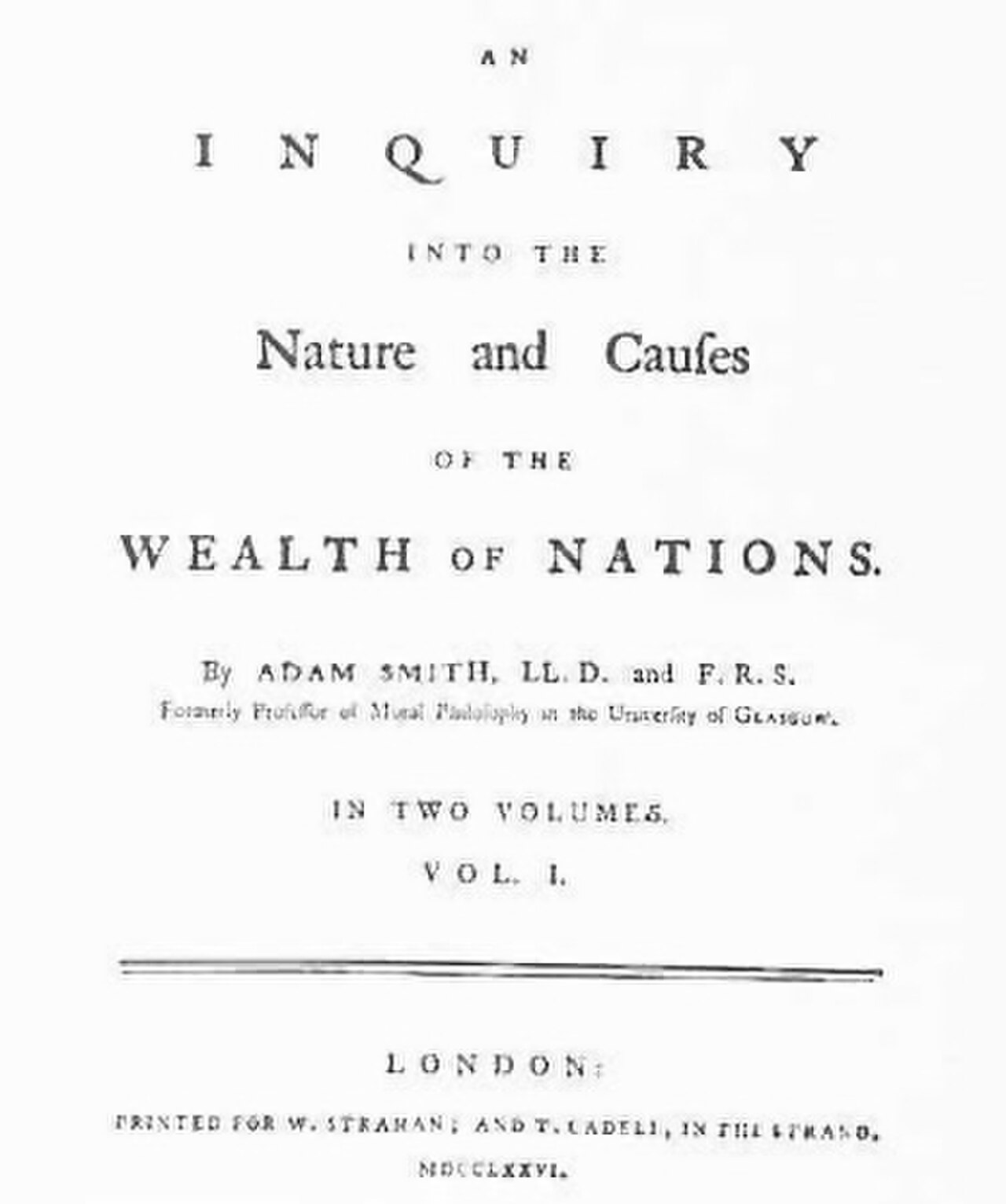
The Wealth of Nations opens not with theory but with a workshop. A single workman untrained in the trade, Smith writes, could scarcely make one pin in a day and certainly not twenty; but the business is divided into about eighteen distinct operations - one man draws out the wire, another straightens it, a third cuts it, a fourth points it - and ten men working this way produced upwards of forty-eight thousand pins in a day. Specialisation raises output by a factor of hundreds, through three mechanisms he names: greater dexterity from repetition, time saved by not switching tasks, and the tendency of a man doing one job to invent a machine that does it faster.
The consequence he draws is the important part. If productivity depends on specialisation, and specialisation depends on being able to sell what you make to people who do other things, then the wealth of a nation is limited by the extent of its market. That single chain of reasoning is the case for trade, for infrastructure, for cities, and against the tariffs and monopolies that were the settled policy of every European government in 1776. It also made the book unsettling reading for the East India Company, whose chartered monopoly Smith attacked at length.
TL;DR
What he actually argued
Smith is quoted more than he is read, usually in defence of positions his own text qualifies or contradicts.
! Why This Matters:
- • The mechanism: Prices set by competition coordinate millions of separate decisions without anyone planning the outcome.
- • The motive: We get dinner not from the benevolence of the butcher and baker but from their regard to their own interest - a description of how it works, not a moral endorsement.
- • The target: Mercantilism: the belief that a nation prospers by hoarding gold and restricting imports. Smith argued that wealth is what a nation produces, not what it stockpiles.
- • The qualifications: He supported public education, infrastructure, banking regulation, progressive taxation and limits on employers, and warned that businessmen conspire against the public whenever they meet.
? Key Data:
- • Times he wrote 'invisible hand': Three, across all his works
- • Years between his two books: 17
- • First edition of Wealth of Nations: Sold out in six months
- • Hart's rank: 30th of 100
Continue reading below for the full detailed article →
The Famous Phrase
Three Words, Used Three Times
The invisible hand appears once in The Theory of Moral Sentiments, once in The Wealth of Nations and once in an essay on astronomy - three times in a corpus of well over a million words - and in the economic case it is a passing remark about why merchants tend to invest at home rather than abroad. It has since been promoted into the organising metaphor of an entire ideology. What Smith actually argued at length is narrower and better evidenced: that in competitive conditions, self-interested exchange tends to allocate resources more efficiently than a government official directing them, because the official cannot possibly hold the information the price system aggregates. He was equally clear that the conditions often fail. Merchants, he wrote, seldom meet even for merriment without the conversation ending in a conspiracy against the public, and any commercial proposal coming from that quarter should be examined with suspicion.
Smith assigned the state three duties - defence, justice, and the provision of public works and institutions that no private individual could profitably supply - and the third is a wider opening than the phrase suggests. Under it he argued for publicly funded elementary education, on the ground that the division of labour makes a workman performing one operation all his life as stupid and ignorant as it is possible for a human creature to become; for roads, bridges and harbours; for banking regulation, which he compared to the legal requirement to build a party wall against fire; and for taxation in proportion to ability to pay. He also thought landlords' rents a fair target and disliked the idea of the wealthy escaping their share. None of that fits comfortably into the use later made of his name.
What the Book Established
The Wealth of Nations is not the first work on economic questions, but it is the one that turned them into a subject with a structure rather than a series of policy pamphlets.
- That an economy is a system: Prices, wages, rents and profits are connected quantities that move in response to one another, so an intervention in one place has consequences elsewhere that can be reasoned about.
- That labour is the source of value: Wealth consists in what a nation's labour produces annually, not in the gold it holds - which reframed the aim of policy from accumulation to production.
- That specialisation drives growth: The division of labour, limited by the size of the market, is the engine of rising productivity and therefore of rising living standards.
- That trade is not a zero-sum contest: If a foreign country can supply a commodity cheaper than we can make it, better to buy it and employ ourselves in what we do best - the argument later formalised as comparative advantage.
- That monopoly is the real enemy: His attack is aimed less at government as such than at chartered companies, guilds, apprenticeship restrictions and the merchants who lobby for them.
- That self-interest needs a moral frame: Read with the earlier book, exchange operates inside a society of people already restrained by sympathy and the impartial spectator. Detaching one book from the other is what produces the caricature.
The Person
Six Things About Adam Smith
He left instructions for most of his manuscripts to be burned, so the record of him is thinner than his fame suggests.
He never married
He lived with his mother Margaret Douglas for most of his life; she died in 1784 and he was reported inconsolable. His cousin Janet Douglas kept house for him afterwards.
- Household: Mother and cousin
He was famously absent-minded
Contemporaries collected the stories: brewing tea from bread and butter and pronouncing it the worst he had tasted, walking miles in a dressing gown while thinking, addressing imaginary opponents aloud in the street.
- Reputation: Abstracted to a fault
He had his papers burned
Days before his death he had friends destroy sixteen volumes of manuscript, including a projected work on law and government. What survives of his lectures comes from students' notes found in the twentieth century.
- Destroyed: 16 volumes
He became a customs official
Appointed Commissioner of Customs for Scotland in 1778, spending his last years administering the tariff system his book had attacked - and, by his own account, discovering how much smuggling the system generated.
- Years: 1778-1790
He gave away most of his income
Friends found after his death that his charitable giving had been large and concealed, which is why an estate that should have been substantial was not.
- Discovered: After his death
He is on the twenty-pound note
He appeared on the Bank of England twenty from 2007, the first Scot on a Bank of England note, illustrated with the pin factory.
- From: 2007
The Adam Smith Problem
Two Books, One Author
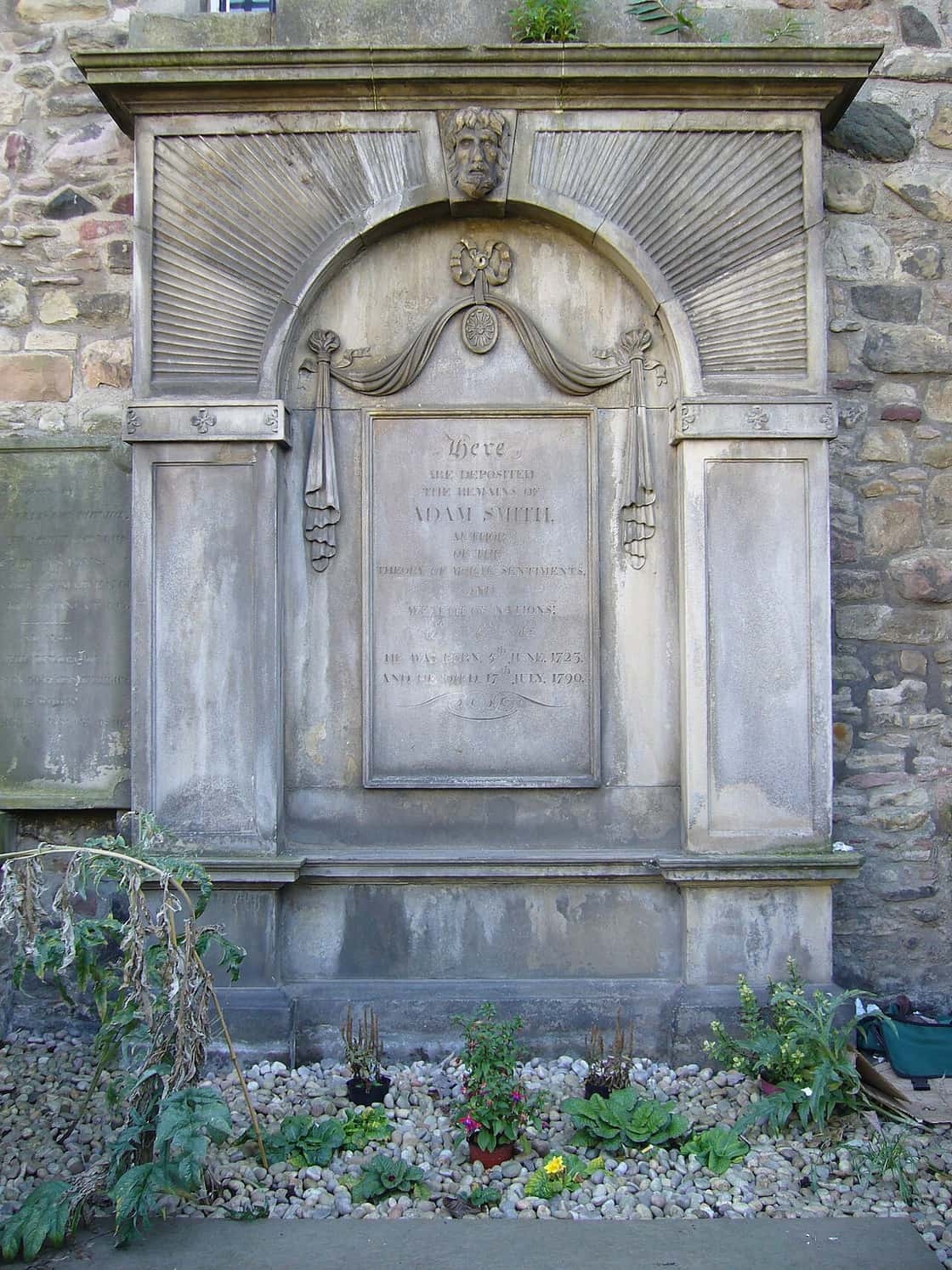
Nineteenth-century German scholars named a supposed contradiction Das Adam Smith Problem: the philosopher of sympathy in 1759 and the analyst of self-interest in 1776 appeared to be two different men. The problem largely dissolved once it was noticed that Smith revised The Theory of Moral Sentiments substantially after writing The Wealth of Nations and evidently saw no conflict, and that the student lecture notes discovered in 1895 and 1958 show both arguments developing together in the same course. The modern reading is that they are halves of one project: an account of how a commercial society holds together, in which markets do the coordinating and moral sentiment supplies the restraint without which the coordination would not survive contact with human beings. He was buried in the Canongate Kirkyard in Edinburgh under a plain stone he specified himself.
Written Works
Books by Adam Smith
Two books published in his lifetime, and two reconstructed from students' notes long after his death.
Further Reading
Books About Adam Smith
Recent scholarship has been largely occupied with recovering the moral philosopher from the free-market mascot.
Adam Smith: An Enlightened Life
The standard modern biography, which places him inside the Scottish Enlightenment and treats the two books as one continuous project.
- Published: 2010
Adam Smith: What He Thought, and Why It Matters
A readable corrective aimed at general readers, arguing that both left and right have misread him and setting out what the texts actually say.
- Published: 2018
The Life of Adam Smith
The scholarly life, thorough on the documents that survive and careful about the enormous gaps left by the burned manuscripts.
- Published: 1995
Legacy
Why Number Thirty
Michael Hart ranked Smith 30th, and the case rests on the founding of a discipline rather than on the correctness of any particular claim. Almost every major economist since has begun by arguing with him: Ricardo refined the trade argument into comparative advantage, Marx built his critique on the labour theory of value Smith had used, Keynes attacked the assumption that markets clear on their own. The framework in which those arguments happen - production, distribution, capital, growth, the effect of policy on incentives - is the one The Wealth of Nations laid out.
The practical influence runs through nineteenth-century British trade policy, the repeal of the Corn Laws, and the long post-war project of lowering tariffs that shaped the world economy after 1945. The irony that attends his reputation is worth stating plainly. Smith distrusted merchants, wanted the state to educate the poor, thought landlords idle and monopolists dangerous, and reserved his sharpest language for businessmen lobbying for privilege. He has nonetheless been adopted as the patron of positions he did not hold, by people quoting a phrase he used three times.
Related Publications