Orville and Wilbur Wright

Orville and Wilbur Wright
Born Wilbur 16 April 1867; Orville 19 August 1871 • Died Wilbur 30 May 1912; Orville 30 January 1948
In 1903 the problem of flight was being worked on by well-funded men with government grants, university positions and steam-powered launching catapults. It was solved instead by two brothers from Dayton, Ohio, who had no education beyond high school, no external funding, and a bicycle shop whose profits paid for everything. They succeeded because they identified the right problem. Everyone else was chasing lift and engine power. The Wrights concluded that the machine which mattered was the one a pilot could steer, and set out to learn to fly before they had anything with an engine in it.
Rank
#28
Influence
81
Field
Inventors and Aviation Pioneers
Historical Perspective
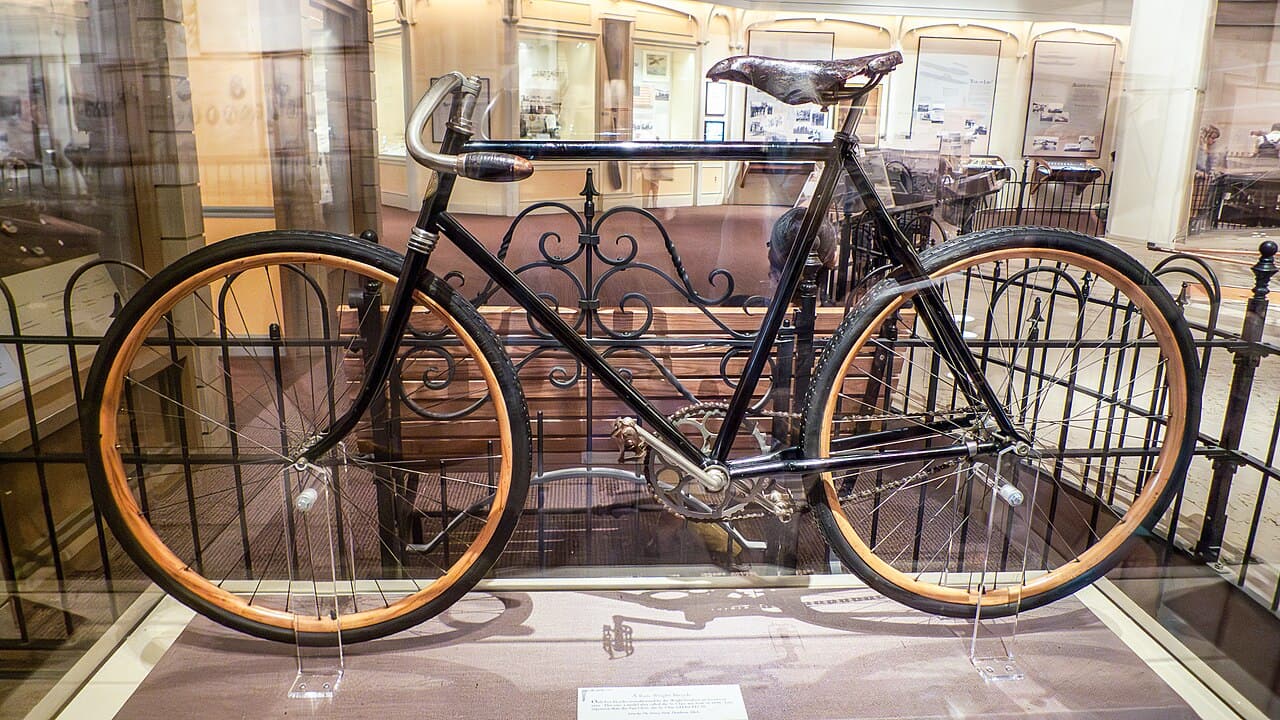
Wilbur Wright was born on 16 April 1867 near Millville, Indiana, and Orville on 19 August 1871 in Dayton, Ohio, the sons of a bishop of the United Brethren Church whose household encouraged argument and curiosity. Neither finished a diploma. They ran a printing business from 1889, then opened a bicycle shop in December 1892 and began building their own machines in 1896 - a trade that turned out to be the ideal apprenticeship, since a bicycle is an unstable vehicle that a rider controls by balance rather than a stable one that resists disturbance. The death of the German glider pioneer Otto Lilienthal in 1896 turned their interest serious. Between 1899 and 1902 they built a kite and three gliders, tested them in the winds at Kill Devil Hills near Kitty Hawk, North Carolina, discovered that the published lift tables everyone relied on were wrong, and built a wind tunnel to produce their own. On 17 December 1903 they flew a powered machine four times. Michael Hart ranked them 28th in The 100.
Influence Meter
81
Measured on a 100-point scale
Solved controlled flight, and compressed the distance between any two points on Earth
1892-1899
Why It Had to Be Bicycle Makers
The Wright Cycle Company gave them three things no rival had together. It gave them money - a good bicycle shop in the 1890s boom was profitable, and they never took a grant or an investor. It gave them a machine shop and a mechanic, Charlie Taylor, who would later build their engine in six weeks when no manufacturer would supply one light enough. And it gave them the correct mental model. Contemporaries designing aircraft sought inherent stability, a machine that would right itself like a boat; the Wrights, who sold vehicles that fall over unless actively balanced, assumed from the start that a flying machine would be unstable and that the pilot's job was to control it continuously. That assumption is the whole difference, and it is why modern aircraft are flown rather than merely launched.
1899-1901
Three Problems, and Only One of Them Unsolved
Wilbur's analysis, set out in a letter to the Smithsonian in 1899, was that flight had three requirements: wings that generate lift, an engine to drive them, and a means of balancing and steering the machine in the air. The first two, he judged, were essentially solved - lifting surfaces had been demonstrated by Lilienthal and others, and internal combustion engines were improving yearly. The third had barely been addressed, and it was the one that killed people. Lilienthal had made some two thousand glides controlling them by swinging his own body weight, and died in 1896 when a gust exceeded what shifting his hips could correct.
The Wrights' answer came from watching buzzards adjust their wingtips, and from idly twisting an empty bicycle inner-tube box in the shop. If the two ends of a wing could be given opposite twists, one would gain lift and the other lose it, rolling the machine deliberately. They called it wing-warping, tested it on a five-foot biplane kite in July 1899, and it worked. Combined with a forward elevator for pitch and, from 1902, a movable rear rudder linked to the warping to counter the resulting yaw, it became three-axis control - the system every aircraft flying today still uses, however it is actuated.
What They Actually Invented
Not the aeroplane. Gliders, wings, propellers and engines all existed. What did not exist was a way to fly one deliberately.
- Roll control by wing-warping: Twisting the wingtips in opposite directions to bank the machine on purpose. Ailerons do the same job today by a different mechanism, which is why the patent fights that followed were so bitter.
- Pitch control by a forward elevator: A movable surface ahead of the wings to raise or lower the nose. Placing it in front also meant a stall pitched the machine down gently rather than dropping it.
- Yaw control by a movable rudder: Added in 1902 after warping produced an unexpected adverse yaw. Linking rudder to warping made the first genuinely coordinated turn possible.
- All three at once, by one pilot: The real invention is the combination. Each axis alone is a control surface; together they are an aircraft that goes where it is pointed.
- Their own aerodynamic data: When the 1901 glider produced barely a third of the predicted lift, they concluded the published tables and the accepted Smeaton coefficient were wrong, and replaced them with measurements of their own.
- An efficient propeller: They realised a propeller is a rotating wing rather than a marine screw, and derived it from their own lift data. Their 1903 propellers were about 66 per cent efficient - a figure marine engineering had not approached.
October-December 1901
The Wind Tunnel That Rewrote the Numbers
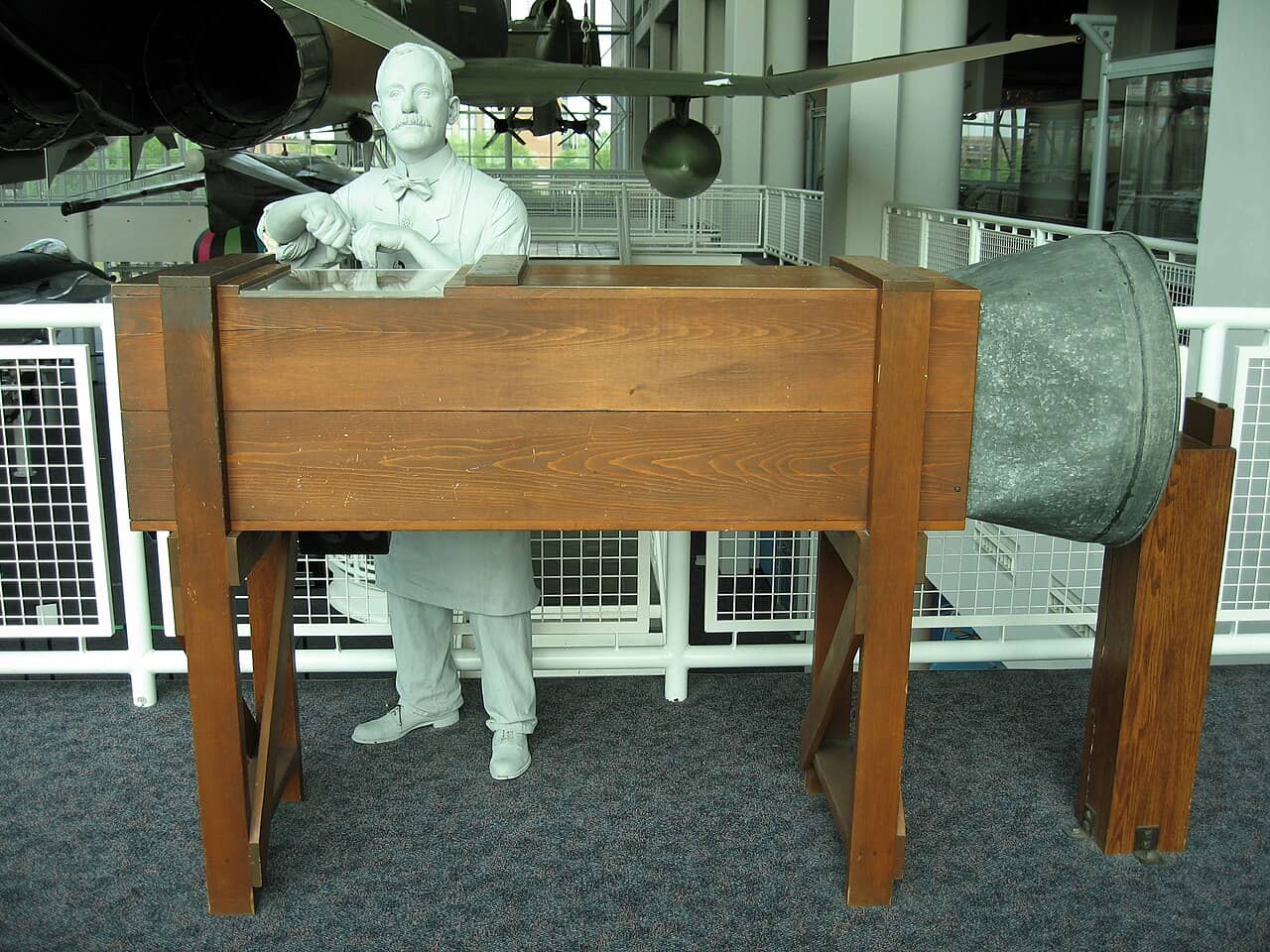
The 1901 glider was a disappointment: it generated roughly a third of the lift the standard equations promised, and Wilbur told Orville on the train home that man would not fly in a thousand years. Rather than abandoning the project or blaming their construction, they questioned the data - which had come down from Lilienthal and rested on a coefficient measured by John Smeaton in 1759. They built a six-foot wooden box with a fan at one end and a balance made from bicycle spokes and hacksaw blades inside, and over about two months tested some two hundred miniature wing shapes, recording lift and drag for each. They corrected Smeaton's coefficient from 0.0054 to roughly 0.0033 and produced the first reliable tables of aerofoil performance ever made. The 1902 glider built from that data flew as predicted, and made over a thousand glides. The wind tunnel, not the engine, is the piece of the story that turned flight from a gamble into engineering.
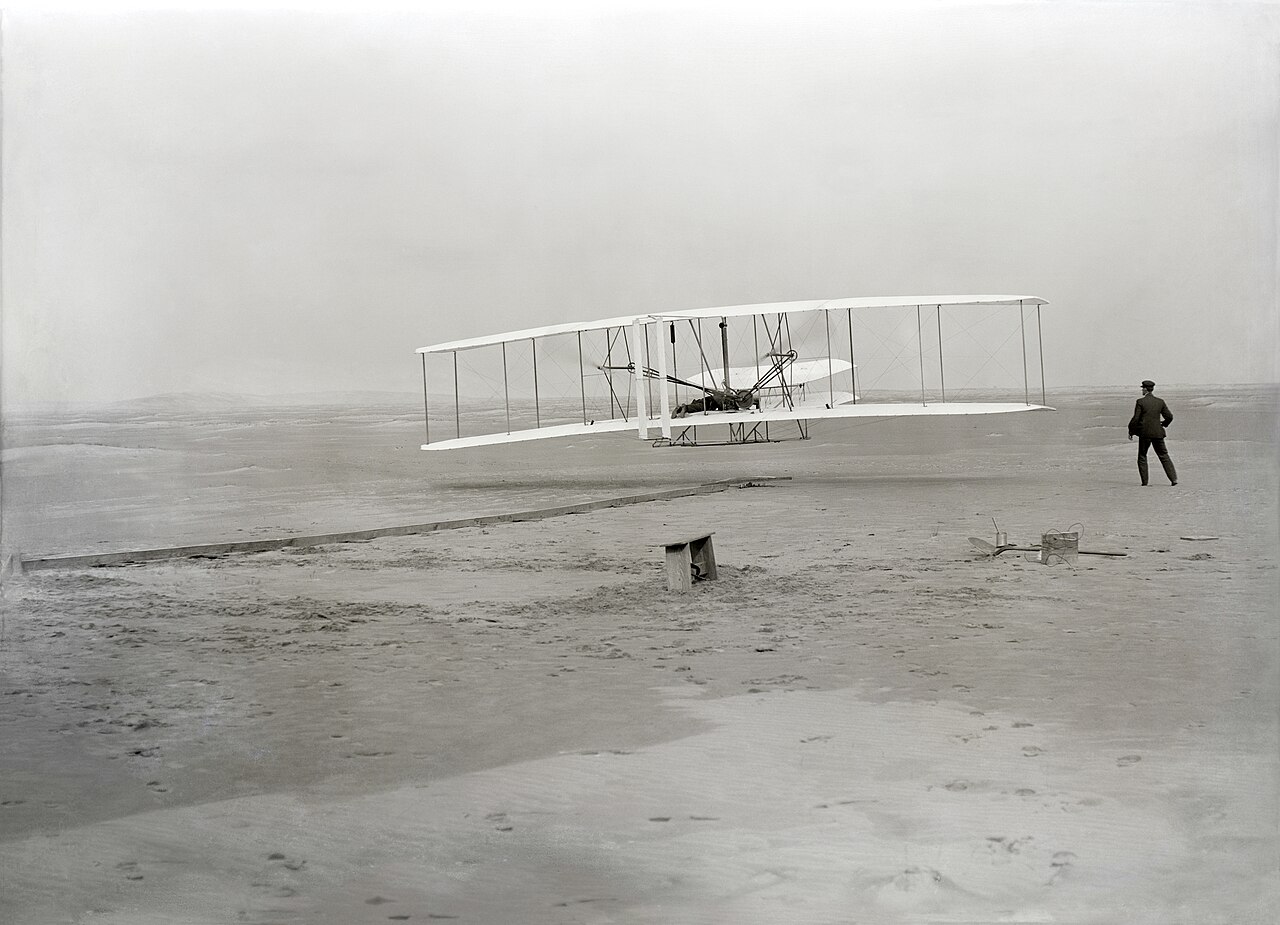
On 17 December 1903 at Kill Devil Hills, in a freezing 27 mph wind, the brothers flew four times. Orville went first, having won the toss, and covered 120 feet in 12 seconds - a distance shorter than the wingspan of a modern airliner. They alternated. Wilbur's fourth and final flight of the day covered 852 feet in 59 seconds. Five local men witnessed it, and John T. Daniels, who had never operated a camera, took the photograph that became one of the most reproduced images of the century. Hours later a gust overturned the Flyer on the ground and wrecked it; it never flew again. The brothers walked to the Kitty Hawk weather station and telegraphed their father to inform the press.
17 December 1903, and What Came Next
Seconds aloft on the first flight
Orville, 120 feet at about 10:35 in the morning, into a 27 mph headwind.
Fast fact signal
Seconds on the fourth and last
Wilbur covered 852 feet, more than seven times the first attempt, before a hard landing broke the elevator supports.
Fast fact signal
Witnesses present
Five local men from the lifesaving station and nearby, one of whom took the photograph having never used a camera.
Fast fact signal
Minutes aloft two years later
Wilbur flew 24.5 miles in 38 minutes at Huffman Prairie on 5 October 1905, circling a cow pasture until the fuel ran out.
Fast fact signal
Years to the first jet airliner
From Kill Devil Hills in 1903 to the de Havilland Comet entering service in 1952.
Fast fact signal
Chronology
Ground Run, Climb, Cruise
Drawn along a takeoff profile rather than a road, since the whole point was leaving the ground.
1904-1905
The Two Years Nobody Noticed
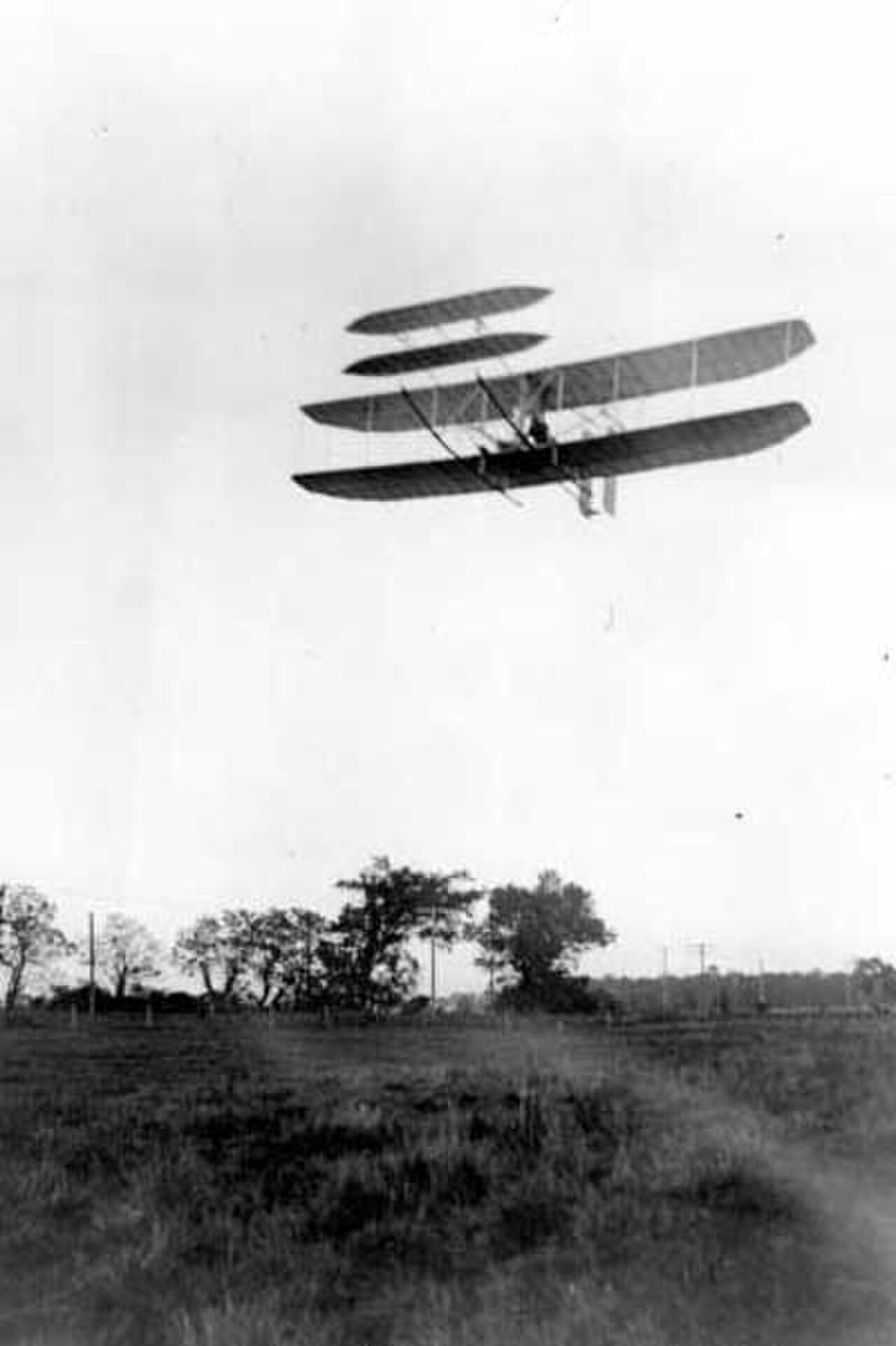
The popular story ends at Kitty Hawk, which misses the part where the aeroplane actually became useful. The 1903 Flyer could travel in a straight line into a strong headwind for under a minute. For the next two years the brothers worked at Huffman Prairie, a cow pasture outside Dayton, using a catapult derrick to launch in Ohio's lighter winds. Wilbur made the first full circle on 20 September 1904. The Flyer III of 1905 was the first practical aeroplane: on 5 October 1905 Wilbur flew 24.5 miles in 38 minutes and 3 seconds, thirty circuits of the field, landing only when the fuel ran out. Almost no one came to look. Reporters had been invited and largely stayed away; a nearby interurban railway carried passengers past the field while it was happening. The brothers then stopped flying entirely for two and a half years while they secured patents and negotiated contracts, which is why European experimenters were still publicly doubting them in 1906.
1908-1912
Vindication, a Death, and the Patent Wars
In August 1908 Wilbur began public flights at Le Mans in France, where opinion had settled on the brothers as bluffeurs. The first demonstration ended the argument: he banked, circled and landed with a precision no European machine could approach, and the aviator Ernest Archdeacon, who had mocked them in print, apologised publicly. Wilbur became a European celebrity within weeks. That September Orville was demonstrating for the US Army at Fort Myer when a propeller split, and the crash killed his passenger Lieutenant Thomas Selfridge - the first fatality in a powered aeroplane - and left Orville with injuries he felt for life. The brothers then spent years in litigation, chiefly against Glenn Curtiss, arguing that any lateral-control system infringed their patent. The suits were largely successful and widely thought to have held back American aviation, and they consumed Wilbur: he died of typhoid on 30 May 1912, aged forty-five, his father recording that a short life had been full of consequences. Orville sold the company in 1915 and lived until 1948, long enough to see aircraft bomb cities and break the sound barrier.
Further Reading
Books About the Wright Brothers
They published papers and gave evidence, but wrote no book. The primary record is their letters, diaries and notebooks.
Legacy
Why Number Twenty-Eight
Michael Hart ranked the brothers 28th, treating them as a single entry because the work is genuinely inseparable - they thought by arguing with each other, sometimes swapping sides mid-argument, and neither claimed a discovery independently. The objection usually raised is that flight was coming anyway: a dozen people were working on it and Europe would have got there within a decade. That is probably true, and it is true of most inventions. What the Wrights supplied was the correct answer to the right question at a moment when everyone else was answering a different one, and a method - measure it yourself, do not trust the tables, build the smallest thing that tests the idea - that reads as modern engineering practice a century before it was formalised.
The consequences are hard to overstate and easy to overlook because they are so ordinary. Within fifty years of a 12-second flight over sand, aircraft were carrying passengers between continents as routine transport; within sixty-six they had put men on the Moon, and Neil Armstrong, an Ohioan, carried a piece of fabric from the 1903 Flyer's wing with him. Another fragment flew on the Ingenuity helicopter on Mars in 2021. Meanwhile aerial bombing changed what war does to civilians, and mass air travel changed migration, trade, disease and holidays. Two bicycle mechanics with a high-school education and no funding produced all of it, in about four years of spare time.
Related Publications