Genghis Khan

Genghis Khan
Born c. 1162 • Died August 1227
Temujin was perhaps nine when his father was poisoned and his clan abandoned the family on the steppe to die. He survived on roots and fish, was enslaved by a rival tribe, escaped, and spent twenty years assembling alliances among people who had been raiding one another for centuries. By 1206 he had made them one nation; by his death in 1227 that nation had taken northern China and destroyed the richest empire in the Islamic world. His grandsons ruled from Korea to Hungary. No one has ever conquered more.
Rank
#29
Influence
85
Field
Ruler and Military Commander
Historical Perspective
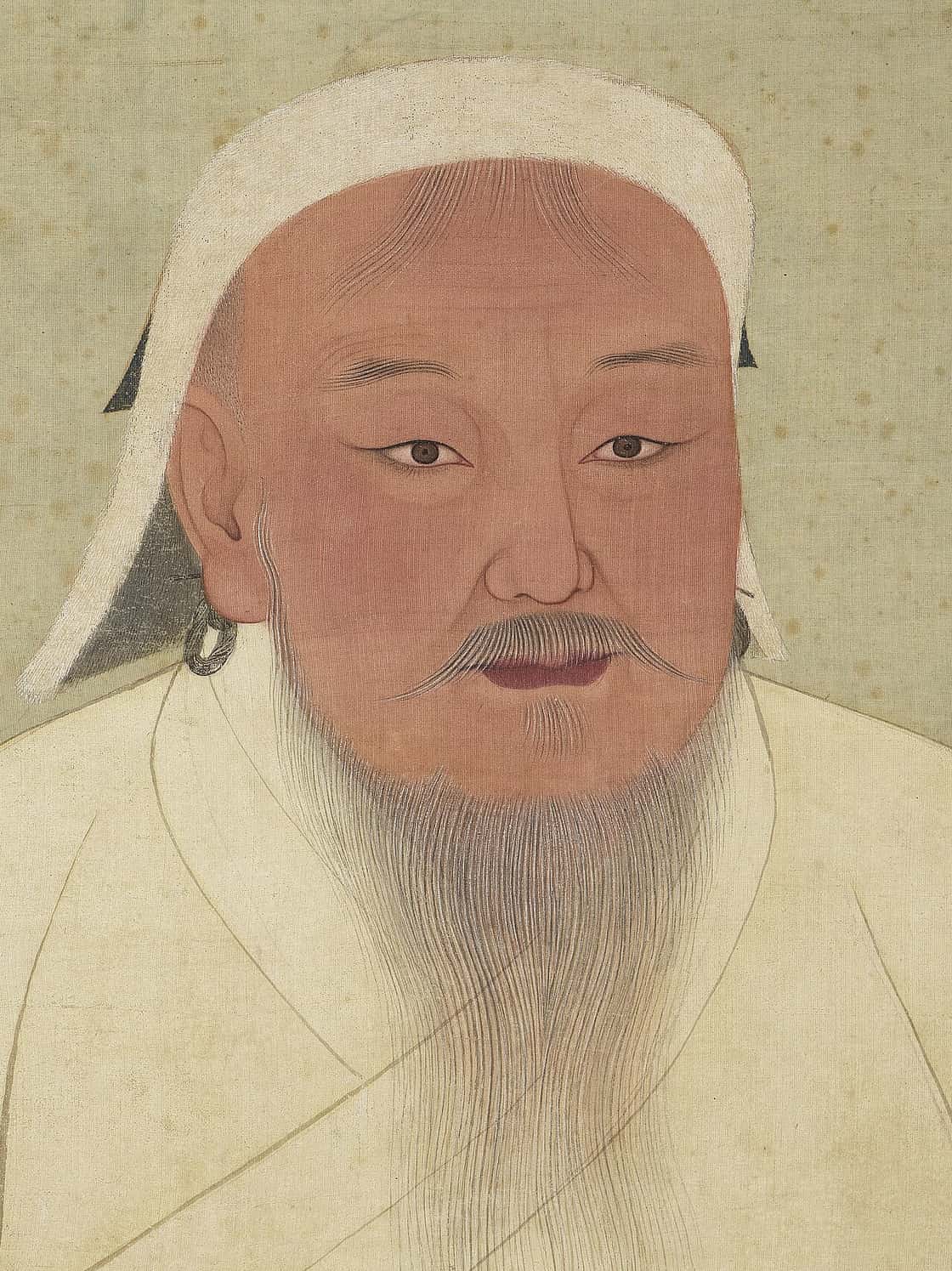
Genghis Khan was born Temujin, probably around 1162, near the Onon River in what is now Mongolia, and his early life is a catalogue of disaster: his father Yesugei was poisoned by Tatars when the boy was about nine, his clan cast the widow and children out, and he spent his adolescence in poverty and at one point in a captor's wooden collar. He killed his own half-brother in a dispute over food and rank. What followed was two decades of steppe politics conducted by war - defeat by his blood-brother Jamukha, alliance with and then destruction of Toghrul of the Kereit in 1203, the defeat of the Naimans in 1204 - until in 1206 a kurultai of the assembled Mongol tribes proclaimed him Genghis Khan. He then turned outward: Western Xia from 1209, the Jin dynasty from 1211 with Zhongdu falling in 1215, and from 1219 the Khwarazmian Empire, which he annihilated after its governor executed his envoys. He died in August 1227 campaigning against Western Xia, and was buried in an unmarked grave. Michael Hart ranked him 29th in The 100.
Influence Meter
85
Measured on a 100-point scale
The largest contiguous land empire ever built, and the Eurasian exchange that followed it
c. 1162-1206
A Childhood Designed to Kill Him
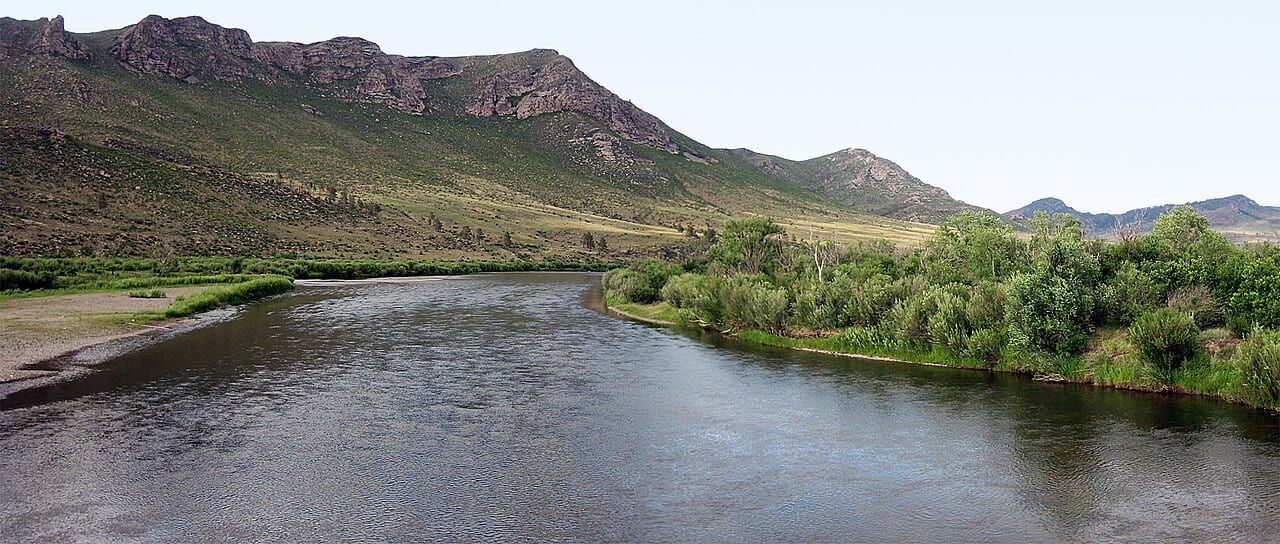
The Mongol steppe of Temujin's boyhood was not a nation but a scatter of feuding confederations - Merkit, Tatar, Kereit, Naiman, Mongol - who raided each other for livestock, women and revenge in cycles that never closed. Status was inherited and fragile. When Yesugei was poisoned at a Tatar feast, his followers took the herds and rode away, leaving his two widows and seven children on open grassland, which under steppe conditions was a death sentence. They survived. Temujin was later captured by the Tayichiud and held in a cangue, escaping with help from a sympathetic family, and when Merkit raiders took his wife Borte he assembled his first coalition to get her back. Every element of his later method is visible in those years: he valued loyalty over blood, he never forgot a debt in either direction, and he had learned exactly how little birth was worth.
1206
He Abolished the Tribes
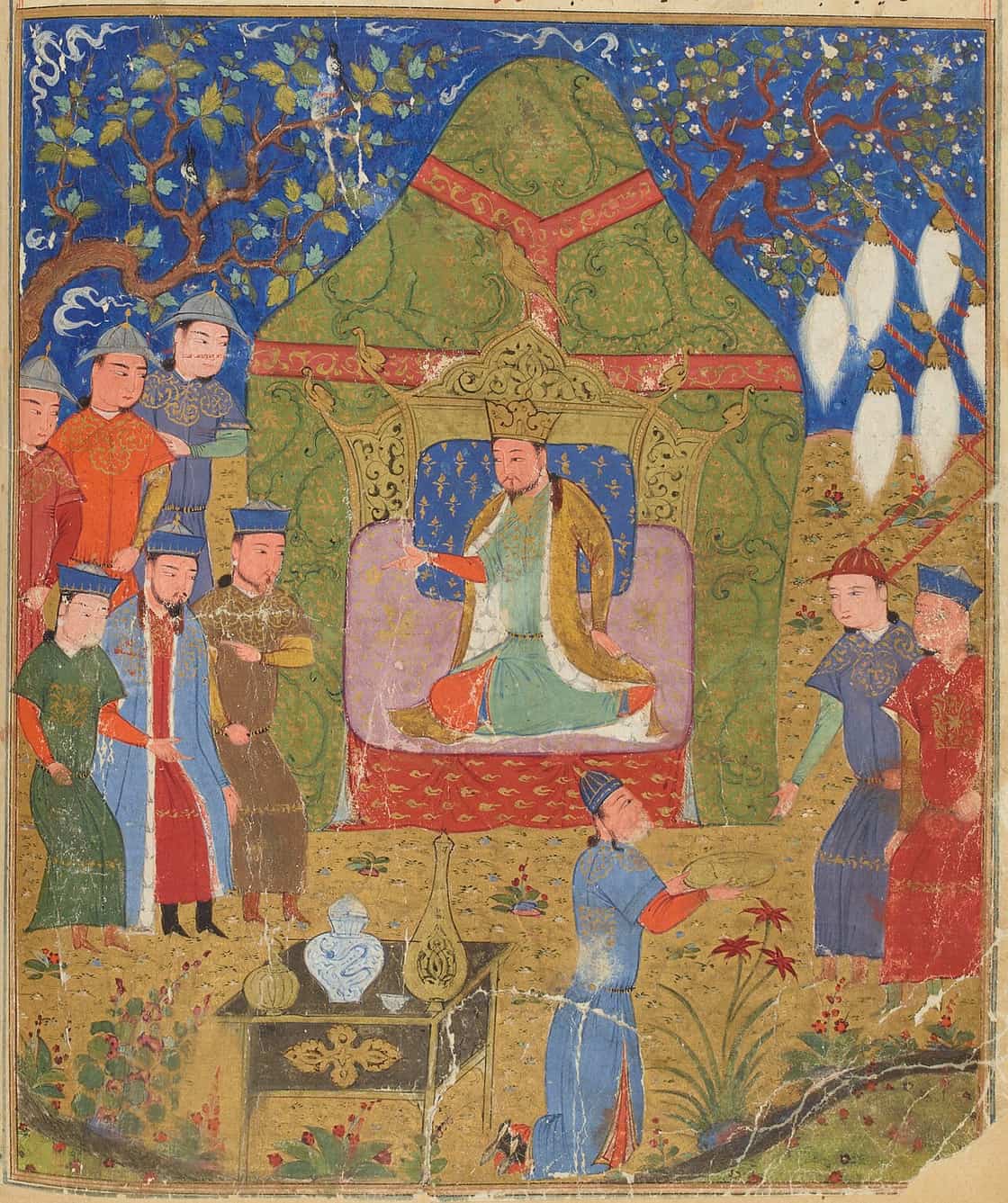
The most radical thing Genghis Khan did was not a conquest. At the kurultai of 1206 he took the nation he had assembled and dismantled the structure it had always had. Men were assigned to units of ten, hundred, thousand and ten thousand, deliberately mixing tribes so that a soldier's loyalty ran to his unit and ultimately to the Khan rather than to his clan. Deserting your ten was punished by death for all ten. He expanded his personal guard, the keshig, from about a thousand to ten thousand, and staffed it with the sons of commanders - part elite corps, part officer academy, part hostage system.
Promotion followed ability. Subutai, who became arguably the finest general of the age and campaigned from Korea to Hungary, was the son of a blacksmith. Jebe had been an enemy archer who shot Temujin's horse from under him and, when challenged afterwards, admitted it; he was given a command and a new name meaning arrow. Foreigners were used freely - Chinese siege engineers, Muslim administrators, Uighur scribes who supplied the script the Mongols had lacked. Set against the hereditary aristocracies of every settled society the Mongols met, this was an enormous practical advantage, and it is the mechanism behind the speed of the conquests.
The scale of killing is not a later exaggeration, though the numbers are unreliable. Cities that resisted after being offered terms were made examples of: Nishapur, Merv, Urgench and Herat were destroyed with slaughters that contemporary chroniclers put in the hundreds of thousands each, figures modern historians regard as inflated but not fictional. Estimates of total deaths from the Mongol conquests range from about eleven million to forty million or more, in a thirteenth-century world of perhaps four hundred million people. The terror was deliberate policy rather than loss of control: a city that surrendered was taxed and left standing, and word of what happened to those that did not was allowed - and helped - to travel ahead of the army.
Chronology
From Abandoned Child to Universal Ruler
Drawn as a climb, which is the plainest description of the trajectory.
1219-1221
The War That Began With a Caravan
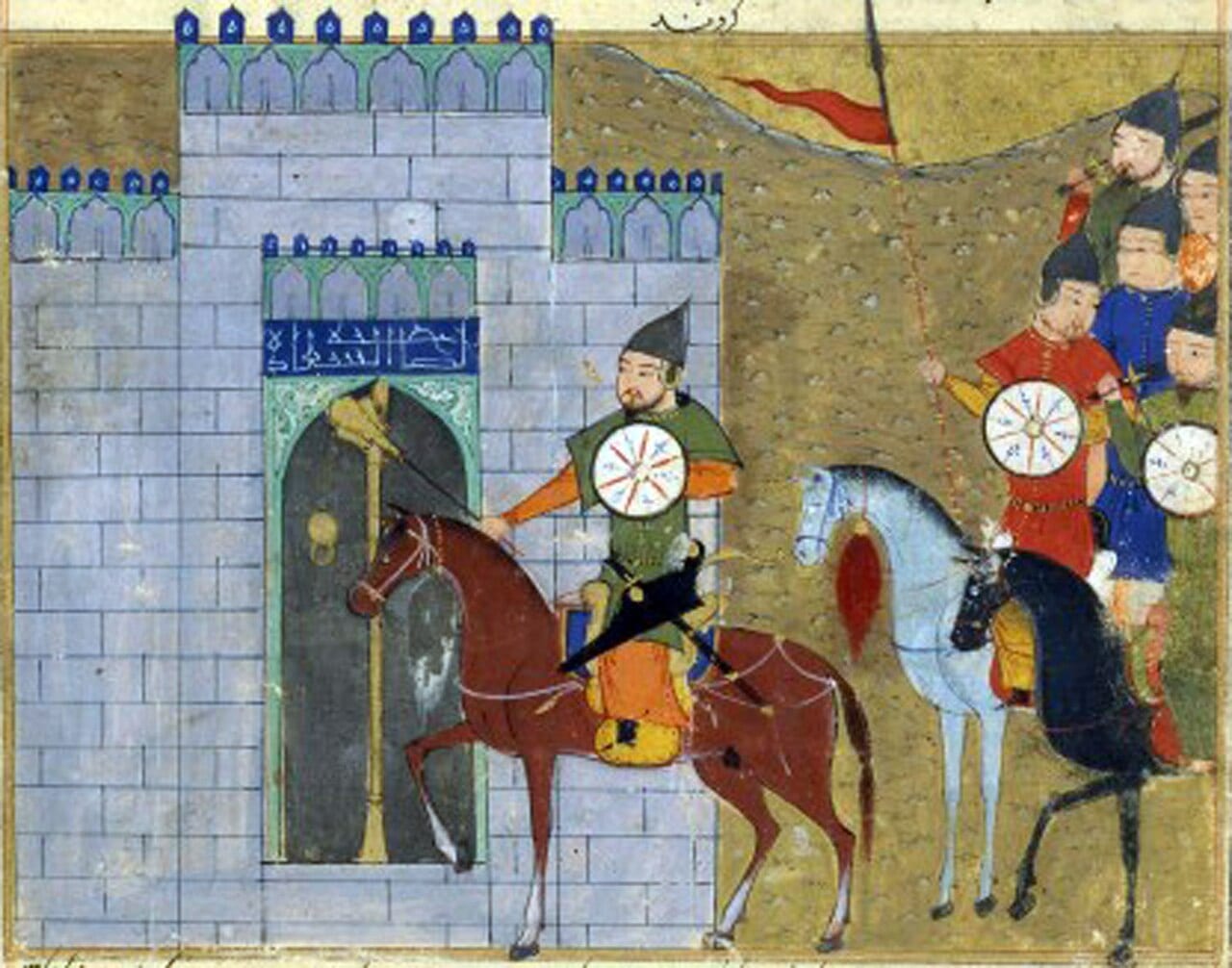
Genghis Khan's first approach to the Khwarazmian Empire, which stretched across Persia and Central Asia and was far richer than Mongolia, was a trade proposal. He sent a caravan of some four hundred and fifty merchants; the governor of Otrar seized the goods and killed them as spies. Genghis sent three envoys to demand redress. The Shah had one executed and the others' beards burned. What followed was one of the most complete destructions of a state in recorded history: within two years Bukhara, Samarkand, Otrar, Urgench, Merv and Nishapur had fallen, the irrigation systems of Khorasan that had supported agriculture for centuries were wrecked, and the Shah died a fugitive on an island in the Caspian. Persian historiography has never entirely absorbed it. The region's population and cultivated area took centuries to recover, and some of it never did.
What Actually Made the Mongols Unbeatable
Not numbers. Mongol armies were usually smaller than the ones they destroyed, often by a wide margin.
- Every soldier was mounted, with remounts: A Mongol trooper travelled with several horses and could cover ground at a rate settled armies could not credit, arriving where he was not expected and outmarching pursuit.
- The composite bow: A laminated bow of horn, wood and sinew that could be drawn from the saddle and outranged most infantry weapons of the day, used at the gallop by men who had shot since childhood.
- Discipline replacing courage: Manoeuvres were executed by signal flags and drums, including the feigned retreat that broke so many pursuing armies - a tactic that requires trust and drill rather than bravery.
- Bought expertise: Nomads cannot besiege cities, so Genghis took Chinese and Persian engineers and put them to work. Within a decade the Mongols had trebuchets, naphtha and the ability to divert rivers into a city's walls.
- Intelligence before invasion: Merchants and scouts were used systematically, so campaigns began with maps, road knowledge and an assessment of local grievances that could be exploited.
- Terror used as an instrument: Surrender was survivable and resistance was not, publicised deliberately so that later cities would calculate accordingly. Many did.
Governance
The Empire Behind the Cavalry
Conquest is the part everyone remembers. What made it stick for a century and a half was administration his successors inherited from him.
The Yasa
A written legal code, unusual on the steppe, covering theft, military obligation, hunting, water and the succession. Its full text does not survive, but its authority did - it was cited across the empire long after his death.
- Status: Text lost, effect documented
Religious tolerance
Clergy of every faith were exempted from taxation and the Khan's own court held Buddhists, Muslims, Nestorian Christians and shamans. This was pragmatism rather than principle, and it bought the cooperation of populations that would otherwise have fought on.
- Exempted: Clergy of all faiths
The yam
A relay network of posting stations a day's ride apart, supplying fresh horses, food and shelter to riders bearing an official tablet. Messages crossed the empire at speeds Europe would not match until the railway.
- Speed: Reportedly 200 miles a day
A written script
The Mongols had no writing. Genghis had the Uighur alphabet adapted to Mongolian and ordered his sons taught it, which is why the empire could keep records and issue orders at all.
- Adapted from: Uighur
Protected trade
Merchants were given legal protection and the routes across Central Asia were policed, producing the conditions later called the Pax Mongolica in which a traveller could cross Eurasia in relative safety.
- Result: Silk Road revival
Census and taxation
Conquered populations were counted and taxed at fixed rates rather than plundered repeatedly, a change that turned a raiding confederation into a state with an income.
- Change: From plunder to revenue
1227-1368
What the Grandsons Did With It
Genghis Khan divided the empire among his sons before his death, and the expansion continued for two generations. Ogedei, his third son and successor, completed the destruction of the Jin and sent Subutai and Batu west, where they wrecked the Rus principalities, took Kiev in 1240 and destroyed Hungarian and Polish armies in 1241 before withdrawing on news of Ogedei's death. Hulagu sacked Baghdad in 1258, ending the Abbasid Caliphate. Kublai completed the conquest of Song China and founded the Yuan dynasty. At its height the empire covered some twenty-four million square kilometres - roughly sixteen per cent of the world's land - and it remains the largest contiguous land empire in history, second overall only to the maritime British Empire. It then fractured along the lines of the original division, and the successor khanates converted to the religions and adopted the manners of the peoples they had conquered.
The Ledger
Destruction and Exchange, in the Same Column
The historiography has swung between Mongols as a natural disaster and Mongols as the makers of the first world system. Both accounts describe real things, and they are not reconcilable into a verdict.
| Central Asia and Persia | Cities razed, irrigation destroyed, populations killed or enslaved | A single administration from China to the Black Sea, and safe passage across it |
| Trade | Local economies destroyed in the campaigns | The Silk Road at its most active, with merchants such as the Polos able to reach China |
| Technology | Craftsmen deported from their cities to serve the Khan | Gunpowder, printing and the compass moving west; Persian astronomy and medicine moving east |
| Disease | Population collapse in the conquered regions | The same routes are thought to have carried the Black Death to Europe in the 1340s |
| Politics | The Abbasid Caliphate destroyed at Baghdad in 1258 | Russia shaped by two centuries of Mongol overlordship; the Yuan and later Qing patterns of rule in China |
Genghis Khan himself was responsible for the first two decades of this. Most of what is credited to the Mongol peace happened under his sons and grandsons, on foundations he laid.
Further Reading
Books About Genghis Khan
The oldest source is Mongol, anonymous and strange; the modern literature argues chiefly about the balance of the ledger above.
Legacy
Why Number Twenty-Nine
Michael Hart ranked Genghis Khan 29th, above Alexander and Napoleon, and the arithmetic is straightforward: he conquered more, held it longer, and left a state that outlived him rather than an empire that dissolved on his death. Alexander's broke apart within a few years; Napoleon's within his own lifetime. The Mongol empire went on expanding for two generations after 1227 and its successor states governed Persia, Russia and China for well over a century.
The genetic footnote is often quoted and worth stating carefully: a 2003 study found a Y-chromosome lineage carried by roughly eight per cent of men across a wide swathe of Asia, which the authors suggested might trace to Genghis Khan's family, though the attribution is inference rather than proof. What is not in doubt is the political afterlife. Russia's development was shaped by two centuries under the Golden Horde; China's Yuan dynasty set precedents the Ming and Qing inherited; and in Mongolia he is the founding father of the nation, on the banknotes and at the airport - a man remembered as a catastrophe across much of Eurasia and as a national origin at home.
Related Publications