Adolf Hitler

Adolf Hitler
Born 20 April 1889 • Died 30 April 1945
This profile is included because the list measures influence, not merit, and by that measure Adolf Hitler is among the most consequential individuals who ever lived. He was a failed painter and an army corporal who came to power legally, dismantled a democracy in a year and a half, started a war that killed tens of millions, and directed an industrial programme of murder against European Jewry. Nothing here is intended as anything other than a historical account of what he did and what it cost.
Rank
#39
Influence
88
Field
Dictator
Historical Perspective
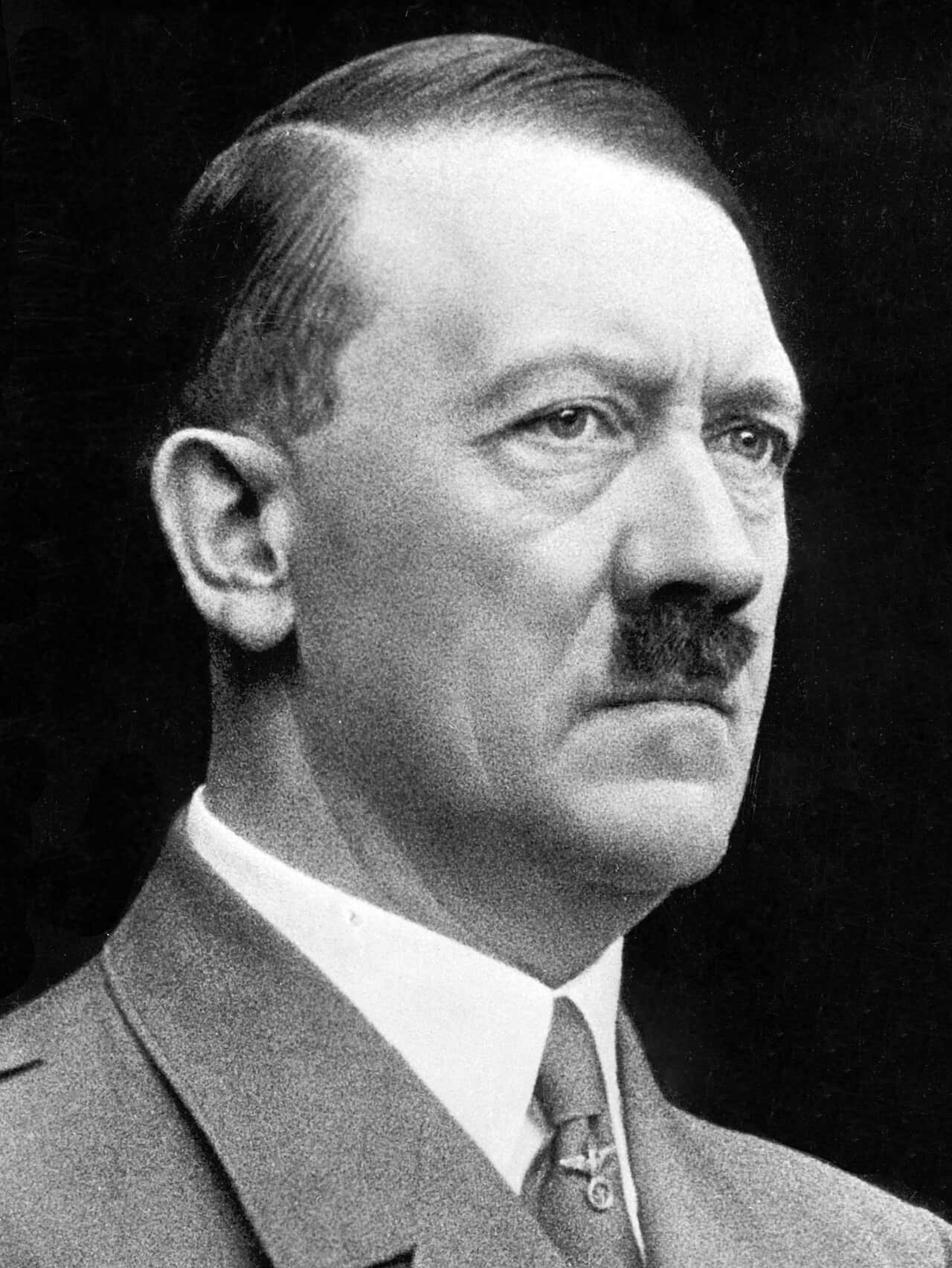
Adolf Hitler was born at Braunau am Inn in Austria-Hungary on 20 April 1889, the son of a customs official. He was twice rejected by the Vienna Academy of Fine Arts, in 1907 and 1908, and spent years in the city selling painted postcards and living for a period in a men's hostel. He volunteered for the Bavarian army in 1914, served as a dispatch runner on the Western Front, was wounded on the Somme and gassed in October 1918, and received the Iron Cross First Class. Defeat and the Versailles settlement supplied his politics. He joined the tiny German Workers' Party in September 1919, took it over, attempted a coup in Munich in November 1923, and served just over a year at Landsberg, where he dictated Mein Kampf. The Depression made a fringe party into the largest in the Reichstag, and on 30 January 1933 he was appointed Chancellor by conservatives who believed they could control him. Within two months the Enabling Act had ended parliamentary government. He invaded Poland on 1 September 1939 and the Soviet Union in June 1941, and killed himself in the Berlin bunker on 30 April 1945. Michael Hart ranked him 39th in The 100.
Influence Meter
88
Measured on a 100-point scale
A measure of consequence, not of merit: the war and the genocide reshaped the world
1930-1934
How a Democracy Was Ended in Eighteen Months
The Nazi Party polled 2.6 per cent in 1928 and was politically negligible. The Depression changed that: unemployment reached six million, the centre parties could not govern, and by July 1932 the Nazis were the largest party in the Reichstag with 37 per cent. They never won a majority in a free election. Hitler became Chancellor on 30 January 1933 not by victory but by appointment, through a backroom arrangement in which Franz von Papen and other conservatives calculated that they could use his popular support and contain him in a cabinet where they held most of the posts. It was among the worst political miscalculations on record.
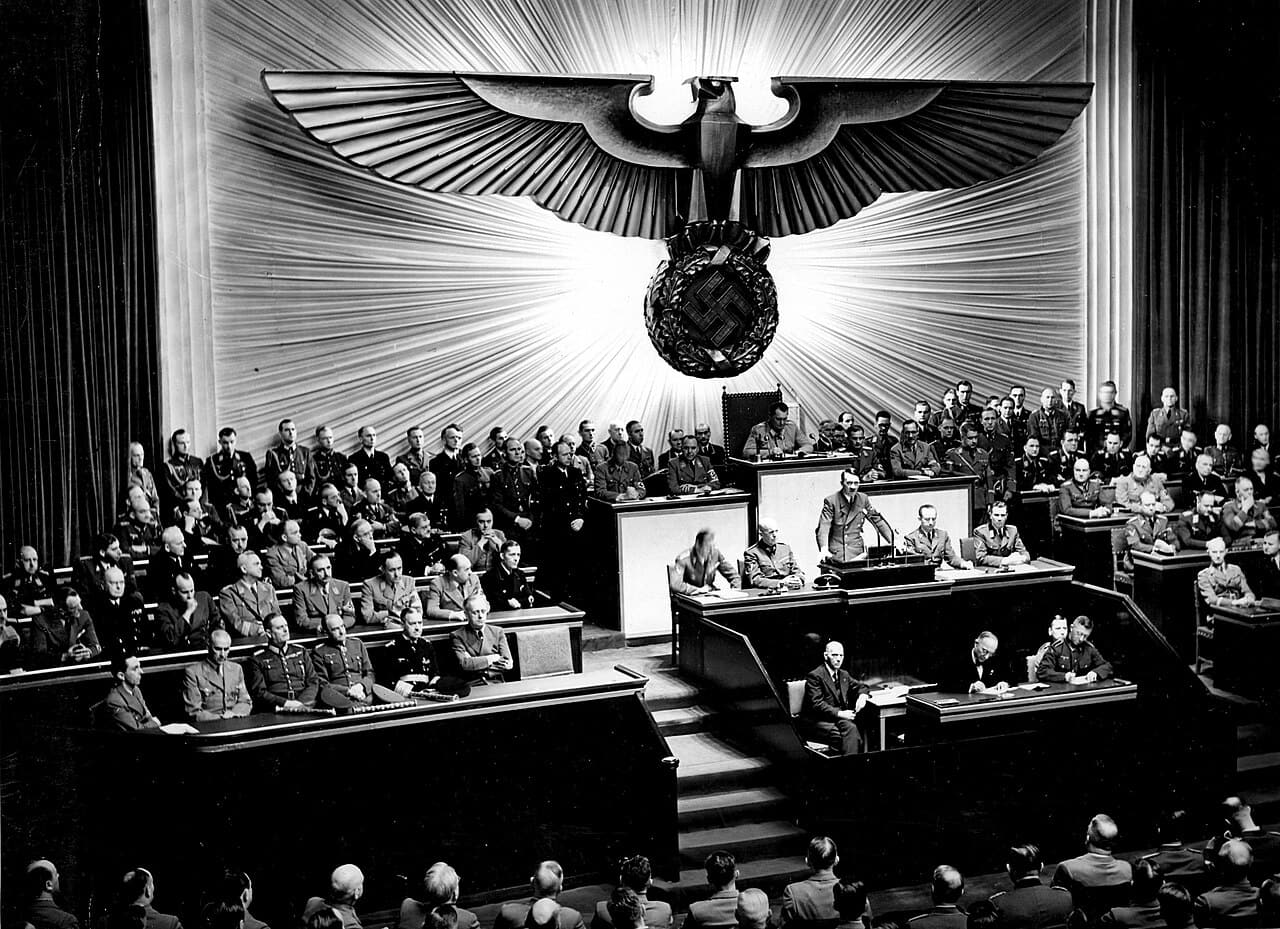
What followed was fast and largely legal in form. The Reichstag fire of 27 February provided the pretext for an emergency decree suspending civil liberties; the Enabling Act of 23 March, passed with the Communist deputies already arrested and the chamber ringed by SA men, let the cabinet legislate without parliament. Trade unions were dissolved in May, other parties banned by July, and the state governments brought under central control. In June 1934 the Night of the Long Knives destroyed the SA leadership and murdered conservative opponents, buying the army's loyalty. When President Hindenburg died on 2 August, Hitler merged the presidency with the chancellorship and the armed forces swore a personal oath to him. The republic had been dismantled in a year and a half.
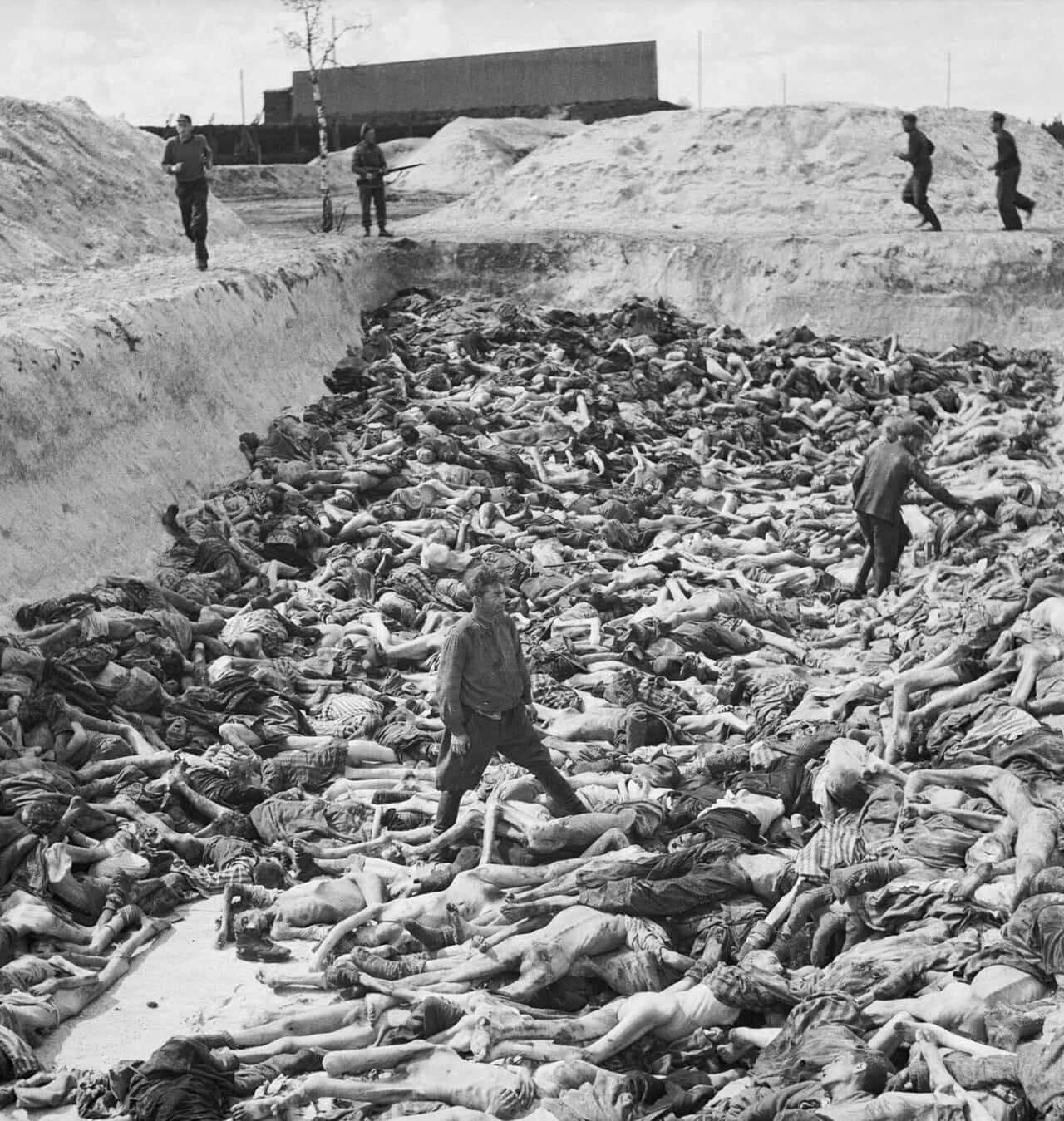
The Holocaust was the systematic, state-organised murder of approximately six million Jews - about two-thirds of the Jewish population of Europe - carried out between 1941 and 1945 by Nazi Germany and its collaborators. It began with mass shootings by Einsatzgruppen behind the Eastern Front, which killed well over a million people, and moved to extermination camps built for the purpose, of which Auschwitz-Birkenau, Treblinka, Sobibor, Belzec, Chelmno and Majdanek were the principal sites. It was administered as a bureaucratic programme, with railway timetables, budgets and industrial contracts. The Nazi regime also murdered around 200,000 disabled people under the T4 programme, several hundred thousand Roma and Sinti, some three million Soviet prisoners of war, and very large numbers of Poles and other civilians. Denying or minimising these facts is not a legitimate historical position; the documentary evidence, much of it produced by the perpetrators, is overwhelming.
The Cost
The Second World War in Europe, by the Numbers
Figures for the Second World War are estimates and specialists differ, sometimes by millions. The orders of magnitude are not in dispute.
| Total deaths, Second World War | 70-85 million | Roughly 3 per cent of the world's population in 1940 |
| Jews murdered in the Holocaust | About 6 million | Around two-thirds of European Jewry |
| Soviet deaths | About 27 million | The largest national toll, mostly civilian |
| Soviet prisoners of war who died in German captivity | About 3 million | Mostly of deliberate starvation and exposure |
| Polish deaths | About 6 million | Roughly a sixth of the pre-war population |
| German military and civilian deaths | 6-8 million | Including the bombing campaign and the eastern front |
| People displaced in Europe by 1945 | Tens of millions | The largest forced movement of population in European history |
Sources: United States Holocaust Memorial Museum, Yad Vashem, and standard scholarly surveys. Ranges reflect genuine uncertainty in the underlying records, not doubt about the events.
1939-1945
The War He Chose
Hitler's foreign policy between 1935 and 1939 was a sequence of gambles that Britain and France declined to call: remilitarising the Rhineland in 1936, annexing Austria in March 1938, taking the Sudetenland at Munich in September 1938 with British and French consent, and occupying the rest of Czechoslovakia in March 1939. The pact with Stalin in August 1939 removed the last obstacle, and Germany invaded Poland on 1 September. The early campaigns succeeded spectacularly - Poland in five weeks, France in six - but the war he actually wanted was in the east, for territory he called Lebensraum, and Operation Barbarossa in June 1941 committed Germany to a war of annihilation against the Soviet Union it could not sustain. Declaring war on the United States that December added the world's largest economy to the coalition against him. From Stalingrad in early 1943 the outcome was not seriously in doubt, and he spent the last two years refusing withdrawals, replacing generals and issuing orders to armies that no longer existed.
How It Was Possible
The most useful question about Hitler is not what he was like but how a modern, literate, industrially advanced country came to be governed this way. Historians point to a combination rather than a cause.
- A defeat that was never accepted: The myth that Germany had been stabbed in the back rather than beaten in the field circulated widely after 1918, and the Versailles settlement gave it a permanent grievance to attach to.
- An economic collapse: Hyperinflation in 1923 destroyed middle-class savings; the Depression from 1929 produced six million unemployed. Extremist parties of both left and right grew directly out of that.
- A republic few were committed to: Weimar was founded in defeat, governed by emergency decree for years before 1933, and defended by an establishment - judges, army, civil service - largely hostile to it.
- Elites who thought they could steer him: He was appointed, not elected to power, by conservatives who wanted his votes and expected to control him in cabinet.
- Antisemitism with deep roots: Nazi racial policy did not invent European antisemitism; it radicalised a prejudice that was centuries old and widespread well beyond Germany, which is part of why collaboration was available across occupied Europe.
- Ordinary institutions doing their jobs: The genocide required railways, ministries, town clerks, engineers and accountants. What made it possible at scale was not fanaticism alone but bureaucratic normality applied to an atrocity.
1945
The End, and What Was Left
By April 1945 Soviet forces were in Berlin and Hitler was in a concrete bunker beneath the Reich Chancellery, physically deteriorated and directing phantom armies on a map. He married Eva Braun, dictated a political testament that blamed the Jews for the war and the German people for failing him, and on 30 April shot himself; Braun took poison. Germany surrendered eight days later. The country was destroyed and partitioned, Europe was divided for forty-four years along the line where the armies had stopped, and the state of Israel was founded three years afterwards in a world that had seen what had been done. The Nuremberg trials established the category of crimes against humanity in international law, and the Genocide Convention of 1948 and the Universal Declaration of Human Rights the same year were written directly in response to what his regime had done.
A Note on Sources and Figures
United States Holocaust Memorial Museum Yad Vashem, the World Holocaust Remembrance Center Nuremberg Trials documentary record
Casualty figures for the Second World War are estimates drawn from incomplete records, and reputable sources differ by several million on the totals. Where this profile gives a range, the range reflects genuine scholarly uncertainty about counting, not any doubt that the events occurred.
The six million figure for Jewish victims of the Holocaust is established by multiple independent methods - German records, pre-war and post-war census comparison, transport lists and camp documentation - and is accepted across the historical profession. Holocaust denial is not a minority historical view but a falsification, and is treated here as such.
Last verified: 22 Aug 2026
Further Reading
Books About Hitler and the Third Reich
The scholarly literature is enormous. These are the standard entry points.
Legacy
Why Number Thirty-Nine
Michael Hart's list ranks influence, and includes people whose influence was catastrophic; Hart himself notes that the criterion is effect on the course of history, not moral standing. On that measure Hitler is placed 39th, and the case is that within twelve years he altered the world more comprehensively than almost anyone in the modern era. The war he began ended European global dominance, elevated the United States and the Soviet Union to superpowers, divided Europe for two generations, accelerated decolonisation, and produced the United Nations, the Nuremberg principles and the Genocide Convention. The state of Israel and the shape of the modern Middle East follow from it. So does the political vocabulary of the entire post-war West, which is still organised around never again.
It is worth being explicit about why a figure like this belongs on such a list at all. Excluding him would suggest that historical importance is a form of praise, and it is not. The reason to study him closely is that he was not a natural disaster: he was a man with mediocre talents who was appointed to office by people who thought him manageable, in a country with courts, newspapers, universities and elections, and the destruction of all of it took a year and a half. That is the part worth remembering, because it is the part that is not unique to Germany in 1933.
Related Publications