William T.G. Morton

William T.G. Morton
Born 9 August 1819 • Died 15 July 1868
Before 16 October 1846, surgery was performed on conscious patients. Speed was the surgeon's chief virtue - a leg came off in under a minute because anything longer was unbearable - and operations inside the abdomen or chest were essentially impossible. Patients had to be held down. Some died of shock. Then a Boston dentist gave a man ether, a surgeon removed a tumour from his neck, and the man said afterwards that he had felt no pain. Almost nothing in the history of medicine changed so much, so fast.
Rank
#37
Influence
77
Field
Dentist and Anaesthesia Pioneer
Historical Perspective
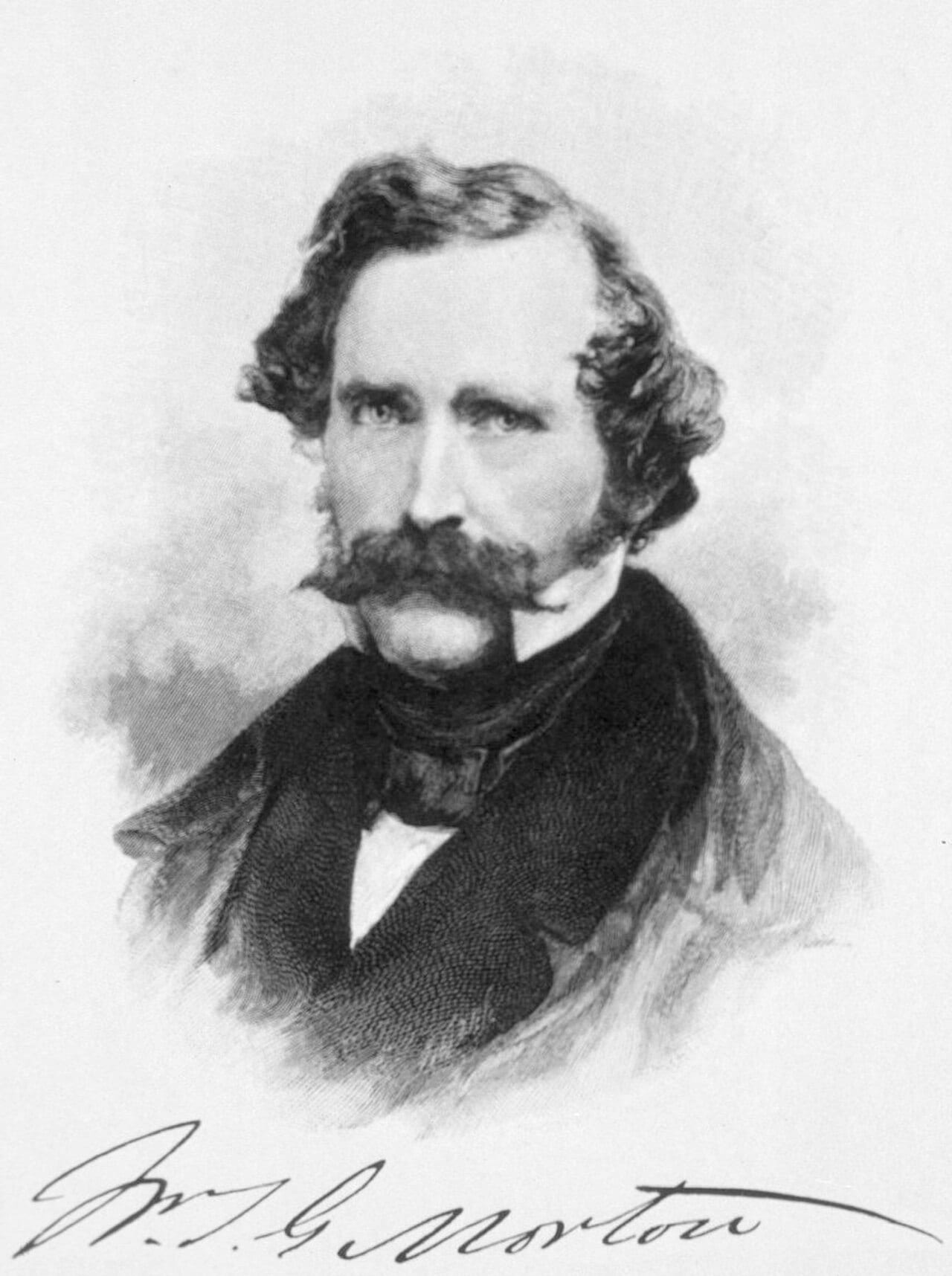
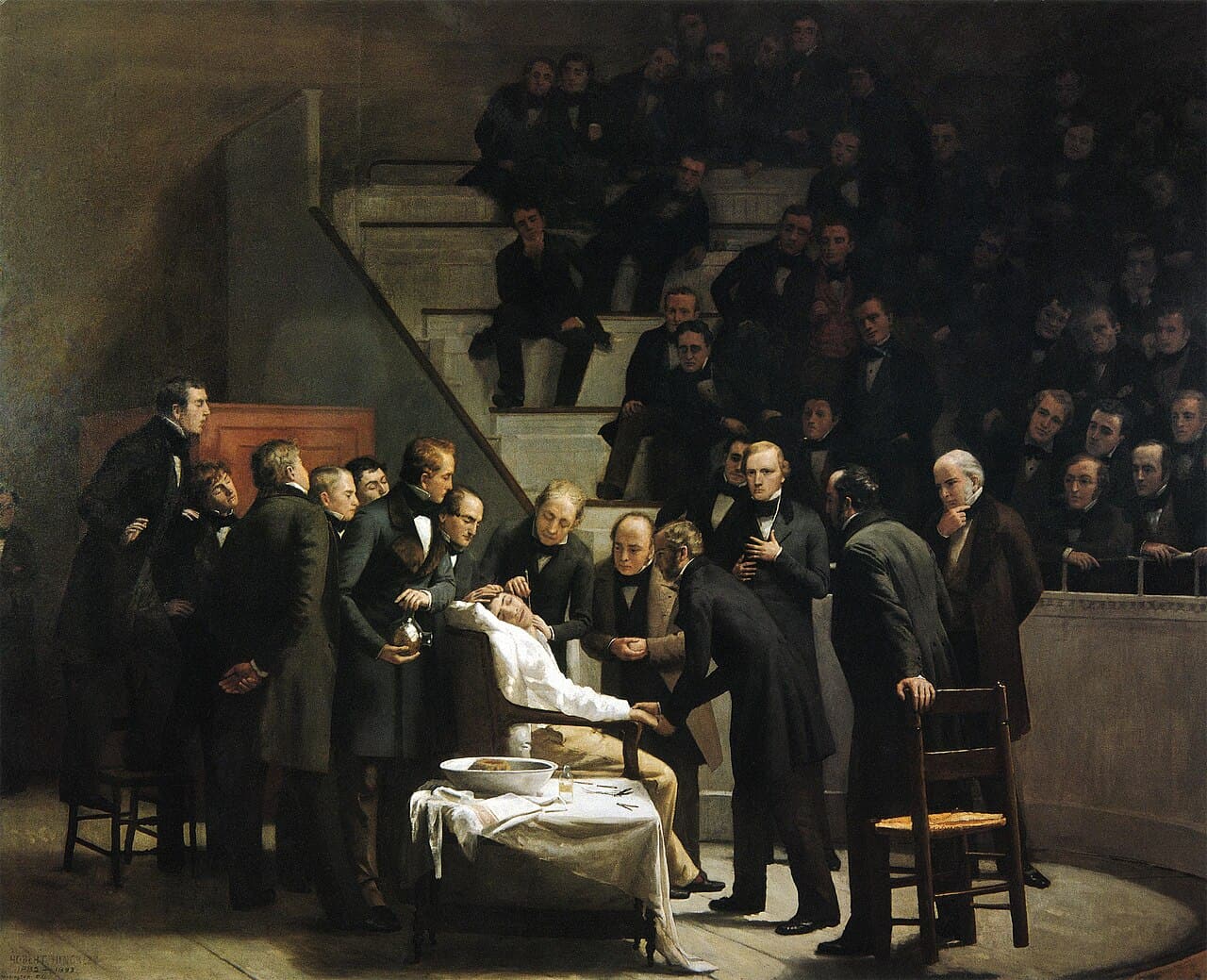
William Thomas Green Morton was born at Charlton, Massachusetts on 9 August 1819, entered the Baltimore College of Dental Surgery in 1840, and set up as a dentist in Boston, where he had a brief and unhappy partnership with Horace Wells of Hartford. Wells had tried nitrous oxide for tooth extraction and had failed publicly at Massachusetts General Hospital in 1845 when a patient cried out. Morton, encouraged by the chemist and Harvard lecturer Charles T. Jackson, turned instead to sulphuric ether, tested it on a dog, on himself and then on a patient in his surgery, and persuaded the hospital to let him try again. On 16 October 1846, in the operating theatre now called the Ether Dome, he anaesthetised Edward Gilbert Abbott while the surgeon John Collins Warren removed a tumour from his jaw. Warren turned to the audience afterwards and said that gentlemen, this was no humbug. Morton then patented the agent under the invented name Letheon, which the medical profession regarded as disgraceful, and spent the rest of his life in a losing contest for credit and compensation. He died in New York on 15 July 1868. Michael Hart ranked him 37th in The 100.
Influence Meter
77
Measured on a 100-point scale
Ended surgical pain, and with it the limits on what surgery could attempt
Before 1846
What Surgery Was
It is difficult to overstate what operating on a conscious person meant. Patients were strapped or held down by assistants; some were given laudanum or spirits, which dulled little and increased bleeding. Surgeons were judged largely on speed, and the London surgeon Robert Liston was famous for taking a leg off in under thirty seconds. Screaming was expected, and hospitals sited their operating theatres where the sound would carry least. Many people simply declined surgery and died of the condition instead, which was often the rational choice.
The consequence was that surgery could not develop. An operation had to be over in minutes, which restricted it to amputations, lithotomy, and superficial work on the surface of the body. There was no possibility of entering the abdomen, the chest or the skull, because no patient could survive the experience and no surgeon could work with the necessary care on a struggling body. Anaesthesia did not merely relieve suffering. It removed the constraint that had defined the entire field, and everything that followed - abdominal surgery, thoracic surgery, neurosurgery, transplantation - became conceivable only after it.
16 October 1846
No Humbug
Morton was late. The surgical audience had gathered in the amphitheatre at Massachusetts General, John Collins Warren had the patient prepared, and Morton was still with an instrument maker finishing the glass inhaler - a globe with a sponge soaked in ether and a mouthpiece. He arrived some fifteen minutes after the hour, apologised, and administered the vapour. Edward Gilbert Abbott, a printer with a vascular tumour below his jaw, went under; Warren cut; the patient did not move and afterwards reported that he had felt no pain, only a sensation like his neck being scraped. Warren, who had watched Horace Wells fail in the same room the year before, turned to the gallery and said gentlemen, this is no humbug. The news travelled at the speed of the mail: a London dentist used ether on 19 December, and by the following year it was in use across Europe and America.
Morton's fatal decision was to try to own it. Aware that ether was a common laboratory chemical anyone could buy, he disguised it with dye and oil of orange, called it Letheon, and took out a patent in November 1846 with Charles Jackson. The concealment collapsed almost at once - the smell was unmistakable - and the medical profession reacted with contempt at the idea of charging for the relief of pain. Hospitals used ether and ignored the patent; the US military did the same. Morton then spent twenty years petitioning Congress for a national reward, in 1846, 1849, 1851 and 1853, and never received one, largely because Jackson, Wells and the supporters of Crawford Long each pressed rival claims and legislators declined to adjudicate between them. He spent his own money on the fight and ended in debt.
The Dispute
Four Men, One Discovery
The priority quarrel over anaesthesia is among the most bitter in the history of medicine, and it destroyed at least two of the people involved.
Crawford Williamson Long
A Georgia physician who removed a neck cyst under ether on 30 March 1842, more than four years before Morton - but who did not publish until 1849, by which time the world had learned it from Boston.
- Claim: Priority, unpublished
Horace Wells
Morton's former partner, who used nitrous oxide for extractions from 1844 and failed publicly at Massachusetts General in 1845. He became addicted to chloroform, was arrested in New York, and killed himself in a cell in 1848, aged thirty-three.
- Died: 1848, by suicide
Charles T. Jackson
The chemist who told Morton that ether would work and then claimed the discovery as his own for decades. He had made similar claims against Samuel Morse over the telegraph. He was committed to an asylum in 1873 and died there.
- Also disputed: Morse's telegraph
William T. G. Morton
Neither the first to use ether nor the first to think of it, but the man who proved it publicly, before witnesses, in a way that could not be dismissed - which is why the world adopted it in months rather than decades.
- Contribution: Public proof
1846-1868
The Ruin of the Man Who Ended Pain
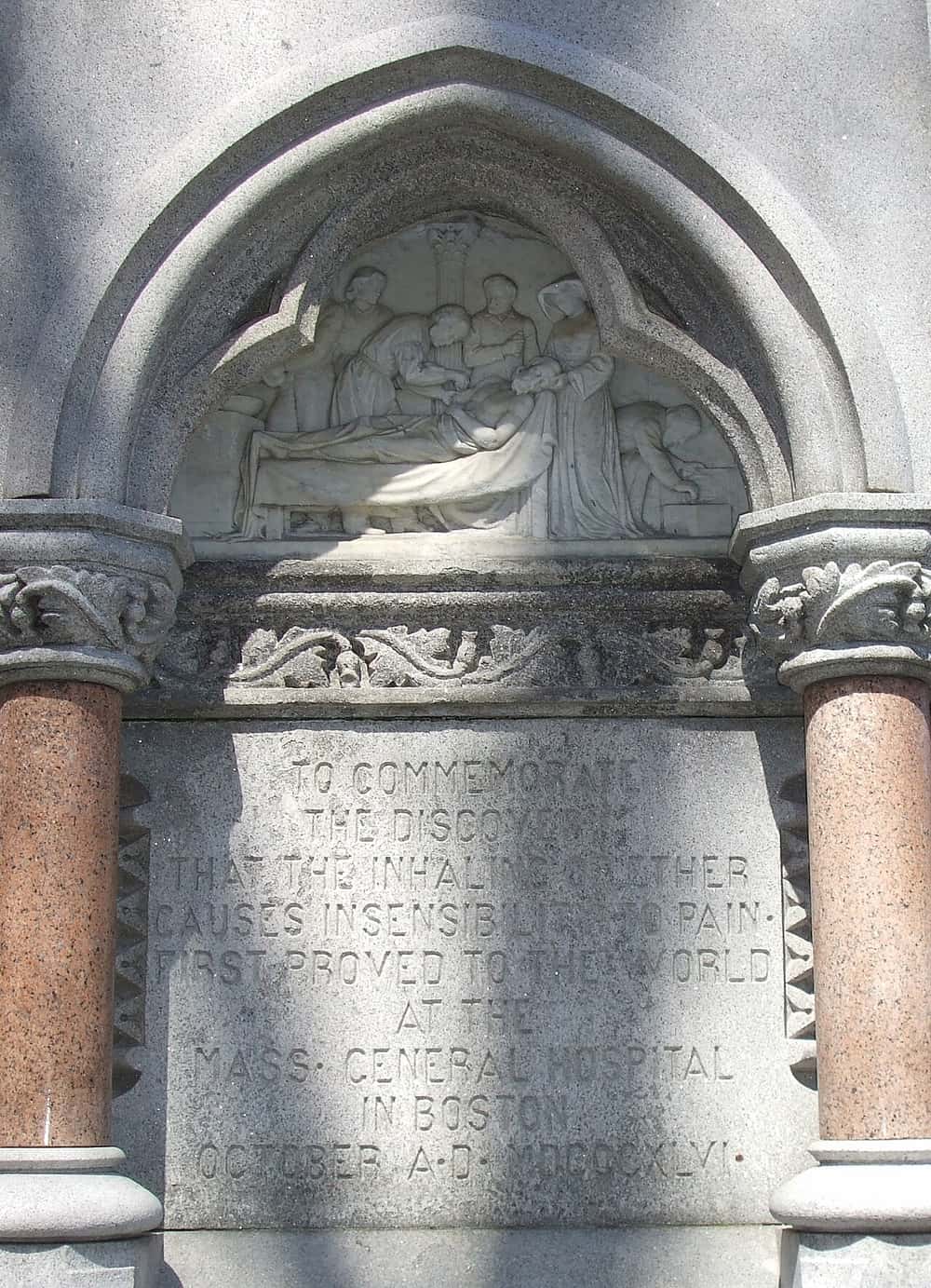
Morton gave up dentistry to pursue the claim, and the pursuit consumed him. He served without pay as an anaesthetist with the Army of the Potomac during the Civil War, administering ether to more than two thousand wounded men on the field at Fredericksburg, the Wilderness and Spotsylvania - which is the part of his life that most clearly answers the question of his motives. He was still fighting for recognition in July 1868 when, reading a magazine article supporting Jackson's claim, he drove into Central Park with his wife, suffered a stroke, ran into the lake to cool himself and was carried to St Luke's Hospital, where he died aged forty-eight. His Boston monument, paid for by a physician, records that by him pain in surgery was averted and annulled, and that since him science has control of pain. The Ether Monument in the Public Garden, erected in 1868, names nobody at all - a deliberate evasion of the quarrel that was still running.
Legacy
Why Number Thirty-Seven
Michael Hart ranked Morton 37th, and the placement rests on a distinction worth being clear about: he did not discover that ether abolishes pain, and several people knew it before him. What he did was demonstrate it in public, in a hospital, on a surgical patient, with the city's leading surgeon operating and an audience watching - and that is why the practice spread across the world within a year rather than remaining, as Crawford Long's use of it did, a private habit in a Georgia town.
Anaesthesia paired with Joseph Lister's antisepsis two decades later to create modern surgery. Before the two, an operation was a brief, agonising and frequently fatal last resort; after them it became a controlled procedure that could last hours and be attempted on any part of the body. Set against that, the sheer quantity of human suffering removed is difficult to compute and easy to forget, precisely because the absence of pain leaves no record. Nobody now goes to a dentist expecting to be held down. That is Morton's, and he was never paid for it.
Related Publications