Oliver Cromwell

Oliver Cromwell
Born 25 April 1599 • Died 3 September 1658
At forty Oliver Cromwell was a farmer of middling means in Huntingdonshire who had once been so reduced that he sold up and rented land. He had never commanded troops, never been abroad, and made no impression whatsoever in his first term as an MP. Within nine years he had beaten the King's cavalry, within ten he had signed the King's death warrant, and within fourteen he was head of state. England has never executed a monarch before or since, and has never had another republic.
Rank
#41
Influence
76
Field
Soldier and Lord Protector
Historical Perspective
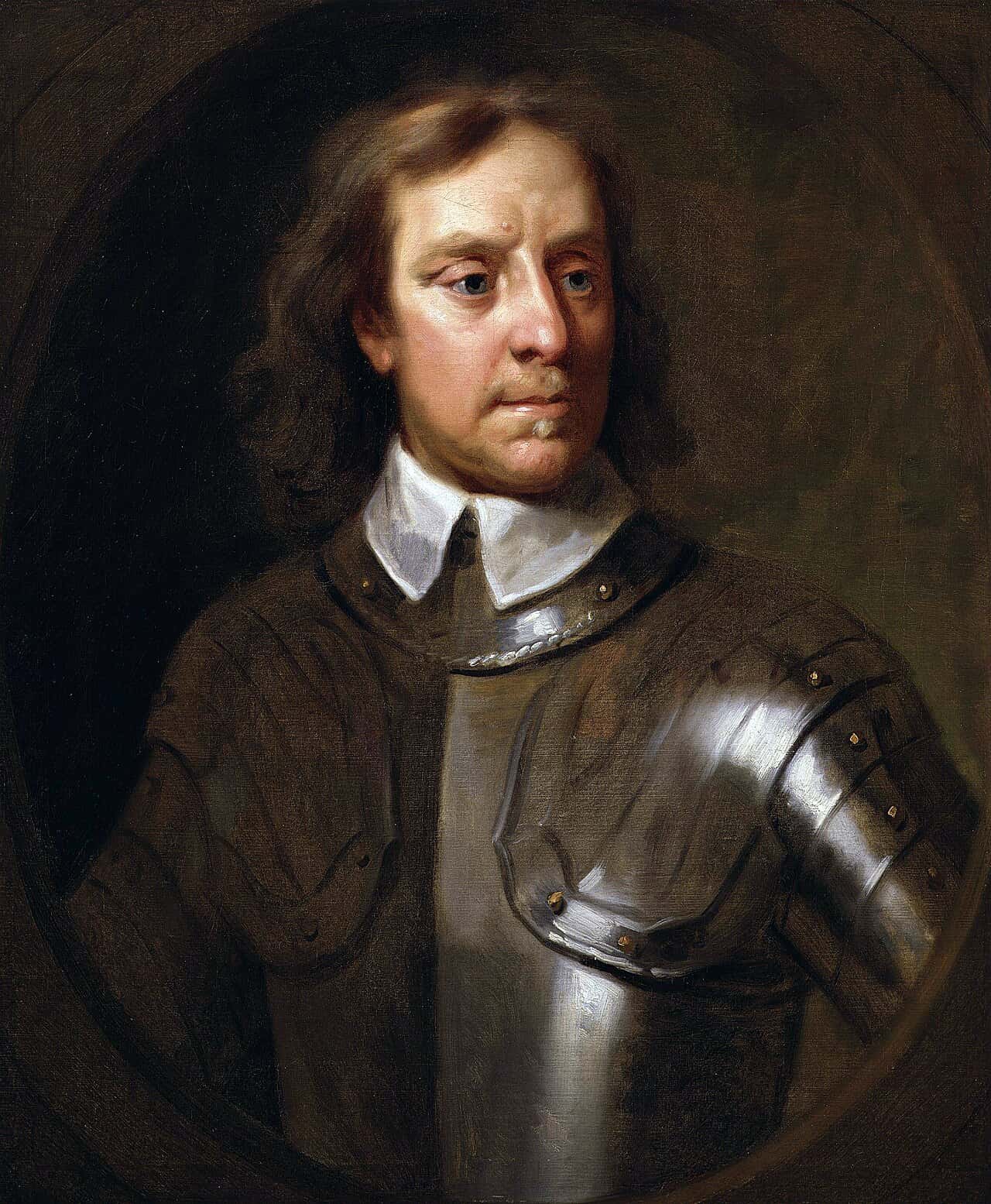
Oliver Cromwell was born at Huntingdon on 25 April 1599 into the lesser gentry - his family's fortunes descended from Thomas Cromwell's brother-in-law and had been in decline for a generation. He went to Sidney Sussex College, Cambridge, left without a degree when his father died, married Elizabeth Bourchier in 1620 and farmed. In the early 1630s he passed through a religious crisis and emerged a convinced Puritan of the Independent sort, certain that God acted directly in events - a conviction that governed everything he later did. Elected for Huntingdon in 1628 and for Cambridge in 1640, he was an undistinguished backbencher until war broke out in 1642, when he raised a troop of horse at forty-three and discovered that he was extremely good at it. Marston Moor in 1644 and Naseby in 1645 were won by the cavalry he trained; the New Model Army he helped shape destroyed the royalist cause. He signed Charles I's death warrant, subdued Ireland in 1649-50 and Scotland in 1650-51, expelled the Rump Parliament in 1653, and ruled as Lord Protector until his death on 3 September 1658. Michael Hart ranked him 41st in The 100.
Influence Meter
76
Measured on a 100-point scale
Executed a king, made England briefly a republic, and left Parliament permanently stronger
1642-1645
Ironsides
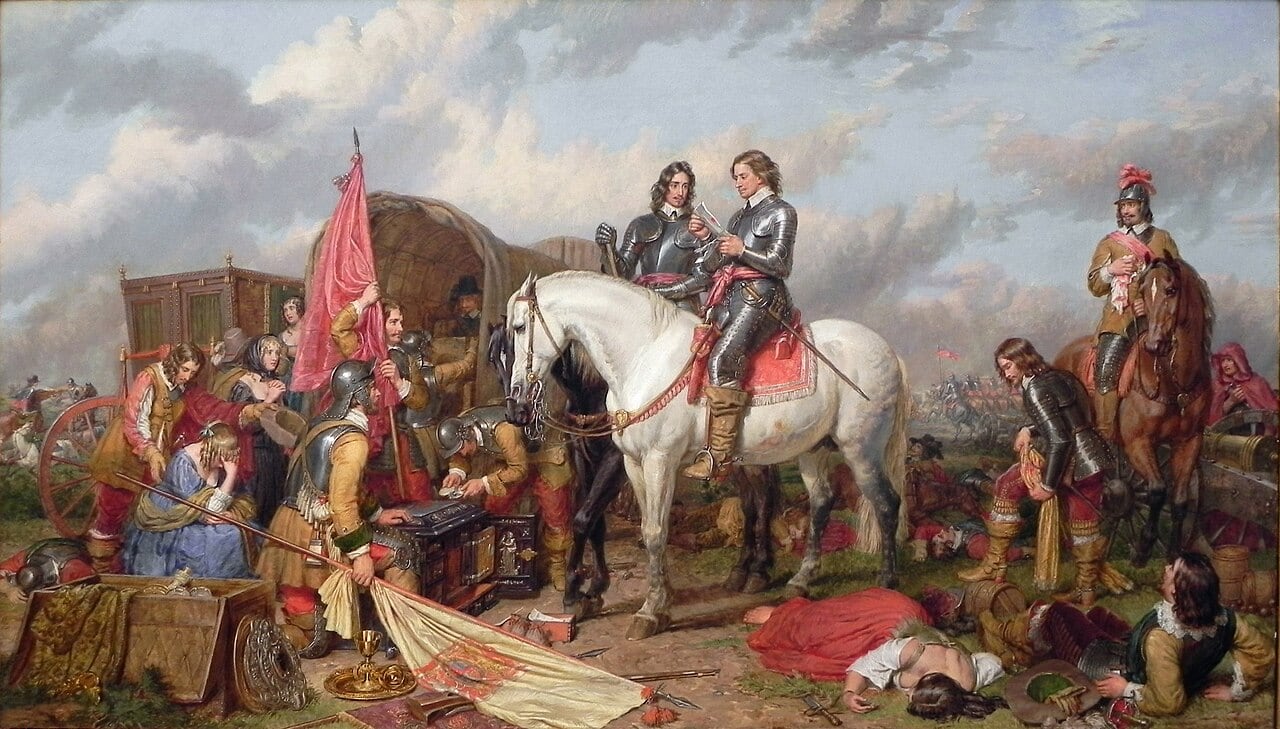
Cromwell's military talent was real and specific. He recruited on conviction rather than status - he wrote that he would rather have a plain russet-coated captain who knows what he fights for and loves what he knows than a gentleman who is nothing else - and he drilled his horse to charge at a controlled trot and, crucially, to rally and charge again rather than pursuing a beaten enemy off the field, which was what royalist cavalry habitually did and what repeatedly cost them battles. At Marston Moor in July 1644 his wing broke Rupert's; the Scots and the Eastern Association took the day, and Cromwell wrote afterwards that God made them as stubble to our swords. At Naseby in June 1645 the same pattern won the war. The New Model Army that emerged that year was paid regularly, promoted on merit and animated by religious conviction to a degree that alarmed its own political masters - and would shortly turn on them.
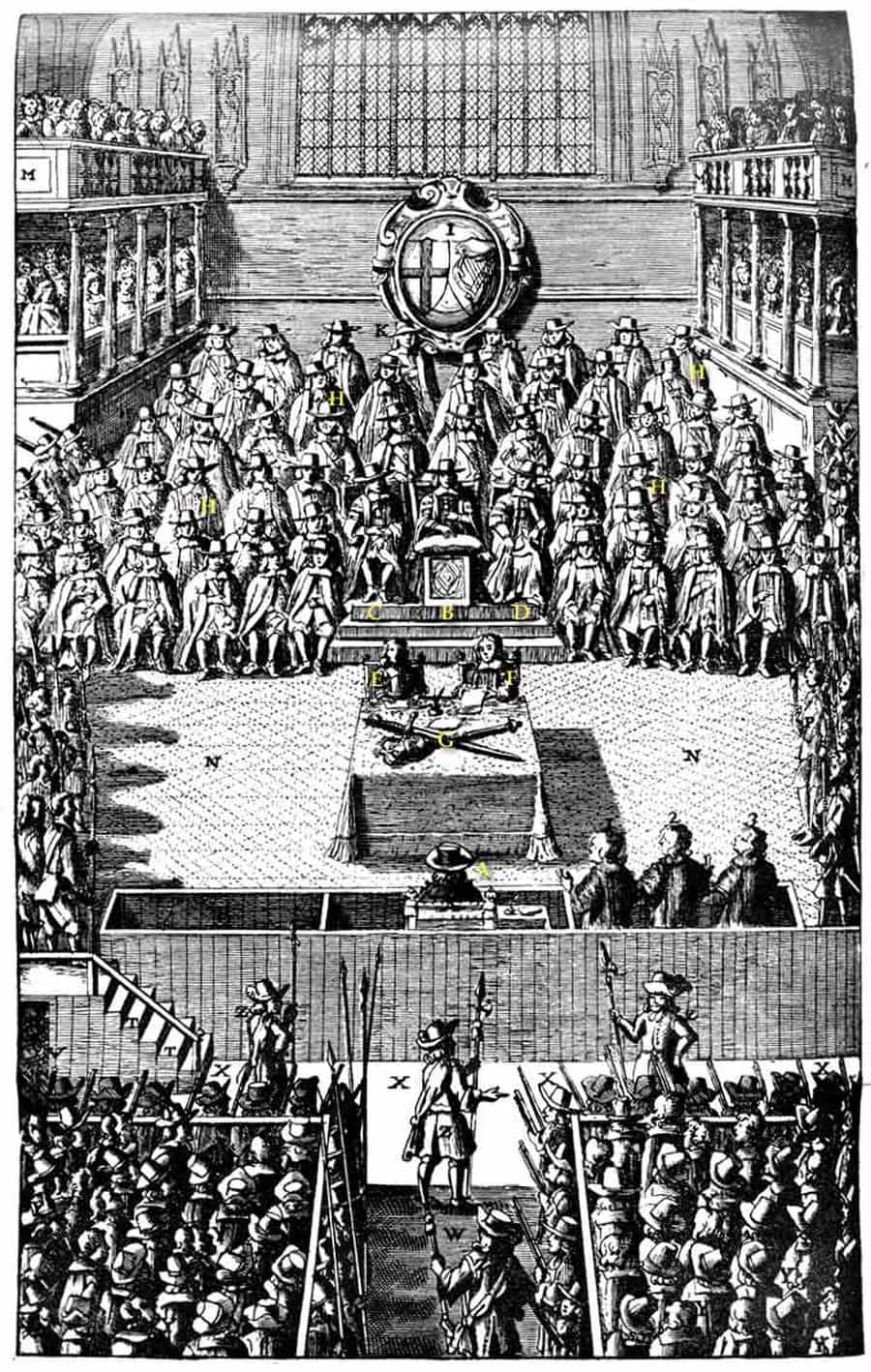
The execution of Charles I on 30 January 1649 was without precedent in Europe: kings had been deposed and murdered, but none had been tried in his own name by his own subjects, convicted in public and beheaded in a street outside his own palace. The court had no legal basis anyone could point to, half the judges named refused to sit, and Charles declined to plead on the ground that no court had jurisdiction over a king - a defence nobody could really answer. Fifty-nine men signed the warrant; Cromwell's is the third signature. He had spent years trying to reach a settlement with Charles and concluded that no agreement with him was worth anything, since the King negotiated in bad faith while inviting foreign armies in. The act made a permanent point: that a sovereign could be held accountable by law. Eleven years later the monarchy came back, and the men who had signed were hunted down.
1649-1650
Drogheda and Wexford
Cromwell landed in Ireland in August 1649 to end a royalist and Catholic confederation and to secure a base that might otherwise be used against England. At Drogheda in September, after the garrison refused to surrender and the walls were breached, he ordered no quarter: some three thousand soldiers and an unknown number of civilians and clergy were killed. Wexford followed in October, where a similar massacre occurred, apparently after his soldiers got out of hand during a negotiation. He defended Drogheda explicitly as a judgement of God on those responsible for the killing of Protestants in 1641, and argued that severity there would prevent longer bloodshed elsewhere. The campaign, continued by his subordinates, was followed by mass confiscation of Catholic-owned land and transplantation westward under the Act of Settlement. Modern historians debate whether the massacres exceeded the brutal conventions of seventeenth-century siege warfare; what is not in dispute is the scale of what followed, or that Cromwell's name in Ireland has meant something entirely different from what it means in England ever since.
1653-1658
Governing Without a Constitution
Having removed the King and then the Parliament, Cromwell spent five years trying to find a legitimate basis for a government that had none, and never solved it.
Dissolving the Rump
He marched soldiers into the Commons and expelled the remaining members, telling them they had sat too long for any good they were doing and to depart, in the name of God, go. The Parliament he had fought a war to defend was ended by him personally.
- Method: Armed force
Lord Protector
Installed under the Instrument of Government, England's only written constitution, with executive power and a Council of State. He was king in everything but title and inheritance.
- Document: Instrument of Government
The Major-Generals
England divided into districts under military governors charged with security and moral reform - closing alehouses, suppressing horse racing and stage plays. Deeply unpopular, and abandoned after eighteen months.
- Outcome: Abandoned
Refusing the crown
Parliament offered him the kingship and he agonised for weeks before declining, reportedly saying he would not build again what God had destroyed. He accepted expanded powers and the right to name his successor instead.
- Answer: No
Readmitting the Jews
Jews had been formally expelled from England in 1290. Cromwell's informal decision to allow resettlement, driven by a mixture of millenarian theology and commercial calculation, ended three and a half centuries of exclusion.
- Expelled since: 1290
Religious toleration, with limits
Unusually broad for the period - Independents, Baptists, Quakers and Jews were tolerated - but it did not extend to Catholics or to Anglican worship using the Prayer Book.
- Excluded: Catholics
1658-1661
The Republic Outlived Him by Twenty Months
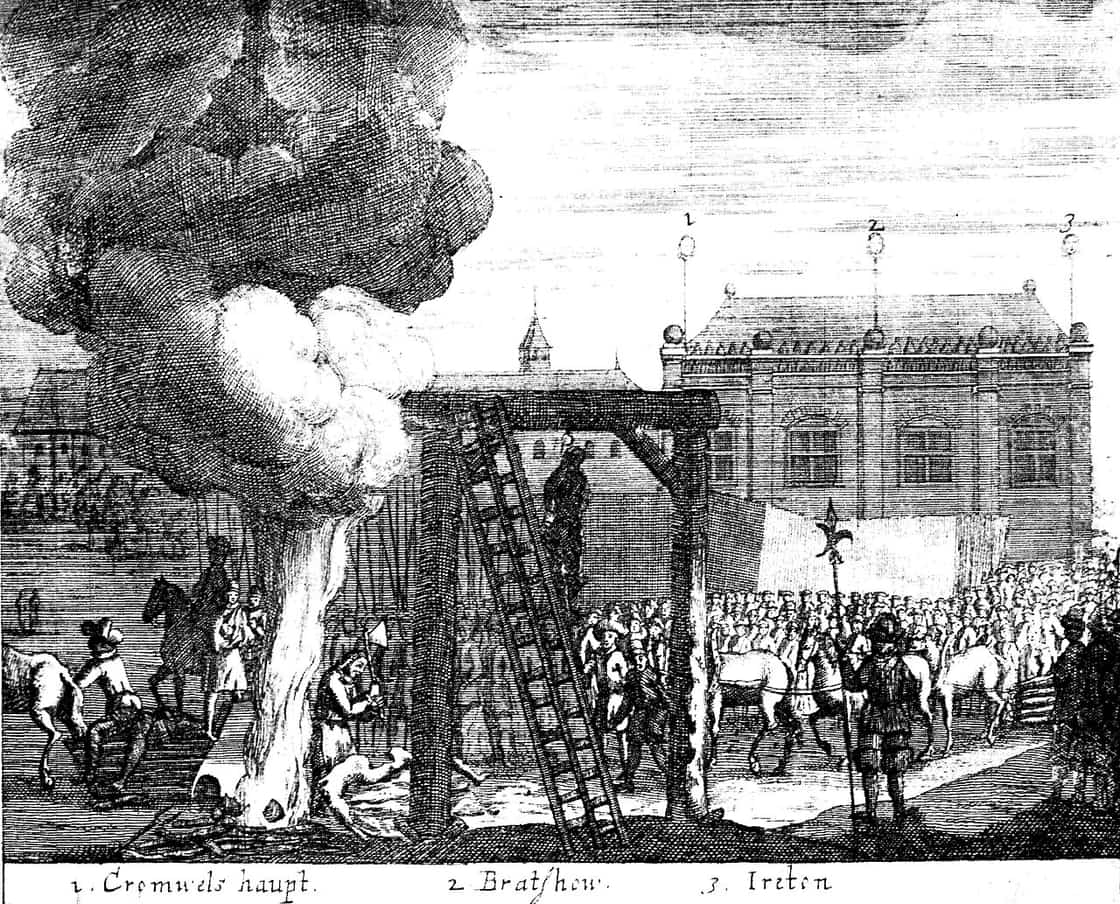
Cromwell died on 3 September 1658, the anniversary of two of his victories, probably of malaria and a urinary infection. He had nominated his son Richard, who had no military standing and no support in the army, and who was pushed out within eight months; the generals quarrelled, the country drifted toward anarchy, and in May 1660 Charles II returned to a general welcome. The following January, on the twelfth anniversary of the regicide, Cromwell's body was exhumed from Westminster Abbey, hanged in its shroud at Tyburn, and beheaded; the head was set on a pole above Westminster Hall, where it stayed for over twenty years. It passed through private collections for centuries and was finally buried at his old Cambridge college in 1960. The republic he made lasted eleven years, and no serious attempt to revive one has been made in Britain since.
Further Reading
Books About Cromwell
He has been read as a liberator, a hypocrite, a regicide, a proto-dictator and a war criminal, sometimes in the same decade.
Legacy
Why Number Forty-One
Michael Hart ranked Cromwell 41st, and the case is not that the republic lasted - it did not - but that the attempt permanently altered the balance between crown and Parliament. After 1649 no English monarch could plausibly claim to rule by divine right unanswerable to anyone, and when James II tried something like it forty years later he was removed in a matter of weeks. The Glorious Revolution of 1688, the Bill of Rights, and the constitutional monarchy that followed all rest on the demonstrated fact that a king could be tried and killed. That model was studied closely by the American revolutionaries a century later.
The second legacy is Irish and it is entirely different. The confiscations that followed his campaign transferred the great majority of Catholic-owned land to Protestant owners and set the pattern of landholding and grievance that shaped Irish history into the twentieth century. In England his statue stands outside the Palace of Westminster; in Ireland his name is a byword for atrocity. Both reputations are grounded in things he actually did, which is why he has never settled into a single verdict and probably never will.
Related Publications