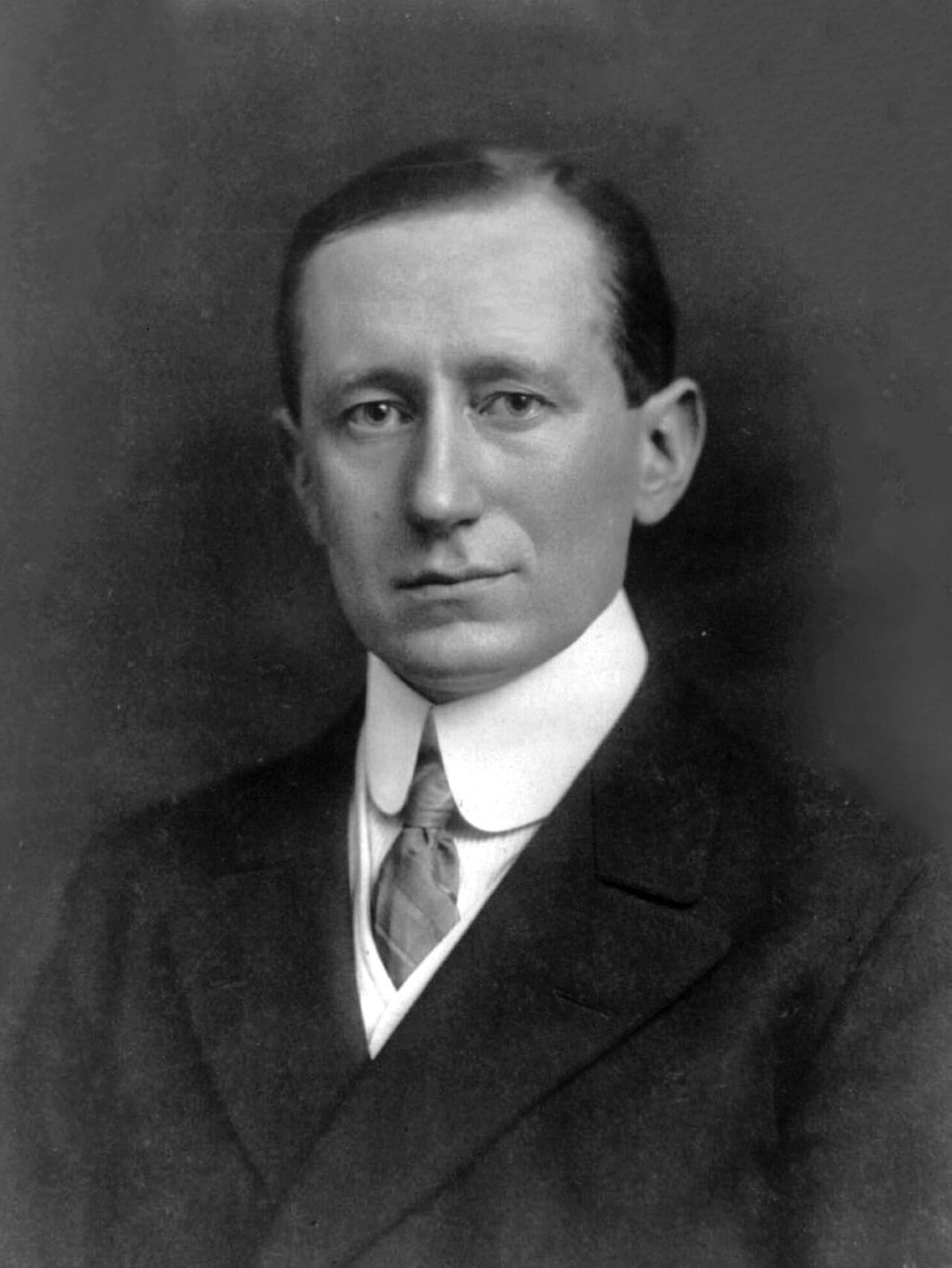
Guglielmo Marconi

Guglielmo Marconi
Born 25 April 1874 • Died 20 July 1937
Heinrich Hertz proved electromagnetic waves existed in 1888 and thought them useless. The physicists who repeated his experiment agreed; the waves travelled a few metres across a laboratory and there was no obvious reason they would ever do more. A twenty-year-old with no degree, working in the attic of his father's villa outside Bologna, decided the interesting question was not what the waves were but how far they could be made to go. Within seven years he had the answer, and it was further than the curvature of the Earth should have allowed.
Rank
#38
Influence
79
Field
Inventor and Electrical Engineer
Historical Perspective
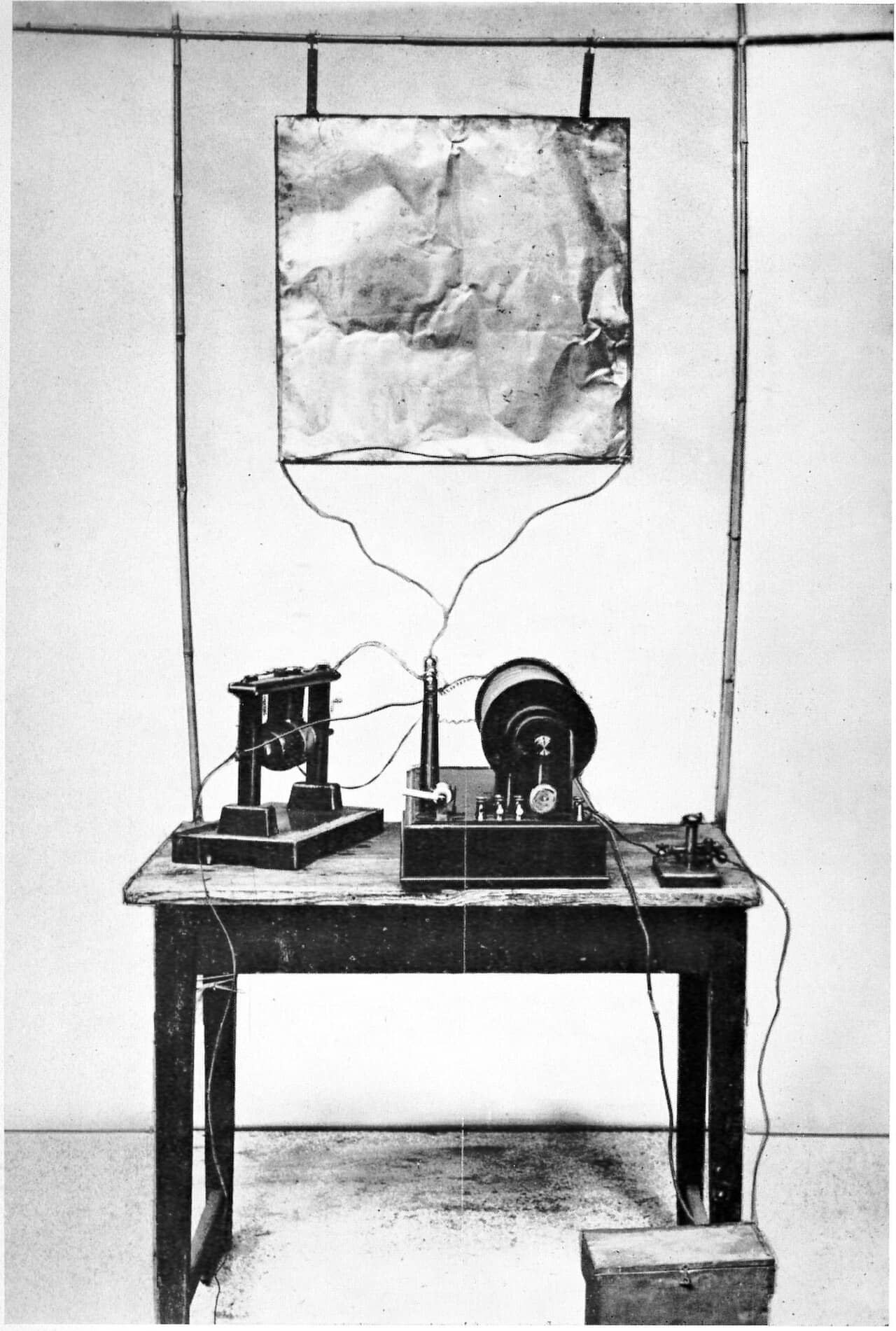
Guglielmo Marconi was born in Bologna on 25 April 1874, son of a wealthy Italian landowner and Annie Jameson, granddaughter of the founder of the Irish whiskey distillery - a maternal connection that later supplied both his fluent English and his access to British capital. He never attended school in the ordinary way, being taught by private tutors, and audited lectures under the physicist Augusto Righi at Bologna. In 1894, reading of Hertz's death, he grasped that the waves could carry signals and began experimenting in the attic at Villa Griffone. By the summer of 1895, having raised his aerial and earthed the apparatus, he transmitted beyond a hill about two kilometres away. Italy showed no interest, so his mother took him to London, where he filed the first patent for a radio-based communication system on 2 June 1896. Salisbury Plain, the Bristol Channel in 1897, the English Channel in 1899 and finally Signal Hill in Newfoundland on 12 December 1901 marked the distances. He shared the Nobel Prize with Ferdinand Braun in 1909, joined the National Fascist Party in 1923, and died in Rome on 20 July 1937. Michael Hart ranked him 38th in The 100.
Influence Meter
79
Measured on a 100-point scale
Turned a laboratory phenomenon into the first communication that needed no wire
1894-1896
Two Improvements That Made It Work
Marconi contributed no new physics and made no secret of it; his gift was engineering persistence and an unusually good instinct for which variable to change. Two changes did most of the work. The first was the aerial: instead of Hertz's small dipoles he raised a large vertical wire on a pole, and found the range increased sharply with height. The second was the earth connection, grounding one side of both transmitter and receiver, which he arrived at partly by accident. Together they took him from a few metres across a room to a signal received over a hill nearly two kilometres away, out of sight of the transmitter - the moment his brother Alfonso fired a shotgun to confirm reception. Neither refinement was theoretically understood at the time. Marconi simply kept adjusting things and noting what helped.
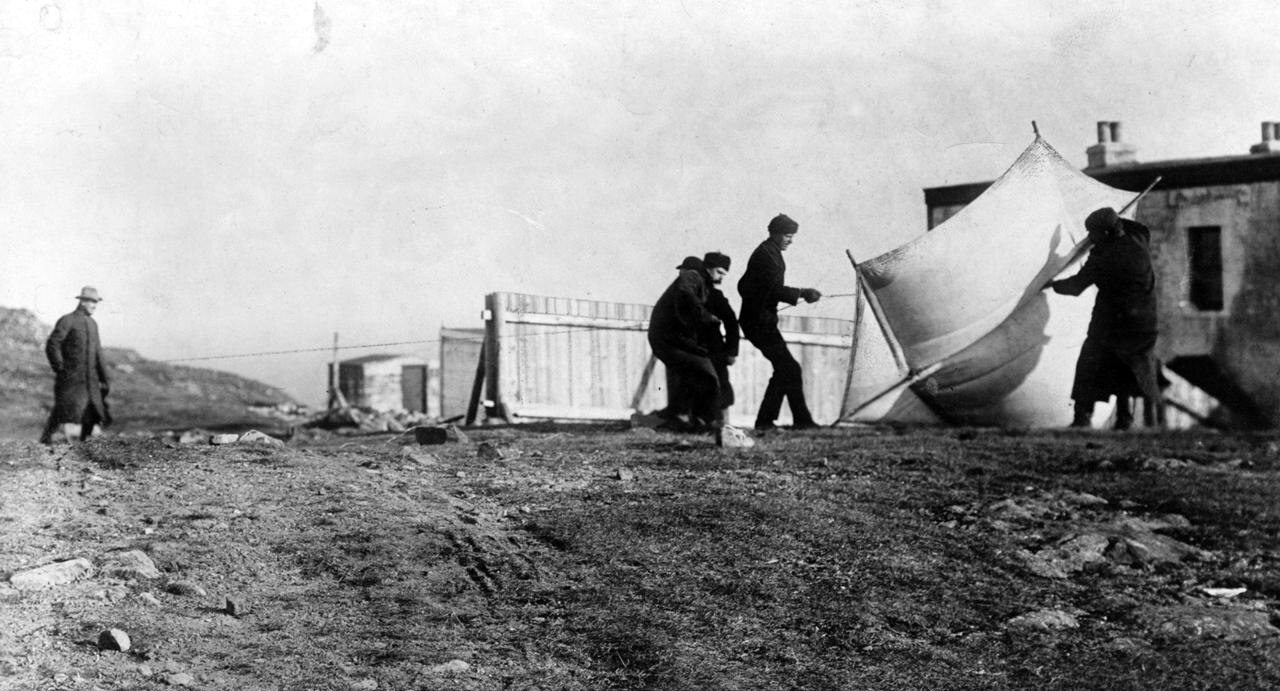
On 12 December 1901 at Signal Hill in St John's, Newfoundland, Marconi reported hearing the letter S - three dots in Morse - transmitted from Poldhu in Cornwall, some 3,500 kilometres away. Physicists had assumed such a thing impossible, since radio waves were expected to travel in straight lines and the Earth curves away. The reception has been debated ever since: it was heard by ear through atmospheric noise, was not recorded, and could not be independently verified. Marconi's own later transatlantic work is unambiguous, and within a few years commercial transatlantic service was running. The theoretical explanation arrived afterwards, when Heaviside and Kennelly independently proposed a conducting layer in the upper atmosphere that reflects the waves back down - the ionosphere, whose existence was inferred because Marconi's signal had already got there.
The Distances
Seven Years From a Room to an Ocean
The history of early radio is essentially a table of increasing range, each step requiring more power, higher aerials and better tuning.
Across an attic
A transmitter and a receiver in the same room at Villa Griffone, ringing a bell across a few metres, demonstrated to his mother in the middle of the night.
- Distance: A few metres
Over the hill
With a raised aerial and an earth, a signal passes beyond the Celestini hill and out of line of sight - the result that showed the idea had commercial potential.
- Distance: About 2 km
Salisbury Plain
Demonstrations for the British Post Office reach roughly six kilometres, and secure official and naval interest.
- Distance: About 6 km
Across open sea
A message sent over the Bristol Channel from Lavernock Point to Flat Holm - the first wireless transmission over open water, and the beginning of maritime radio.
- Distance: About 6 km of sea
The English Channel
France to England, connecting two countries by wireless for the first time and putting the technology beyond dispute in Europe.
- Distance: About 50 km
The Atlantic
Poldhu in Cornwall to Signal Hill in Newfoundland. Whatever the doubts about that particular reception, it ended the assumption that the Earth's curvature set a limit.
- Distance: About 3,500 km
15 April 1912
The Night Radio Proved Itself
The Marconi Company equipped ships and employed the operators who worked the sets, and when the Titanic struck ice her Marconi men, Jack Phillips and Harold Bride, stayed at the key transmitting distress calls until the power failed. Phillips died. The Carpathia heard them and reached the site in time to pick up some seven hundred survivors from the boats - people who would otherwise have died of exposure before any ship arrived. Marconi had been offered free passage on the Titanic and had travelled days earlier on the Lusitania instead. The inquiries that followed made continuous radio watch compulsory at sea, and the disaster converted wireless from a commercial convenience into a legal requirement. Britain's postmaster general told the Commons that those who had been saved had been saved through one man, Mr Marconi.
1923-1937
The Part Usually Left Out
Marconi joined the National Fascist Party in 1923, the year after Mussolini took power, and was rewarded with position: a seat on the Fascist Grand Council, the presidency of the Royal Academy of Italy from 1930, and the marquisate. He was not a passive figurehead. Under his presidency the Academy admitted no Jewish members, and records suggest candidates' files were annotated to identify them. He publicly defended the invasion of Ethiopia in 1935 and broadcast in support of it. Mussolini attended his funeral.
This sits alongside the other Marconi, the one who set up Vatican Radio for Pius XI in 1931 and introduced the first papal broadcast personally, and who spent his last decade on the shortwave and microwave work that underpins modern point-to-point radio and radar. Both are him. It is worth stating plainly rather than omitting, because a great deal of writing about inventors treats the technical achievement as though it settled the question of the man, and it does not.
Further Reading
Books About Marconi
He wrote no memoir; the company archives and his daughter's account supply most of the personal record.
Legacy
Why Number Thirty-Eight
Michael Hart ranked Marconi 38th, and the ranking implicitly answers the argument that always attends him: that Maxwell predicted the waves, Hertz produced them, Tesla, Lodge, Popov and Bose all built apparatus, and Marconi merely commercialised what others discovered. The 1943 US Supreme Court decision on his patents, often cited as proof, actually turned on tuning circuits and left the substance of his priority alone. The fair statement is that he invented no physics and built the first system - and a communication technology is a system, not an effect.
What followed is difficult to bound. Ship-to-shore wireless made the sea survivable in a new way. Broadcasting, which grew out of the same apparatus in the 1920s, became the first medium capable of addressing an entire nation simultaneously, with everything that meant for politics in the century that followed - including, uncomfortably, for the regime Marconi himself joined. Radar, satellite communication, mobile telephony and wifi are all the same waves, put to work at different frequencies. He was twenty when he decided the question worth asking was how far, and essentially every wireless device now in existence is an answer to it.
Related Publications