Asoka

Asoka
Born c. 304 BC • Died c. 232 BC
Rulers do not usually carve their regrets into rock. Ashoka conquered Kalinga, counted the dead in his own inscription - a hundred thousand killed, many times that number dead of other causes, a hundred and fifty thousand deported - and then had that arithmetic published across an empire stretching from Afghanistan to Bengal, along with the statement that it caused him profound sorrow. He then spent the rest of his reign on something else entirely. He was forgotten for a thousand years, and rediscovered when a British official learned to read the script.
Rank
#53
Influence
80
Field
Emperor
Historical Perspective
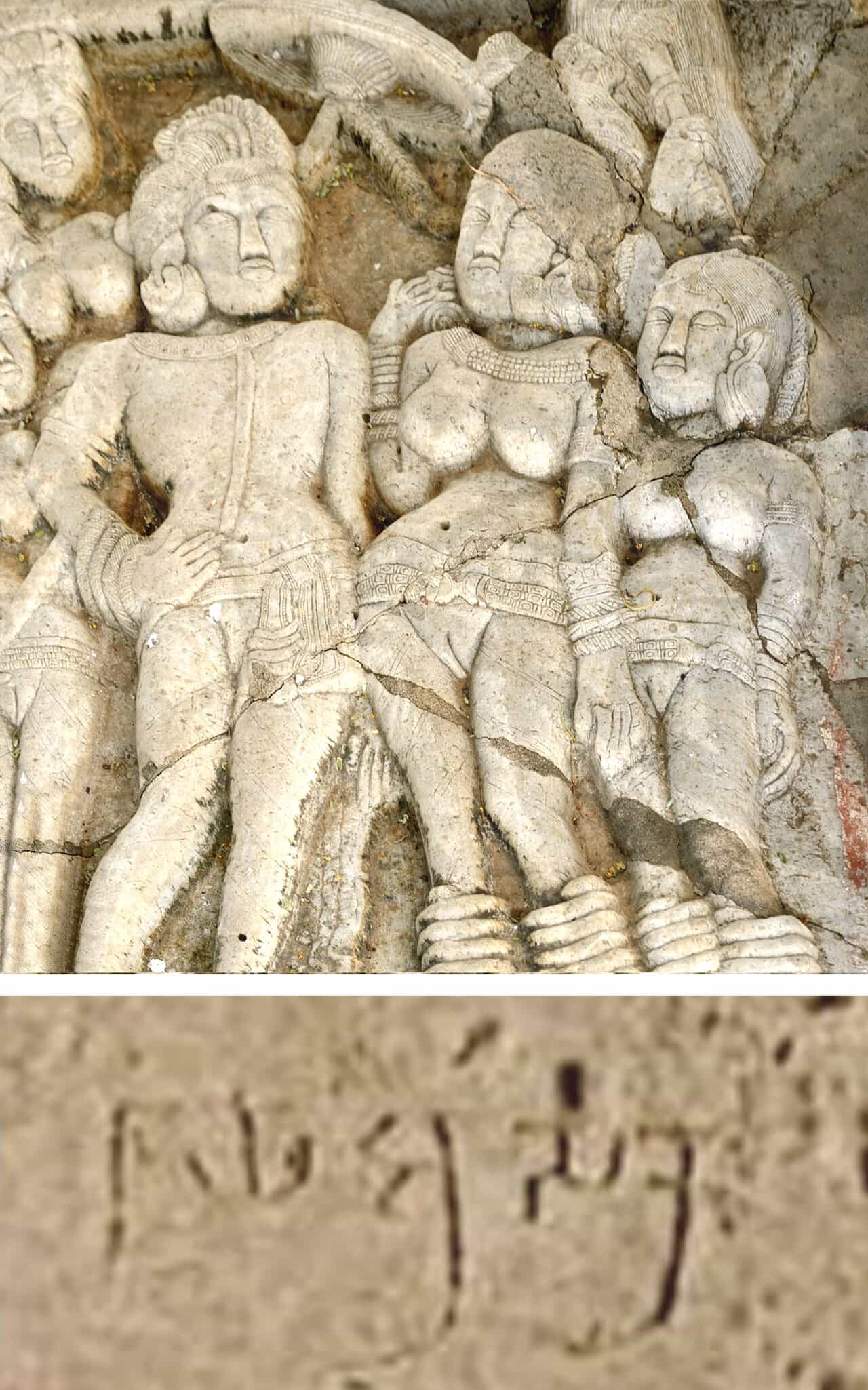
Ashoka was born around 304 BC, grandson of Chandragupta Maurya, who had founded the empire in the wake of Alexander's withdrawal, and son of Bindusara. He came to the throne around 268 BC, apparently after a contested succession that later Buddhist tradition made lurid. In about 262 or 261 BC, in his eighth regnal year, he invaded Kalinga on the east coast, and the campaign was catastrophic enough that Rock Edict 13 records the numbers and his own remorse in unprecedented terms. He turned to Buddhism - gradually rather than in a single conversion, on the evidence of the edicts themselves - and reoriented his rule around dhamma: non-violence toward people and animals, religious tolerance, care of the sick, planting of trees and wells along roads, and officers appointed to oversee welfare. He convened what Buddhist tradition calls the Third Council and sent missions abroad, including one to Sri Lanka under his son Mahinda. He died around 232 BC and the empire fragmented within fifty years. Michael Hart ranked him 53rd in The 100.
Influence Meter
80
Measured on a 100-point scale
Made Buddhism a world religion, and left the earliest decipherable writing in India
c. 261 BC
The Only Conqueror Who Published the Casualty Figures
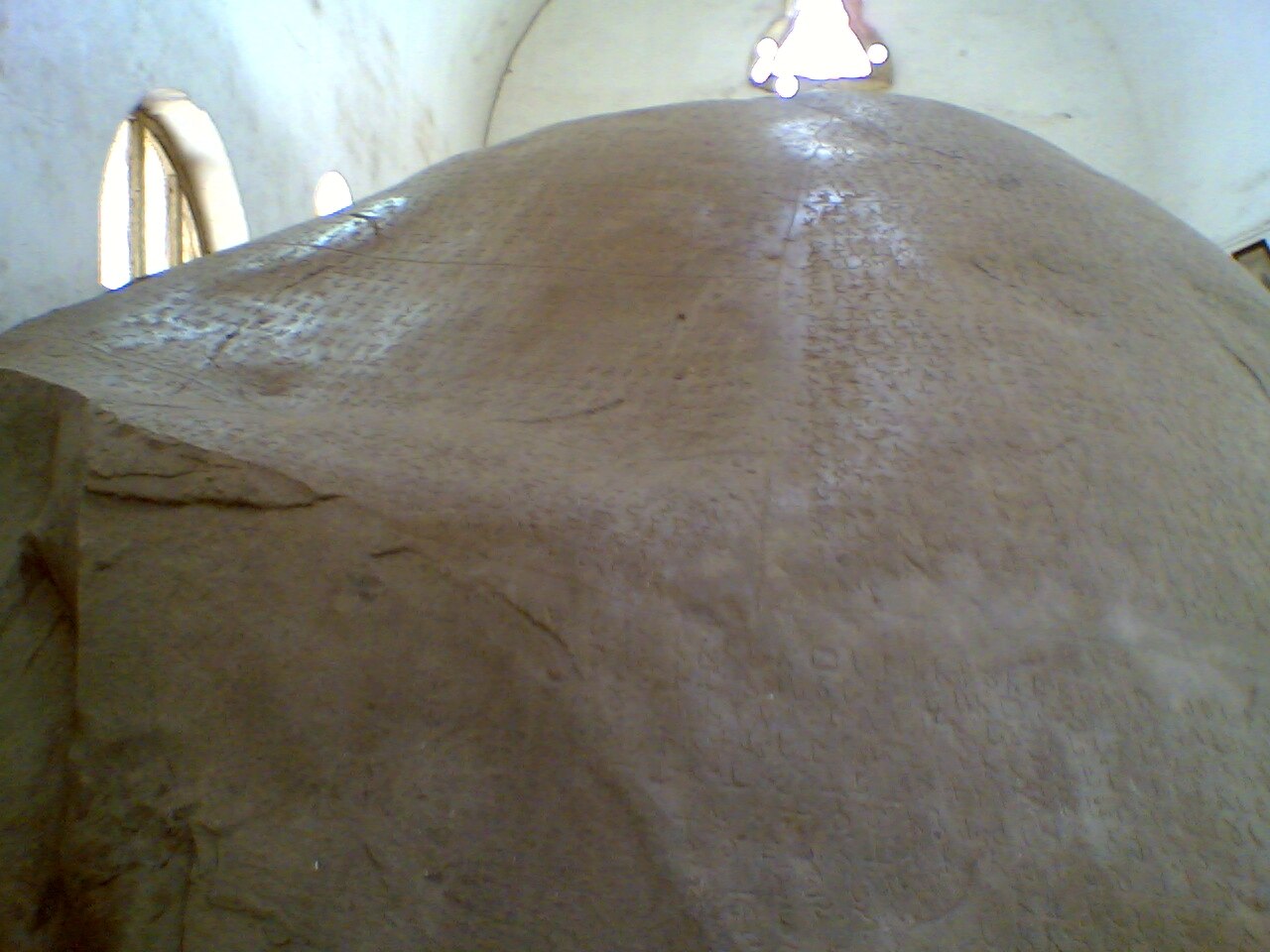
Rock Edict 13 is one of the strangest documents to survive from the ancient world. In it Ashoka states that when Kalinga was conquered, a hundred thousand people were killed in the fighting, many times that number died afterwards, and a hundred and fifty thousand were deported - and that this is a matter of profound sorrow and regret to him. He goes on to say that even a hundredth or a thousandth part of that suffering would now grieve him, that the true conquest is conquest by dhamma rather than by arms, and that he wishes his sons and grandsons to make no new conquests. This is a ruling monarch, at the height of his power, having his own worst act inscribed permanently in public across his territory. Historians differ on how far the remorse was genuine and how far a new ideology of rule replacing an exhausted military one. The document is nonetheless without parallel, and it is his own voice - the edicts use the first person and read nothing like court poetry.
The edicts of Ashoka are the earliest substantial written records from India that can be read, and they are scattered across a territory covering modern India, Pakistan, Nepal, Bangladesh and Afghanistan - on boulders beside roads, on polished sandstone pillars up to fifteen metres high, and in caves. They are written in local languages using the Brahmi and Kharosthi scripts, and in Afghanistan in Greek and Aramaic so that populations left over from Alexander's conquests could read them. Their content is not religious instruction but public policy: obey your parents, treat servants well, do not slaughter animals needlessly, respect other people's religions because criticising them dishonours your own, and here are the officials I have appointed to check that it happens. They are among the few sources in ancient history where a ruler addresses his subjects directly rather than through a chronicler.
What Dhamma Actually Required
Ashoka's dhamma was not simply Buddhism imposed by the state. It is closer to a civic ethic, framed so that Buddhists, Jains, Brahmins and Ajivikas could all accept it.
- Non-violence toward living things: He restricted animal slaughter, banned it entirely on certain days, gave up the royal hunt and progressively reduced meat in the palace kitchens - which the edicts record with the honesty of an admission that it had not stopped completely.
- Religious tolerance as policy: Rock Edict 12 states that honouring one's own sect while disparaging others harms one's own sect, and that concord is best. He made grants to Buddhist, Brahmin, Jain and Ajivika communities alike.
- Public works as a duty of rule: Wells dug and shade trees planted along roads, rest houses built, medical treatment provided for people and for animals - the edicts specify this as something he had done in his own territory and in neighbouring kingdoms.
- Officers of dhamma: A new class of official charged with promoting welfare and checking on the treatment of prisoners, the old and religious communities. A moral inspectorate, which is an unusual thing to invent.
- Conquest by dhamma: He claims to have sent envoys as far as the Hellenistic kings - naming Antiochus, Ptolemy, Antigonus, Magas and Alexander - and treats this as the only conquest worth having.
- Obedience and moderation in ordinary life: Respect for parents and elders, generosity to friends and servants, restraint in speech and expenditure. The content is deliberately unsectarian and practical.
c. 250 BC
How a Regional Teaching Became a World Religion
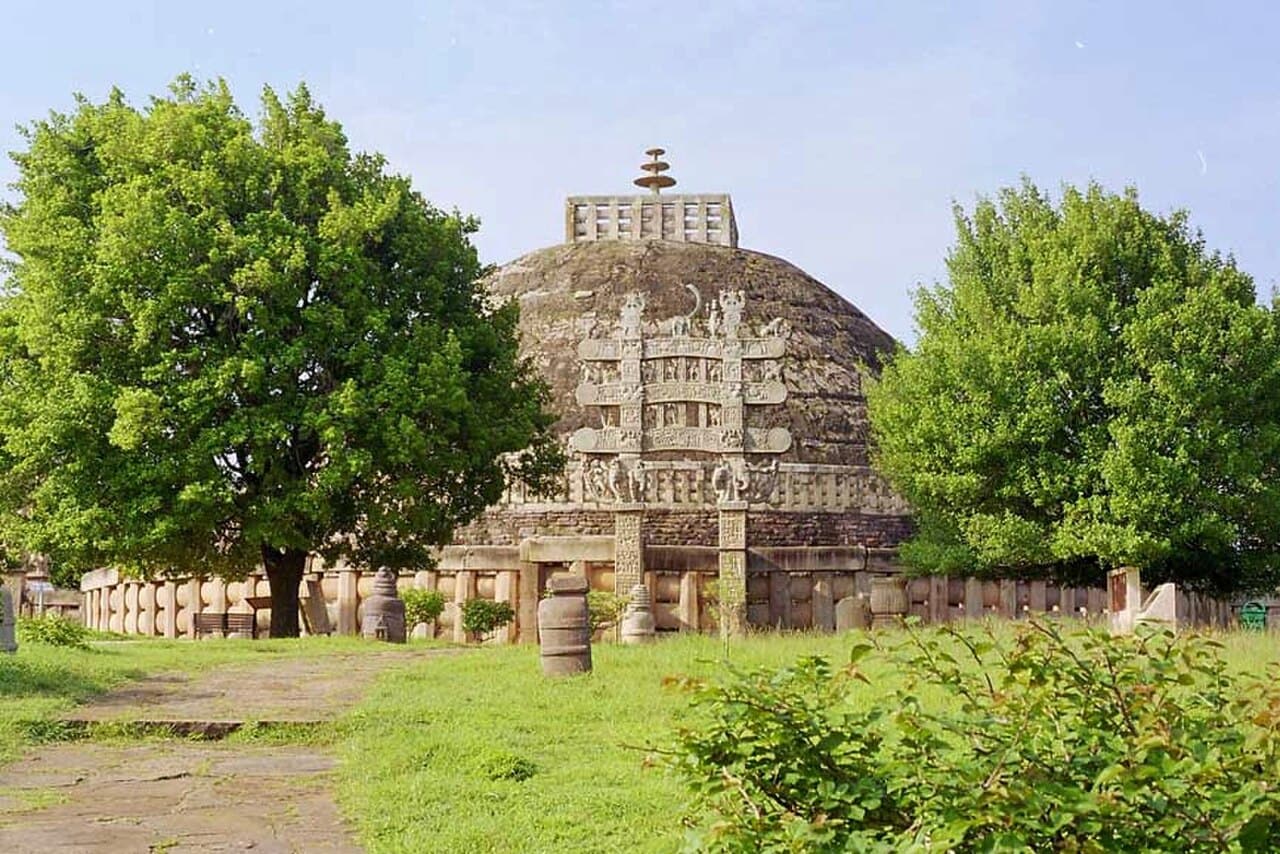
Buddhism at Ashoka's accession was roughly two centuries old and largely confined to the Ganges plain, one of several ascetic movements competing for patronage in northern India. State sponsorship on the Mauryan scale changed its position entirely. Ashoka is credited with building large numbers of stupas, enlarging the one at Sanchi, endowing monasteries, and going on pilgrimage to the sites of the Buddha's life - the pillar he erected at Lumbini records the visit and is the earliest hard evidence for the location of the birthplace. Buddhist tradition holds that he convened a council at Pataliputra to settle doctrinal disputes and then dispatched missions: to the Himalayan regions, to the Greek kingdoms of the north-west, to south India, and most consequentially to Sri Lanka under his son Mahinda, where the Theravada tradition took root and from which it later spread across Southeast Asia. Within a few centuries Buddhism reached China, and from there Korea and Japan.
1837
Lost for a Thousand Years
By the medieval period Ashoka had essentially vanished from Indian memory outside Buddhist tradition preserved in Sri Lanka and elsewhere. The pillars and rock inscriptions were still standing, but the Brahmi script had not been read for centuries and nobody knew what they said or who had put them there. In 1837 James Prinsep, an official of the East India Company mint in Calcutta and a gifted amateur, deciphered Brahmi and found that the inscriptions were the proclamations of a king calling himself Devanampiya Piyadasi - beloved of the gods, of amiable appearance. It took further decades and the Sri Lankan chronicles to establish that this was Ashoka.
The rediscovery arrived at a useful moment. When India became independent in 1947 it took its state emblem from the four-lion capital of Ashoka's pillar at Sarnath, and placed the wheel from the same monument at the centre of the national flag. For a new republic that was secular, multi-religious and committed rhetorically to non-alignment and non-violence, an ancient emperor who had renounced conquest and legislated tolerance was an almost perfect ancestor. Nehru said as much. It is a rare case of an archaeological discovery becoming a country's founding symbolism within a century.
Further Reading
Books About Ashoka
The edicts are the primary source; almost everything else is Buddhist legend written centuries later, and separating the two is the central task of the scholarship.
Legacy
Why Number Fifty-Three
Michael Hart ranked Ashoka 53rd, and the comparison the ranking invites is with Constantine at twenty-one. Both were emperors whose patronage converted a regional faith into a world religion, and in both cases the religion would probably have spread anyway but not on that scale or that timetable. Buddhism now has something in the order of half a billion adherents, concentrated in countries - Sri Lanka, Thailand, Myanmar, and through later transmission China, Korea and Japan - that lie along or beyond the routes his missions took.
The second claim is about the edicts themselves, and it is less about consequence than about evidence. They are the oldest deciphered writing in Indian history, they fix the chronology of the period, and they preserve the voice of a ruler stating in public that his greatest military success was his greatest mistake. Whether he meant it is not finally knowable. That he thought it worth carving into rock across a subcontinent, where it stood unread for a thousand years and then supplied a modern nation with its flag, is a matter of record.
Related Publications