Umar ibn al-Khattab

Umar ibn al-Khattab
Born c. 584 • Died c. November 644
Rapid conquests are not rare in history; keeping them is. Umar took an Arabian confederation that had existed for barely a decade and, in ten years, destroyed one empire and took half of another - and then did the harder thing, which was to build the offices, registers, salaries, courts and tax arrangements that let the result survive him. Most conquerors leave a personal empire that dissolves at their funeral. Umar left an administration, and it lasted centuries.
Rank
#52
Influence
83
Field
Caliph
Historical Perspective
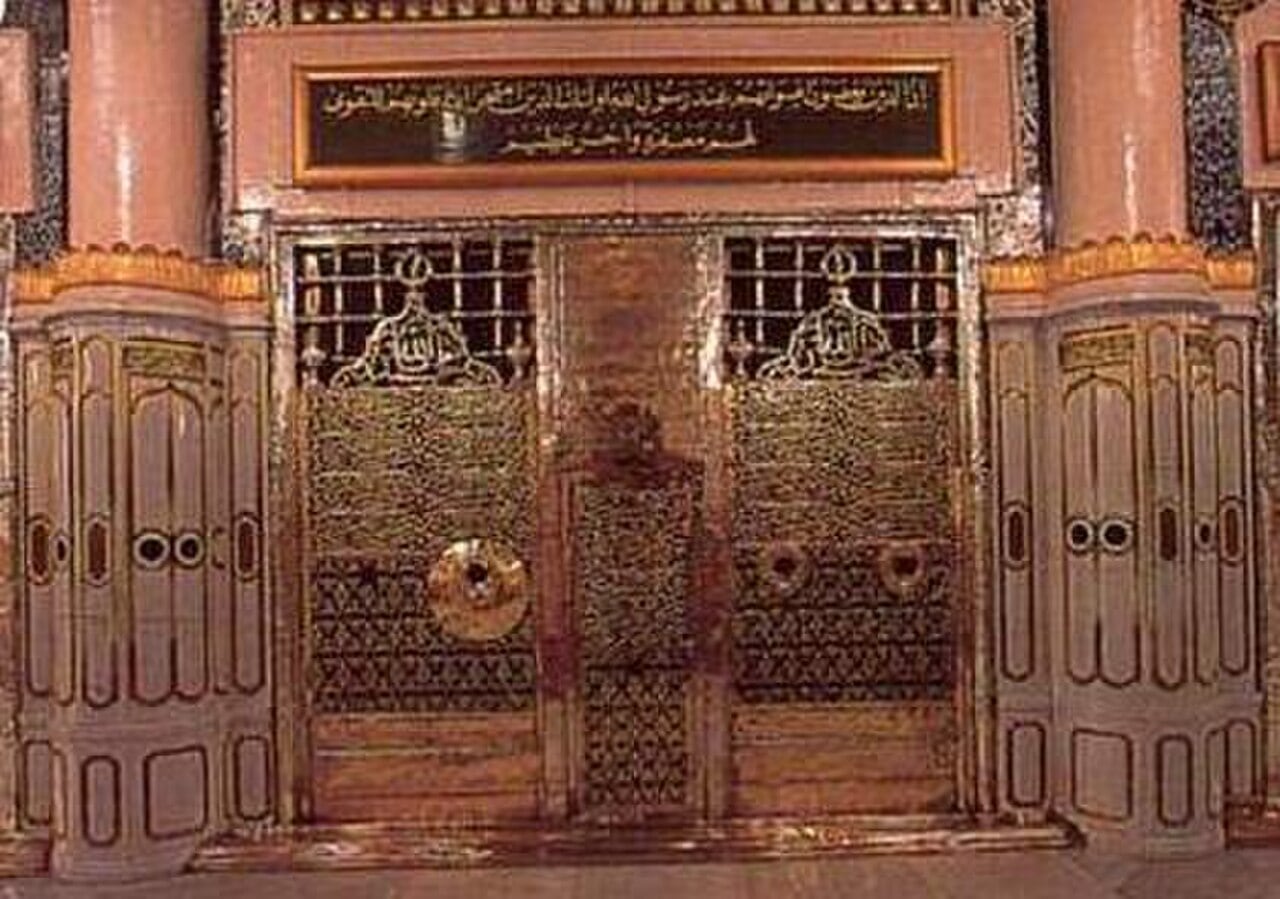
Umar ibn al-Khattab was born in Mecca around 584 into the Banu Adi clan of the Quraysh, and was among the most vigorous early opponents of Muhammad's preaching before converting, according to tradition, around 616 after reading verses of the Quran his sister was reciting. He became one of the Prophet's closest companions, was given the title al-Faruq, the one who distinguishes truth from falsehood, and his daughter Hafsa married Muhammad. He was the decisive voice at Saqifa in securing the succession of Abu Bakr in 632, served as his chief adviser through the Ridda wars, and was named by Abu Bakr as his successor in 634. The ten years that followed transformed the world: Byzantine Syria fell after Yarmouk in 636, Jerusalem surrendered to Umar personally in 637 or 638, the Sasanian Persian Empire collapsed after Qadisiyyah and Nahavand, and Egypt was taken between 640 and 642. He was stabbed while leading dawn prayer in Medina by a Persian captive, Abu Lu'lu'a, and died in November 644. Michael Hart ranked him 52nd in The 100.
Influence Meter
83
Measured on a 100-point scale
Ten years of conquest, and the administration that made it permanent
TL;DR
Ten years that redrew the map
Umar's caliphate is short, and almost everything that made the Islamic world a world rather than a movement happened inside it.
! Why This Matters:
- • The opening: Byzantium and Persia had just exhausted each other in a twenty-six-year war, leaving their frontier provinces taxed to the bone and religiously disaffected.
- • The method: Mobile armies using the desert as a road, and surrender terms - a tax, and keep your religion - often lighter than the incumbent empire's.
- • The difference: He built a state while conquering: a payroll register, appointed and audited governors, a treasury, a land settlement and a calendar.
- • The cost: Two ancient empires ended, and a succession dispute that began at his deathbed committee and has divided Islam ever since.
? Key Data:
- • Length of his caliphate: 10 years, 73 days
- • Jerusalem surrendered: 637 or 638, to him in person
- • Sasanian Empire ended: Nahavand, 642
- • Hart's rank: 52nd of 100
Continue reading below for the full detailed article →
634-644
Two Empires in a Decade
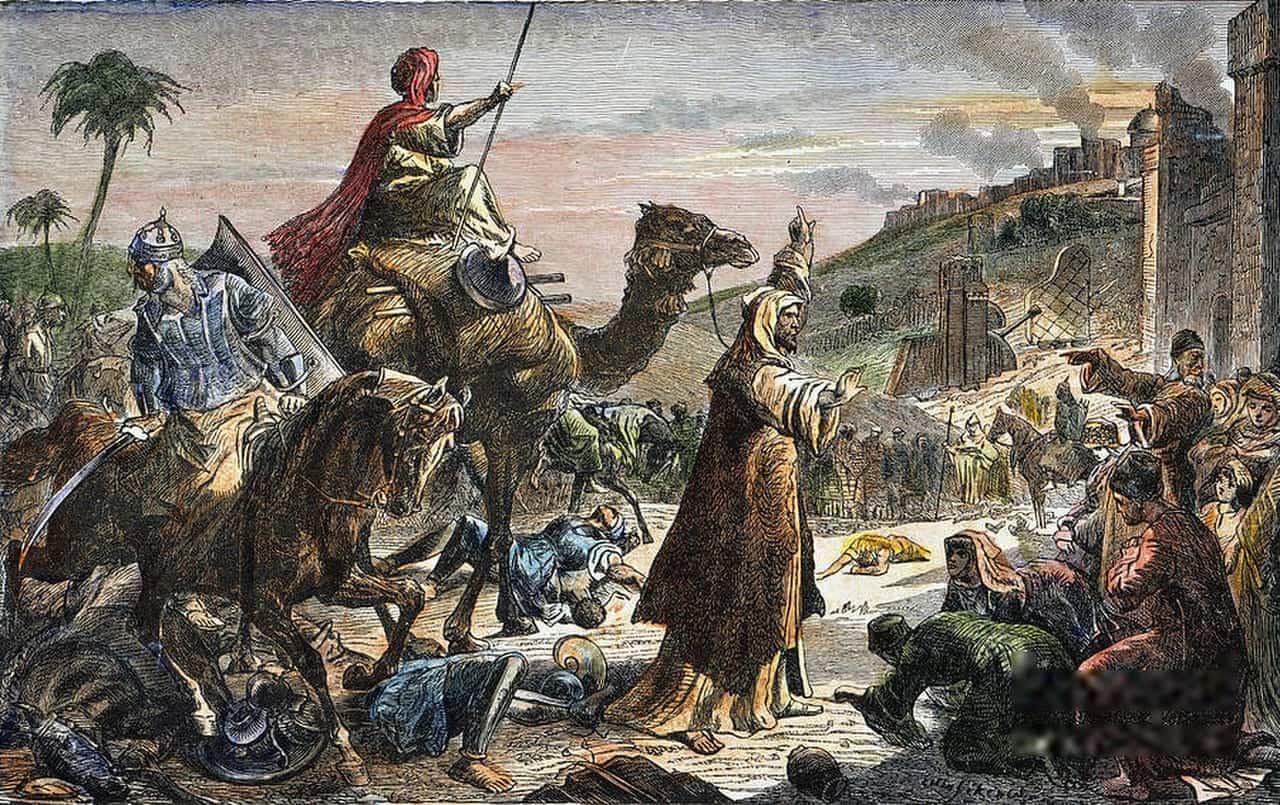
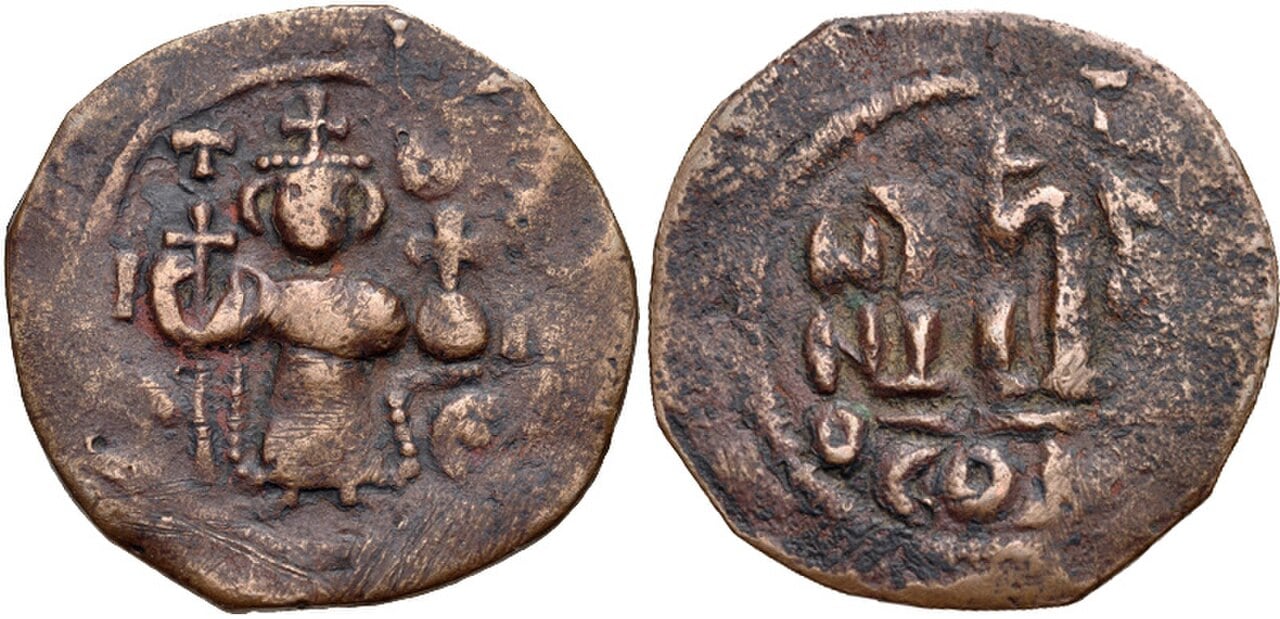
The strategic situation Umar inherited was unusually favourable and he exploited it without hesitation. Byzantium and Sasanian Persia had just finished a war of nearly three decades that had exhausted both, wrecked their frontier provinces and left their populations heavily taxed and, in Syria and Egypt, religiously alienated from an imperial church that regarded them as heretics. Arab armies were mobile, lightly supplied, used the desert as a highway that neither empire could patrol, and offered conquered cities terms - pay a tax, keep your religion, keep your clergy - that were often lighter than what they had been paying before. At Yarmouk in 636 the Byzantine field army in Syria was destroyed; at Qadisiyyah the same year and Nahavand in 642 the Sasanian state effectively ceased to exist. Within a century, Arab rule extended from the Atlantic coast of Iberia to the Indus, and the linguistic and religious map of the Middle East and North Africa took the shape it still has.
Jerusalem surrendered in 637 or 638, and the Patriarch Sophronius is said to have insisted on handing the city over to the caliph in person. Umar arrived, according to the accounts, plainly dressed and on a camel, sharing the ride with his servant. Offered the chance to pray inside the Church of the Holy Sepulchre, he is reported to have declined and prayed outside, on the ground that if he prayed within, later Muslims would claim the building as a mosque. The terms he granted - safety of persons, property, churches and crosses, freedom to practise, in exchange for tribute - became the model for the treatment of conquered Christian and Jewish populations, and are the basis of the document later tradition calls the Pact of Umar, although the surviving text is substantially later. He also permitted Jews to live in Jerusalem again, reversing a Byzantine prohibition.
The Machinery
What He Built Behind the Armies
The conquests are the famous part. The administration is the reason they held.
The diwan
A register of the Muslim community listing every person entitled to a stipend from the state, ranked by precedence in Islam and service. It converted plunder into salaries and made the army an institution rather than a war band.
- Function: State payroll
The land settlement
Against pressure from his commanders, Umar refused to divide conquered agricultural land among the soldiers, keeping it in the hands of its cultivators and taxing it for the treasury. It preserved the productive economy and funded the state permanently.
- Effect: Kept farmland productive
Provincial governors and accountability
Governors were appointed, required to declare their wealth on taking office, and investigated on complaint. He is recorded dismissing highly successful commanders, including Khalid ibn al-Walid, for reasons of principle.
- Principle: No indispensable men
The Hijri calendar
He fixed the start of the Islamic era at the year of the hijra to Medina in 622, giving the community a chronology of its own. It remains in use across the Muslim world.
- Year zero: 622 CE
Garrison cities
Kufa, Basra and Fustat were founded as camps to keep Arab armies out of conquered cities and prevent their assimilation. All three became major urban centres, and Fustat grew into Cairo.
- Became: Basra, Kufa, Cairo
Public welfare and infrastructure
The bayt al-mal treasury supported the poor, orphans and the elderly, including non-Muslims in some recorded cases; canals were dug, including one connecting the Nile to the Red Sea, and famine relief was organised from Egypt during the Year of Ashes.
- Institution: Bayt al-mal
Character
The Ruler Who Patched His Own Clothes
Umar's personal austerity is among the most consistently reported facts about him, and it functioned politically as well as devotionally. He ruled the wealthiest new empire in the world from Medina, lived in a simple house, wore a robe described as heavily patched, ate plainly, and walked the streets at night to hear complaints. The point was not modesty for its own sake: he was governing men who had suddenly become rich through conquest, and he used his own conduct as the standard against which theirs could be measured. He was known to be severe - he carried a whip, and both his contemporaries and later tradition record that people were afraid of him.
He was killed by that same accessibility. On a morning in November 644, leading the dawn prayer in the mosque at Medina, he was stabbed six times by Abu Lu'lu'a Firuz, a Persian captive craftsman who had a grievance about the tax his master required him to pay and who took his own life immediately afterwards. Umar survived three days, refused to appoint his own son, and named a committee of six senior companions to choose his successor - a procedure that produced Uthman and, in the disputes that followed, the divisions that eventually split the community.
Memory
Two Very Different Reputations
Umar's standing in Islamic tradition depends entirely on which tradition. In Sunni Islam he is among the most revered figures after the Prophet himself - one of the four Rightly Guided Caliphs, the model of just and austere rule, and the administrator whose decisions on taxation, land and stipends became precedents in Islamic jurisprudence. In Twelver Shia tradition he is viewed with hostility, chiefly for his role at Saqifa in securing the succession to Abu Bakr rather than to Ali, whom Shia Muslims hold the Prophet had designated; a body of Shia narration also accuses him of violence toward Ali's household. The disagreement is not a minor one - it goes to the legitimacy of the succession itself, which is the founding division of the two traditions, and it means that any account of Umar written from within one is read as polemic by the other.
Further Reading
Books About Umar and the Early Conquests
The earliest surviving Arabic histories date from a century or more after the events, which is the central methodological problem of the field.
Legacy
Why Number Fifty-Two
Michael Hart ranked Umar 52nd, and the argument implicit in the ranking is about what turns a religious movement into a civilisation. Muhammad, first on Hart's list, founded the faith and unified Arabia. Umar took what he left and, in a single decade, extended it across the richest provinces of two ancient empires and gave it the institutional form to hold them. Without that decade Islam might well have remained an Arabian religion. With it, the Middle East and North Africa became Arabic-speaking and predominantly Muslim, and have remained so for fourteen centuries.
The administrative legacy is the part that gets least attention and may matter most. The register of stipends, the decision not to parcel out conquered farmland, the taxation settlement with non-Muslim populations, the separation of garrison from city, the appointment and auditing of governors - these are the mechanisms that converted a series of victories into a functioning state, and they set precedents that Islamic law and Islamic governments have been arguing about ever since. He was killed at prayer by a man with a tax grievance, which is a strangely fitting end for a ruler whose chief achievement was building a system that could collect one.
Related Publications