Pope Urban II

Pope Urban II
Born c. 1035 • Died 29 July 1099
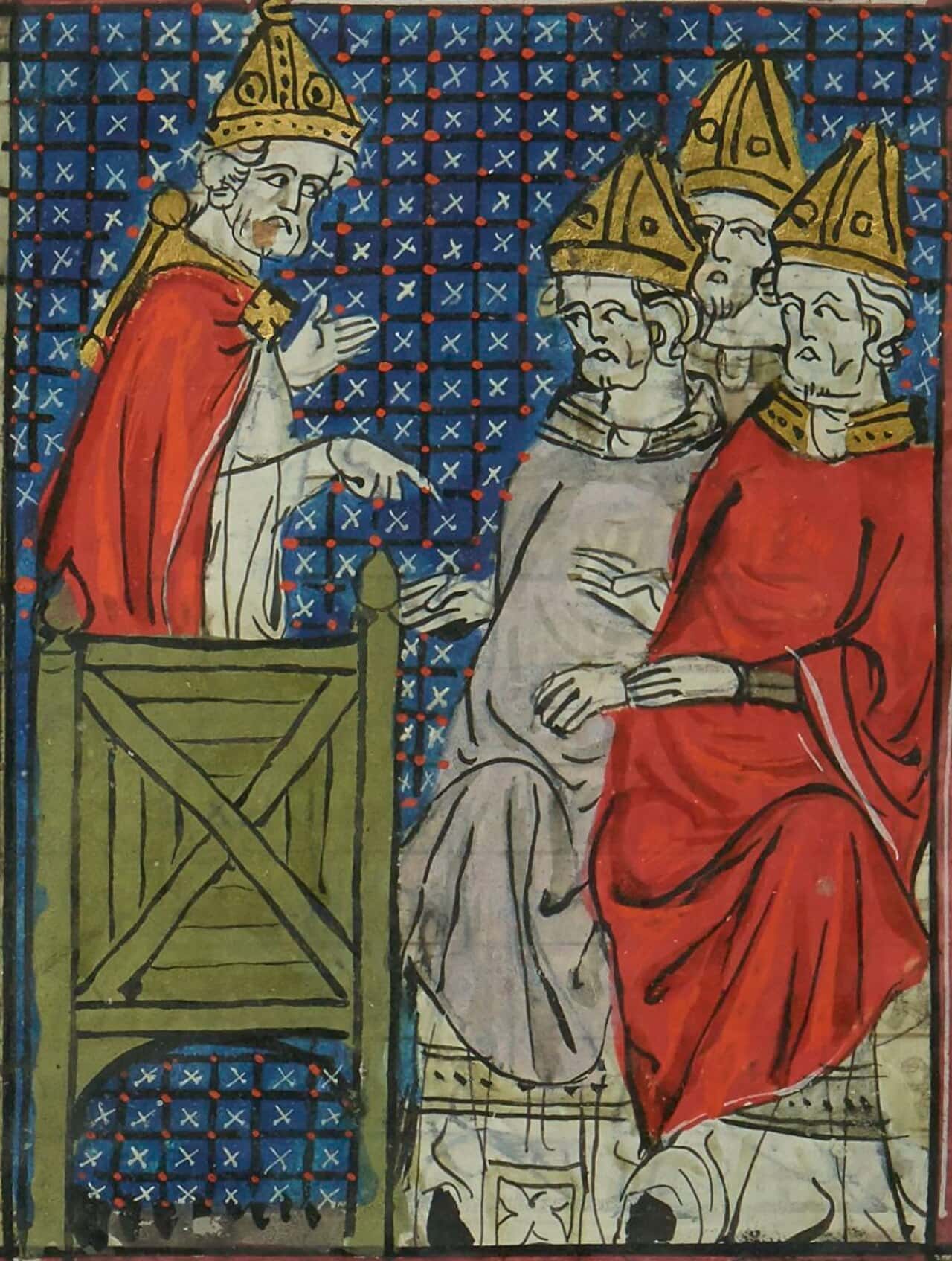
One speech, delivered in a field outside a French town in November 1095, sent tens of thousands of people walking three thousand kilometres to besiege a city most of them could not have located. No transcript exists - five chroniclers wrote down what they remembered or thought he should have said - and the crowd is supposed to have interrupted with a shout of God wills it. Two centuries of warfare followed, along with massacres of Jewish communities in the Rhineland, the sack of Christian Constantinople by a Christian army, and a mutual antagonism still being cited nine hundred years later.
Rank
#51
Influence
77
Field
Pope
Historical Perspective
Odo of Châtillon was born around 1035 at Lagery in Champagne, into the minor nobility, and educated at the cathedral school of Reims before entering the abbey of Cluny - the reforming monastic centre that had become the most powerful religious institution in Europe outside Rome. He rose to prior, was made cardinal-bishop of Ostia around 1080 by Gregory VII, and was elected pope at Terracina on 12 March 1088, taking the name Urban II. His position was initially weak: the imperial antipope Clement III held Rome itself, and Urban could not securely occupy his own city for years. He rebuilt papal authority by touring France and Italy, holding councils and pressing the Gregorian reform programme against lay control of church appointments. At the Council of Clermont on 27 November 1095, responding to an appeal from the Byzantine emperor Alexios I for mercenaries against the Seljuk Turks, he called instead for an armed pilgrimage to recover Jerusalem. He died in Rome on 29 July 1099, fourteen days after the city fell and before the news reached him. Michael Hart ranked him 51st in The 100.
Influence Meter
77
Measured on a 100-point scale
Launched the crusading movement, and with it two centuries of contact and conflict
27 November 1095
What He Said, As Far As Anyone Knows
Because the crowd was too large for the cathedral, Urban preached in a field outside Clermont. Five accounts of the sermon survive, all written afterwards by men with reasons to shape it, and they do not agree. The common elements are these: the Turks were oppressing eastern Christians and desecrating the holy places; the knights of the West were wasting their violence on each other in private feuds; and those who went to fight in the East would receive remission of the penance owed for their sins. He is reported to have said that whoever went for devotion alone, not for money or honour, could substitute the journey for all penance. The crowd is said to have shouted Deus vult - God wills it. Whatever the precise words, the offer was a spiritual reward for warfare, which was a genuine innovation, and the response overwhelmed the mechanism: Urban had envisaged a disciplined force of knights departing the following August, and instead a mass movement began at once.
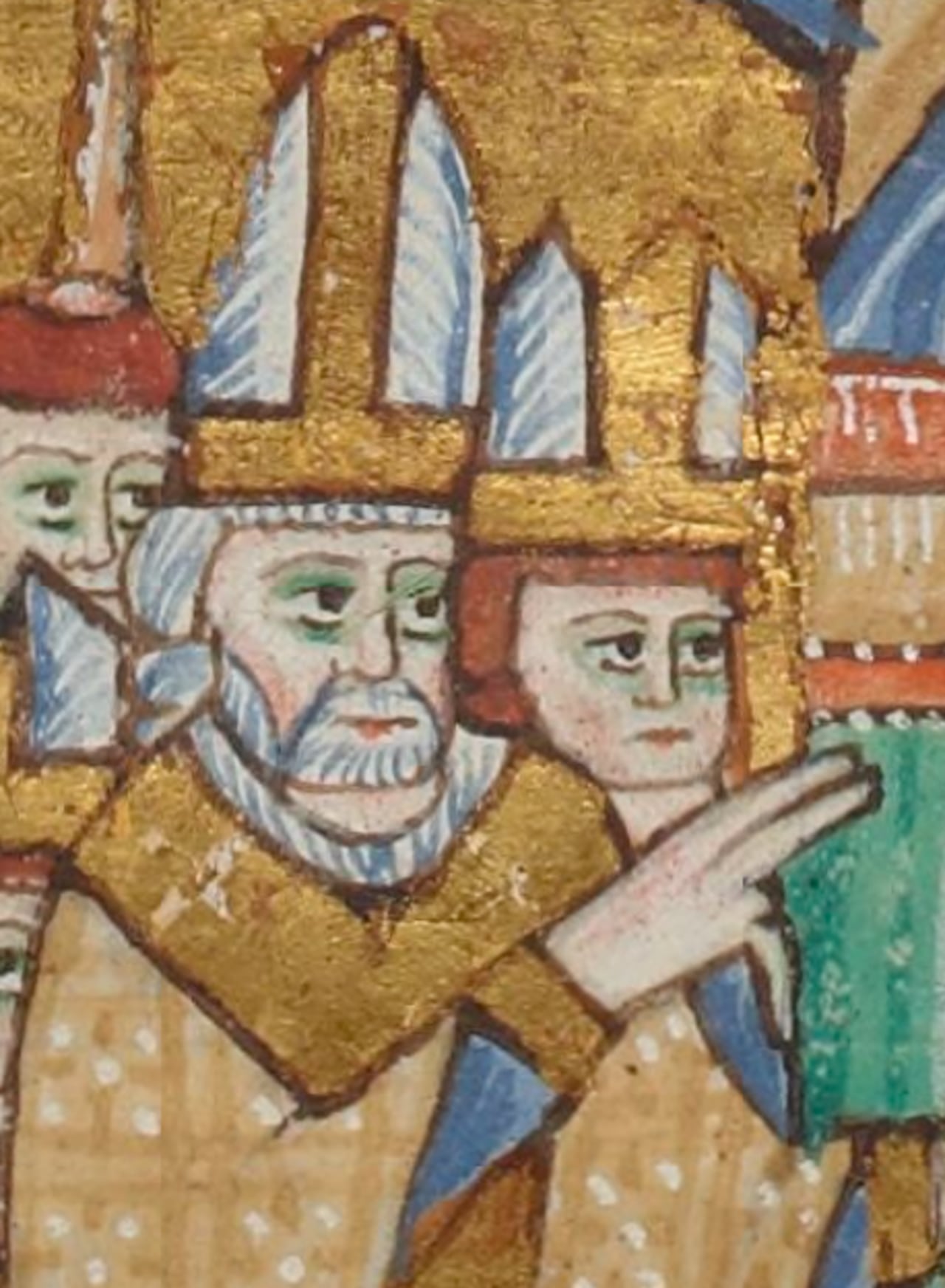
The first killing of the First Crusade was done in Europe, against Europeans. In the spring of 1096, bands moving down the Rhine under leaders including Count Emicho attacked the Jewish communities of Speyer, Worms, Mainz and Cologne, demanding conversion and murdering those who refused; contemporary Hebrew chronicles describe families killing themselves rather than be baptised by force. Estimates of the dead run to several thousand. The logic, such as it was, held that it made no sense to march two thousand miles to fight unbelievers while leaving unbelievers at home. Local bishops in several cities tried to shelter the Jewish communities and in most cases failed. Urban had said nothing to authorise this and the church condemned it, but it followed directly from what he had set in motion, and it marks a turning point after which the position of Jews in Western Europe deteriorated sharply and lastingly.
1096-1099
What Actually Happened
The First Crusade is the only one that achieved its stated objective, which is part of why the model kept being repeated for two hundred years.
The People's Crusade
An unplanned popular movement led by Peter the Hermit set off months early, plundered its way across Hungary, and was destroyed by the Turks in Anatolia within weeks of crossing. Most of the participants died.
- Outcome: Annihilated
The Princes' Crusade
The serious armies, under Godfrey of Bouillon, Bohemond, Raymond of Toulouse and others, gathered at Constantinople, where Alexios extracted oaths of loyalty in exchange for supplies and guides.
- Numbers: Perhaps 60,000-100,000 in total
Nicaea and Dorylaeum
The Seljuk capital in Anatolia fell to a joint siege, and a Turkish army was beaten in the open. The crossing of Anatolia that followed killed enormous numbers through thirst and heat.
- Result: Anatolia opened
The siege of Antioch
Eight months outside the walls in winter, with starvation and desertion, followed by capture through treachery and then an immediate siege of the crusaders inside by a relieving Muslim army. The finding of the Holy Lance restored morale.
- Duration: About eight months
Jerusalem
The city fell after a five-week siege. The sack that followed killed a large part of the Muslim and Jewish population; accounts by both crusader and Muslim writers describe indiscriminate slaughter over days.
- Date: 15 July 1099
The crusader states
Four Latin polities were established along the coast - Jerusalem, Antioch, Edessa and Tripoli - and survived, shrinking, until the fall of Acre in 1291.
- Ended: 1291
Why the Appeal Landed
Urban was not simply lucky. The offer answered several problems in European society at once.
- Too many armed men and not enough land: Primogeniture left younger sons of the knightly class with military training, no inheritance and few outlets. A war in the East offered land, plunder and status.
- A spiritual problem for warriors: Knights lived by violence in a religion that condemned it. Urban offered a form of fighting that was itself penance, resolving a contradiction that had troubled the class for generations.
- Pilgrimage was already central: Jerusalem was the supreme destination of Christian pilgrimage, and the journey was an established devotional practice. Urban's innovation was to arm it.
- The papacy needed authority: Urban was contending with an antipope and an emperor. Placing himself at the head of a movement uniting Western Christendom under papal direction transformed the office's standing.
- Byzantium asked for help: Alexios wanted mercenaries to recover Anatolia after the disaster at Manzikert in 1071. What arrived was an autonomous army with its own objective, which strained relations rather than repairing them.
- The apocalyptic mood: Preachers connected the recovery of Jerusalem with the end times, and the popular response had a millenarian intensity the church hierarchy neither created nor could control.
After 1099
Two Hundred Years, and Then Nine Hundred More
The crusading movement Urban began ran for roughly two centuries and mostly failed. Saladin retook Jerusalem in 1187; the Third Crusade could not recover it; the Fourth, in 1204, never reached the Holy Land at all and instead sacked Constantinople, the greatest Christian city in the world, permanently crippling the Byzantine Empire and deepening the schism between the Latin and Orthodox churches beyond repair. The crusading formula was later turned on targets in Europe - the Cathars of Languedoc, the pagan Baltic, political enemies of the papacy - which did lasting damage to the idea's moral standing even among contemporaries. The last mainland foothold fell in 1291.
The consequences that outlasted the wars were mostly indirect. Two centuries of sustained contact moved goods, texts and techniques westward: Arabic numerals, Greek philosophy preserved in Arabic translation, medicine, sugar, papermaking and navigational knowledge all travelled along channels the crusades helped open, and Italian maritime cities grew rich on the traffic. The papacy emerged as a power capable of mobilising Europe. And the memory has proved unusually durable and unusually available for reuse - invoked by nineteenth-century European colonialism, by twentieth-century propagandists, and by modern extremists on both sides, generally with a historical accuracy that would not survive an hour's reading.
Further Reading
Books About the Crusades
Urban left few personal papers; the subject is the movement rather than the man.
Legacy
Why Number Fifty-One
Michael Hart ranked Urban II 51st on a straightforward causal argument: a single speech by a single man set in motion a movement involving hundreds of thousands of people across two centuries, and there are few clearer cases of an individual's decision producing effects at that scale. He did not create the conditions - the surplus of armed nobility, the pilgrimage tradition, the Byzantine appeal and the reform papacy were all in place - but he was the one who assembled them into a call to action, and nobody had done it before.
The results were largely not what he intended. Jerusalem was held for eighty-eight years, the eastern and western churches ended further apart rather than reunited, and the movement's chief long-term beneficiaries were Venetian and Genoese merchants. What the crusades did deliver was two centuries of intense, violent, commercially productive contact between Latin Europe and the Islamic and Byzantine worlds, at exactly the period when Europe was poorest in learning and had most to gain. It is a bleak sort of influence, and it belongs to a monk who died believing his enterprise had failed, a fortnight after it had succeeded.
Related Publications