Charlemagne

Charlemagne
Born 2 April 748 • Died 28 January 814
Roughly ninety per cent of the surviving works of Roman authors reach us through manuscripts copied in the ninth century - after Charlemagne ordered monasteries to maintain schools and scriptoria, and after his scholars developed a clear, spaced, lower-case hand to copy them in. That script is the ancestor of the letters on this screen. Whatever else the empire achieved and however quickly it fell apart, the reason we can read Cicero is that he told monks to write things down properly.
Rank
#97
Influence
76
Field
King and Emperor
Historical Perspective
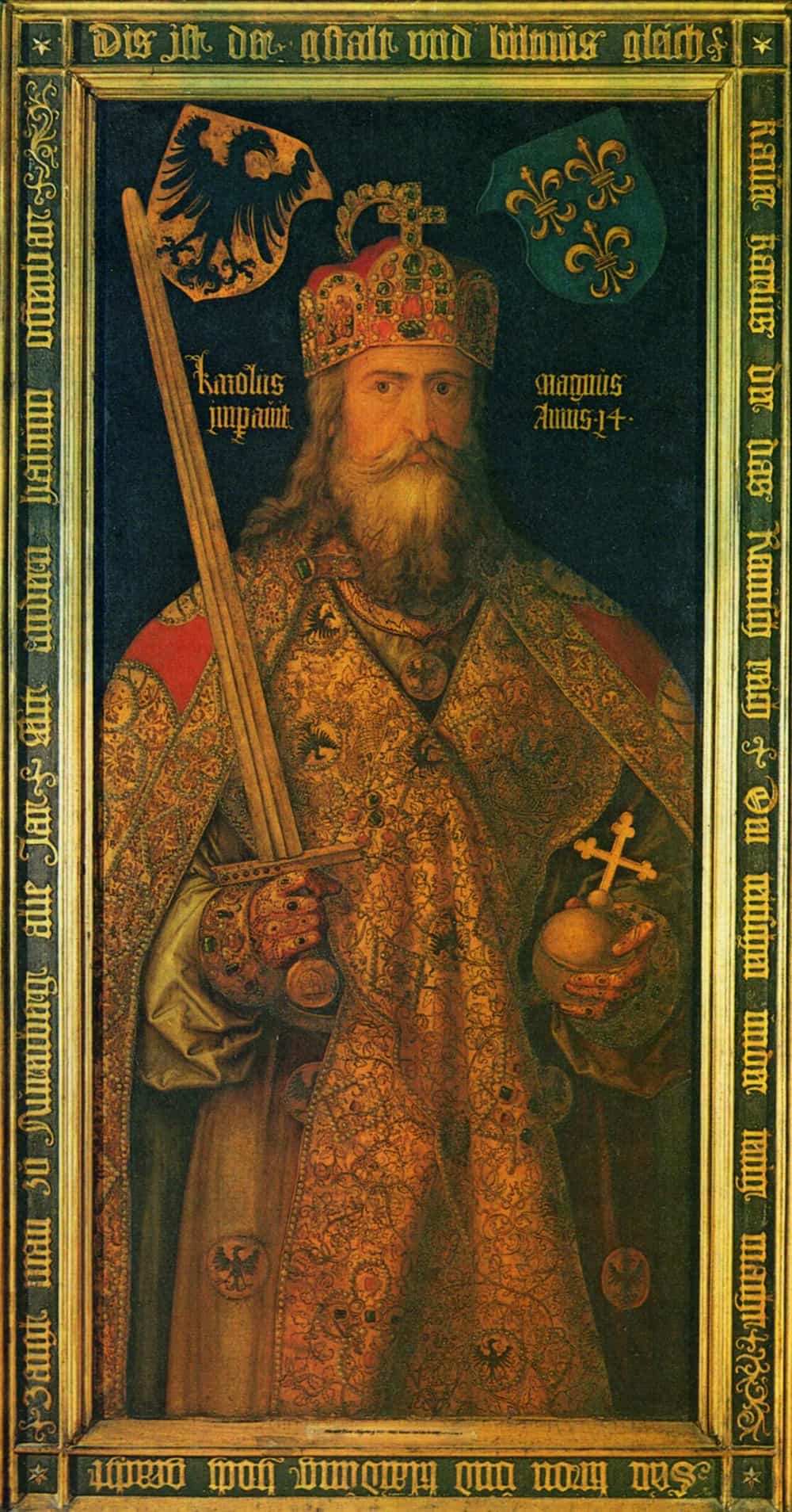
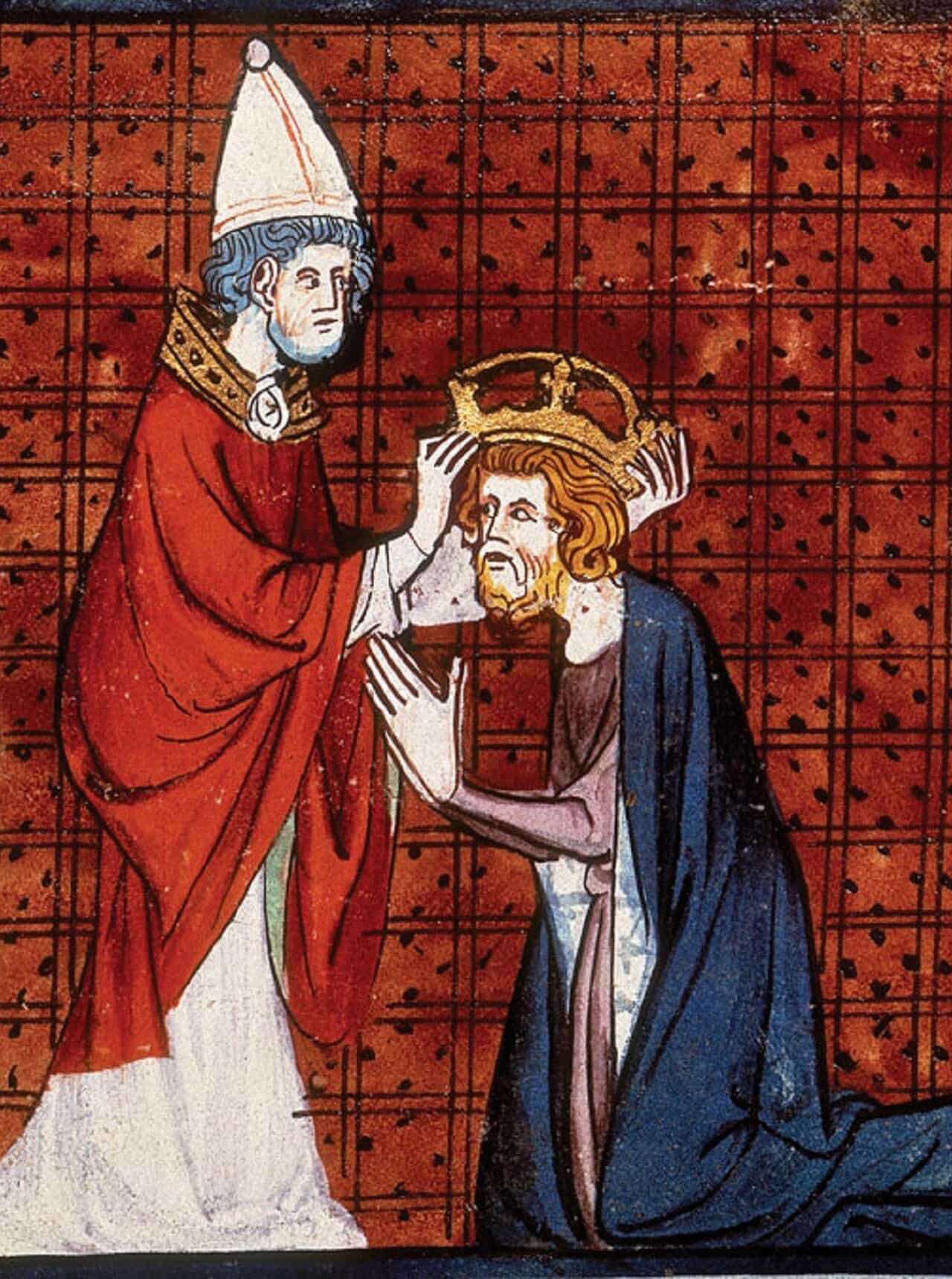
Charles, later called the Great, was born on 2 April 748, son of Pepin the Short, and inherited half the Frankish kingdom in 768; his brother Carloman's death in 771 gave him the rest. He then campaigned almost every year for four decades. He destroyed the Lombard kingdom in Italy in 774 and took its crown, annexed Bavaria, pushed the frontier east against the Avars, and fought a war of conquest and forced conversion in Saxony that ran on and off for thirty-two years and included the massacre of some four and a half thousand prisoners at Verden in 782. On Christmas Day 800, in St Peter's, Pope Leo III placed a crown on his head and the assembly acclaimed him emperor - an act that revived the western empire, gave the papacy a protector, and permanently annoyed Constantinople. He built a capital at Aachen with a palace chapel modelled on Ravenna, issued capitularies regulating everything from weights to the conduct of bishops, and gathered scholars including Alcuin of York. He died at Aachen on 28 January 814. Michael Hart ranked him 97th in The 100.
Influence Meter
76
Measured on a 100-point scale
Unified western Europe briefly, and preserved its inheritance permanently
Forty-Six Years
A Reign of Campaigns
He is recorded as having led or sent an army in all but two or three years of his reign, and the empire is best understood as what that produced.
The Carolingian Renaissance
The Part That Lasted
Charlemagne could read but, by his biographer Einhard's account, never mastered writing - he kept tablets under his pillow to practise and started too late. It did not stop him treating literacy as state policy. He imported Alcuin from York and scholars from Italy, Ireland and Spain, ordered that every cathedral and monastery run a school, required that clergy be able to understand the Latin they recited, and had authoritative texts of the Bible and the liturgy established because the copies in circulation had drifted apart. The practical instrument was a new script. Carolingian minuscule separated words, used consistent lower-case letterforms, and introduced punctuation and capitals at the start of sentences, replacing the cramped, unspaced scripts that had made older manuscripts slow to read and easy to miscopy. Monasteries then copied everything they could find. When Italian humanists rediscovered classical texts six hundred years later, what they found were Carolingian copies, whose clear script they mistook for Roman and revived - which is how it became the model for the roman typefaces of print and, eventually, for these letters.
The Saxon wars deserve to be stated plainly rather than folded into a list of conquests. Saxony was pagan, decentralised and had no single authority to surrender, so the war lasted from 772 to 804 and had to be won village by village. Charlemagne's capitulary for Saxony prescribed death for refusing baptism, for eating meat in Lent, for cremating the dead in the pagan manner, and for practising traditional rites. After a revolt in 782 he had around four and a half thousand Saxon prisoners beheaded in a single day at Verden, and he later deported whole populations and settled Franks in their place. Alcuin, his own leading scholar, wrote to him objecting that faith cannot be compelled and that tithes were being extracted from people who had not been taught what they were for. This was forced conversion carried out as a policy of state over three decades, and it succeeded: Saxony became Christian and stayed so. It is part of the same reign as the schools and the manuscripts, and any account that keeps them in separate compartments is not describing the man.
Further Reading
Books About Charlemagne
Einhard's short life, written by a courtier who knew him, is one of the few intimate portraits to survive from the early Middle Ages - and is modelled closely on Suetonius, which is worth remembering while reading it.
Legacy
Why Number Ninety-Seven
Michael Hart ranked Charlemagne 97th, and part of the reason for the low placement is how fast the political achievement dissolved. His son Louis held the empire together; his grandsons divided it at Verdun in 843 into three parts whose western and eastern halves became, in the long run, France and Germany. The Holy Roman Empire that claimed his inheritance was for most of its thousand years neither an effective state nor particularly Roman. Within seventy years of his death the Vikings were sailing up the rivers of a fragmenting Francia.
What survived was less visible and more durable. The alliance between the Frankish crown and the papacy, sealed in 800, shaped European politics for seven hundred years and produced both the coronation tradition and the long quarrel over who outranked whom. The administrative habits - written law, sworn officials, a standard silver coinage whose pound and pence descended into English currency until 1971 - outlived the empire that introduced them. And the manuscripts survived everything. Charlemagne is invoked today as a founding figure of European unity, with a prize named for him awarded at Aachen; that is a modern projection onto a Frankish warlord, but the projection stuck because he was the last person to hold most of western Europe together before anyone tried again.
Related Publications