Mikhail Gorbachev

Mikhail Gorbachev
Born 2 March 1931 • Died 30 August 2022
In 1953, 1956, 1968 and 1981, when a country inside the Soviet bloc moved toward independence, Moscow's answer was armour. In 1989 six of them went in a single autumn - Poland, Hungary, East Germany, Czechoslovakia, Bulgaria, Romania - and the tanks did not come. Nothing Gorbachev built lasted. The thing he declined to do changed the map of Europe.
Rank
#95
Influence
74
Field
Head of State
Historical Perspective
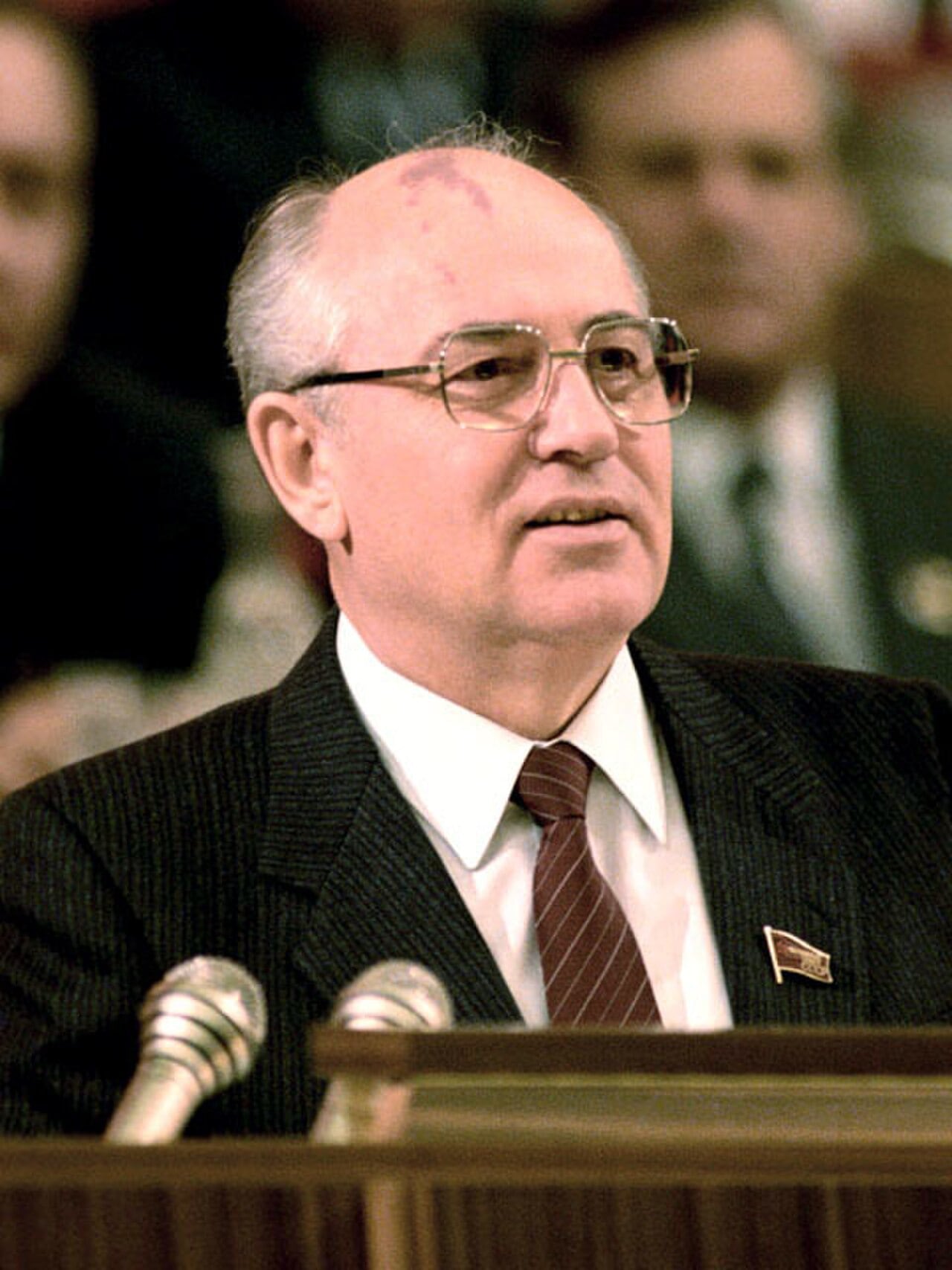
Gorbachev was born on 2 March 1931 to a peasant family in Privolnoye, in the Stavropol region, and drove a combine harvester as a teenager before studying law at Moscow State University. He rose through the party in Stavropol, joined the Politburo in 1980, and became General Secretary on 11 March 1985 at fifty-four - the first Soviet leader born after the revolution and the first in a decade who was not visibly dying. His programme had two names: glasnost, the opening of public discussion, and perestroika, the restructuring of the economy. The Chernobyl disaster in April 1986 pushed him toward the first far faster than planned. He met Reagan at Geneva in 1985 and Reykjavik in 1986, signed the INF Treaty in 1987 eliminating an entire class of missiles, and completed the withdrawal from Afghanistan in February 1989. He accepted German reunification in 1990 and took the Nobel Peace Prize the same year. A coup by hardliners in August 1991 failed but destroyed his authority, and he resigned on 25 December 1991 as the Soviet Union dissolved. He died on 30 August 2022. Michael Hart ranked him 95th in The 100.
Influence Meter
74
Measured on a 100-point scale
Ended the Cold War without a war, and lost his country doing it
TL;DR
What he intended and what happened
Nearly everything Gorbachev is celebrated for was a consequence he did not want, produced by a reform he did want.
! Why This Matters:
- • He wanted to save socialism: Not to end it. Perestroika was meant to make the planned economy work by decentralising decisions and allowing limited cooperatives; he remained a convinced socialist to the end of his life and said so repeatedly.
- • Glasnost broke the story the state told: Once censorship loosened, the press printed the famine, the purges, the camps, Katyn, and the true state of the economy. A system whose legitimacy depended on its own account of itself could not survive its own archives being read aloud.
- • The economy got worse, not better: Half-reform removed the discipline of the plan without supplying the discipline of a market. Shortages worsened, the budget deficit exploded, and by 1990 there were queues for bread in a country that had recently been a superpower.
- • He would not use force to hold the bloc: He told the Warsaw Pact leaders in 1989 that Soviet troops would not intervene. That single decision, more than any treaty, is what ended the division of Europe.
- • The nationalities question ended him: Glasnost let the Baltic republics, Georgia, Armenia and eventually Russia itself say what they wanted, and what they wanted was out. He never found an answer, and force was used in Tbilisi, Baku and Vilnius in ways that discredited him with reformers without satisfying hardliners.
? Key Data:
- • Years in power: Six and a half
- • Nuclear warheads cut by INF: About 2,700 missiles eliminated
- • Countries that left the bloc in 1989: Six, without Soviet intervention
- • Hart's rank: 95th of 100
Continue reading below for the full detailed article →
1985-1988
The Summits
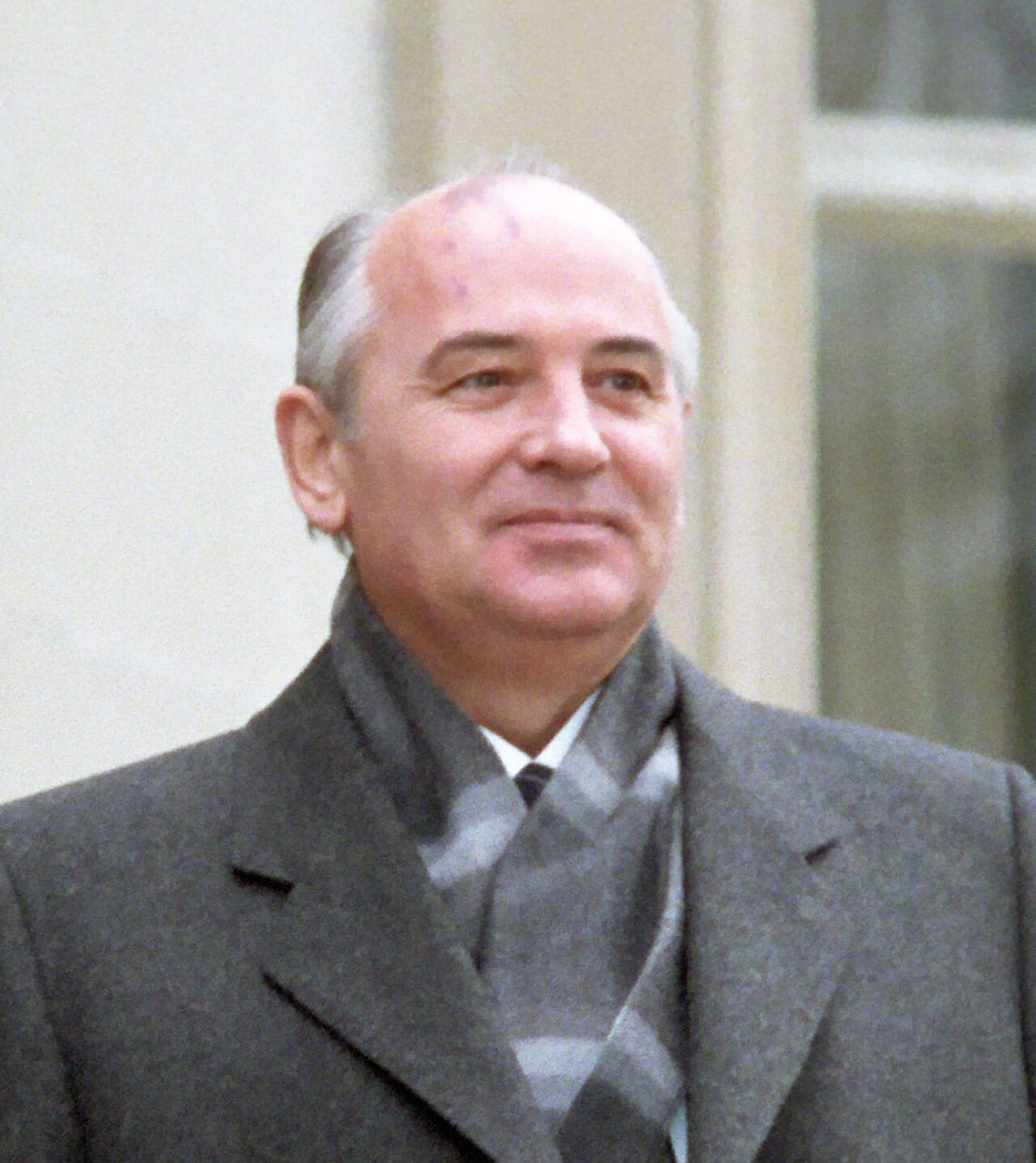
The relationship with Reagan is the part of the story that looks least likely in advance. Reagan had called the Soviet Union an evil empire in 1983 and was committed to a missile-defence programme the Soviets regarded as destabilising; Gorbachev arrived with a Politburo that expected confrontation. They met at Geneva in November 1985 and talked privately for far longer than scheduled. At Reykjavik in October 1986 they came within reach of agreeing to abolish all nuclear weapons - the talks collapsed over Reagan's refusal to confine missile defence to the laboratory, and the near miss is still argued about. The INF Treaty signed in Washington in December 1987 was the first agreement ever to eliminate a whole category of nuclear weapons rather than cap it, and it included intrusive on-site inspection that both militaries had said would never be accepted. What made it work was not warmth but a shared, unusual assessment: both men appear to have genuinely believed that nuclear war was possible by accident and that the arsenals were the problem rather than the solution.
Outside Russia, Gorbachev is one of the most admired figures of the twentieth century. Inside it, he is not. Polling has consistently found large majorities of Russians regretting the dissolution of the Soviet Union, and pluralities holding him personally responsible for it; when he ran for president of Russia in 1996 he received about half of one per cent of the vote. The reason is not mysterious. The years that followed the collapse brought a fall in Russian output comparable to a major war, the loss of savings to hyperinflation, a decline in male life expectancy of several years, and the transfer of state assets to a small number of people. That happened largely under his successor, but it happened because the state he led came apart, and for most Russians the two are the same event. His own last years were spent running a foundation, campaigning on environmental and disarmament issues, and objecting - with no influence whatever - to the direction his country had taken.
Further Reading
Books About Gorbachev
The interesting question in all of them is whether the Soviet Union could have been reformed at all, or whether the attempt was what killed it.
Legacy
Why Number Ninety-Five
Michael Hart ranked Gorbachev 95th, and the case is essentially about what did not happen. The Cold War had been expected, by serious people on both sides, to end either in stalemate indefinitely prolonged or in a nuclear exchange. It ended instead with one superpower dismantling its own empire and then itself, largely peacefully, in about six years. The Yugoslav wars are a reasonable indication of what the same process looks like when force is used; the Soviet case involved a far larger population, fifteen republics, and the world's largest nuclear arsenal, and it did not go that way.
The reservations are equally clear. He was a poor economic manager whose half-measures made a bad situation worse, he was outmanoeuvred repeatedly by both hardliners and by Yeltsin, and he never devised any coherent response to the national movements that undid him. Much of what he is credited with was the result of losing control rather than exercising it. But the decisive acts were decisions - not to shoot in Eastern Europe, not to resist reunification, to sign away weapons systems - and a different man in the same office would very plausibly have chosen otherwise. The world that followed, for good and ill, is the one those choices produced.
Related Publications