Constantine the Great

Constantine the Great
Born 27 February c. 272 • Died 22 May 337
Constantine (c. 272-337) inherited a share of an empire that had spent the previous decade persecuting Christians, and left one in which the emperor built their churches, paid their bishops' travel expenses, and presided over their doctrinal councils in person. He was not a gentle man - he fought civil wars for two decades, executed his eldest son and his wife, and delayed his own baptism until he was dying. But the institutional decisions he took between 312 and 337 did more to determine the religious history of Europe than those of any other single ruler, and the city he founded outlasted Rome itself as a seat of empire.
Rank
#21
Influence
86
Field
Roman Emperor
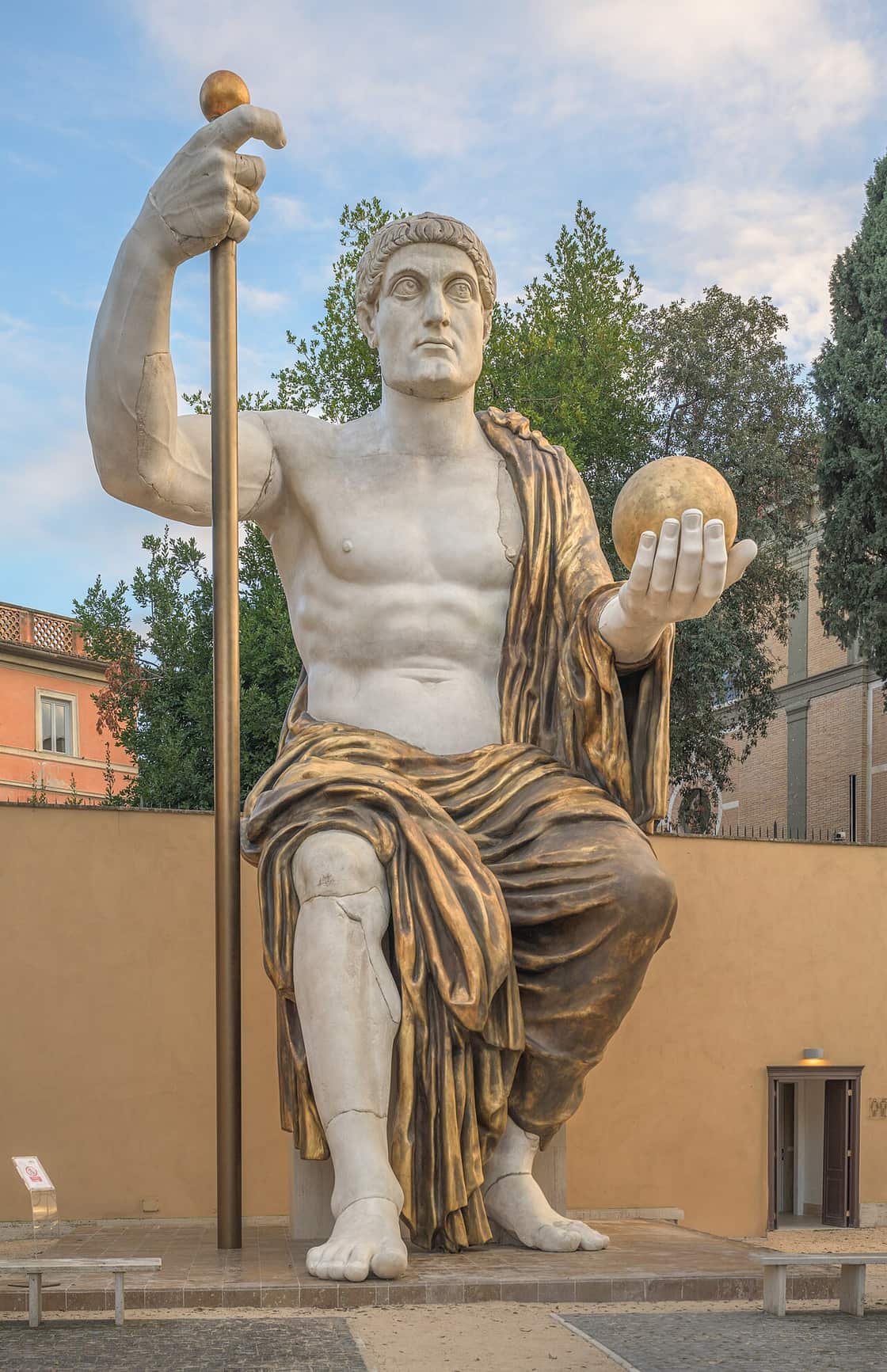
Historical Perspective
Constantine was born at Naissus in the Balkans, probably on 27 February around the year 272, the son of the officer Flavius Constantius - later the emperor Constantius I - and Helena, a woman of humble background who would herself be canonised. He grew up inside the tetrarchy, Diocletian's four-ruler system designed to stabilise imperial succession, and when his father died at Eboracum, modern York, on 25 July 306, the army there proclaimed him emperor. The system promptly collapsed into the civil wars it had been built to prevent. Constantine won them: Maxentius at the Milvian Bridge outside Rome on 28 October 312, and finally Licinius in 324, leaving him sole ruler of the whole empire. Along the way he attached himself and the state to the Christian God. He extended legal toleration, returned confiscated property, funded basilicas, exempted clergy from public duties, and in 325 summoned the bishops to Nicaea to settle what Christians actually believed. In 324 he began building a new capital on the Bosphorus, dedicated as Constantinople on 11 May 330. Michael Hart ranked him 21st in The 100 for a single reason: without imperial patronage, Christianity might well have remained one sect among many.
Influence Meter
86
Measured on a 100-point scale
Attached the Roman state to the Christian church, and moved the empire's centre east for a millennium
306
Proclaimed Emperor in Britain
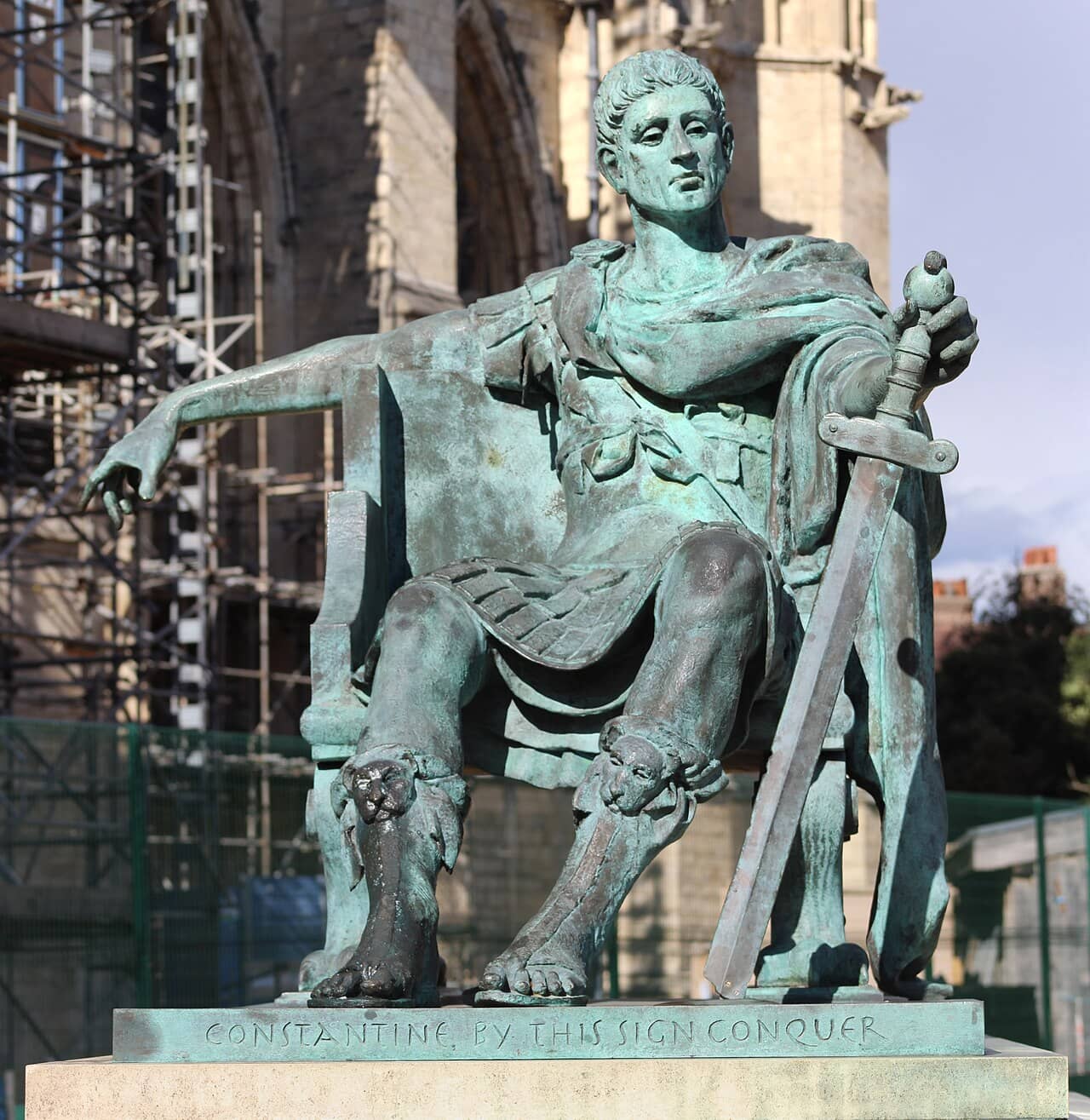
Constantine spent his youth as a hostage in all but name, held at Diocletian's court in Nicomedia as a guarantee of his father's loyalty, where he received a good Greek education and watched the machinery of empire at close range. He joined his father in Britain for a campaign against the Picts, and when Constantius died at York on 25 July 306, the troops immediately proclaimed the son in his place - an entirely irregular proceeding under the tetrarchy, which allotted succession by seniority rather than heredity or acclamation. The senior emperor Galerius, presented with a fait accompli backed by an army, compromised by granting Constantine the junior title of caesar. Constantine accepted it, waited, and began styling himself augustus on his own coinage. The next eighteen years were spent making that claim true.
306-324
Eighteen Years of Civil War
Diocletian's tetrarchy was a serious attempt to solve the problem that had nearly destroyed Rome in the third century: emperors made and unmade by their own armies, at a rate of roughly one every two or three years. Four rulers, two senior and two junior, would divide the empire's regions and hand power on by orderly promotion. It worked exactly once, at Diocletian's own retirement in 305, and then failed completely. Within a year there were six claimants. Constantine's career is the story of removing them.
He dealt with Maxentius, who held Italy and Africa, by invading in 312 and destroying his army at the Milvian Bridge. He then shared the empire with Licinius in the east for a decade of increasingly hostile coexistence, marked by disputes over religious policy and territory, before the final war of 324 ended at Chrysopolis. Licinius surrendered, was spared, and was executed the following year. From 324 Constantine ruled alone, the first man to hold the whole empire since Diocletian had deliberately divided it, and he used that authority to make changes no committee of four could ever have agreed on.
The Battle of the Milvian Bridge, fought on 28 October 312 just north of Rome, is the hinge of Constantine's reign and arguably of European religious history. Maxentius had the larger force and the walls of Rome behind him, but chose to give battle in the open across the Tiber; his army broke, and he drowned in the river during the retreat. Constantine entered Rome as sole ruler of the west. Every Christian account of the reign treats this victory as the moment the emperor's allegiance changed - and Constantine himself, whatever he privately believed, spent the next twenty-five years acting as though it had.
The Sign
Two Incompatible Accounts of a Conversion
The story of the sign before the battle survives in two versions that do not match. Lactantius, writing within a few years of the event, says Constantine was directed in a dream to mark his soldiers' shields with a symbol of Christ. Eusebius of Caesarea, writing much later in his Life of Constantine and claiming the emperor told him so under oath, describes something far grander: a cross of light seen in the sky above the sun by the whole army in the early afternoon, accompanied by a written instruction to conquer by this sign. The two accounts differ in medium, timing, audience and drama, and the more spectacular one is the later. Historians therefore treat the vision itself as unrecoverable and study the behaviour instead - and the behaviour is unambiguous. From 312 onward Constantine's patronage, legislation, correspondence and building programme all point one way, even as he continued to hold the pagan office of pontifex maximus and kept the sun-god Sol on his coins for another decade.
313
What the Edict of Milan Did and Did Not Do
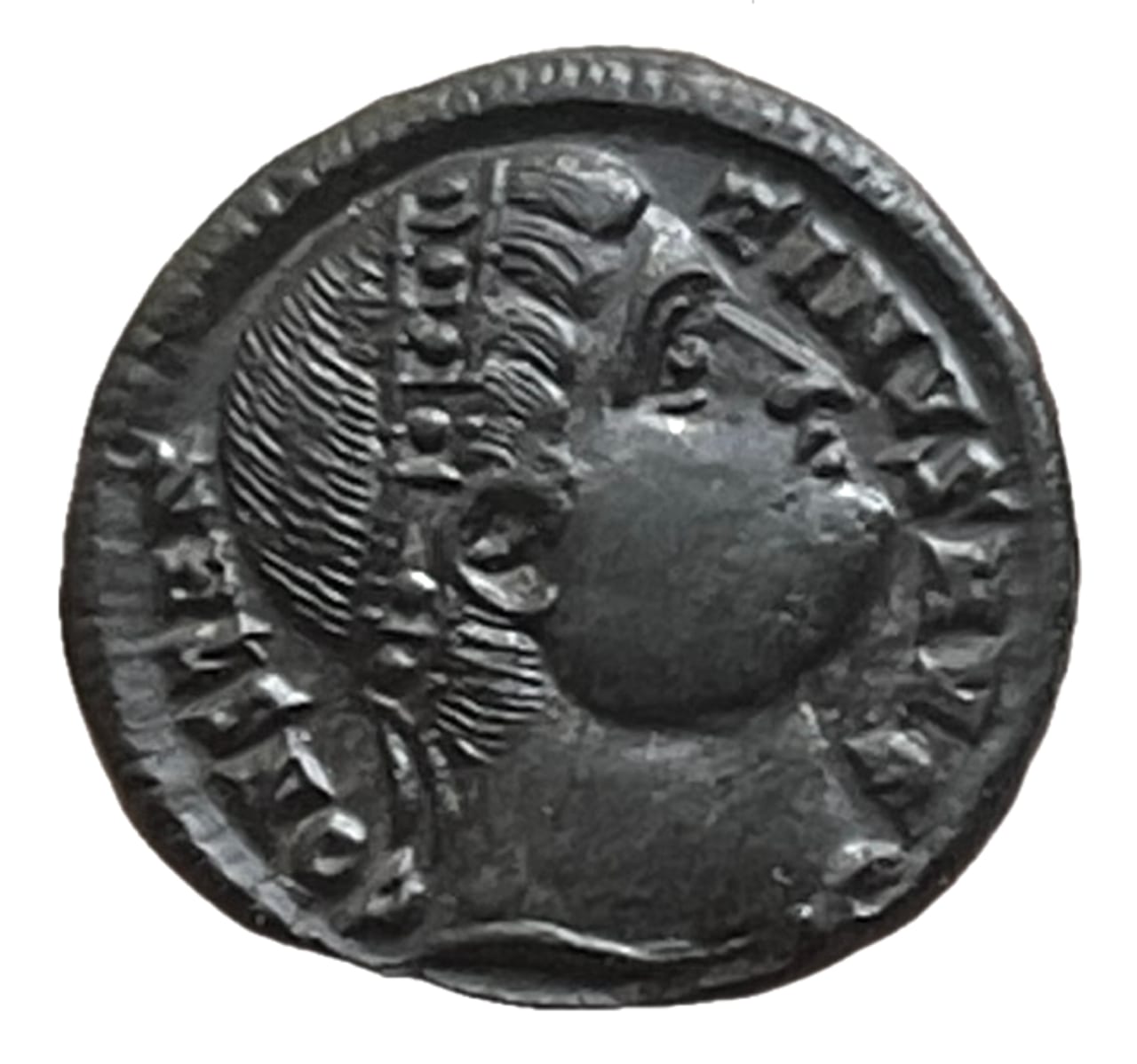
Issued jointly with Licinius in 313, the agreement conventionally called the Edict of Milan granted Christians the legal right to practise openly and ordered the restitution of property confiscated during the persecutions - most recently the Great Persecution launched by Diocletian in 303, which had demolished churches, burned scriptures and executed clergy across the empire. It came as an enormous relief to a minority that had spent a decade in real danger.
It is worth being precise about its limits, because it is routinely overstated. The edict did not make Christianity the state religion of Rome; it made it lawful, alongside every other cult, and its language extends toleration generally rather than to Christians alone. Paganism remained legal, widely practised and publicly funded for decades afterwards, and Constantine himself never suppressed it. Christianity became the official religion of the empire only under Theodosius I, in 380, more than forty years after Constantine's death. What Constantine supplied was not establishment but something arguably more valuable at that stage: safety, money, legal privilege, and the personal attention of the emperor.
The First Council of Nicaea, 325
Constantine summoned around three hundred bishops from across the empire to a lakeside palace in Bithynia, paid their travelling costs, and attended in person. The immediate problem was a quarrel in Alexandria over whether Christ was co-eternal with God the Father; the emperor's interest was in an empire that did not fracture along theological lines.
- It produced the Nicene Creed: A short statement of belief, still recited weekly in most Christian churches, drafted specifically to exclude the position of the Alexandrian priest Arius.
- It condemned Arianism: Arius held that the Son was created by, and therefore subordinate to, the Father. The council ruled against him - though the dispute continued for most of the following century.
- It fixed the dating of Easter: The council resolved that Easter should be calculated independently of the Jewish calendar, ending a divergence between eastern and western practice.
- It issued twenty canons: Rules on clerical discipline, the authority of bishops in their own provinces, and the readmission of those who had lapsed during the persecutions.
- It set a precedent that outlasted the doctrine: For the first time, a Roman emperor convened and steered a church council. The idea that secular power has a legitimate role in defining religious orthodoxy begins here, and shaped the next fourteen centuries of European politics.
- Constantine's own position stayed ambiguous: He enforced the creed, then later recalled Arius from exile, and was ultimately baptised by an Arian bishop. His concern was unity rather than the substance of the argument.
324-330
A New Rome on the Bosphorus
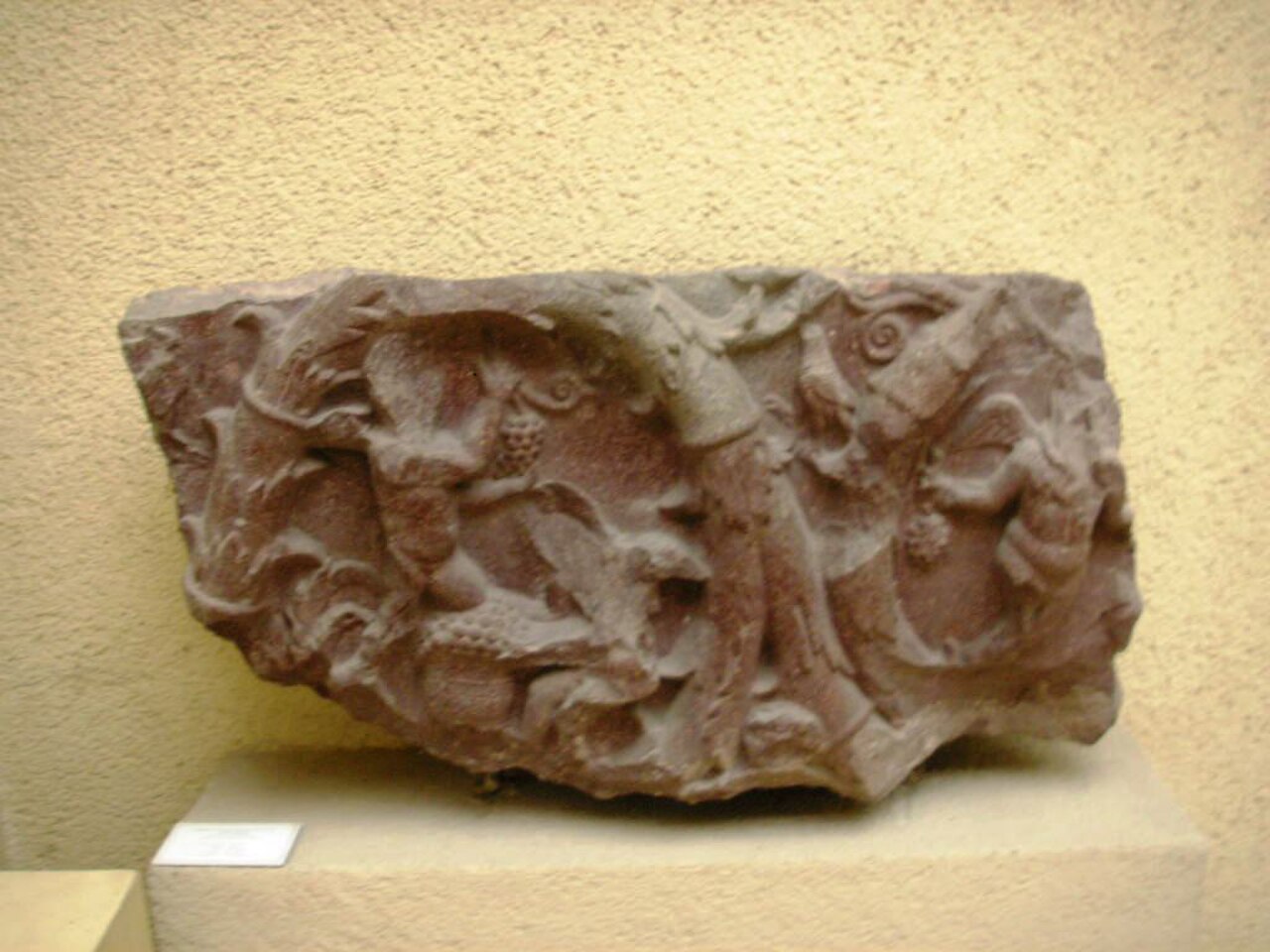
Rome had ceased to be a practical capital. The frontiers that mattered were the Danube and the Persian border, both far to the east, and emperors had already spent decades governing from Milan, Trier and Nicomedia. Constantine chose the Greek town of Byzantium, on a defensible peninsula commanding the strait between Europe and Asia and astride the trade routes between the Aegean and the Black Sea. The site was consecrated on 8 November 324 and the city dedicated on 11 May 330 amid forty days of celebration. He filled it with monuments stripped from across the empire, endowed it with a senate and free grain, and had it declared a New Rome. The choice proved extraordinarily durable: the western empire fell in 476, but Constantinople remained a capital until 1453, and the eastern Roman state it governed lasted more than eleven hundred years after its founder's death.
Statecraft
The Reforms Behind the Religion
The religious policy is what he is remembered for. The administrative changes are what made the late empire governable, and several outlasted the empire itself.
The solidus
A gold coin of consistent weight and purity, introduced to replace a currency ruined by generations of debasement. It held its standard for some seven hundred years and became the reserve currency of the medieval Mediterranean.
- Endured: Over 700 years
Separation of civil and military command
Provincial governors lost their troops and generals lost their tax revenues, making it far harder for any one official to mount a rebellion - the structural problem that had produced the third-century crisis.
- Purpose: Suppress usurpation
Mobile field armies
Reorganised the army into comitatenses, mobile reserves stationed in depth, and limitanei, standing frontier garrisons - a defensive doctrine that traded border impermeability for the ability to concentrate force.
- Structure: Comitatenses and limitanei
Abolition of the Praetorian Guard
Disbanded after the Milvian Bridge, where it had fought for Maxentius. The unit had made and murdered emperors for three centuries; Constantine simply ended it.
- Year: 312
Legal privileges for the clergy
Exempted clergy from onerous civic obligations, gave bishops' courts standing in law, and permitted the church to receive legacies - measures that made it a wealthy, permanent institution.
- Effect: Institutional endowment
A programme of basilicas
Funded the Lateran basilica and Old St Peter's in Rome and the Church of the Holy Sepulchre in Jerusalem, establishing at imperial expense the physical map of Christian pilgrimage.
- Notable: Old St Peter's; Holy Sepulchre
326-337
The Last Years, and the Deathbed Baptism
The reign has a dark stretch that Christian sources handle awkwardly. In 326 Constantine had his eldest son Crispus, an accomplished commander, put to death, and shortly afterwards his wife Fausta died in circumstances that ancient writers describe variously and none convincingly. No satisfactory explanation survives; the episode sits oddly beside the piety of the surrounding decades and is a useful corrective to any reading of him as primarily a religious figure. His mother Helena travelled to Palestine soon after, a journey later credited with locating the True Cross. Constantine spent his final years preparing a campaign against Persia. He fell ill at Nicomedia in the spring of 337, was baptised there by Eusebius of Nicomedia - a bishop of the Arian party his own council had condemned - and died on 22 May, still wearing the white robes of the newly baptised. Deferring baptism to the deathbed was common practice for men whose office required violence. He was buried in Constantinople, and the empire passed to his three surviving sons.
Further Reading
Books About Constantine
Constantine left letters, edicts and a few speeches, but no book of his own. Everything we know comes through others - which is why the modern literature is so heavily concerned with the reliability of its sources.
A Note on the Sources
Eusebius of Caesarea, Life of Constantine (c. 339) Lactantius, On the Deaths of the Persecutors (c. 315) First Council of Nicaea (325)
Almost everything known about Constantine's religious life comes from writers who had a stake in the answer. Eusebius knew him, corresponded with him, and wrote a Life that modern historians describe as a blend of biography and eulogy; it is the only detailed account of the reign from someone close to it, and it cannot be read as neutral testimony. Lactantius, the other near-contemporary Christian source, is earlier and briefer and disagrees with Eusebius on the crucial detail of the vision.
The pagan sources are hostile in the opposite direction, and the surviving official record - laws, coins, inscriptions, building works - is silent on motive while being far more reliable on action. This profile follows the usual scholarly practice of trusting the documentary and archaeological record on what Constantine did, reporting the narrative sources as claims rather than facts where they conflict, and leaving the sincerity of his belief as the open question it has been for seventeen centuries.
Last verified: 21 Aug 2026
Legacy
Why Number Twenty-One
Michael Hart ranked Constantine 21st, and the case rests on a counterfactual rather than an achievement. Christianity was growing before him, perhaps a tenth of the empire's population, and it is possible it would have spread regardless. But it was also a persecuted minority with no property rights, no legal standing and no wealthy patrons, and Diocletian's persecution twenty years earlier had shown how much damage a determined emperor could do. Constantine reversed all of that in a decade and turned the church into an institution with imperial money, imperial law and imperial architecture behind it. Every subsequent European ruler who claimed to govern by Christian authority was working inside a settlement he created.
The second half of the legacy is geographic. By moving the capital to the Bosphorus he split the Mediterranean world along a line that has never really closed: a Greek-speaking, Orthodox east and a Latin, eventually Catholic, west, governed separately, diverging in law, liturgy and language, and formally schismatic from 1054. Constantinople held out against every attacker until 1453 and preserved through Justinian's codification the Roman legal tradition that European law was later rebuilt from. Few rulers get to make one decision of that magnitude. Constantine made two, roughly a decade apart, and both were still shaping the map fifteen hundred years later.
Related Publications