Cyrus the Great

Cyrus the Great
Born c. 600 BC • Died c. 530 BC
Ancient conquerors deported populations, destroyed temples and imposed their own gods; that is what conquest meant. Cyrus took Babylon in 539 BC and did the opposite - restored the local cults, returned statues that previous rulers had confiscated, kept the existing administration, and allowed deported peoples to go home, the Jews among them. It was almost certainly calculation rather than benevolence. It also worked, and it produced the largest and one of the most durable empires of the ancient world.
Rank
#87
Influence
80
Field
King and Empire Founder
Historical Perspective
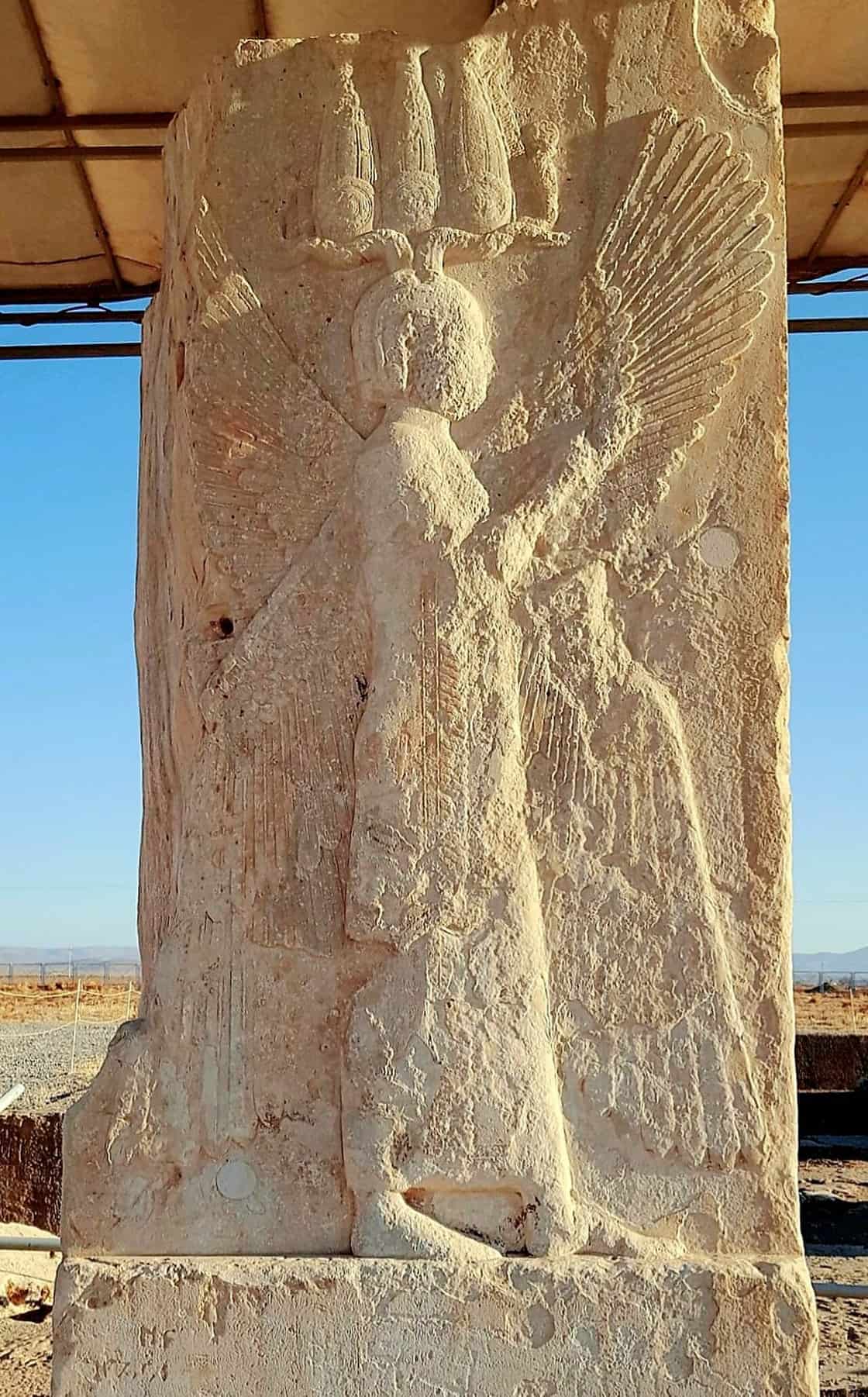
Cyrus was born around 600 BC at Anshan in what is now the Iranian province of Fars, son of Cambyses I, ruler of a Persian kingdom subordinate to the Median Empire. He came to that throne around 559 BC and within a decade had revolted against and defeated Astyages of Media - who according to Herodotus was his own grandfather - absorbing the Median empire and its dependencies around 550 BC. Lydia followed: he defeated Croesus, the proverbially wealthy king, and took Sardis around 546 BC, bringing the Greek cities of Anatolia under Persian rule and setting up the conflict that produced the Greco-Persian wars two generations later. Central Asia was subdued between 545 and 540 BC. In 539 BC he defeated the Babylonians at Opis and entered Babylon on 29 October, ending the Neo-Babylonian Empire. He organised his conquests into satrapies under appointed governors answering to the centre. He died around 530 BC campaigning in Central Asia, and was buried in the stone tomb that still stands at Pasargadae. Michael Hart ranked him 87th in The 100.
Influence Meter
80
Measured on a 100-point scale
The largest empire yet built, and a model of ruling by toleration rather than erasure
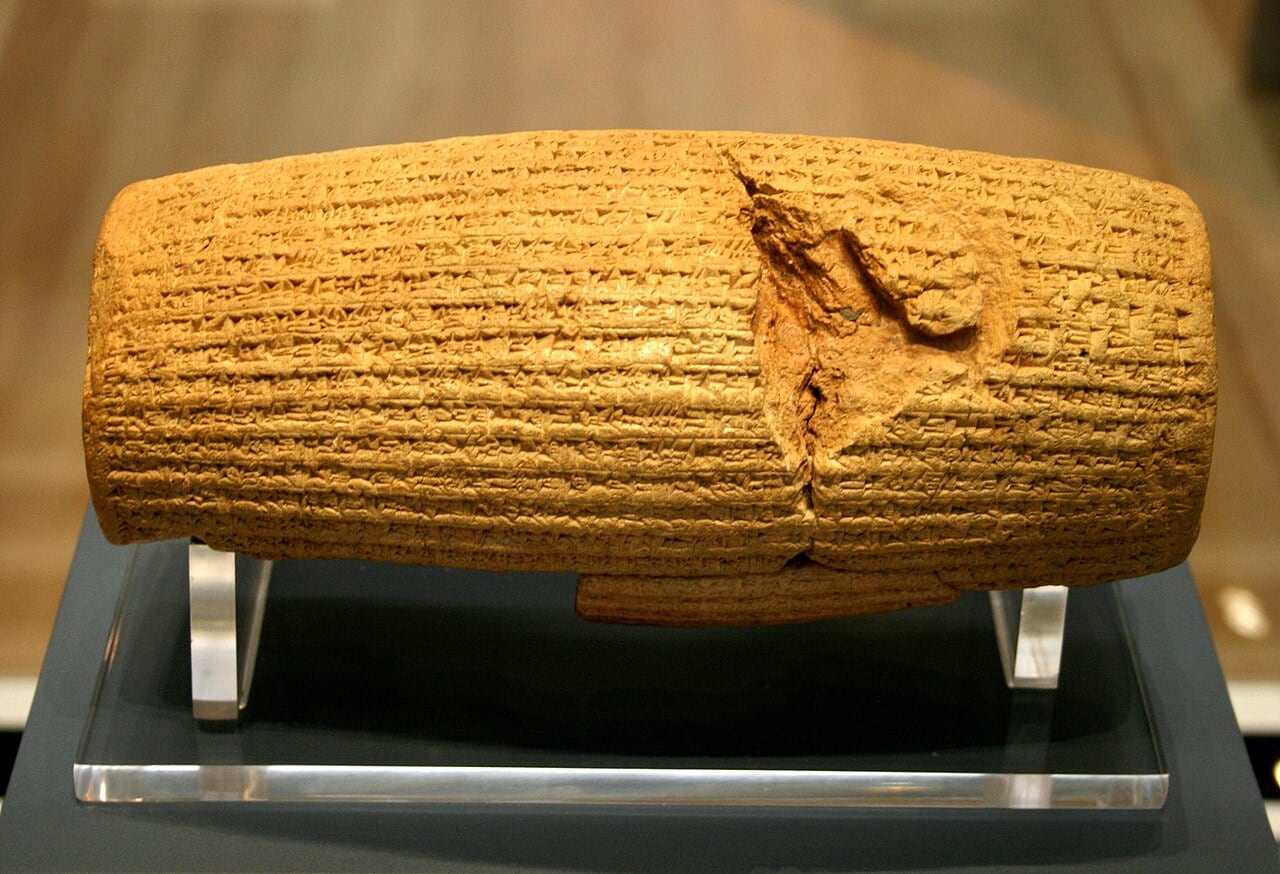
The Cyrus Cylinder, a clay barrel about twenty-three centimetres long found at Babylon in 1879 and now in the British Museum, is frequently described as the first charter of human rights - a claim promoted by the Shah's government in 1971 and repeated at the United Nations. Scholars of the ancient Near East do not accept it. The text is a foundation deposit in a long-established Mesopotamian genre in which a new king declares that the previous ruler had offended the gods, that he himself was chosen by Marduk, and that he has restored the temples and returned displaced populations. Similar inscriptions survive from Assyrian and Babylonian kings centuries earlier. What the cylinder does document is genuine and unusual in degree if not in kind: a policy of restoring local cults and repatriating deported peoples, applied systematically as a method of governing an empire of many nations. That is a real innovation in scale. It is not a declaration of rights.
539 BC
The Return From Babylon
The kingdom of Judah had been destroyed by Nebuchadnezzar in 587 BC, the Temple in Jerusalem burned, and a substantial part of the population deported to Babylonia. Within a year of taking Babylon, Cyrus issued a decree permitting them to return and to rebuild the Temple, and according to the biblical account returned the vessels that had been looted from it. The consequences for Judaism were enormous: the Second Temple period, the redaction of much of the Hebrew Bible into the form it now has, and the survival of a religious community that might otherwise have dissolved into Babylonian society as the northern Israelite deportees had. The Book of Isaiah calls Cyrus the Lord's anointed - mashiach, messiah - the only non-Jew in the Hebrew Bible given that title, and describes God as having taken him by the right hand to subdue nations. It is a remarkable thing to find in a scripture: a foreign polytheist emperor named as an instrument of divine purpose.
How the Empire Was Governed
The Achaemenid system was the first attempt to run a genuinely multinational empire as a going concern rather than as a collection of tributaries to be plundered.
- Satrapies: Provinces under appointed governors, with separate military and fiscal officials reporting independently to the centre so that no satrap held all three levers. Alexander kept the system when he took it over.
- Local religion left alone: Temples restored, priesthoods confirmed, gods respected. Cyrus is recorded as taking the hands of Marduk in Babylon and honouring the local pantheon, which no conqueror was obliged to do.
- Existing administration retained: Babylonian officials kept their posts, local law continued, and tribute was regularised rather than extracted by raid. It cost less to run and provoked fewer revolts.
- Deported peoples repatriated: A reversal of Assyrian and Babylonian policy, applied to several populations. It bought loyalty cheaply and left a positive memory in the record of at least one of them.
- Scale without precedent: At its height under his successors the empire ran from the Aegean and Egypt to the Indus, covering perhaps forty per cent of the world's population - a proportion no later empire has matched.
- Infrastructure: The Royal Road, the postal relay system that Herodotus described as undeterred by snow or rain or heat, and standardised coinage came under Darius, building on what Cyrus assembled.
Further Reading
Books About Cyrus
Persian sources are sparse, so most of the narrative comes from Greeks writing about an enemy, and from Babylonian and Hebrew texts with their own purposes.
Legacy
Why Number Eighty-Seven
Michael Hart ranked Cyrus 87th, and the case has three parts. He built the largest empire the world had yet seen and it lasted two centuries until Alexander destroyed it - and Alexander then governed it with Cyrus's own administrative system. He established a method of imperial rule based on toleration of local religion and custom, which was genuinely unusual and which Rome, among others, later found more effective than the alternative. And by returning the Jews to Jerusalem he made possible the Second Temple period, during which most of the Hebrew Bible took its final form.
His afterlife has been unusually political. The Greeks who fought his successors nonetheless wrote him up as a model king; Xenophon's fictionalised Cyropaedia was read across Europe as a manual on rulership and was in Jefferson's library. The last Shah of Iran staged an enormous celebration at Pasargadae in 1971 and addressed the tomb directly, which did not save him. And the cylinder continues to be described as a human rights charter by people who have not read the Assyrian precedents. He is one of the few ancient conquerors whose reputation improved over two and a half millennia, which is worth noticing given how he acquired the empire in the first place.
Related Publications