Mao Zedong

Mao Zedong
Born 26 December 1893 • Died 9 September 1976
No individual in the twentieth century governed more people for longer. Mao took charge of roughly a fifth of humanity in 1949 and held it until his death in 1976, and in that time China went from a dismembered, invaded, warlord-ridden country to a unified nuclear-armed state - and through the largest famine ever recorded, caused by policies he insisted on and refused to reverse for three years.
Rank
#89
Influence
82
Field
Revolutionary and Head of State
Historical Perspective
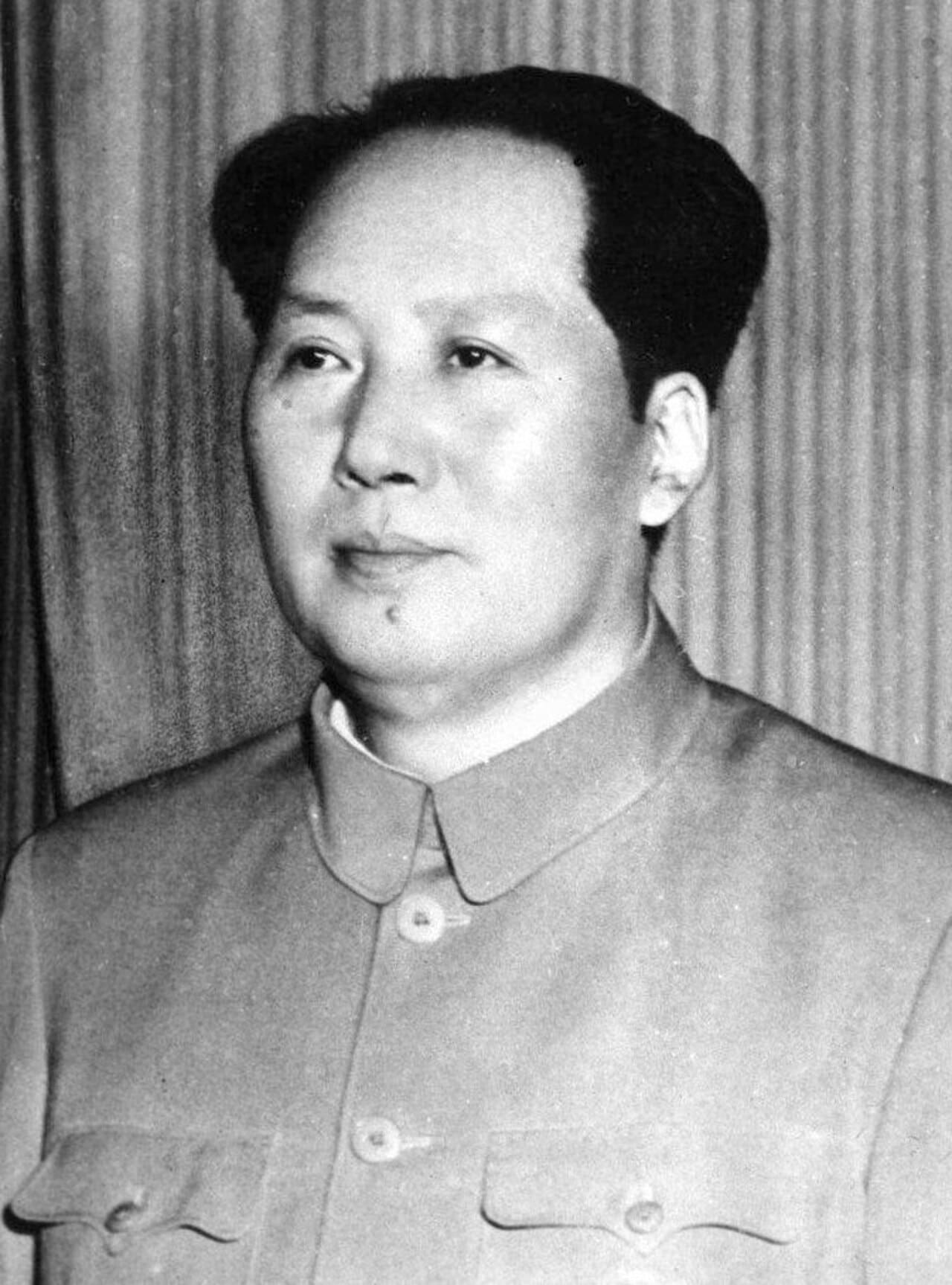
Mao was born on 26 December 1893 in the village of Shaoshan in Hunan, the son of a prosperous peasant, and was working as a library assistant in Peking when he encountered Marxism. He was among the founders of the Chinese Communist Party in 1921. After the Nationalists turned on their Communist allies in 1927, he took the remnants into the countryside and built a rural base area in Jiangxi - a strategic reversal, since orthodox Marxism located revolution in the urban proletariat and China barely had one. Encircled by Chiang Kai-shek, the Communists broke out in October 1934 on the Long March, a retreat of some six thousand miles over a year in which most of the force died and Mao emerged as leader. The war with Japan from 1937 let the Communists grow while the Nationalists absorbed the main blows; the civil war that followed ended with the proclamation of the People's Republic on 1 October 1949. Land reform, the Korean War, the Great Leap Forward from 1958, and the Cultural Revolution from 1966 followed. He died on 9 September 1976. Michael Hart ranked him 89th in The 100.
Influence Meter
82
Measured on a 100-point scale
Reunified China and ruled a fifth of humanity; the human cost was without precedent
TL;DR
The ledger, both sides
Mao is the hardest figure on this list to summarise honestly, because the achievements and the catastrophes are the work of the same person and often the same decade.
! Why This Matters:
- • The strategic idea: That in a peasant country the revolution comes from the countryside and surrounds the cities. It contradicted Soviet orthodoxy, it worked in China, and it was copied - with varying results - in Vietnam, Cambodia, Peru and Nepal.
- • The unification: China had been effectively partitioned since 1911 among warlords, foreign concessions and invading armies. After 1949 there was one government from Manchuria to Yunnan for the first time in living memory.
- • The Great Leap Forward: An attempt to industrialise and collectivise at forced speed from 1958. Grain was requisitioned on the basis of fabricated harvest figures, backyard steel furnaces consumed tools and labour, and the resulting famine killed an estimated 15 to 45 million people between 1959 and 1961 - the deadliest in recorded history.
- • The Cultural Revolution: From 1966, a decade of mobilised chaos aimed at his own party. Universities closed for years, an estimated one to two million died, and much of China's cultural inheritance was destroyed.
- • What improved anyway: Life expectancy roughly doubled between 1949 and 1976, literacy rose sharply, and basic rural healthcare reached hundreds of millions who had none - gains real enough that scholars still argue about how to weigh them against the famine.
? Key Data:
- • Population governed: About 600 million rising to 900 million
- • Great Leap famine deaths: 15-45 million (scholarly range)
- • Years in power: 27
- • Hart's rank: 89th of 100
Continue reading below for the full detailed article →
The famine of 1959-61 was not a natural disaster with a policy component; it was a policy disaster with weather as an aggravating factor. Communes were required to report harvests, officials competed to report impossible ones, and the state then taxed grain in proportion to the fabricated figures - taking real food out of villages that had not grown it. China continued to export grain during the worst of it, and refused foreign aid, because admitting the failure was politically impossible. When the defence minister Peng Dehuai wrote privately to Mao in 1959 describing what was happening in the countryside, he was denounced and removed, which taught every other official what reporting the truth would cost. The estimates of the death toll vary widely because the records are poor and the demographic methods differ; the low end, from historians most sympathetic to the government, is around fifteen million, and the high end around forty-five million. Even the lowest credible figure makes it the deadliest famine ever recorded anywhere.
After 1976
What His Successors Kept
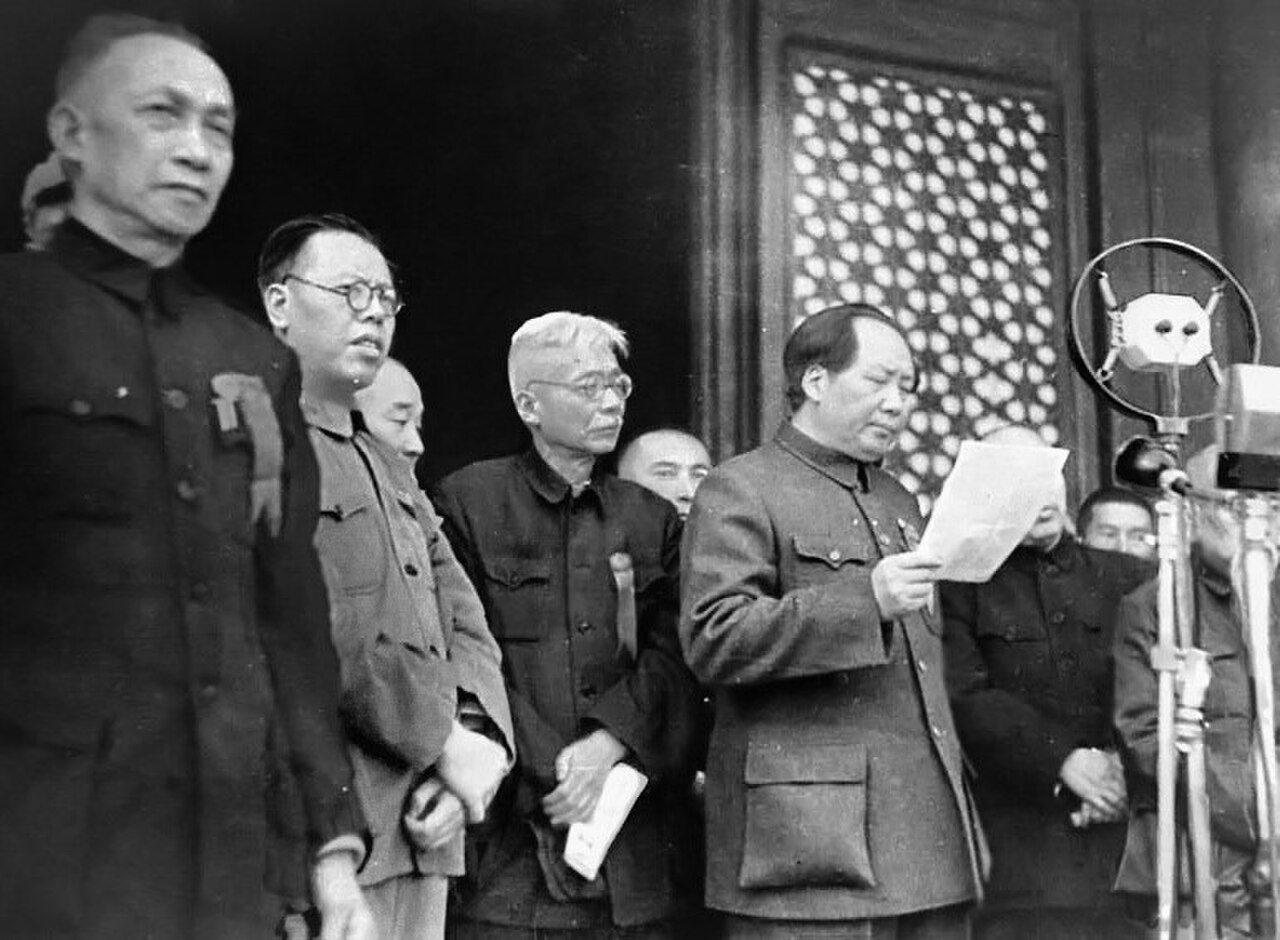
Within two years of Mao's death Deng Xiaoping had begun dismantling almost all of his economic programme - decollectivising agriculture, opening to foreign investment, and permitting private enterprise - while keeping the Communist Party's monopoly on power intact. The official verdict issued in 1981 held that Mao had been seventy per cent right and thirty per cent wrong, a formula designed to allow repudiation of the Cultural Revolution without repudiating the revolution itself. That balance still governs how he is discussed in China: his portrait hangs over Tiananmen and his body lies in a mausoleum on the square, while the Great Leap and the Cultural Revolution are acknowledged in principle and rarely examined in public. Outside China his strategic writings on guerrilla warfare had a long afterlife, and Maoist movements - some of them still armed - appeared in a dozen countries that had little in common except a peasant majority.
Further Reading
Books About Mao
The literature is unusually polarised, and the most useful thing a reader can do is know which end of the argument a given book sits at.
Legacy
Why Number Eighty-Nine
Michael Hart placed Mao 89th, and the ranking rests on scale rather than admiration. He ended what the Chinese call the century of humiliation - the stretch from the Opium Wars to 1949 in which China was invaded, partitioned and repeatedly defeated - and left a single unified state with a functioning army, a nuclear weapon and effective control of its own territory. Everything China has done since, including the economic transformation that repudiated his economics, was done from that foundation.
The counterweight is that his rule produced the largest famine in history and a decade of self-inflicted political violence, and that both were avoidable and were prolonged because he would not be contradicted. Judged as a revolutionary strategist he was formidable; judged as an administrator of a country he was catastrophic. The two verdicts do not cancel out, and any account that offers only one of them is not describing the same person.
Related Publications