Vasco da Gama

Vasco da Gama
Born c. 1460 • Died 24 December 1524
Columbus was looking for this and did not find it. Da Gama sailed south along Africa, round the Cape, up the east coast, picked up a pilot who knew the monsoon winds, and arrived at a working Indian port where merchants had been trading for centuries. Asked what he had come for, one of his men reportedly said Christians and spices. The Portuguese had brought striped cloth, hats, coral and sugar as gifts, which the Zamorin's court found insulting; they were the wrong goods for a market far richer than Lisbon.
Rank
#86
Influence
77
Field
Navigator and Admiral
Historical Perspective
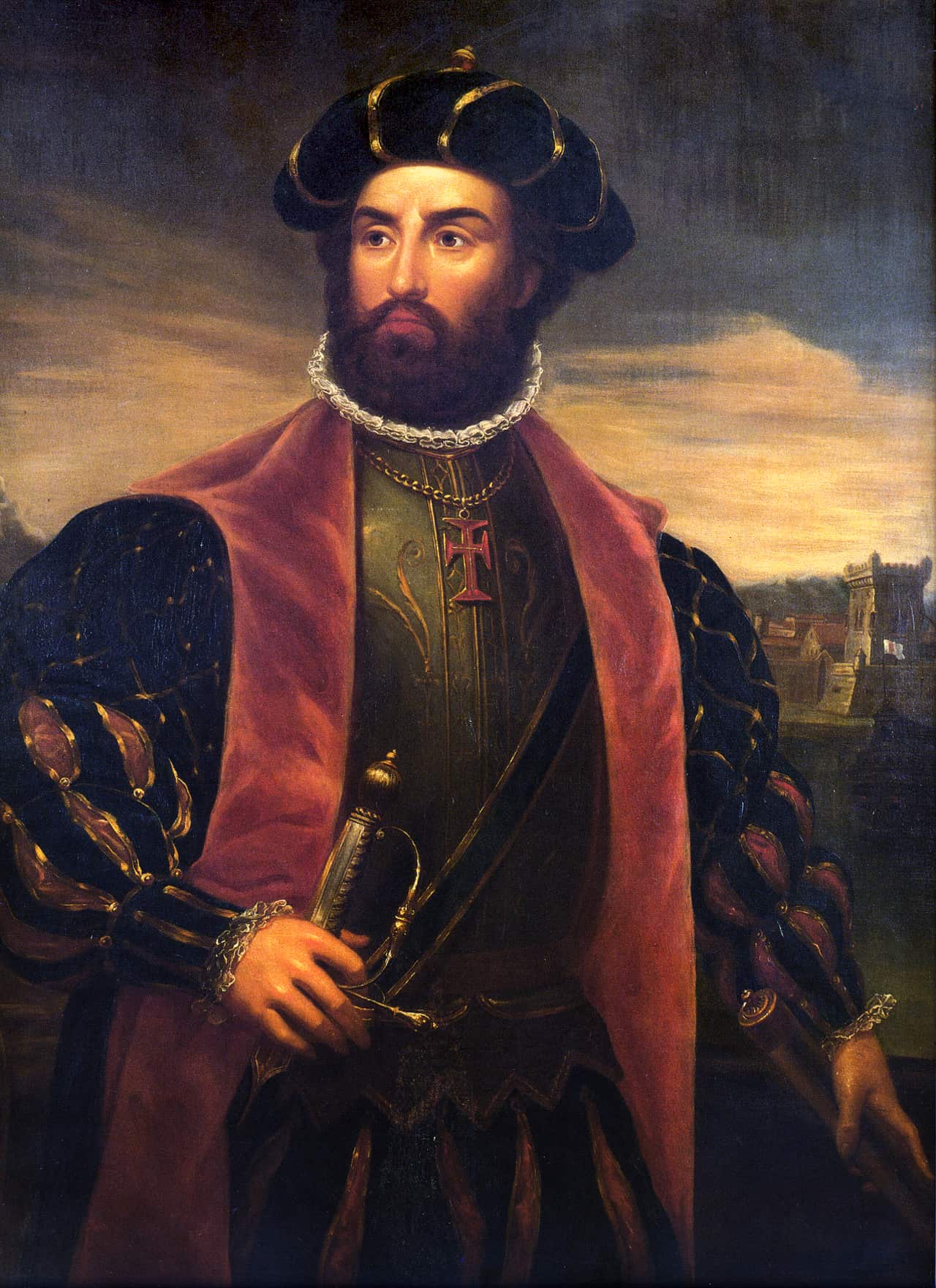
Vasco da Gama was born around 1460 at Sines on the Portuguese coast, into the minor nobility and a family with naval connections. Portugal had spent most of the fifteenth century working down the African coast under the direction of Prince Henry and his successors, and Bartolomeu Dias had rounded the Cape of Good Hope in 1488, proving that the Indian Ocean was reachable. Da Gama left Lisbon on 8 July 1497 with four ships and around one hundred and seventy men, swung far out into the South Atlantic to catch favourable winds rather than hugging the coast, rounded the Cape in November, worked up the East African coast to Malindi, and there took on a pilot who guided them across the Arabian Sea. They reached Calicut on 20 May 1498. The commercial reception was poor and relations with the Muslim merchants already established there were hostile. The return crossing was mistimed against the monsoon and took some three months, with roughly half the crew dying of scurvy. He returned in 1502 with a war fleet, and died at Cochin on 24 December 1524. Michael Hart ranked him 86th in The 100.
Influence Meter
77
Measured on a 100-point scale
Opened the sea route to Asia, and began four centuries of European maritime empire there
1497-1499
Two Years, and Half the Crew
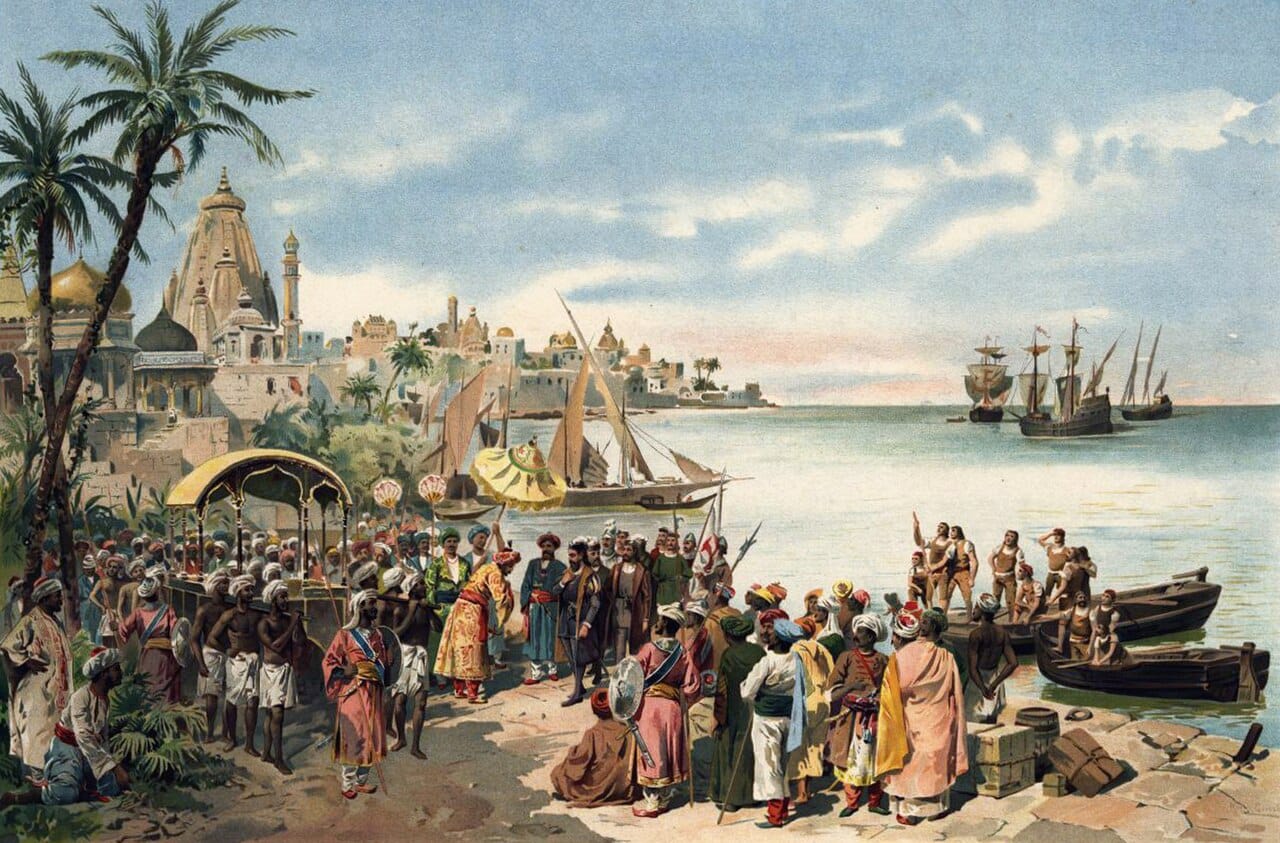
The outward voyage involved a piece of navigation that deserves more attention than the arrival. Rather than following the African coast south against contrary winds and currents, da Gama took his ships far out into the mid-Atlantic in a great arc - some ninety days out of sight of land, the longest open-ocean passage yet made by Europeans - to pick up the westerlies that would carry him round the Cape. It became the standard Portuguese route. The Indian Ocean crossing was the opposite kind of achievement: he hired a pilot at Malindi who knew the monsoon system, and the passage took twenty-three days on knowledge that had been routine among Arab, Indian and Swahili navigators for centuries. The return was botched: he sailed against the monsoon, took three months instead of three weeks, and lost so many men to scurvy that one of the four ships had to be burned for want of crew to sail it. Of about a hundred and seventy who left, perhaps fifty-five came back.
The second voyage of 1502 was a punitive expedition with fifteen ships and eight hundred men, sent after a Portuguese factory at Calicut was destroyed, and it established the pattern of Portuguese conduct in the Indian Ocean. Da Gama demanded that the Zamorin expel all Muslim traders, bombarded Calicut for two days, and hanged or mutilated captured fishermen and merchants. The worst single act was the interception of the Miri, a ship returning from Mecca with several hundred pilgrims aboard including women and children; after looting it, he had it burned with the passengers locked below, and accounts describe survivors in the water being killed. Contemporary Portuguese chroniclers record it without much apology. The Portuguese entered an ocean where trade had been conducted for centuries by many competing communities without any single power controlling it, and imposed by force a licensing system - the cartaz - requiring ships to buy Portuguese permission to sail. It is the beginning of armed European commercial dominance in Asian waters.
After 1500
What the Route Did
The economic effect was immediate and severe for the incumbents. Spices had reached Europe by a chain of merchants through the Indian Ocean, the Red Sea or the Gulf, Egypt or the Levant, and finally Venetian galleys - with duties and margins at each transfer. A Portuguese ship sailing direct cut all of it out. Venice's spice trade contracted sharply, the Mamluk sultanate of Egypt lost transit revenue and attempted, with Ottoman and Gujarati help, to expel the Portuguese by force and failed at Diu in 1509. Lisbon became for a period the richest port in Europe.
The political consequence was the Estado da India: a chain of fortified trading posts from East Africa to Malacca and eventually Macau, holding no territory to speak of but controlling choke points and taxing the sea. It was the first European empire in Asia and the template for the Dutch and English companies that displaced it within a century and a half. The larger point is the one that makes the voyage rank at all: after 1498 the world's oceans were a single connected system that Europeans could traverse, and the balance of advantage in world trade began a shift from the land routes across Eurasia to the sea - with consequences for Venice, for the Ottoman and Persian empires, and eventually for everyone.
Further Reading
Books About da Gama
An anonymous journal kept by a member of the first voyage survives, which is unusually good fortune for a voyage of this period.
Legacy
Why Number Eighty-Six
Michael Hart ranked da Gama 86th, well below Columbus at nine, and the gap is defensible even though da Gama actually found what both men were looking for. Columbus's error opened two continents that Europe had not known existed and changed the composition of the world's population, its crops and its diseases. Da Gama connected two regions that already knew about each other and had traded indirectly for millennia; what he changed was the route and who controlled it.
That is nonetheless a large change. The direct sea link inverted the economics of Eurasian trade, shifted wealth from the Mediterranean and the overland routes toward the Atlantic seaboard, and inaugurated four and a half centuries of European naval dominance in Asian waters that ended only after 1945. The methods he used on the second voyage set the tone for much of what followed. In Portugal he is a national hero with a bridge and an epic poem named for him; in Kerala the memory is more complicated, which is a fair reflection of a voyage that opened a route and then armed it.
Related Publications