Francisco Pizarro

Francisco Pizarro
Born c. 1478 • Died 26 June 1541
On an afternoon in November 1532, in a mountain town in what is now Peru, one hundred and sixty-eight Spaniards attacked the entourage of an emperor whose army of tens of thousands was camped within sight. Within a couple of hours they had killed thousands of people, taken the emperor alive, and lost nobody. It is among the most lopsided military events on record, and explaining it - horses, steel, guns, an empire in civil war, and above all disease that had arrived years ahead of the Spaniards - has occupied historians ever since.
Rank
#62
Influence
74
Field
Conquistador
Historical Perspective
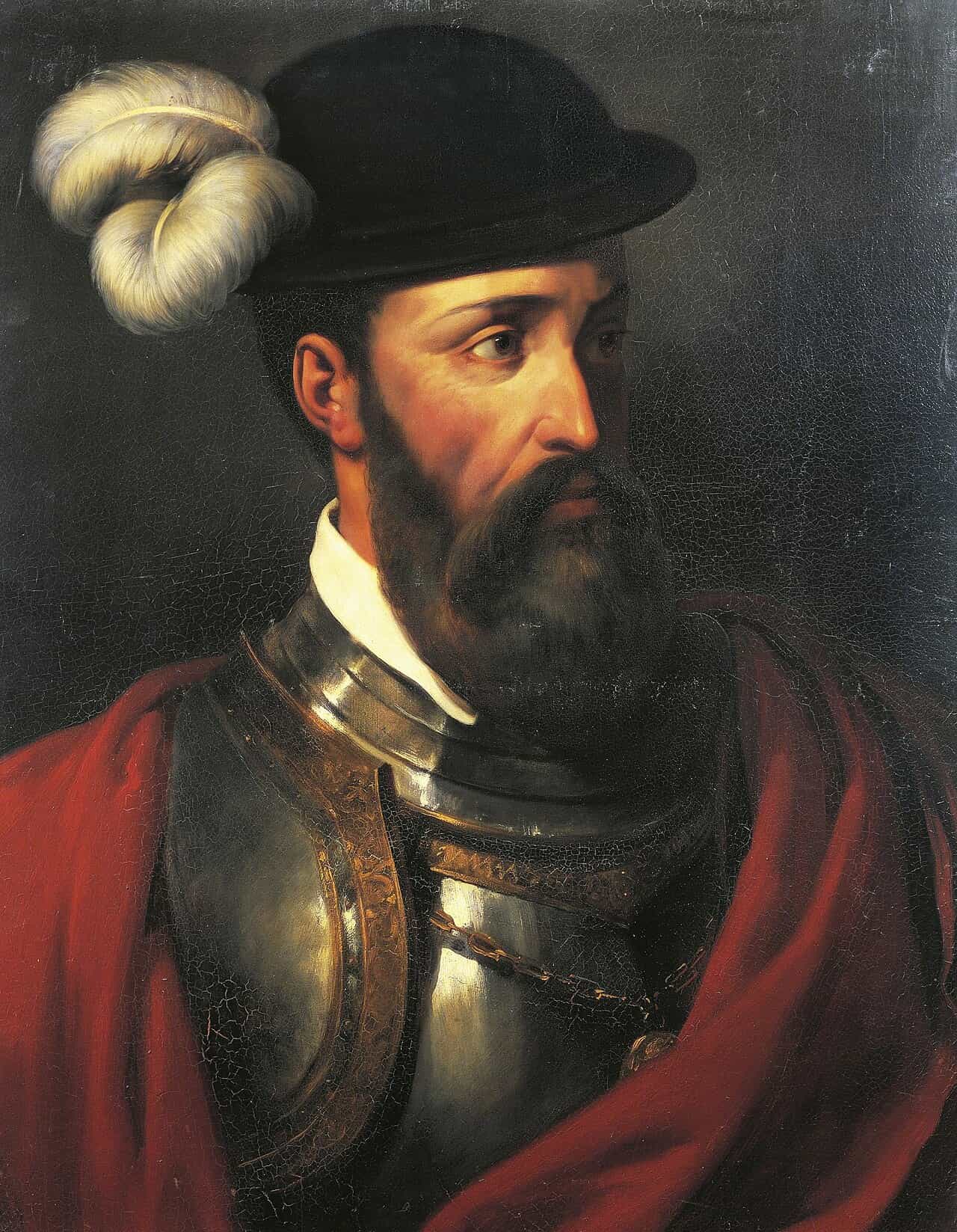
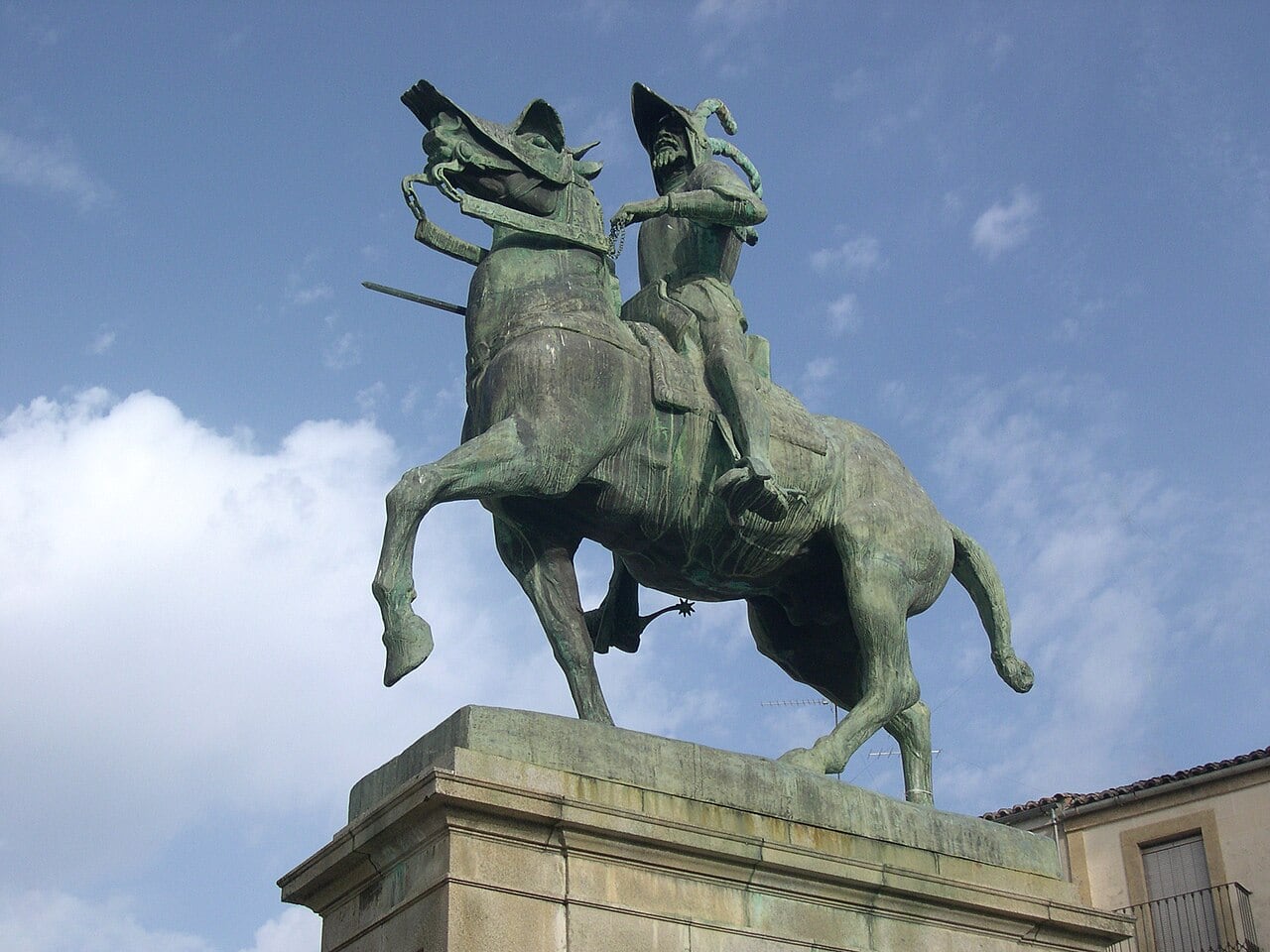
Francisco Pizarro was born at Trujillo in Extremadura around 1478, the illegitimate son of an infantry colonel, never acknowledged by his father, and remained unable to read or write his whole life. He sailed for the Americas in 1502, settled in Panama, and in 1513 was with Balboa's party when it became the first Europeans to see the Pacific from the American side. Rumours of a wealthy kingdom to the south drew him into two failed expeditions in 1524 and 1526, the second of which ended with a famous episode in which he drew a line in the sand and invited those willing to continue to cross it - thirteen did. He obtained a royal licence in Spain in 1529 and sailed again in 1530. He landed to find the Inca Empire, the largest state in the Americas, exhausted by a civil war between the brothers Atahualpa and Huascar and by an epidemic, probably smallpox, that had already killed the previous emperor. At Cajamarca on 16 November 1532 he seized Atahualpa. He entered Cuzco in November 1533, founded Lima on 6 January 1535, and was murdered there on 26 June 1541 by supporters of his former partner Diego de Almagro. Michael Hart ranked him 62nd in The 100.
Influence Meter
74
Measured on a 100-point scale
Destroyed the largest state in the Americas, and opened South America to Spain
16 November 1532
Two Hours at Cajamarca
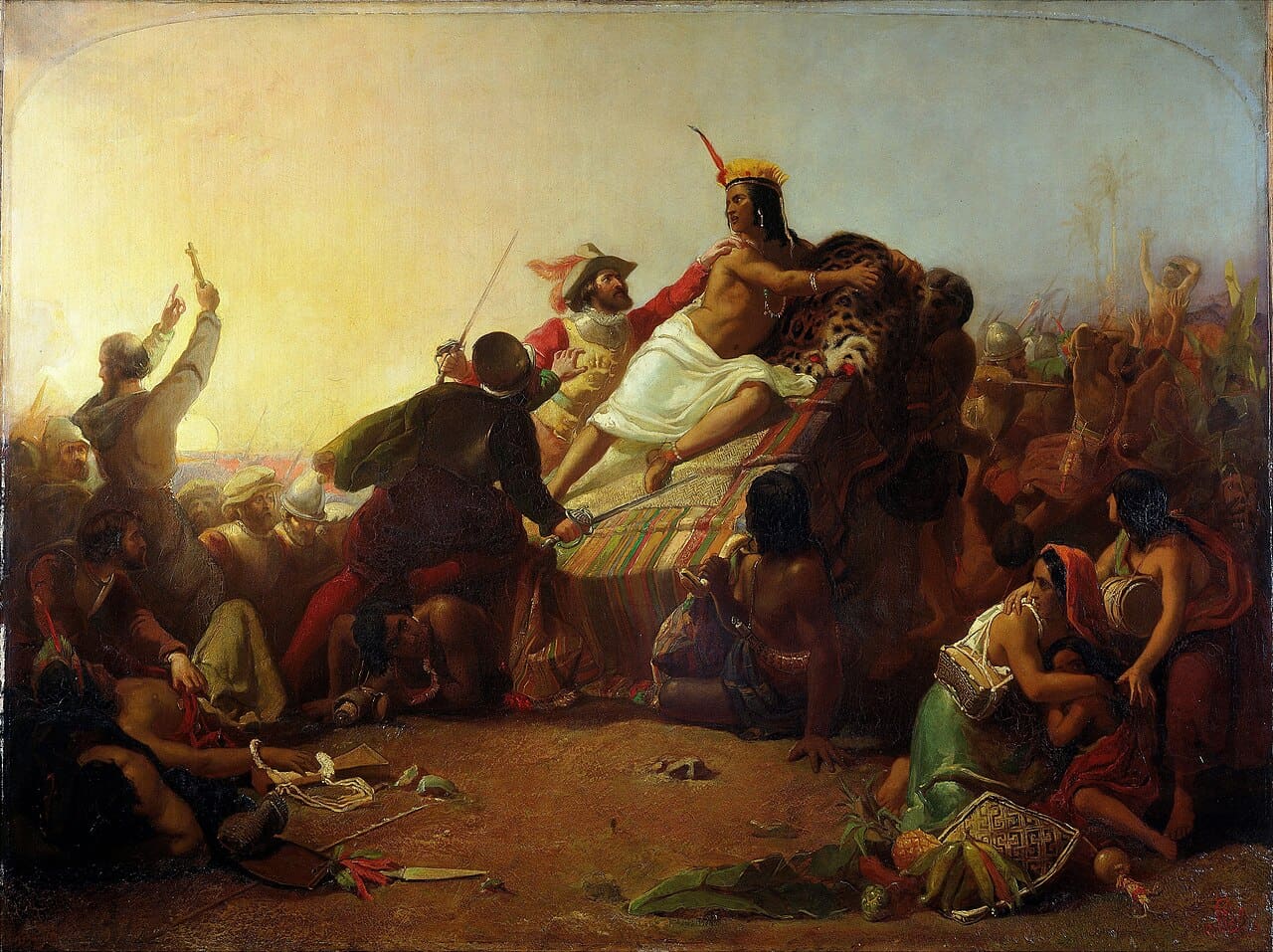
Pizarro had 168 men - 62 on horseback, the rest on foot - with a few small cannon and some arquebuses. Atahualpa had just won a civil war and was camped outside Cajamarca with an army usually estimated at forty to eighty thousand. He accepted an invitation to meet the strangers in the town square, arriving with several thousand attendants, most of them unarmed or lightly armed, apparently regarding the Spaniards as a curiosity too few in number to threaten him. A friar approached with a breviary and, through an interpreter, delivered the Requerimiento demanding submission to the Pope and the Spanish crown; Atahualpa examined the book and dropped it. Pizarro gave the signal. Cannon fired into the packed square, the cavalry charged out of the buildings, and in about two hours the Spaniards killed thousands of people penned in an enclosed space and took the emperor. No Spaniard died. The horses in particular did the work: nobody in the Americas had seen one, and mounted men with steel lances against unarmoured infantry in a confined square is not a battle.
Atahualpa, held prisoner and observing the Spaniards' obsession with gold, offered a ransom: he would fill the room in which he was held once with gold and twice with silver, to a line above his head. The room was roughly seven metres by five, and the offer was met over some eight months, with treasure carried in from across the empire and much of it melted down from religious and ceremonial objects of extraordinary craftsmanship. The metal is usually put at around six tonnes of gold and eleven of silver, the largest ransom ever paid. Having received it, the Spaniards tried Atahualpa on charges including the murder of his brother, idolatry and plotting rebellion, and sentenced him to be burned. He accepted baptism to have the sentence commuted, and was garrotted on 26 July 1533. The betrayal was controversial in Spain at the time; Charles V wrote to Pizarro expressing displeasure, having already accepted the crown's share of the gold.
Why 168 Men Could Do This
The numbers alone make no sense. Every serious account rests on a combination of factors, of which the military ones are not the most important.
- Disease arrived first: Smallpox spread overland from the Caribbean ahead of any Spaniard and killed the emperor Huayna Capac and his designated heir around 1527, along with an unknown but enormous share of the population. Estimates of total indigenous mortality in the Andes over the following century run from fifty to over ninety per cent.
- The empire was in civil war: The succession dispute between Atahualpa and Huascar had just been decided by force. Pizarro arrived into a state that had been fighting itself, with a defeated faction willing to treat the Spaniards as allies.
- Horses and steel: The Inca had no horses, no iron, and no steel. Against cotton armour and bronze or wooden weapons, mounted men in plate with lances and Toledo blades were close to invulnerable in open ground.
- A highly centralised state: The Inca system concentrated authority absolutely in the emperor. Capturing him paralysed the administration in a way that would not have worked against a decentralised society - as the Spaniards found later, at length, against the Mapuche.
- Indigenous allies: As in Mexico, large numbers of people subject to Inca rule saw an opportunity and joined the Spaniards. The conquest was never 168 men against an empire; it was a civil war with Spanish leadership.
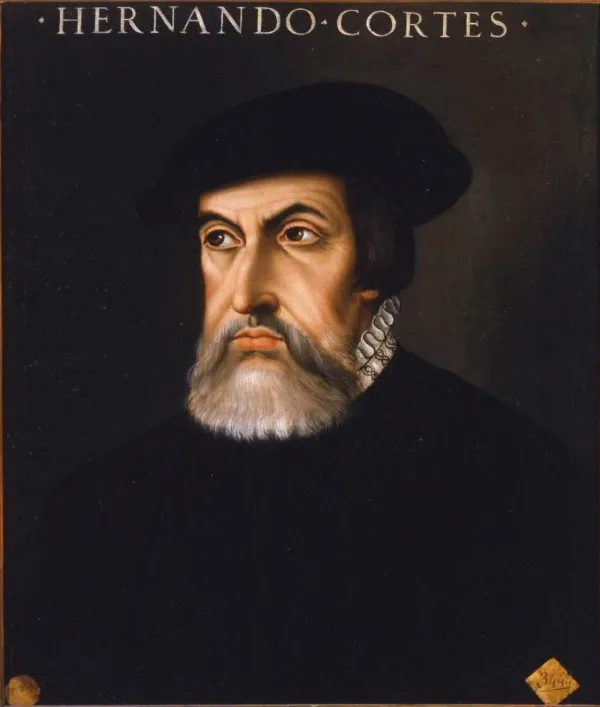
- Writing and prior knowledge: Pizarro knew Cortés had taken Mexico by seizing the ruler, because it had been written down and circulated. Atahualpa had no comparable intelligence about the Spaniards at all.
1533-1541
What the Conquerors Did Next
Having taken an empire, the conquistadors fell on each other. Pizarro and Diego de Almagro, his partner in the original expeditions, quarrelled over the division of the spoils and specifically over Cuzco; the dispute became open war, and Almagro was defeated and executed in 1538. On 26 June 1541 a group of his supporters, led by Almagro's son, forced their way into Pizarro's palace in Lima and killed him; he is said to have drawn a cross on the floor in his own blood as he died. The wars among the Spaniards continued for another decade. Meanwhile the extraction began in earnest: the silver of Potosí, discovered in 1545, was worked under the mita forced labour system and financed the Spanish empire and much of the early modern European economy, at a human cost that is beyond reliable counting.
Further Reading
Books About the Conquest of Peru
Several eyewitness accounts survive, including one by Pizarro's own secretary and one by a mestizo chronicler who was the grandson of an Inca princess.
Legacy
Why Number Sixty-Two
Michael Hart ranked Pizarro 62nd, just below Cortés, and the two entries carry the same logic: a small number of men destroyed a large indigenous state and thereby determined the language, religion, political structure and population of a continent for the following five centuries. South America speaks Spanish and Portuguese, is predominantly Catholic, and has the ethnic composition it does because of what happened between 1519 and 1533.
The economic consequence was global. Peruvian and Bolivian silver, above all from Potosí, flowed to Spain and from there across Europe and on to China, financing Habsburg wars, contributing to a century of European inflation, and integrating the world's economies for the first time in a genuinely global trade. The human cost is the other side of the ledger and is not seriously disputable: the indigenous population of the Andes fell by something between a half and ninety per cent within a century, overwhelmingly from disease but substantially from forced labour and the destruction of the systems that had fed people. Pizarro himself got very little of it. He was murdered by his own countrymen eight years after Cajamarca, in a city he had founded, over a share of the gold.
Related Publications