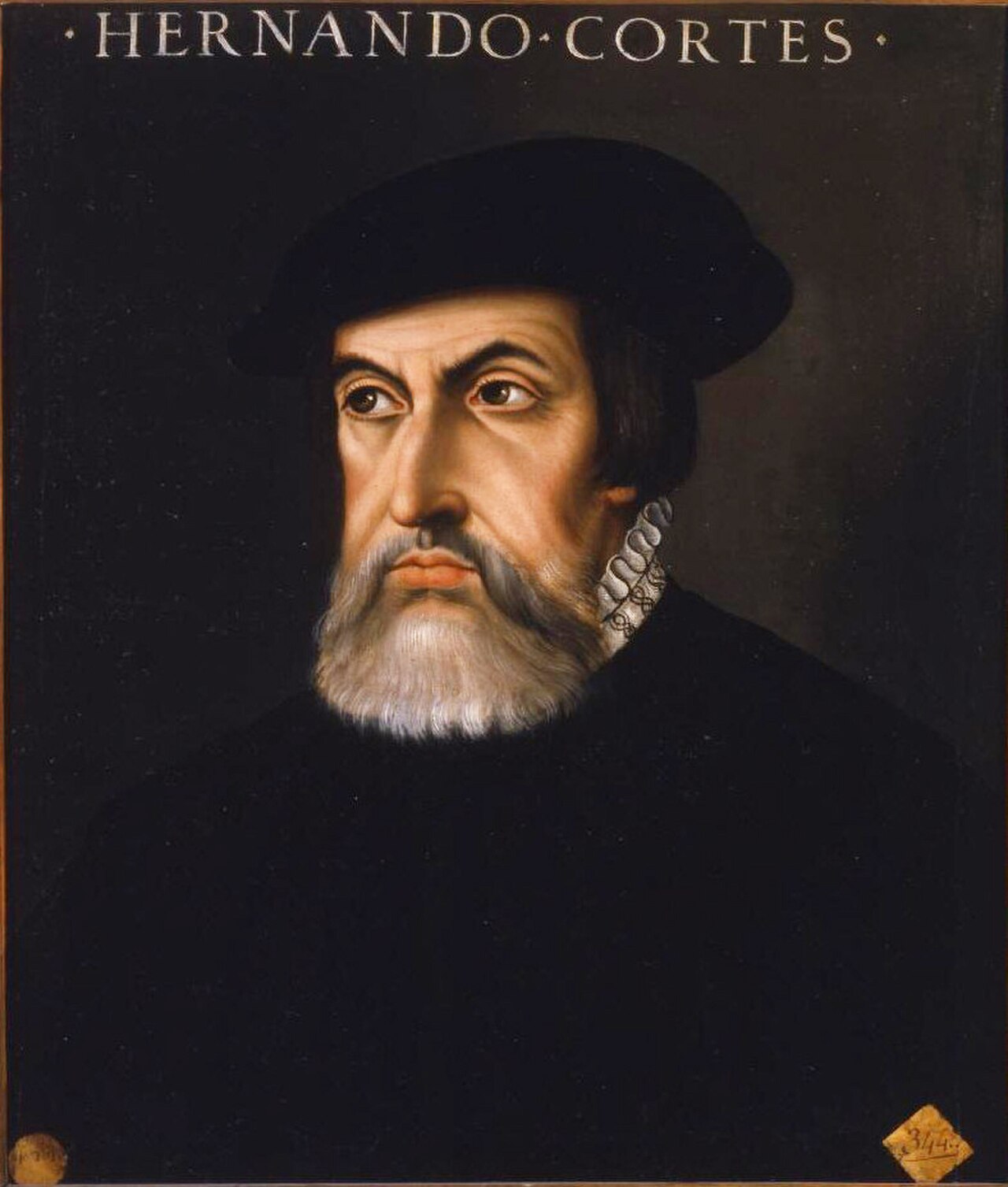
Hernando Cortes

Hernando Cortes
Born c. 1485 • Died 2 December 1547
Cortés landed in Mexico with about six hundred men, in open defiance of the governor who had commissioned him, and had his ships run aground so that nobody could go back. Two years later the largest city in the Americas - bigger than Paris, built on a lake, supplied by causeways and aqueducts - had been besieged, starved, ravaged by smallpox and destroyed, and its stones were being used to build a Spanish cathedral on the same site. He did it with allies. Most of the army that took Tenochtitlan was not Spanish.
Rank
#63
Influence
75
Field
Conquistador
Historical Perspective
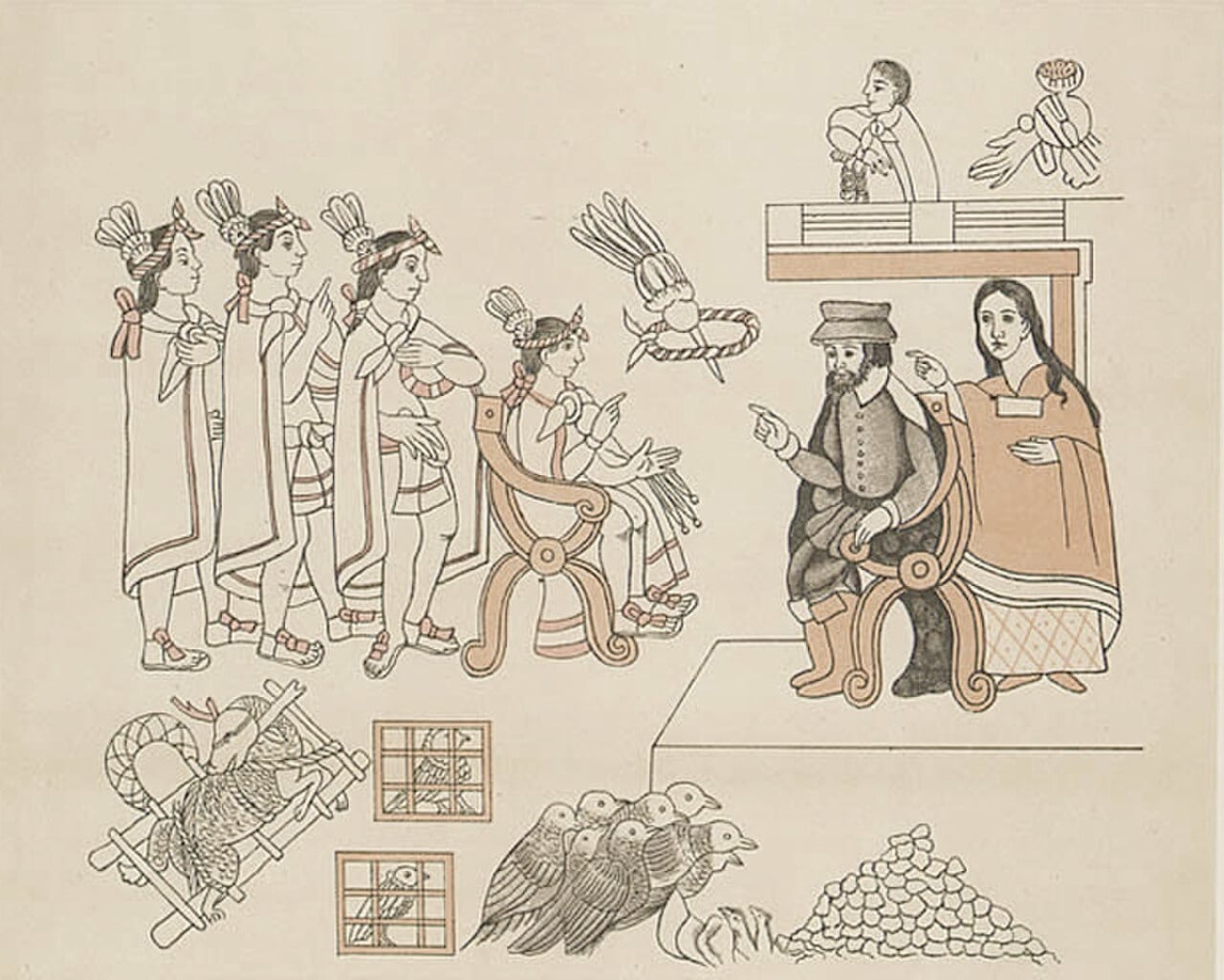
Hernán Cortés was born at Medellín in Extremadura around 1485 to minor gentry, briefly studied law at Salamanca, and sailed for Hispaniola at nineteen. He took part in the conquest of Cuba under Diego Velázquez, prospered, and in 1518 was given command of an expedition to the mainland - which Velázquez then tried to cancel, suspecting his ambition. Cortés sailed anyway in February 1519 with around eleven ships, five hundred men and sixteen horses, an act of open mutiny he legalised by founding a town at Veracruz and having its council commission him directly in the king's name. Two interpreters made everything possible: Gerónimo de Aguilar, a shipwrecked Spaniard who spoke Maya, and an enslaved Nahua woman known as La Malinche, who spoke Maya and Nahuatl. He allied with the Tlaxcalans, longstanding enemies of the Aztecs, massacred thousands at Cholula, and entered Tenochtitlan on 8 November 1519. Driven out on the Noche Triste of 30 June 1520 with heavy losses, he returned, besieged the city for seventy-five days and took it on 13 August 1521. He died near Seville on 2 December 1547. Michael Hart ranked him 63rd in The 100.
Influence Meter
75
Measured on a 100-point scale
Destroyed the Aztec Empire and founded the Spanish Americas
1519
The Woman Without Whom It Does Not Happen
The conquest ran on translation, and the translator was an enslaved Nahua woman given to Cortés at Tabasco, known as Malintzin, Doña Marina, or La Malinche. She spoke Nahuatl, the language of the Aztecs, and Chontal Maya; Aguilar spoke Maya and Spanish. For the first months everything passed through both of them in sequence, until she learned Spanish and became the sole interpreter. She was far more than a translator: indigenous accounts and Spanish ones alike describe her negotiating, gathering intelligence, and warning Cortés of the planned ambush at Cholula. She bore him a son, Martín, often called the first mestizo. Her reputation in Mexico has been fought over for two centuries - malinchismo is a Mexican word for preferring the foreign and betraying one's own - and more recent scholarship has emphasised that she was a captive who had been given away twice before she was twenty and had no meaningful choice at any point.
The single most destructive Spanish weapon was one nobody deployed deliberately. Smallpox arrived in Mexico in 1520, carried by a member of the Narváez expedition sent from Cuba to arrest Cortés, and swept through a population with no prior exposure and no immunity. It killed the emperor Cuitláhuac, Moctezuma's successor, who had just defeated Cortés and driven him from the city; it killed an estimated third or more of the population of Tenochtitlan during the siege; and it disorganised command, agriculture and morale at exactly the moment the Aztecs needed all three. Spanish accounts and the indigenous Florentine Codex both describe the epidemic in detail. Across the Americas as a whole, epidemic disease is generally reckoned to have killed a larger share of the population than all the fighting combined - estimates for the century after contact range from fifty to ninety per cent, from a pre-contact population that may have been sixty million.
1519-1521
How Two Years Went
The campaign was not a march of conquest so much as a sequence of alliances, massacres, reverses and one very long siege.
Scuttling the ships
He had his fleet run aground at Veracruz - not burned, as the legend has it - removing any possibility of retreat and any option for men loyal to Velázquez to sail home and report him.
- Actually: Run aground, not burned
The Tlaxcalan alliance
After weeks of hard fighting against them, the Tlaxcalans - independent and long at war with the Aztecs - allied with him. They supplied the bulk of the army for the rest of the campaign.
- Contributed: Most of the troops
The Cholula massacre
Warned by Malinche of an ambush, Cortés assembled the city's nobility in a courtyard and had thousands killed. It was a demonstration, and it worked as one.
- Purpose: Terror
Entering Tenochtitlan
Received peacefully by Moctezuma II into a city of perhaps two hundred thousand people, larger than any in Europe except Constantinople. Within days Moctezuma was effectively a hostage in his own palace.
- City population: Perhaps 200,000
The Noche Triste
After a massacre of Aztec nobles at a religious festival by Cortés's deputy, the city rose. The Spaniards fled by night along a causeway, losing most of their men and nearly all the treasure. Cortés is said to have wept.
- Losses: Most of the Spanish force
The siege
He returned with Tlaxcalan armies and thirteen purpose-built brigantines to control the lake, cut the aqueduct and the causeways, and reduced the city over seventy-five days. It fell on 13 August 1521 and was largely demolished.
- Duration: 75 days
TL;DR
Six hundred Spaniards did not do this
The story is usually told as a handful of Europeans overwhelming an empire. Almost every element of that framing is wrong.
! Why This Matters:
- • The army: Overwhelmingly indigenous. Tlaxcalan and other allies supplied the great majority of the troops that besieged Tenochtitlan.
- • The decisive weapon: Smallpox, which arrived in 1520 by accident and killed perhaps a third of the city during the siege, including the emperor who had just beaten Cortés.
- • The mistaken-for-a-god story: Almost certainly constructed afterwards. Modern scholarship finds little contemporary support for it in the Nahuatl sources.
- • The ships: Run aground, not burned. The phrase about burning his boats is a later embellishment of a deliberate but less cinematic act.
? Key Data:
- • Spaniards who landed in 1519: About 500-600
- • Population of Tenochtitlan: Perhaps 200,000
- • Length of the final siege: 75 days
- • Hart's rank: 63rd of 100
Continue reading below for the full detailed article →
1521-1547
The Reward, and the Litigation
Cortés governed New Spain personally for three years, imposed the encomienda system that granted colonists the labour of indigenous communities, and rebuilt Mexico City on the ruins of Tenochtitlan using the same stones - the cathedral stands on the site of the main temple precinct. In 1524 he led an exhausting expedition to Honduras during which he had Cuauhtémoc, the last Aztec emperor, hanged on suspicion of conspiracy, an act contemporaries regarded as unnecessary and dishonourable.
The crown was never comfortable with him. He was made Marqués del Valle de Oaxaca in 1529 with enormous estates but stripped of political authority, and a viceroy was appointed over his head in 1535. He spent his last years in Spain pursuing lawsuits over money and status, joined a disastrous expedition to Algiers, and died near Seville on 2 December 1547, wealthy, litigious and largely ignored. His remains were eventually returned to Mexico, where their location has been kept discreet - there have been repeated proposals to destroy them.
Further Reading
Books About the Conquest of Mexico
Unusually for a conquest, substantial indigenous accounts survive, collected within a generation in Nahuatl.
Legacy
Why Number Sixty-Three
Michael Hart ranked Cortés 63rd, immediately above Pizarro, and the pair are best assessed together as the men who converted Columbus's landfall into an empire. What Cortés established was not a trading post but a settled colonial society on the mainland, with a capital, an administration, a church and a labour system - the model that Spain then applied from California to Chile for three centuries. Modern Mexico's language, religion, legal tradition and mestizo population all begin there.
The wider consequence is the Columbian Exchange in full flow. Maize, potatoes, tomatoes, chilli, chocolate, tobacco and beans crossed to the Old World and transformed diets and populations on three continents; wheat, cattle, horses, sugar and smallpox crossed the other way. The demographic catastrophe in the Americas is among the largest in recorded history. Cortés was a minor gentleman with a law-school dropout's education and an exceptional gift for negotiation, treachery and nerve, and the world map still shows what he set in motion.
Related Publications