Joseph Lister

Joseph Lister
Born 5 April 1827 • Died 10 February 1912
Anaesthesia let surgeons operate without agony, and immediately made things worse. With pain no longer limiting what could be attempted, surgeons cut deeper and more often, and their patients died of infection in greater numbers than before - in some hospitals, roughly half of all amputations ended in death. Surgeons operated in old coats stiff with dried blood, and a crusted coat was a mark of experience. Lister worked out why, and the answer was in a French chemist's papers about why wine goes sour.
Rank
#60
Influence
80
Field
Surgeon
Historical Perspective
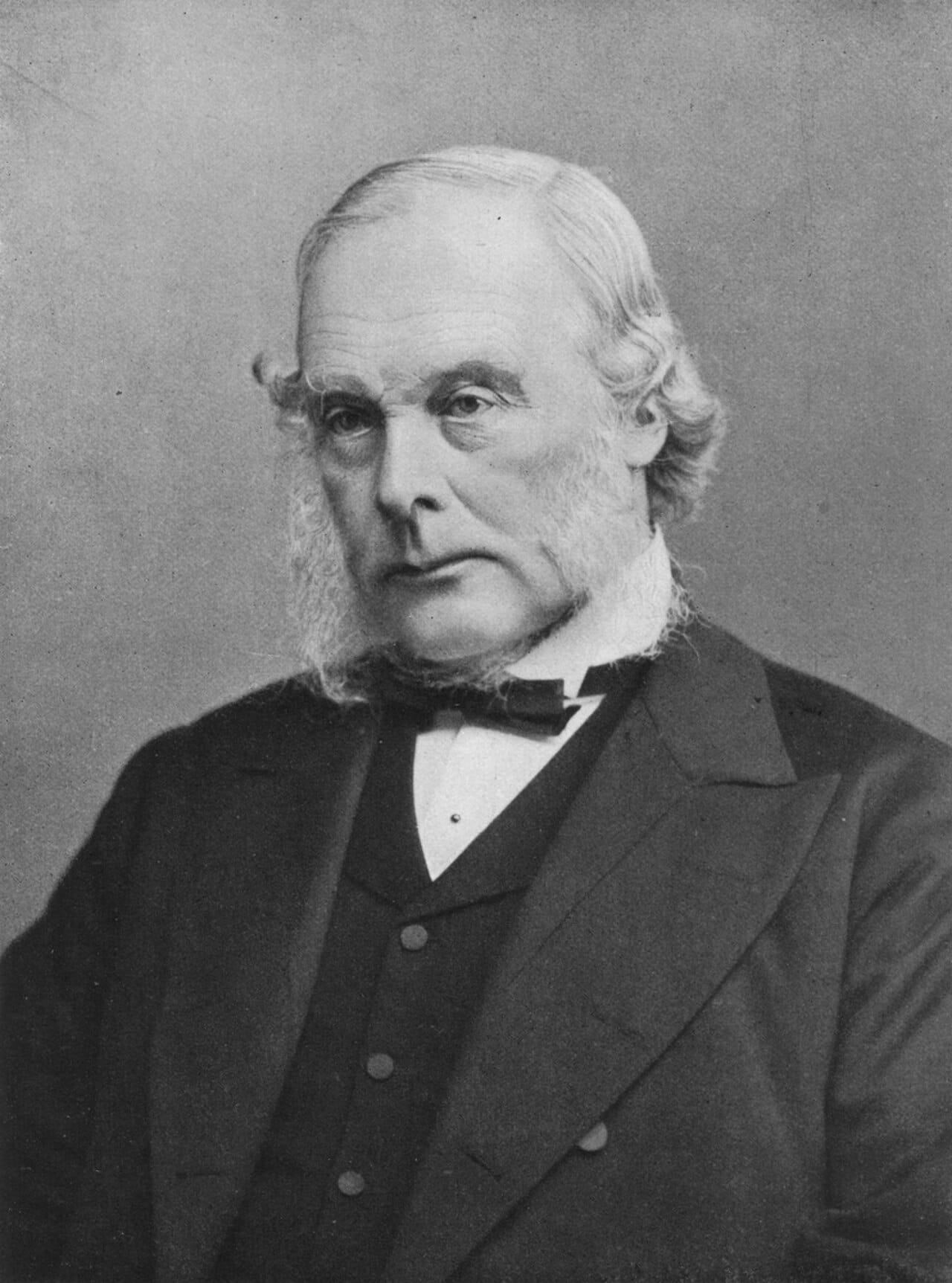
Joseph Lister was born at West Ham on 5 April 1827 into a prosperous Quaker family. His father, Joseph Jackson Lister, was an amateur scientist who solved the problem of chromatic aberration in the compound microscope - which is to say Lister grew up in a house where the instrument that would eventually reveal bacteria had been perfected by his own father. Barred as a Quaker from Oxford and Cambridge, he took his degree at University College London in 1852, then went to Edinburgh as assistant to James Syme, the leading British surgeon of the day, and married Syme's daughter Agnes, who became his laboratory partner. As professor of surgery at Glasgow from 1860 he was confronted daily with hospital gangrene and pyaemia, and could not accept the prevailing explanation that they were caused by miasma - bad air. In 1865 a colleague drew his attention to Louis Pasteur's work showing that fermentation and putrefaction are caused by living organisms. Lister reasoned that the same must apply to wounds, chose carbolic acid because it was used to treat sewage, and published his results in The Lancet in 1867. He died at Walmer in Kent on 10 February 1912. Michael Hart ranked him 60th in The 100.
Influence Meter
80
Measured on a 100-point scale
Made surgery survivable, and put germ theory to work before most doctors believed it
Before 1865
Hospitalism
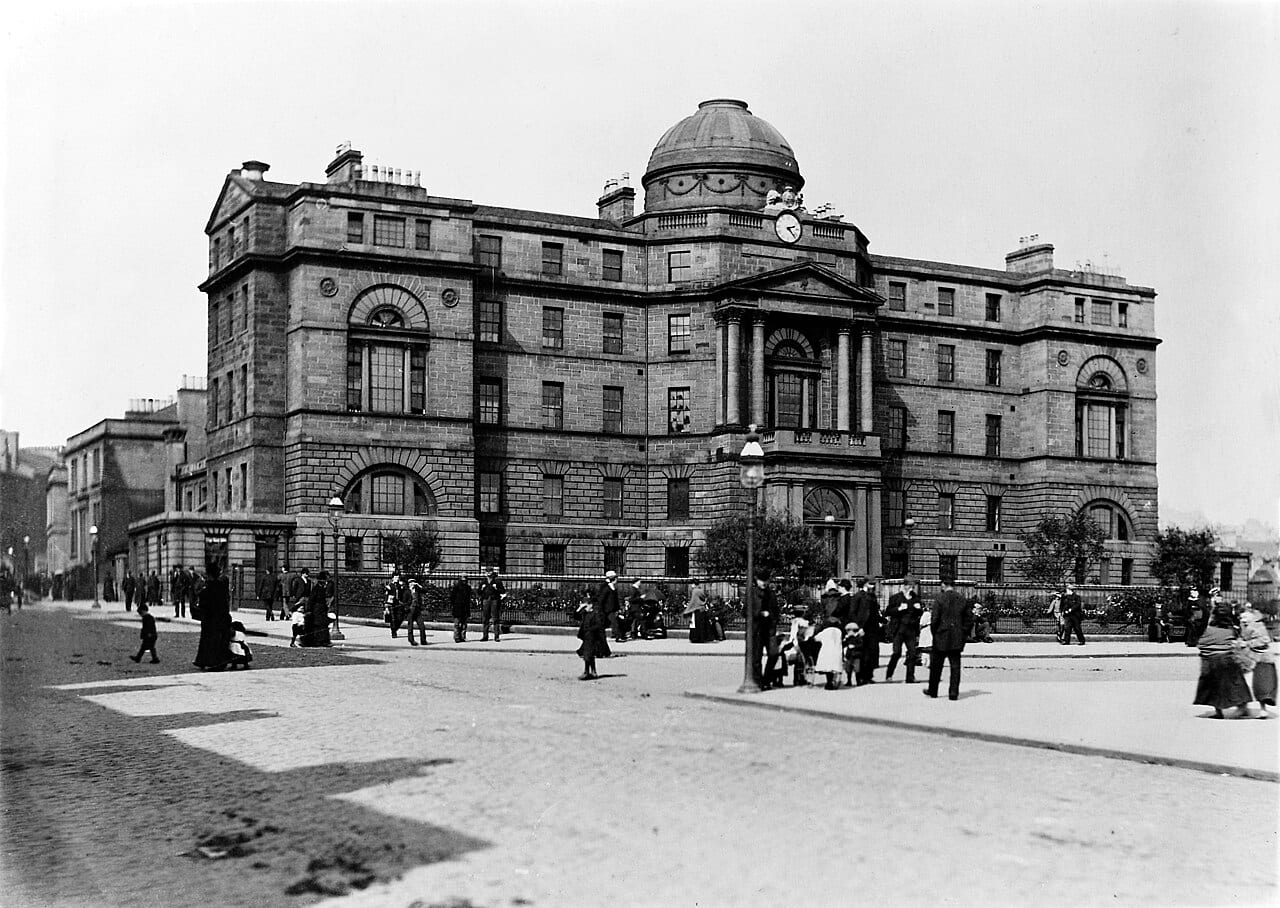
The mid-nineteenth-century surgical ward had a mortality problem so severe it had its own name - hospitalism - and it was understood to be worse in large city hospitals than in cottage practice, which was correctly observed and wrongly explained. Erysipelas, hospital gangrene, pyaemia and septicaemia swept through wards; amputation mortality at some institutions ran between forty and sixty per cent, and the great surgeon Robert Liston's famous operation with a reported three-hundred-per-cent mortality - patient, assistant and a spectator who died of shock - is an extreme case of a general condition. Surgeons did not wash their hands between patients, wore frock coats caked with the residue of previous operations, used the same unsterilised instruments, and probed wounds with their fingers. Ligatures were left hanging out of the wound to be pulled free later once suppuration had loosened them. None of this was carelessness by the standards of the time; it followed logically from the belief that infection arrived in the air.
Lister's reasoning was a chain of three steps, and the middle one is the reason he succeeded where others with the same suspicion had not. Pasteur had shown that putrefaction requires living organisms carried in the air, not the air itself. Lister inferred that wound sepsis is the same process. And he then needed something that would kill those organisms without destroying tissue - which is where carbolic acid came in, because he had read that the town of Carlisle used it on sewage and that this had reduced disease among cattle grazing on treated fields. He first applied it in August 1865 to an eleven-year-old boy, James Greenlees, with a compound fracture of the tibia - an injury that at the time usually meant amputation or death. The leg healed. Over the following years his compound fracture mortality fell from around forty-five per cent to about fifteen, and he published the results in a series of Lancet papers in 1867.
1867-1880s
Why It Took Twenty Years
The opposition was substantial and partly reasonable. Germ theory was not yet established, and asking surgeons to accept that invisible organisms caused disease was asking them to accept something they could not see; James Young Simpson, who had introduced chloroform, attacked Lister publicly and argued the results came from better ventilation. Others tried the method carelessly - carbolic at the wrong strength, applied at the wrong stage - got poor results, and concluded it did not work. Lister was also a poor advocate: a hesitant lecturer who published dense papers rather than campaigning.
Acceptance came first in Germany, where surgeons adopted the method during the Franco-Prussian War of 1870-71 and reported dramatic improvements, and in the United States after his 1876 tour. Britain came last, which Lister noted with some bitterness. By the 1880s the argument was over, helped enormously by Koch's identification of specific bacteria causing specific diseases, which supplied the visible evidence Lister had lacked. The method then evolved past him: his carbolic spray, which soaked the whole operating theatre and the surgeons in it, was abandoned in the 1890s once it was understood that the important thing was to prevent organisms reaching the wound at all - sterile instruments, gloves, masks, gowns - rather than to kill them in the air. Lister accepted the correction and dropped the spray himself.
What Followed
Surgery Before and After
Anaesthesia removed the limit on how long an operation could last; antisepsis removed the limit on where in the body it could be performed.
The abdomen became operable
Appendicectomy, gastric and intestinal surgery - all previously near-certain death from peritonitis - became routine procedures within a generation.
- Previously: Almost always fatal
Childbirth grew far safer
Puerperal fever, which Semmelweis had shown in the 1840s could be prevented by handwashing and had been ignored for it, collapsed once antisepsis was general.
- Anticipated by: Semmelweis, 1847
Ligatures and sutures changed
Lister developed sterilised absorbable catgut, which could be tied off and left inside the wound rather than dangling out of it - a small change that removed a major route of infection.
- Innovation: Absorbable catgut
Asepsis replaced antisepsis
Rather than dousing everything in disinfectant, surgeons sterilised instruments by heat and covered themselves - gowns, caps, masks and rubber gloves, the last introduced at Johns Hopkins in 1889.
- Gloves from: 1889
Hospitals became places to get well
For most of history a hospital was where the poor went to die. The combination of anaesthesia, antisepsis and nursing reform turned it into the place where treatment happens.
- Change: From last resort to first
Everything later depends on it
Transplantation, cardiac surgery, joint replacement and neurosurgery are all impossible without a sterile field. Lister is the precondition.
- Precondition for: All modern surgery
Further Reading
Books About Lister
His wife Agnes worked with him for decades as his laboratory assistant and recorder; after her death in 1893 he essentially stopped research.
Legacy
Why Number Sixty
Michael Hart ranked Lister 60th, and the entry belongs in a group with Morton at thirty-seven and Pasteur at eleven, since the three between them made surgery a rational procedure rather than a gamble. The distribution of credit is genuinely arguable. Pasteur supplied the theory; Semmelweis had demonstrated in Vienna in 1847 that handwashing collapsed maternal mortality and was driven out of the profession for saying so; Koch supplied the bacteriological proof. What Lister did was apply the theory to surgery systematically, publish measured results, and persist for twenty years until the profession moved.
The measure is in the mortality figures, which is the least glamorous and most persuasive kind of evidence. His compound fracture cases went from roughly forty-five per cent dead to fifteen, and the same collapse repeated in every hospital that adopted the method properly. Every operation performed anywhere today happens inside a sterile field, which is his idea refined. His name is also, oddly, on a mouthwash - Listerine was formulated as a surgical antiseptic in 1879 and named in his honour, apparently without his enthusiasm.
Related Publications