Nikolaus August Otto

Nikolaus August Otto
Born 10 June 1832 • Died 26 January 1891
There are somewhere over a billion vehicles in the world, and the overwhelming majority of the petrol-powered ones run on a cycle worked out by a man who sold tea and sugar around the Rhineland and had no technical training whatsoever. Suck, squeeze, bang, blow - intake, compression, power, exhaust. Otto did not invent the internal combustion engine and did not originate the theory of the four-stroke cycle, but he built the first one that worked well enough to sell, and it is still what is under the bonnet.
Rank
#61
Influence
78
Field
Engineer and Inventor
Historical Perspective
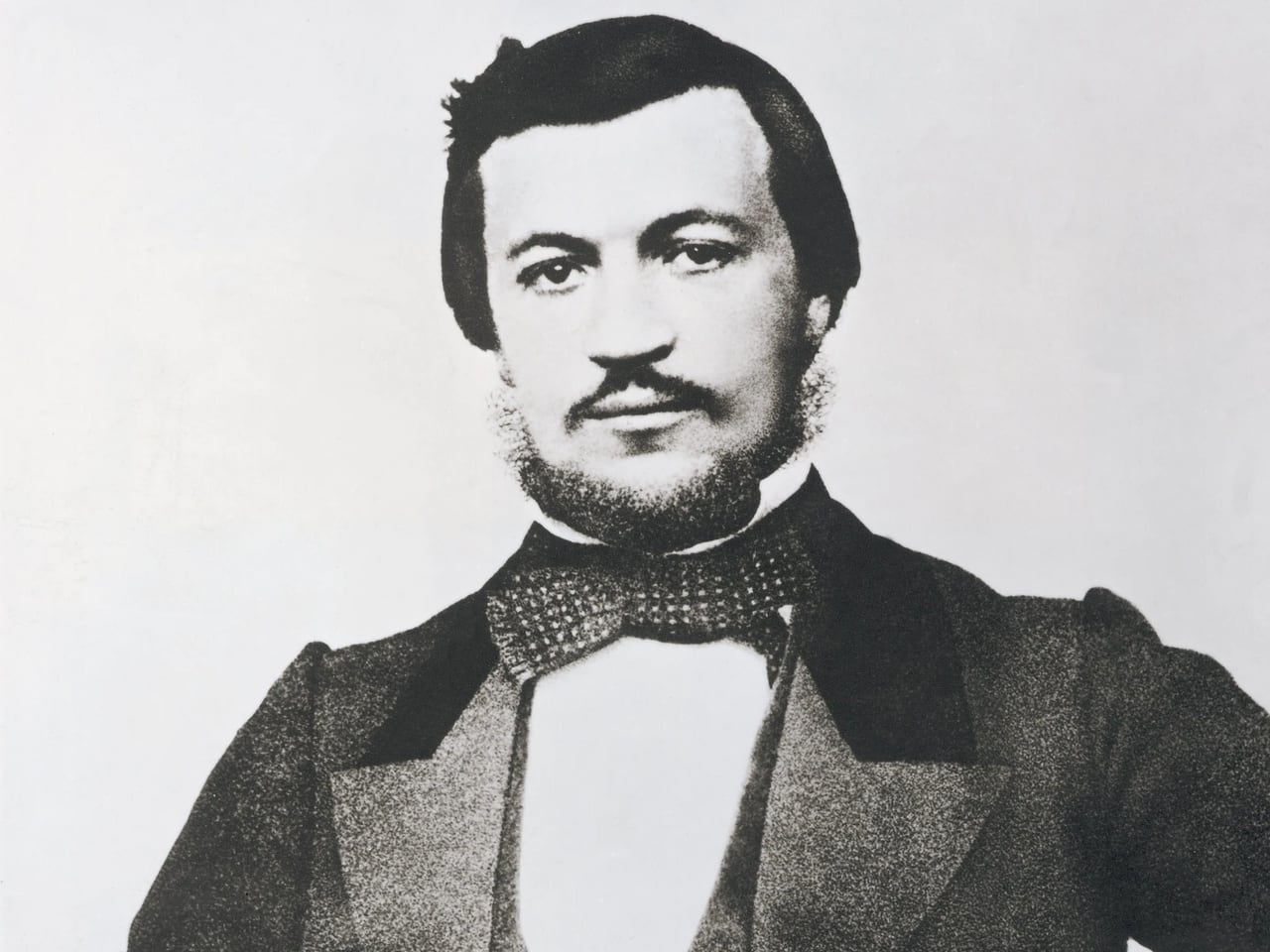
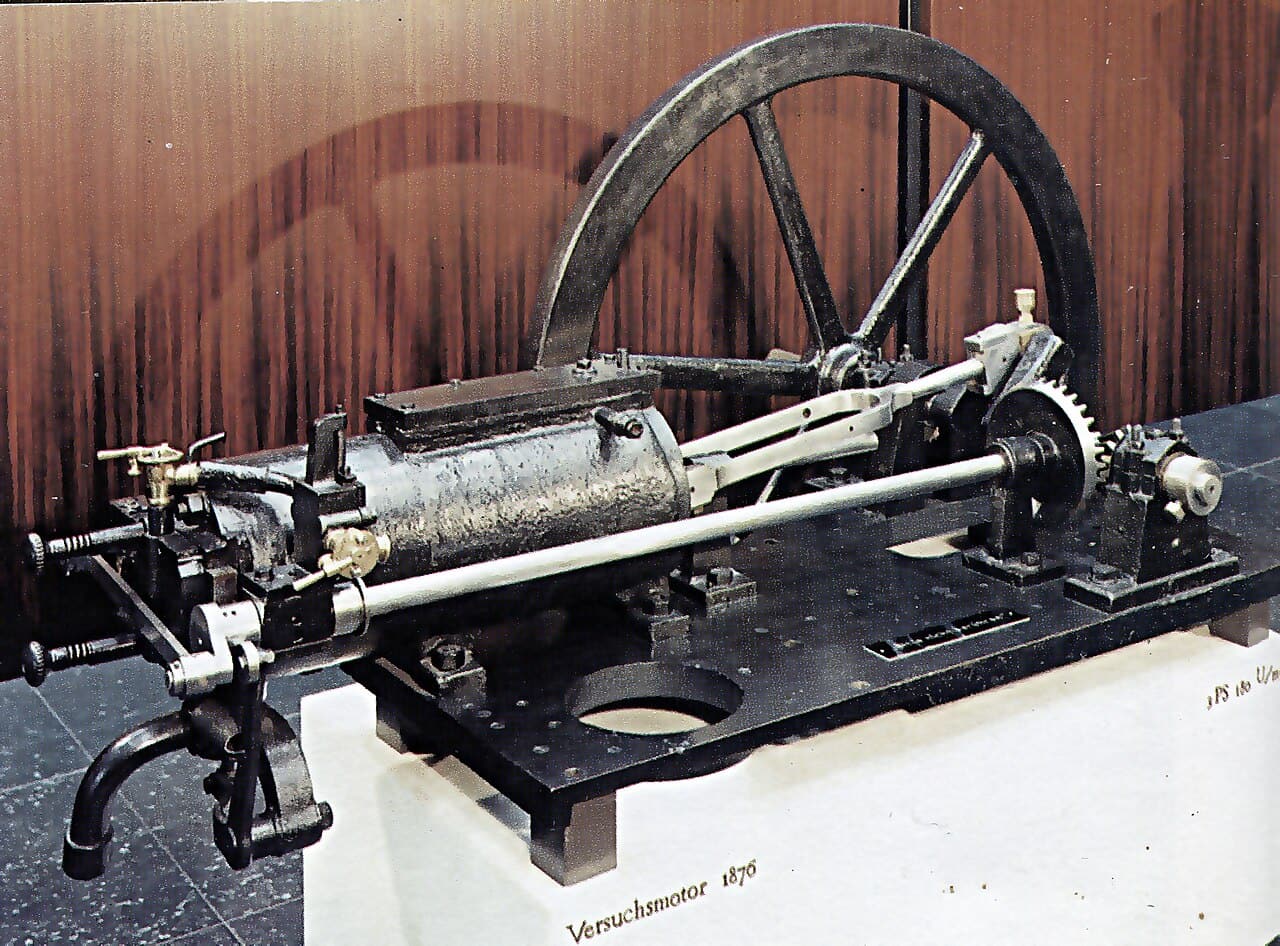
Nikolaus August Otto was born at Holzhausen an der Haide on 10 June 1832, the youngest of six children; his father died the same year. He left school early and became a travelling salesman in colonial goods - coffee, tea, rice and sugar - across western Germany. In 1860 he read about the gas engine of Jean Joseph Étienne Lenoir, the first internal combustion engine to be sold commercially, and built himself a copy. Lenoir's engine burned a fuel-air mixture without compressing it first and was consequently very inefficient. Otto's insight, which he tried and failed to realise in 1861, was that compressing the charge before ignition would transform the output. In 1864 he formed a partnership with the wealthy engineer Eugen Langen, and their firm - which became Deutz - was the first company in the world devoted entirely to internal combustion engines. Their atmospheric engine won the gold medal at the Paris Exposition of 1867. In 1876 Otto finally produced the compressed-charge four-stroke engine. He died at Cologne on 26 January 1891. Michael Hart ranked him 61st in The 100.
Influence Meter
78
Measured on a 100-point scale
The cycle running most of the world's engines, and the basis of the motor age
The Four Strokes
Two revolutions of the crankshaft, four movements of the piston, one power stroke. Once stated it seems obvious, and it took fifteen years of work to make it run.
- Intake: The piston descends and draws a mixture of fuel and air into the cylinder through the open inlet valve.
- Compression: Both valves close and the piston rises, squeezing the mixture into a small volume. This is the step Lenoir omitted and the reason Otto's engine was several times more efficient.
- Power: The compressed mixture is ignited near the top of the stroke and the expanding gases drive the piston down. This is the only stroke that does work.
- Exhaust: The piston rises again with the exhaust valve open, pushing the burnt gases out, and the cycle repeats.
- Why compression matters: Compressing the charge raises the temperature and pressure at ignition and lets far more of the fuel's energy become mechanical work. Otto's engine used roughly a third of the gas Lenoir's did for the same output.
- Why it is called stratified charge: Otto believed, wrongly, that the mixture in the cylinder remained layered rather than uniform, and that this layering was the key. The engine worked for reasons other than the ones he gave.
Otto patented the four-stroke engine in Germany in 1877 and enforced the patent aggressively, which made his firm the dominant engine manufacturer in Europe. In 1886 a French lawyer found that Alphonse Beau de Rochas, a French engineer, had described the four-stroke cycle in a privately printed pamphlet in 1862 - fourteen years before Otto built one - and had even set out the conditions for efficiency more clearly. Beau de Rochas never built an engine and never paid the fees to maintain his patent, but the prior publication was enough. Otto's German patent was invalidated, the market opened to competitors, and the price of engines fell sharply. The episode is a neat illustration of the difference between having an idea and making it work: the cycle is named after the man who spent fifteen years getting one to run, and the man who wrote it down first is a footnote.
1872-1882
The Two Employees Who Left
In 1872 Otto's firm hired Gottlieb Daimler as technical director and Daimler brought with him a designer named Wilhelm Maybach. Both were considerably better trained than Otto and both quarrelled with him. They left in 1880 and 1882, set up on their own in Cannstatt, and worked on the problem Otto had not pursued: making the engine small, light and fast enough to be carried by a vehicle rather than bolted to a factory floor. Otto's engines were large stationary units running at around 180 revolutions per minute; Daimler and Maybach got to 900. In 1885 they fitted one to a wooden bicycle, and in 1886 to a carriage, in the same year that Carl Benz - working separately - patented his Motorwagen. The motor car therefore emerges from Otto's factory by way of two men who found him difficult to work for.
After 1876
What the Engine Did to the World
Otto's firm sold something over fifty thousand engines in the seventeen years after 1876, initially to small workshops that had previously needed a steam plant or a water wheel. That alone mattered: an engine that could be started in minutes, ran on gas piped from the town supply, and did not require a boilerman democratised mechanical power for small manufacturers in the way Watt's engine had for large ones. Then it went mobile, and everything followed - the car, the lorry, the tractor, the motorcycle, the aeroplane, the outboard motor and the portable generator.
The second-order consequences are the shape of the twentieth century. Cities spread outward into suburbs because commuting became possible; agriculture mechanised and the rural population collapsed into the cities; armies became mobile in a way that made 1914 and 1939 look entirely different from 1870; and global supply chains became feasible. The bill is also his, in part. Road transport accounts for a substantial share of global carbon dioxide emissions, and the reason the transition to electric vehicles is difficult is precisely that a century and a half of infrastructure, manufacturing and expectation has been built around a cycle a grocery salesman got working in 1876.
Further Reading
Books About Otto and the Engine
He is among the least written-about people on this list relative to the size of what he made.
Legacy
Why Number Sixty-One
Michael Hart ranked Otto 61st, and the placement makes an implicit comparison with James Watt at twenty-two. Watt's engine industrialised production; Otto's mobilised it. A steam engine is heavy, needs a boiler, a fire, water and a long warm-up, and is only sensible above a certain size. An internal combustion engine is compact, starts quickly, carries its own fuel in a tank and scales down to something a person can lift - which is what made a personal vehicle conceivable.
Otto himself is usually left out of the story in favour of Benz, Daimler or Ford, and the omission is understandable since none of the famous applications are his. But the cycle is the invention, and it is his: over a century after his death, essentially every petrol car, motorcycle, lawnmower, chainsaw and light aircraft engine in existence runs on four strokes in the order he settled. Whether that record continues much longer is now an open question, since the electric motor is displacing it, and it will be an unusual thing to watch - a piece of engineering so successful that it defined an era being retired for reasons its inventor could not have imagined.
Related Publications