Karl Marx

Karl Marx
Born 5 May 1818 • Died 14 March 1883
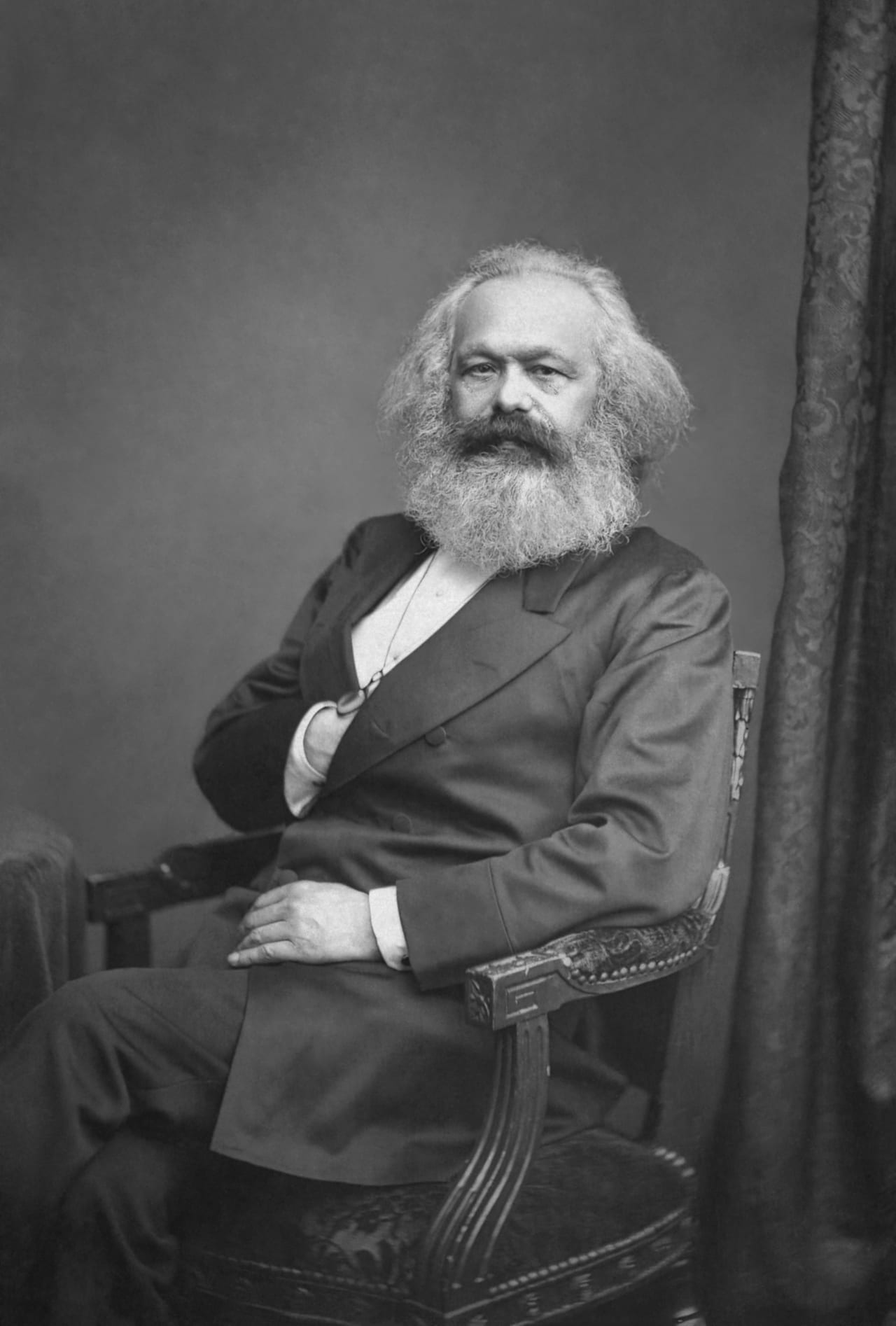
Karl Marx (1818-1883) was expelled from three countries, published a newspaper that was shut down, buried three of his children partly for want of money, and was so poor in Soho that he once could not leave the house because his coat was pawned. Eleven people attended his funeral. Within seventy years, governments claiming his authority ruled roughly a third of the world's population. No other private individual has been claimed as the founder of so many states, and few thinkers have been so thoroughly rewritten by the people invoking them.
Rank
#27
Influence
89
Field
Philosopher and Economist
Historical Perspective
Karl Marx was born on 5 May 1818 in Trier, in Prussia's Rhineland, into a family of rabbis on both sides; his father Heinrich converted to Lutheranism to keep practising law. He studied at Bonn and Berlin, fell in with the Young Hegelians, and took a doctorate from Jena in 1841 on Greek atomism. Barred from academia by his politics, he turned to journalism, editing the Rheinische Zeitung until Prussia suppressed it in 1843. What followed was permanent exile: Paris from 1843, where he met Friedrich Engels in August 1844 and began the century's most productive intellectual partnership; Brussels from 1845, where the two wrote The Communist Manifesto, published weeks before the revolutions of 1848 swept Europe; and from August 1849, London, for the remaining thirty-four years of his life. There he wrote for the New-York Daily Tribune to eat, researched in the British Museum, and produced the first volume of Das Kapital in 1867. He died stateless on 14 March 1883 and is buried at Highgate. Michael Hart ranked him 27th in The 100.
Influence Meter
89
Measured on a 100-point scale
A theory of history that became the official doctrine of states ruling a third of humanity
TL;DR
What the argument actually is
Marx claimed that societies are shaped primarily by how they produce things, that this produces conflicting classes, and that capitalism generates the conditions of its own replacement.
! Why This Matters:
- • The method: Historical materialism: examine who owns the means of production, and the politics, law and ideas of a period become explicable rather than accidental.
- • The mechanism: Surplus value. A worker produces more value than the wage returns; the difference is profit, and the relationship is therefore structurally antagonistic.
- • The prediction: Competition concentrates capital, immiserates workers, and produces recurring crises until the system is overturned.
- • The gap: He wrote thousands of pages on how capitalism works and almost nothing on how the society replacing it should be organised.
? Key Data:
- • Years in exile: 40 (1843-1883)
- • Volumes of Das Kapital he lived to publish: 1 of 3
- • Mourners at his funeral: About 11
- • Hart's rank: 27th of 100
Continue reading below for the full detailed article →
1835-1843
A Doctorate, and No Career
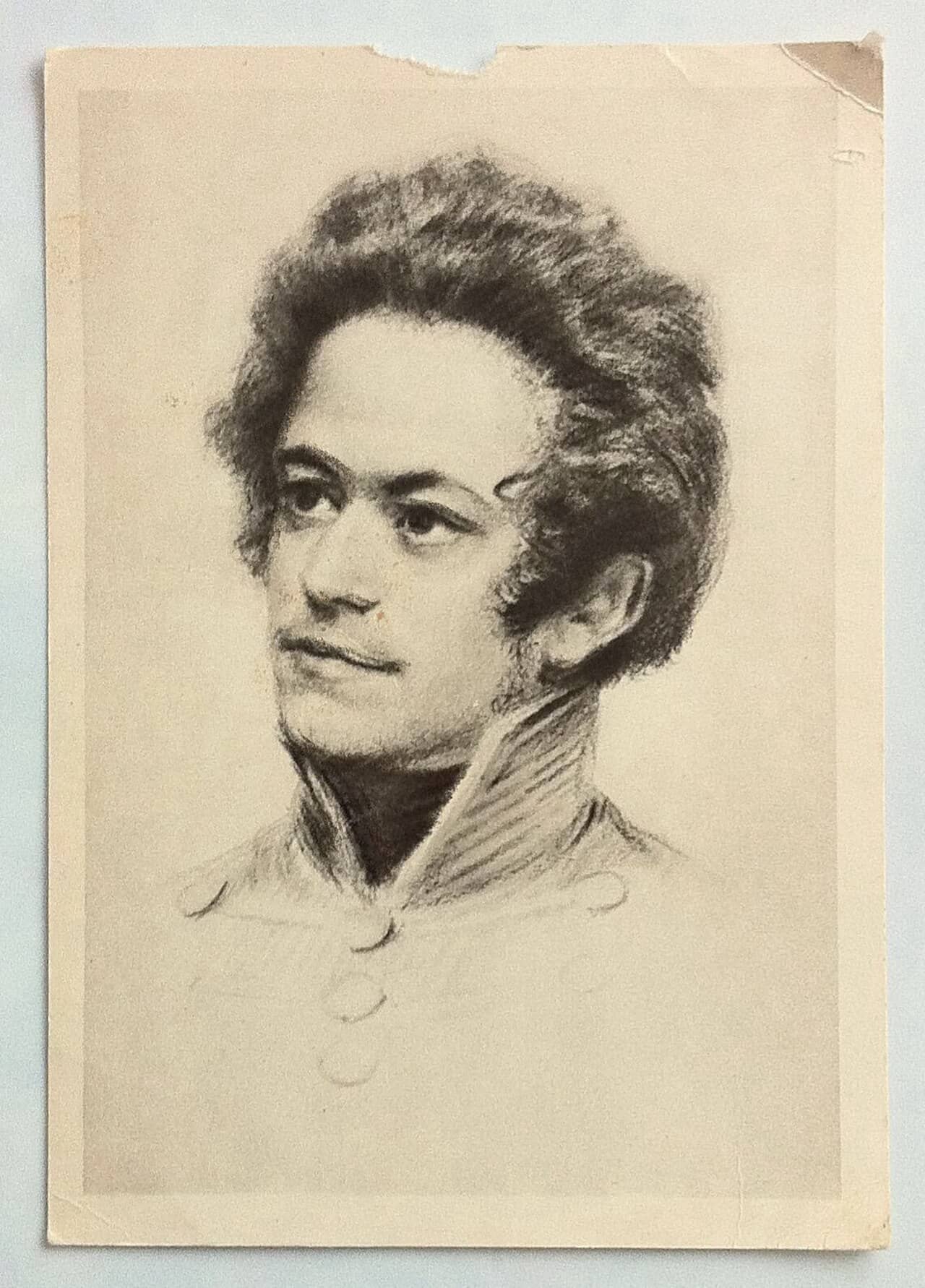
Marx was sent to Bonn to read law, drank heavily, was wounded in a duel and jailed briefly for disturbance; his father moved him to Berlin, where he abandoned law for philosophy and joined the Young Hegelians, a circle applying Hegel's dialectic to religion and politics with increasingly radical results. He took his doctorate from Jena in 1841 - submitted there rather than Berlin because the Prussian authorities were purging the faculty - and expected an academic post. It never came: his supervisor Bruno Bauer was dismissed for atheism, and Marx was unemployable in any Prussian university. The closure was decisive. Excluded from the academy, he spent his life writing as a journalist and pamphleteer for readers outside it, which is a large part of why his prose has the polemical edge that a professor's would not.
1843-1849
Expelled From Three Countries in Six Years
Marx edited the Rheinische Zeitung in Cologne from 1842 until Prussia banned it in 1843, having discovered while writing about the theft of firewood and the condition of Moselle winegrowers that he did not understand economics and would have to learn it. He married Jenny von Westphalen, an aristocrat's daughter who had been engaged to him for seven years against her family's wishes, and moved to Paris. There he read political economy seriously for the first time, wrote the manuscripts on alienated labour that would not be published until 1932, and in August 1844 met Engels at the Cafe de la Regence - a meeting that produced a collaboration of forty years and, quite literally, Marx's income.
France expelled him in 1845 at Prussian request. He went to Brussels, renounced his Prussian citizenship and remained stateless for the rest of his life. Belgium expelled him in 1848; he returned to Cologne to found the Neue Rheinische Zeitung with his father's inheritance, was tried for incitement and acquitted, and was expelled again when the revolutions failed. France would not have him back. In August 1849 he arrived in London, intending to stay a few months until the next revolutionary wave. He stayed thirty-four years.
The Partnership
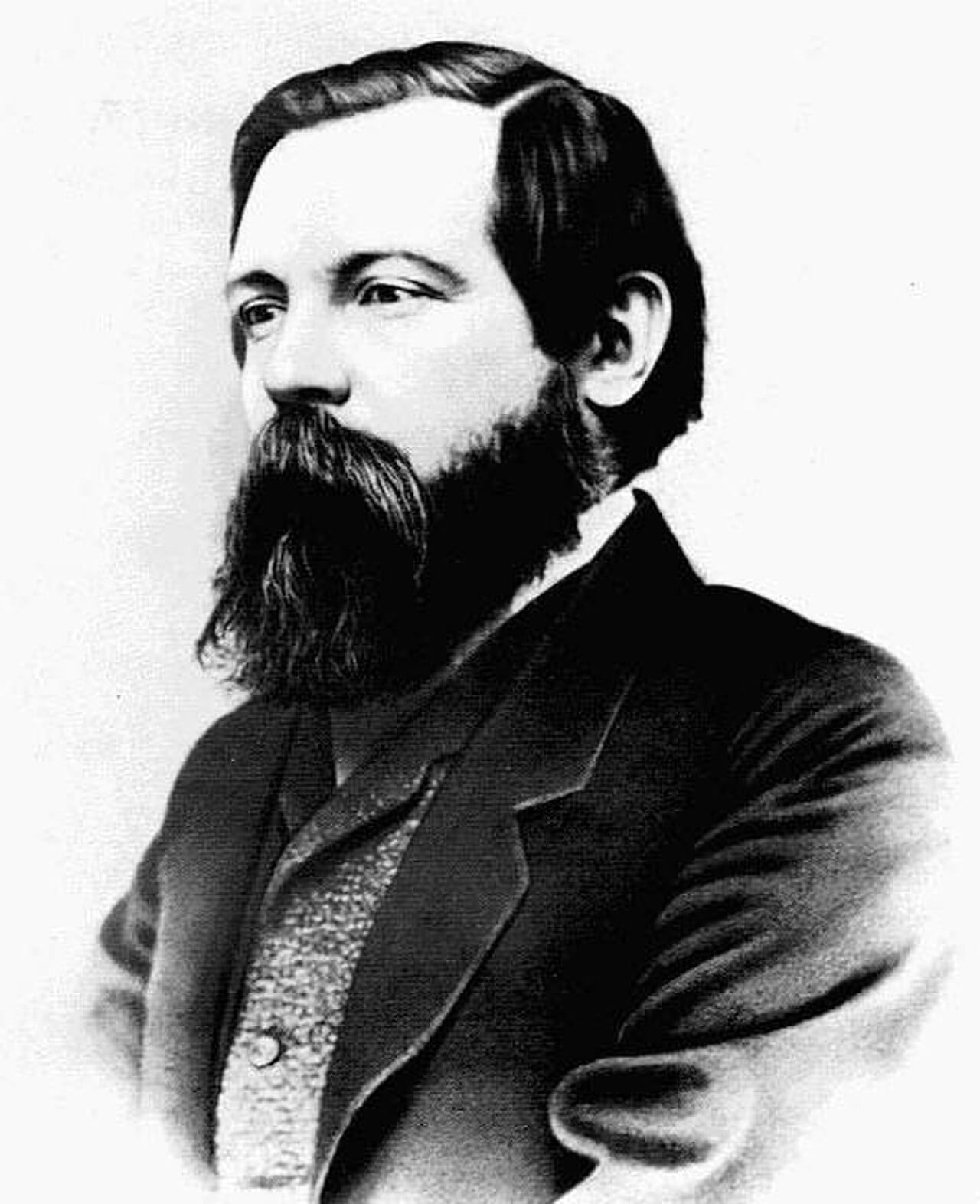
Friedrich Engels
The relationship is unusual enough in intellectual history to be worth stating plainly: for roughly thirty years, the manager of a Manchester cotton mill owned by his father sent much of his income to a stateless writer in London so that the writer could produce a book explaining why men like the manager's father should be expropriated. Engels went into the family firm largely to fund Marx, hated the work, and stayed at it for twenty years. He had already written The Condition of the Working Class in England before they became close, and it was he who first pointed Marx at the industrial proletariat as the agent of change. He co-wrote the Manifesto, edited volumes two and three of Das Kapital from Marx's near-illegible notebooks after his death, and spent his last years defending and simplifying the theory - a simplification later Marxists have both relied on and blamed him for.
The Communist Manifesto was commissioned as a programme for the Communist League, a small emigre organisation, and published in London on 21 February 1848. It is about thirty pages long. Marx wrote most of it in a rush in Brussels, from a draft by Engels, and it appeared within weeks of revolutions breaking out in Paris, Vienna, Berlin, Milan and beyond - a coincidence that did the pamphlet's reputation no harm and had nothing to do with its influence at the time, since almost nobody read it. It sank for two decades. Only after the Paris Commune of 1871 and the trials that followed did it become the most widely printed political text of the modern era.
The Apparatus
Six Ideas That Left the Building
Whatever one concludes about the politics, these concepts are now standard equipment across history, sociology and economics, often used by people who would reject the conclusions entirely.
Historical materialism
The claim that the way a society produces and reproduces its material life is the primary determinant of its politics, law, religion and ideas - not the other way round.
- Against: Hegel's idealism
Class struggle
That recorded history is driven by conflict between groups defined by their relation to production - master and slave, lord and serf, capitalist and worker.
- Opening line of: The Communist Manifesto
Surplus value
Workers produce more value than their wages return; the surplus is appropriated as profit. This makes exploitation a structural feature of the wage relation rather than a matter of individual employers behaving badly.
- Set out in: Das Kapital, volume 1
Alienation
Under industrial wage labour the worker is estranged from the product, the act of working, other people and their own nature. Written in 1844 and unpublished until 1932, it reshaped how the twentieth century read him.
- Rediscovered: 1932
Commodity fetishism
Relations between people take on the appearance of relations between things, so that a price seems a natural property of an object rather than the residue of human labour and social arrangement.
- Chapter: Das Kapital, book 1, chapter 1
Ideology
That the ruling ideas of an age tend to be the ideas of its ruling class, and that beliefs presented as neutral often encode an interest. Now a routine analytical move well outside Marxism.
- From: The German Ideology
1850-1867
Dean Street, and the Reading Room
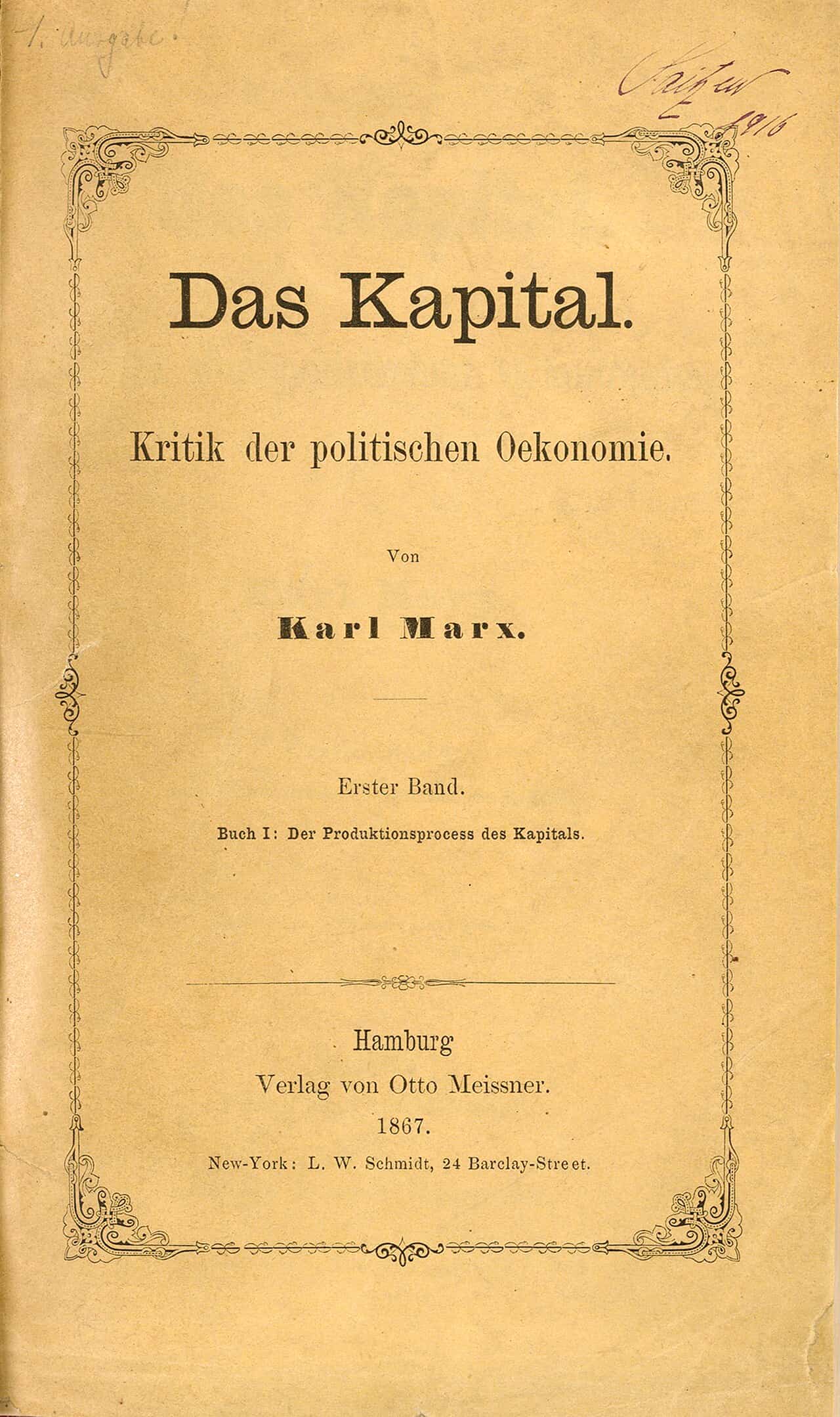
The Marx family lived from 1851 to 1856 in two rooms at 28 Dean Street in Soho, in conditions a Prussian police spy described in detail: broken furniture, everything covered in dust, manuscripts and children's toys and tobacco ash on the same table. Three of their children died there, and Jenny Marx recorded borrowing money to buy a small coffin. Marx's income came from Engels and from the New-York Daily Tribune, for which he was European correspondent from 1852 to 1862 - the largest-circulation newspaper in the world, which makes him, for a decade, principally a working journalist. Almost every day he walked to the British Museum reading room and worked through parliamentary reports, factory inspectors' returns and blue books. Das Kapital is built from that material: its most devastating passages are not theory but quotation, the British state's own inspectors describing what was being done to children in mills and mines.
Assessment
What He Predicted, and What Happened
Reading Marx as prophecy is the least interesting way to read him, but he did make claims about the future, and they have now had a century and a half to be tested. The record is mixed in a way that is more instructive than either his defenders or his critics usually allow.
| Capital concentrates into ever fewer, larger firms | Global markets are dominated by a small number of very large corporations | Largely right |
| Capitalism produces recurring crises of its own making | Repeated cycles, including 1929 and 2008 | Largely right |
| Production becomes global and uproots local ways of life | Described in the Manifesto in terms readers now call globalisation | Strikingly right |
| Workers' conditions steadily worsen toward subsistence | Real wages and living standards in industrial countries rose enormously | Wrong |
| Revolution comes first in the most advanced industrial nations | It came in agrarian Russia and China; industrial Britain and Germany reformed instead | Wrong |
| The state withers away after the transition | States claiming his name became the most extensive in history | Wrong, and catastrophically so |
| Class position shapes politics, law and culture | A standard assumption across the social sciences | Absorbed into the mainstream |
Marx wrote almost nothing prescriptive about how a post-capitalist society should be run, which is part of why regimes invoking him diverged so widely and so violently.
After 1883
What Was Done in His Name
Marx died in 1883 with volume one of Das Kapital published, volumes two and three in notebooks, and no organised movement of any size. Engels edited and published the remaining volumes in 1885 and 1894, and the theory was systematised into a doctrine over the following decades by people Marx never met. Lenin adapted it for a country Marx had considered too agrarian for socialist revolution, adding a vanguard party the original texts do not describe. Stalin and Mao adapted it further. The regimes that followed were responsible for tens of millions of deaths through famine, purge and camp, and by the middle of the twentieth century governed roughly a third of humanity.
How much of that belongs to Marx is the longest-running argument in modern political thought, and it is genuinely unsettled. He wrote of a dictatorship of the proletariat and endorsed revolutionary violence; he also spent his life as a journalist attacking censorship and state repression, and once remarked of a group of French followers that if that was Marxism, he was not a Marxist. The honest position is that his work is a critique of capitalism rather than a design for what replaces it, that the blueprint was written by others, and that the absence of a blueprint in a text claiming historical inevitability is itself a serious flaw rather than an alibi.
A Note on Reading Marx
Marx/Engels Collected Works and archive Das Kapital, volume 1 (1867) The Communist Manifesto (1848)
Few writers are as often summarised by people who have not read them, in both directions. A large part of the corpus was unpublished in his lifetime - the 1844 manuscripts on alienation appeared in 1932, The German Ideology in the same decade, the Grundrisse notebooks not in full until the 1950s - so the Marx of 1900 and the Marx of 1960 are recognisably different figures assembled from different texts.
This profile separates three things that are routinely merged: what Marx wrote, what movements claiming him did, and what modern scholarship makes of the gap. Where his predictions can be checked they are reported as right or wrong on the evidence rather than defended or dismissed wholesale.
Last verified: 22 Aug 2026
Written Works
Books and Pamphlets by Marx
Much of the most influential material was written for a drawer and published decades after his death.
Further Reading
Books About Marx
Biography rather than doctrine, chosen for range: an admirer, a sceptic, and two who mainly want to put him back in the nineteenth century.
Karl Marx: A Life
A witty, humane and unillusioned biography that treats him as a Victorian man of letters rather than a prophet, and is very good on the poverty and the boils.
- Published: 1999
Karl Marx: Greatness and Illusion
A major scholarly life arguing that the twentieth-century Marx is largely a construction, and returning him to the specific arguments of his own century.
- Published: 2016
Karl Marx: A Nineteenth-Century Life
Similar in intent to Stedman Jones and published three years earlier, insisting he is better understood as a backward-looking figure of 1848 than a prophet of modernity.
- Published: 2013
Karl Marx
Written in 1939 when Berlin was in his twenties, and still one of the clearest short introductions to what the ideas are and where they came from.
- Published: 1939
Legacy
Why Number Twenty-Seven
Michael Hart ranked Marx 27th on reach rather than on whether the theory holds. The Russian Revolution of 1917 and the Chinese Revolution of 1949 were both carried out by men citing him, and at the Cold War's height governments professing Marxism ruled roughly a third of the world's people. Most of those regimes are gone - the Soviet system collapsed between 1989 and 1991 - but the twentieth century is not comprehensible without them, and neither is the shape of the century that followed. Few private individuals writing alone in a library have had a comparable effect on the map.
The quieter legacy may prove the more durable. Sociology as a discipline is unimaginable without him; so is economic history, and much of the way historians now read any period. The habit of asking who owns a thing, who benefits from an arrangement, and whose interest a widely held belief happens to serve is so embedded in modern thought that it no longer registers as Marxist at all. Eleven people stood at his grave in Highgate in March 1883. Engels told them that his name and his work would endure through the ages, which was, on any reading, a considerable understatement.
Related Publications