Queen Isabella I

Queen Isabella I
Born 22 April 1451 • Died 26 November 1504
1492 is one of the most consequential years in European history and Isabella of Castile is responsible for three separate events in it. On 2 January the last Muslim kingdom in Iberia surrendered. On 31 March she and Ferdinand ordered every Jew in their territories to convert or leave within four months. And in August a Genoese sailor she had refused twice sailed west with three ships and her backing. Each would rank as a reign's defining act. She did them in eight months.
Rank
#65
Influence
78
Field
Queen of Castile
Historical Perspective
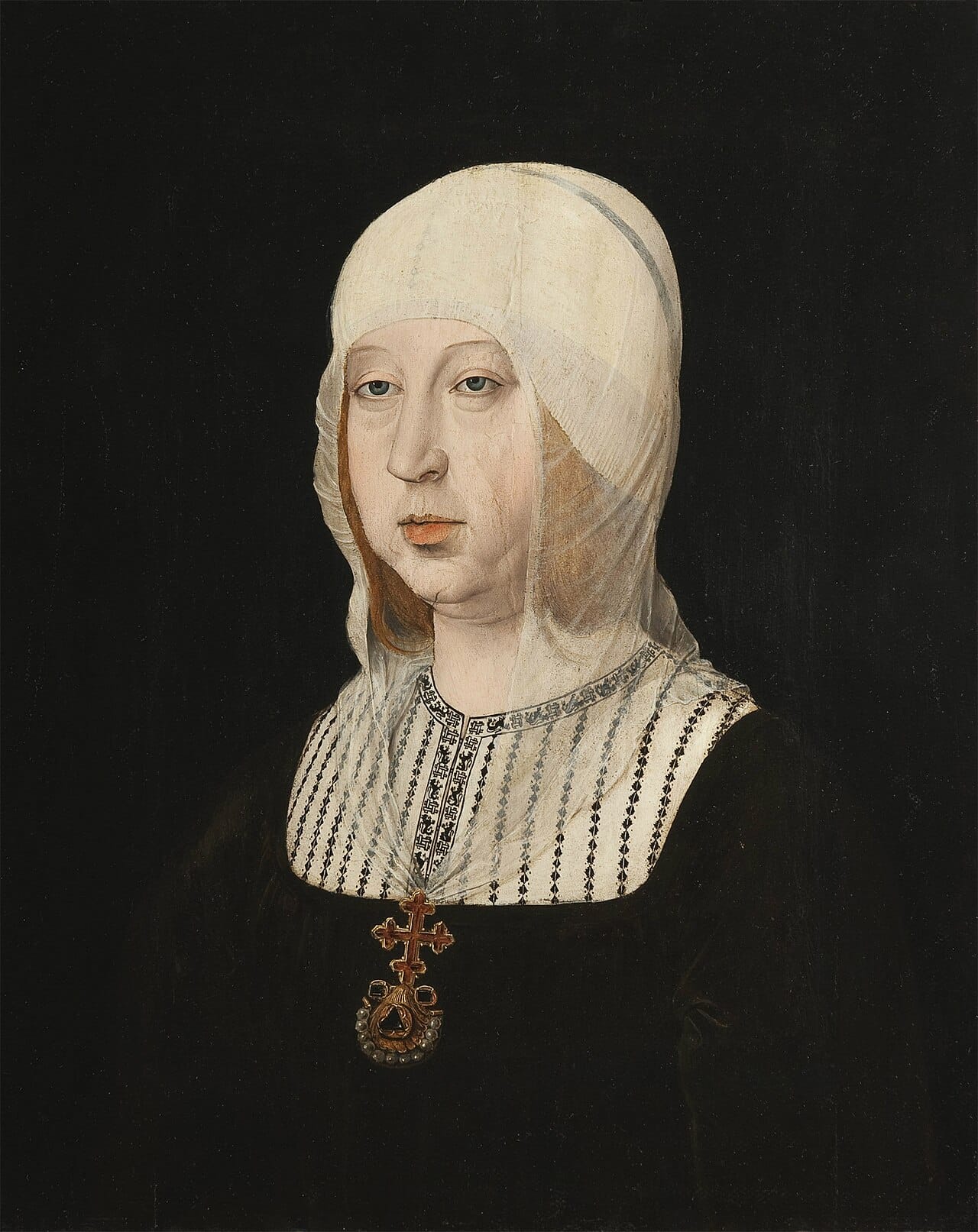
Isabella was born on 22 April 1451 at Madrigal de las Altas Torres, half-sister to Henry IV of Castile, and was not expected to rule. She married Ferdinand, heir to Aragon, on 19 October 1469 - secretly, without her brother's permission, using a forged papal dispensation, since they were second cousins. On Henry's death in 1474 she claimed the throne against his daughter Joanna, whose paternity was disputed, and won the resulting five-year civil war. When Ferdinand succeeded in Aragon in 1479 the two largest Iberian crowns were held jointly, though they remained legally separate; their motto, tanto monta, expressed the equality of their authority. They spent a decade on the conquest of Granada, completed on 2 January 1492, and in the same year expelled the Jews and commissioned Columbus. Isabella reformed Castile's finances, curbed the nobility, and married her five surviving children into Portugal, England and the Habsburg dynasty. She died at Medina del Campo on 26 November 1504. Michael Hart ranked her 65th in The 100.
Influence Meter
78
Measured on a 100-point scale
Unified Spain, launched an empire, and expelled a people who had been there a thousand years
1492
Eight Months
Four decisions taken within a single year, in the same court, by the same two people. Their consequences run in entirely different directions and are still being worked out.
| 2 January | Granada surrenders | Seven centuries of Muslim rule in Iberia end; the Reconquista is complete |
| 31 March | The Alhambra Decree | Spain's Jews are given four months to convert or leave; the Sephardic diaspora begins |
| 17 April | The Capitulations of Santa Fe | Columbus is commissioned, having been refused twice before |
| 12 October | Columbus makes landfall | Permanent contact between Europe and the Americas; the Spanish empire follows |
| August | Nebrija's Castilian grammar | The first grammar of a modern European language, dedicated to Isabella, arguing that language is the companion of empire |
Nebrija's dedication is often quoted as prophetic. Spanish is now the second most spoken native language in the world, with well over four hundred million speakers, almost all of them in the Americas.
The Alhambra Decree of 31 March 1492 ordered all practising Jews out of Castile and Aragon by the end of July. Jewish communities had lived in Iberia for well over a millennium, had produced a civilisation of extraordinary richness under both Muslim and Christian rule, and had already suffered mass violence in 1391 and decades of pressure to convert. Estimates of the numbers vary widely; a common modern figure is that around forty thousand of perhaps eighty thousand left, with the rest converting - and the converts, the conversos, then became the Inquisition's principal target on suspicion of secretly retaining their faith. The exiles went to Portugal, North Africa, Italy and above all the Ottoman Empire, where Sultan Bayezid II is said to have remarked that Ferdinand was called wise and had impoverished his own country to enrich Turkey. The Sephardic communities of the eastern Mediterranean, and the Ladino language, descend from that expulsion. Spain formally revoked the decree in 1968 and offered citizenship to Sephardic descendants in 2015.
1486-1492
The Proposal She Refused Twice
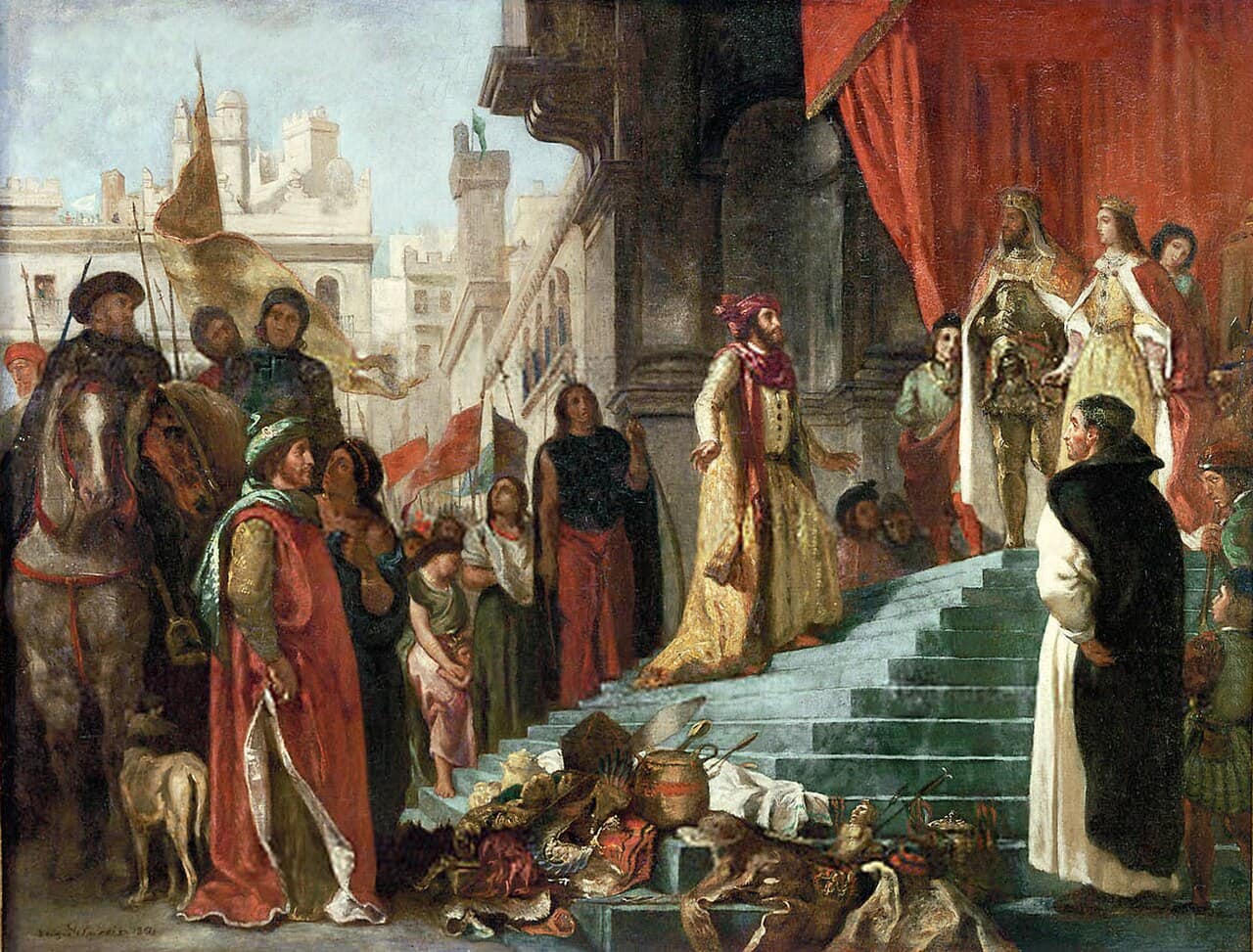
Columbus first approached the Castilian court in 1486 with a plan to reach Asia by sailing west. A royal commission examined it and rejected it, correctly: his estimate of the Earth's circumference was far too small and his estimate of the distance to Japan far too short, and the experts who told him so were right on the geography. He was refused again in 1490. What changed in 1492 was the fall of Granada, which freed both attention and money, and a final appeal in which Ferdinand's treasurer argued the cost was trivial against the possible return. The traditional story that Isabella pawned her jewels is a legend; the voyage was funded largely from Castilian treasury sources and Genoese and converso lenders, and was cheap. She took the Crown's share of any discoveries and her instinct, in the narrow commercial sense, was vindicated beyond any reasonable expectation - though not for the reason Columbus advertised, since what he found was not Asia.
Statecraft
What She Actually Built
The dramatic events of 1492 sit on top of two decades of unglamorous state-building that turned a chaotic kingdom into the strongest power in Europe.
The Santa Hermandad
A national police force funded by the towns, which suppressed the banditry and private warfare of the nobility. It gave the crown, for the first time, an armed force independent of the aristocracy.
- Function: Royal police
Curbing the nobility
She recovered crown lands granted away by her predecessors, reduced the Royal Council's noble membership in favour of trained lawyers, and appointed corregidores to govern towns for the crown.
- Replaced nobles with: Lawyers
The Inquisition
Established by papal bull at the monarchs' request and, unusually, under royal rather than papal control. Directed at conversos suspected of Judaising rather than at Jews or Muslims as such. Torquemada was the first Inquisitor General.
- Controlled by: The crown
The conquest of Granada
A ten-year campaign combining siege artillery, systematic devastation of the countryside and the exploitation of a civil war within the Nasrid dynasty. It produced a battle-hardened army that then went to the Americas and Italy.
- Duration: Ten years
Dynastic marriage
Her children married into Portugal, England and the Habsburgs. Through her daughter Juana, her grandson Charles inherited Spain, the Low Countries, Austria and the Americas - the largest personal inheritance in European history.
- Grandson: Emperor Charles V
Protection of indigenous Americans, on paper
She declared the indigenous peoples of the Americas free subjects of the crown, ordered Columbus arrested in part for enslaving them, and made provision in her will for their good treatment. The instruction was ignored comprehensively.
- Effect: Almost none
Further Reading
Books About Isabella
Her reputation in Spain has swung between Catholic saint and architect of intolerance, and a beatification process opened in 1958 has never concluded.
Legacy
Why Number Sixty-Five
Michael Hart ranked Isabella 65th, and the case is that a single monarch's decisions in one year produced consequences on three continents. Backing Columbus is the largest of them, though it was the cheapest: Spain acquired an empire that stretched from California to Tierra del Fuego, and the language, religion and legal traditions of some twenty countries derive from it. Her grandson Charles V ruled the largest European inheritance since Rome because of marriages she arranged.
The other half of the ledger is the expulsions and the Inquisition, and it should not be softened. She and Ferdinand removed a Jewish community that had been in Iberia since Roman times, forced the conversion of Muslims in 1502 in breach of the terms Granada had surrendered under, and created an institution that policed belief in Spain for three centuries. The economic damage to Spain itself was significant and the human damage was greater. She has been proposed for canonisation and the process has stalled precisely on this, which is a reasonable place for it to stall.
Related Publications