James Clerk Maxwell

James Clerk Maxwell
Born 13 June 1831 • Died 5 November 1879
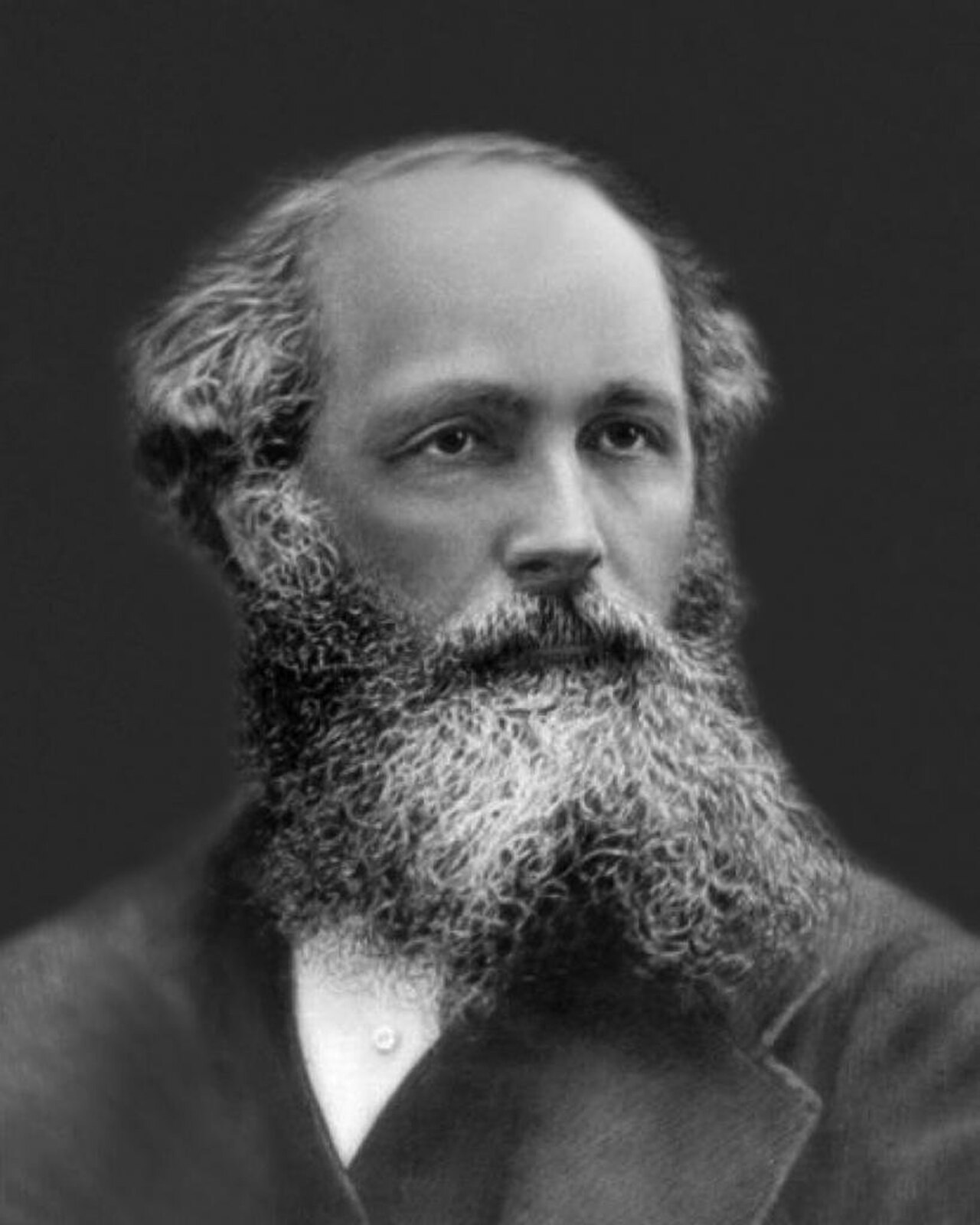
James Clerk Maxwell (1831-1879) is the least famous of the great physicists and, by the estimate of most physicists, the third of them. He took a set of unrelated laboratory results about magnets, wires and charges, wrote them as mathematics, and found that the equations described a wave - one that travelled at a speed he could calculate from measurements made on a bench. The number came out at the speed of light. He concluded that light is an electromagnetic wave, which meant there should be others nobody had ever seen. Radio, radar, microwaves and wifi are all that prediction being collected.
Rank
#24
Influence
86
Field
Physicist
Historical Perspective
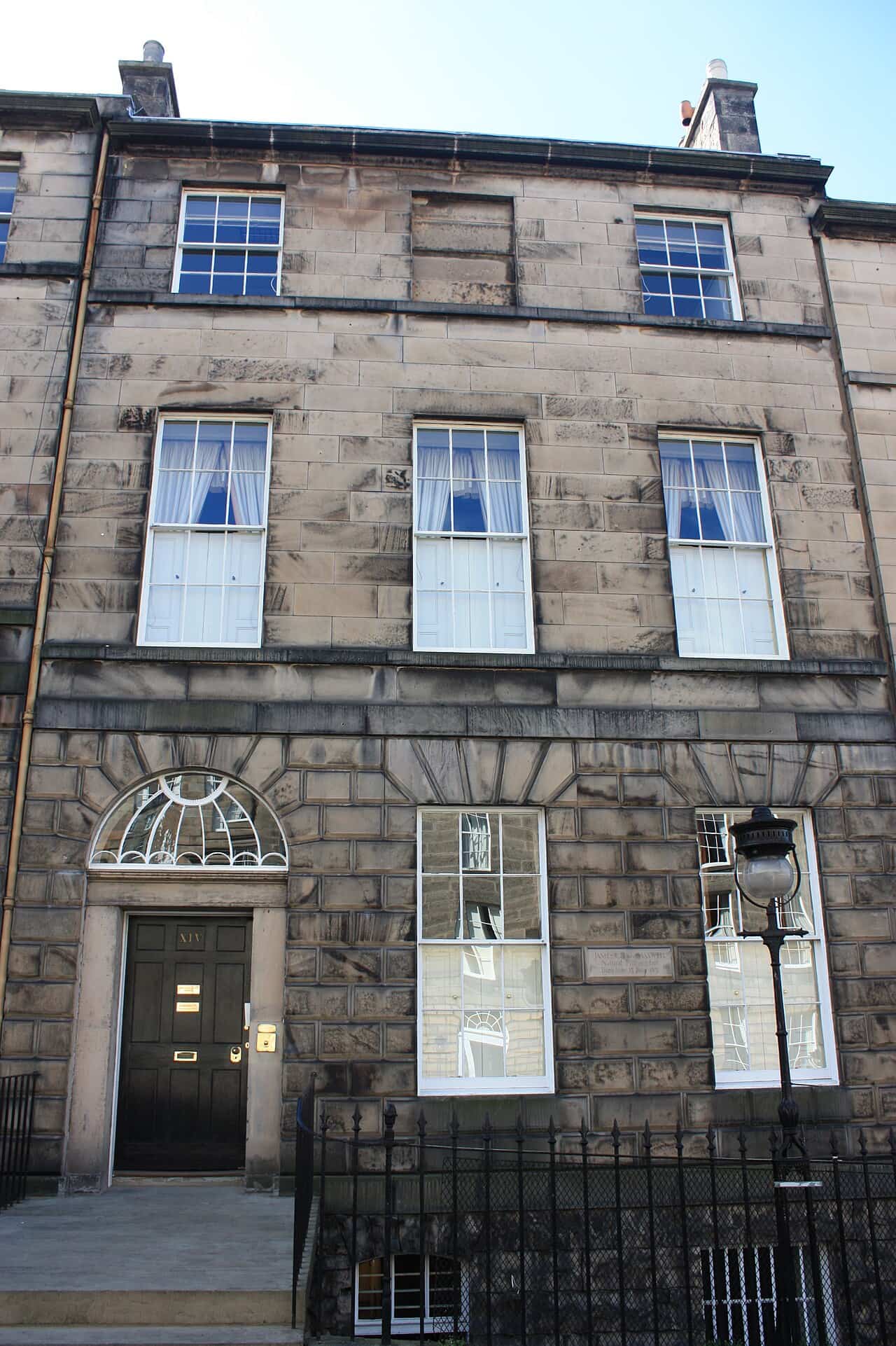
James Clerk Maxwell was born on 13 June 1831 at 14 India Street in Edinburgh and raised at Glenlair, the family estate in Galloway, where a curious and relentlessly questioning child was taught first by his mother and then, after her death when he was eight, by a series of tutors. He published his first mathematical paper at fourteen. He studied at the University of Edinburgh and then at Cambridge, graduating Second Wrangler in 1854, and held chairs at Aberdeen, King's College London and finally Cambridge, where in 1871 he became the first Cavendish Professor of Physics and built the laboratory that would later find the electron and the neutron. His output across twenty-five years is extraordinary in its range: the composition of Saturn's rings, the statistical behaviour of gas molecules, the theory of colour vision, the first colour photograph, and the electromagnetic theory that carries his name. He died of abdominal cancer on 5 November 1879, aged forty-eight, the same disease and the same age as his mother. Michael Hart ranked him 24th in The 100.
Influence Meter
86
Measured on a 100-point scale
Four equations that unified electricity, magnetism and light, and predicted the radio spectrum
1831-1854
The Boy Who Asked What the Go of It Was
Maxwell's childhood question, repeated so often that the family recorded it, was 'what's the go o' that?' - and when a general answer came back, 'but what's the particular go of it?' He wanted mechanisms, not names. Sent to Edinburgh Academy at ten in home-made clothes and a Galloway accent, he was mocked as 'Dafty' and largely ignored the fact, spending his time on geometry. At fourteen he found a method for drawing perfect oval curves with pins and thread and wrote it up; the paper was read to the Royal Society of Edinburgh, since a fourteen-year-old could not present it himself. He went on to Edinburgh University at sixteen and to Cambridge at nineteen, where he was placed Second Wrangler in the 1854 Tripos and shared the Smith's Prize with the man who beat him.
1856-1859
Two Years Inside Saturn's Rings
The Adams Prize of 1857 asked entrants to determine the nature of Saturn's rings - whether they were solid, liquid, or something else. Maxwell, then professor at Aberdeen, spent roughly two years on it and produced a proof that a solid ring would be torn apart by its own rotation and a fluid one broken up by waves, so that the rings had to consist of a vast number of unconnected particles each in its own orbit. He was the only entrant. He won the prize of £130 in 1859, and the essay was described by the astronomer George Biddell Airy as one of the most remarkable applications of mathematics he had ever seen.
The result stood unconfirmed for 121 years, until the Voyager probes flew past in 1980 and 1981 and photographed exactly what he had described. The work mattered beyond Saturn: thinking about the statistical behaviour of enormous numbers of independently moving particles led him directly to the kinetic theory of gases, and to the Maxwell distribution of molecular speeds, which founded statistical mechanics and gave physics its first successful account of heat as motion.
1861
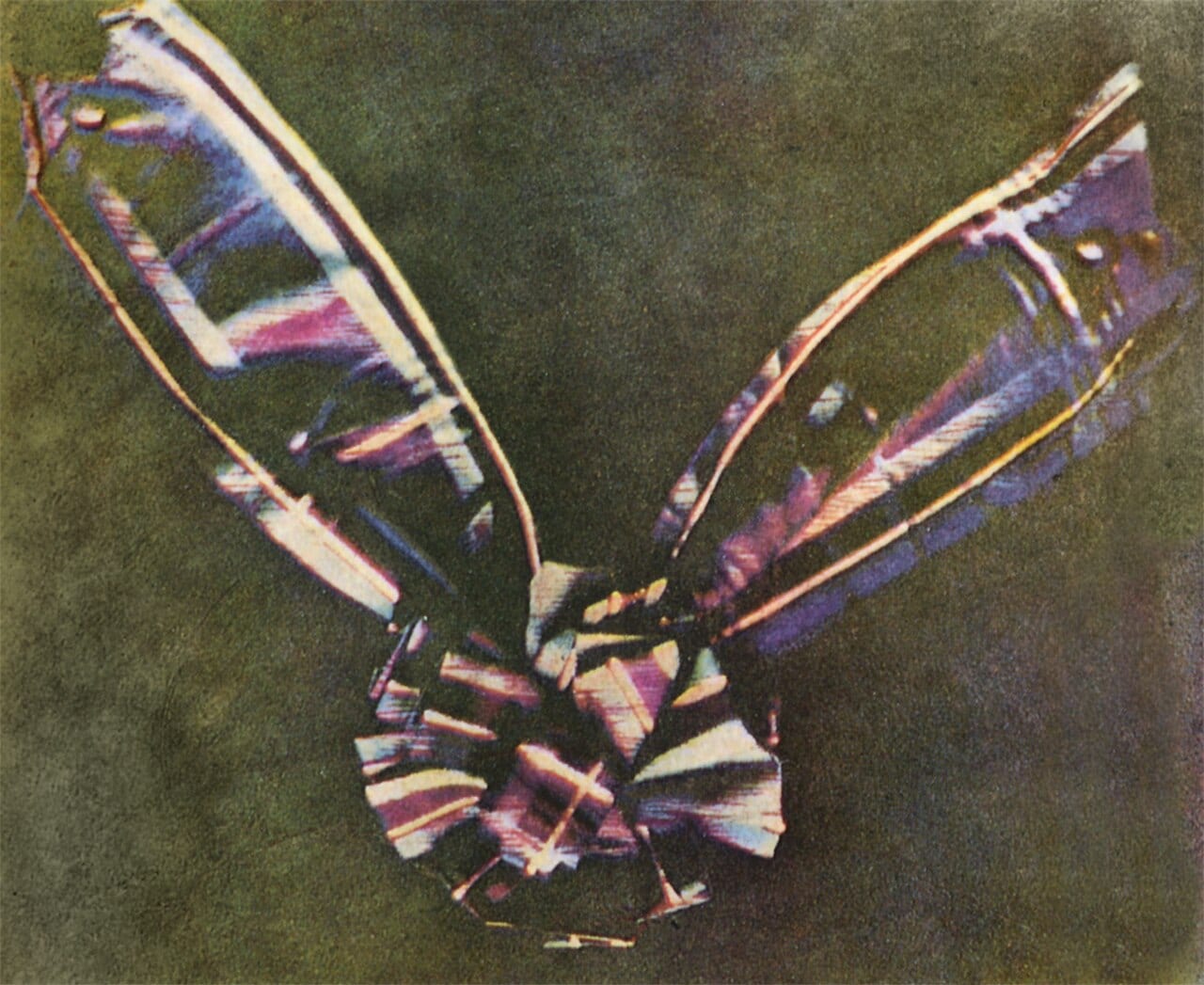
A Tartan Ribbon, and the First Colour Photograph
Maxwell's work on colour vision established that the eye responds to three primaries and that any colour can be matched by mixing red, green and blue in the right proportions. To demonstrate it he asked the photographer Thomas Sutton to take three separate black-and-white photographs of a tartan ribbon, each through a different coloured filter, then projected the three through matching filters onto a screen so they overlapped. The result, shown at the Royal Institution in 1861, is the first colour photograph ever made, and the three-channel principle behind it is how every colour screen and camera sensor works today. The demonstration should not have worked - the photographic emulsions of 1861 were nearly blind to red - and it is now thought the red channel was captured by ultraviolet light the ribbon happened to reflect. A lucky accident, in service of a correct theory.
Between 1861 and 1865 Maxwell showed that electricity and magnetism are not two phenomena but one, and that light is part of it. Working from Faraday's lines of force, he assembled a set of equations describing how electric and magnetic fields generate one another, and found that the equations permit a self-sustaining wave. He calculated its speed from two constants measured in the laboratory, quantities with no obvious connection to light at all, and got roughly 310,740,000 metres per second - within a fraction of the measured speed of light. His conclusion, stated plainly in 1865, was that light is an electromagnetic disturbance propagated through the field. It is regarded as the second great unification in physics, after Newton joined the heavens to the Earth.
What the Equations Actually Say
Maxwell wrote twenty equations in twenty variables; Oliver Heaviside later compressed them into the four now taught everywhere. Stripped of the calculus, each makes a plain physical claim.
- Electric charge makes an electric field: Gauss's law: field lines begin on positive charges and end on negative ones, and their density falls off with distance in a way fixed by geometry.
- There are no magnetic charges: Gauss's law for magnetism: magnetic field lines never begin or end, they only loop. Cut a magnet in half and you get two magnets, never an isolated north pole.
- A changing magnetic field makes an electric field: Faraday's law of induction, the experimental result of 1831, written as mathematics. It is why generators and transformers work.
- A changing electric field makes a magnetic field: Maxwell's own addition - the displacement current. Nobody had observed it; he added it because without it the equations contradicted the conservation of charge. It is the term that makes waves possible.
- Together they permit a wave: Each changing field creates the other, so a disturbance can sustain itself and travel indefinitely with no medium carrying it and nothing to push it along.
- That wave moves at the speed of light: Its speed is fixed by two constants measured with batteries and coils. That the answer matched light was the moment optics became a branch of electromagnetism.
Chronology
Forty-Eight Years
Drawn as a wave, which is what the equations turned out to describe.
The Range
What Else He Did
The electromagnetic theory would have been a career. It was roughly a third of one.
Kinetic theory of gases
Derived the distribution of molecular speeds in a gas, showing that temperature is a statistical property of enormous numbers of particles rather than a substance. Founded statistical mechanics with Boltzmann.
- Known as: The Maxwell-Boltzmann distribution
Trichromatic colour vision
Established experimentally that human colour vision rests on three receptor types, and built the colour triangle still used to map what the eye can see.
- Led to: The first colour photograph
Maxwell's demon
A thought experiment: a tiny being sorting fast molecules from slow ones would decrease entropy without doing work. Posed as a challenge to the second law, it opened the link between thermodynamics and information that occupies physicists still.
- Resolved via: Information theory
Structural engineering
Derived the reciprocal-diagram method for calculating forces in frameworks, used by bridge and roof designers for a century afterwards.
- Field: Statics
Control theory
His paper On Governors analysed why steam-engine governors hunt and oscillate - the first mathematical treatment of feedback stability, and a founding document of control engineering.
- Subject: Watt's centrifugal governor
The Cavendish Laboratory
Designed, equipped and directed Cambridge's first physics laboratory, and spent five years editing the unpublished papers of Henry Cavendish. The lab went on to produce the electron, the neutron and the structure of DNA.
- Position: First Cavendish Professor
Reference
Four Equations, and What Each One Bought
Three of the four were already known as separate experimental laws. The fourth was Maxwell's, and it is the one that produces waves.
| Gauss's law | Charge creates an electric field | Capacitors, electrostatics, the shielding in a Faraday cage |
| Gauss's law for magnetism | Magnetic poles always come in pairs | The reason no isolated magnetic charge has ever been found |
| Faraday's law | A changing magnetic field drives a current | Generators, transformers, the electrical grid |
| Ampere-Maxwell law | A changing electric field creates a magnetic one | Radio, radar, microwaves, wifi - the whole spectrum |
The final term was added on theoretical grounds alone, to keep the equations consistent with the conservation of charge. Hertz confirmed the waves it predicted in 1887, eight years after Maxwell died.
1871-1879
Building a Laboratory, and Editing a Recluse
Cambridge had no experimental physics laboratory until Maxwell was persuaded to take the new Cavendish chair in 1871 and design one. He specified the building, chose the instruments, and taught in it for eight years. He also spent a large part of those years on a task that looks like a waste of the period's finest theoretical mind: editing the unpublished electrical papers of Henry Cavendish, an eccentric and secretive aristocrat who had discovered much of electrostatics a century earlier and told nobody. Maxwell repeated Cavendish's experiments himself to check them before publishing. The laboratory he built went on to house the discovery of the electron, the neutron, the splitting of the atom and the structure of DNA, which is a return on a building few institutions have matched.
Reputation
The Most Important Physicist Most People Cannot Name
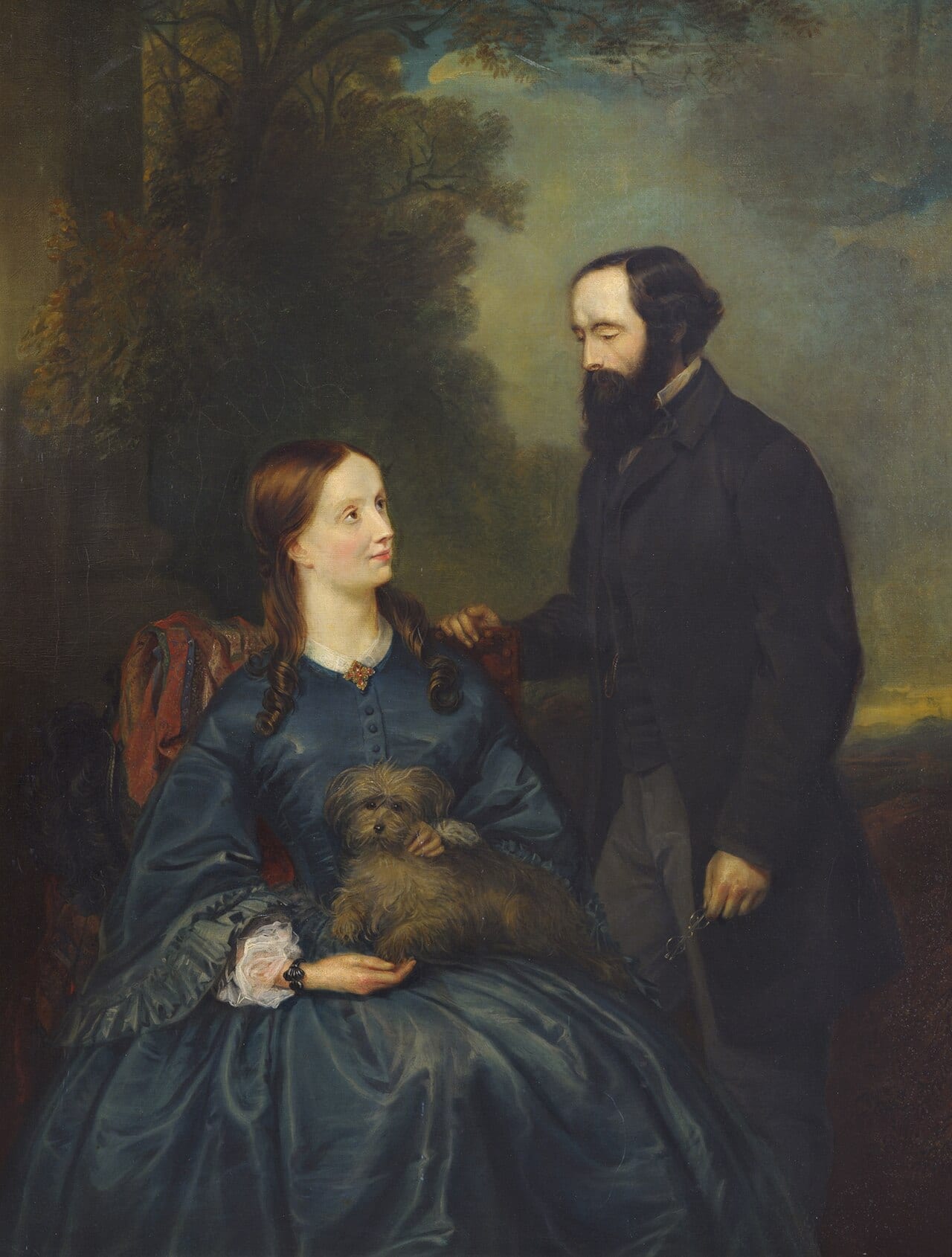
Maxwell has none of the biographical hooks that make a scientist famous. There is no falling apple, no bath, no persecution by the Church, no bomb. He was a contented man with a happy marriage and a Scottish estate, he was liked by nearly everyone who met him, he wrote comic verse, and he died young and quietly. The work itself resists summary: you cannot draw Maxwell's equations the way you can draw a heliocentric solar system, and their consequences arrived as ordinary infrastructure rather than as a shock.
Physicists have never had this problem. Einstein kept a photograph of Maxwell on his study wall beside Newton and Faraday, said that one epoch of physics ended and another began with him, and observed that special relativity owes its origin to Maxwell's equations - which is literally true, since relativity began as an attempt to reconcile mechanics with them. Richard Feynman remarked that from a long enough perspective, the most significant event of the nineteenth century would be judged to be Maxwell's discovery of the laws of electrodynamics, beside which the American Civil War would look provincial.
Written Works
Books and Papers by Maxwell
He wrote textbooks as carefully as he wrote theory, and several stayed in use for decades.
Further Reading
Books About Maxwell
A short list, which is itself part of the story of his reputation.
The Man Who Changed Everything
The standard modern biography, written for general readers and unusually good at explaining why the equations mattered without demanding mathematics of the reader.
- Published: 2003
- Subtitle: The Life of James Clerk Maxwell
Faraday, Maxwell, and the Electromagnetic Field
A joint biography of the experimenter and the theorist, tracing how physical intuition and mathematics combined into field theory.
- Published: 2014
The Life of James Clerk Maxwell
Written by a schoolfriend and a former assistant three years after his death, and still the main source for his letters and character.
- Published: 1882
Legacy
Why Number Twenty-Four
Michael Hart ranked Maxwell 24th, just behind Faraday, and the pairing is the point: Faraday found the phenomenon and Maxwell found its mathematics, and it is the mathematics that makes a phenomenon usable. Heinrich Hertz generated and detected the predicted waves in 1887 and remarked that they were of no use whatsoever; within twenty years Marconi was sending signals across the Atlantic with them. Every wireless technology in existence - broadcast, mobile, satellite, radar, the microwave oven - is engineering carried out inside Maxwell's equations.
The theoretical debt is larger still. Special relativity was built to resolve a conflict between Maxwell's equations and Newtonian mechanics, and it was Newton that gave way. Quantum electrodynamics, the most precisely tested theory in science, is Maxwell's field quantised. And the method he introduced - unify two forces by finding the mathematics that contains both - became the central ambition of twentieth-century physics, pursued through the electroweak unification and still pursued now. For a man who died at forty-eight and is known to the public chiefly, if at all, for a photograph of a ribbon, that is an unusually long shadow.
Related Publications