John Calvin

John Calvin
Born 10 July 1509 • Died 27 May 1564
Luther started the Reformation and Calvin organised it. Where Luther wrote furiously and unsystematically in reaction to events, Calvin - a trained lawyer with a humanist education - produced a single ordered account of Christian doctrine, revised it for twenty-three years until it ran to eighty chapters, and then built a working city around it. Geneva under Calvin was studied by refugees from across Europe, who took the model home. Scotland, the Netherlands, Huguenot France and Puritan New England all came out of it.
Rank
#57
Influence
79
Field
Theologian and Reformer
Historical Perspective
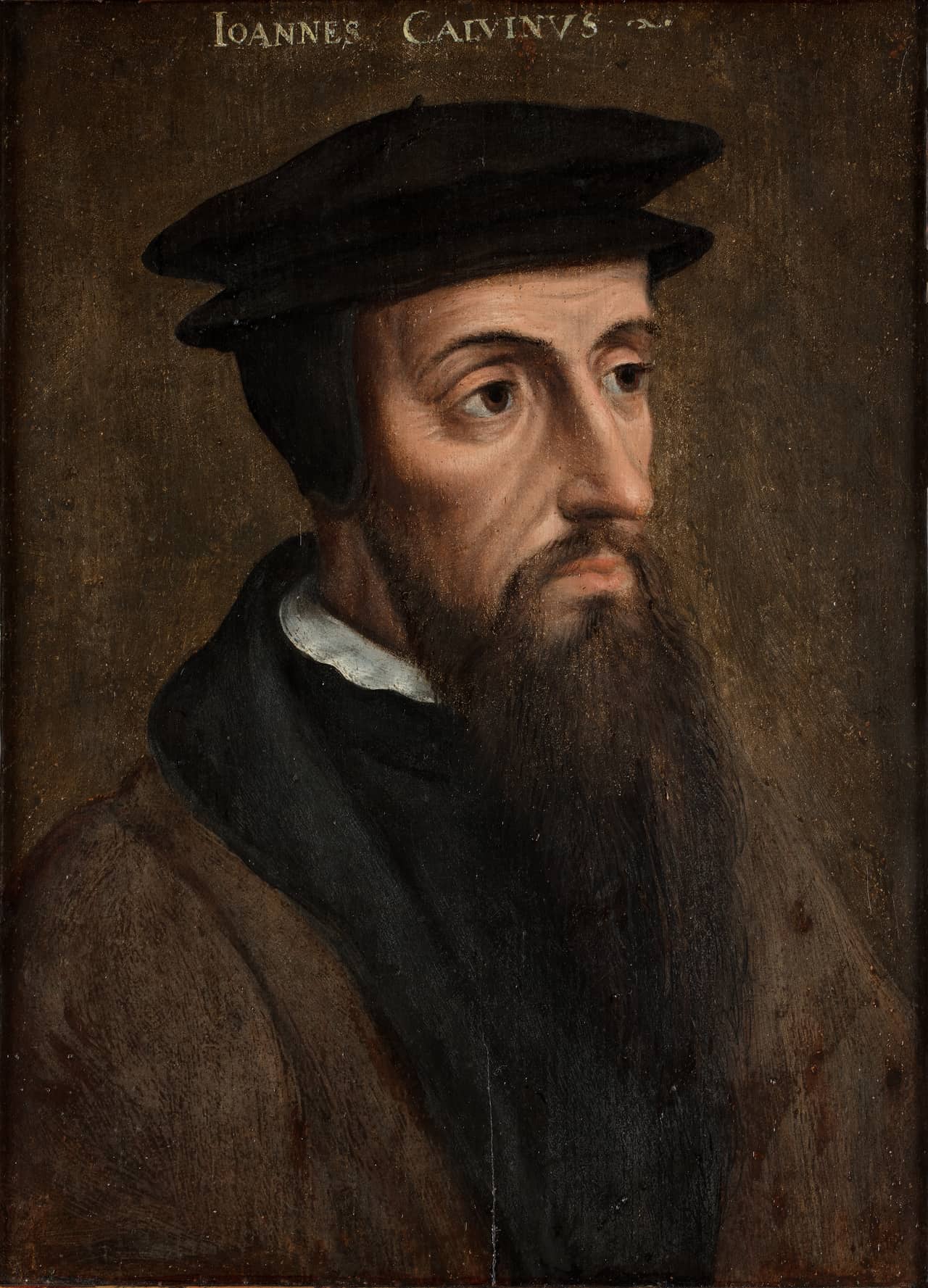
Jean Cauvin was born at Noyon in Picardy on 10 July 1509, the son of a cathedral notary who directed him first toward the priesthood and then, after a quarrel with the chapter, toward law. He studied at Paris, Orléans and Bourges, took a legal training that shows in everything he later wrote, and absorbed the humanist scholarship of Erasmus and Budé. He converted to the reforming cause at some point around 1533 and fled France after the Affair of the Placards in October 1534, settling briefly in Basel, where he published the first edition of the Institutes in March 1536 - six chapters, written at twenty-six. Passing through Geneva that year he was effectively conscripted by William Farel, expelled in 1538, spent three productive years in Strasbourg, and was recalled in September 1541. He remained until his death, drafting the Ecclesiastical Ordinances, presiding over the Consistory, preaching over two thousand sermons, founding the Genevan Academy in 1559, and expanding the Institutes through four editions to its final form. He died on 27 May 1564 and was buried, at his own insistence, in an unmarked grave. Michael Hart ranked him 57th in The 100.
Influence Meter
79
Measured on a 100-point scale
Systematised Protestant theology, and exported a working model of a reformed society
1536-1559
The Book He Rewrote for Twenty-Three Years
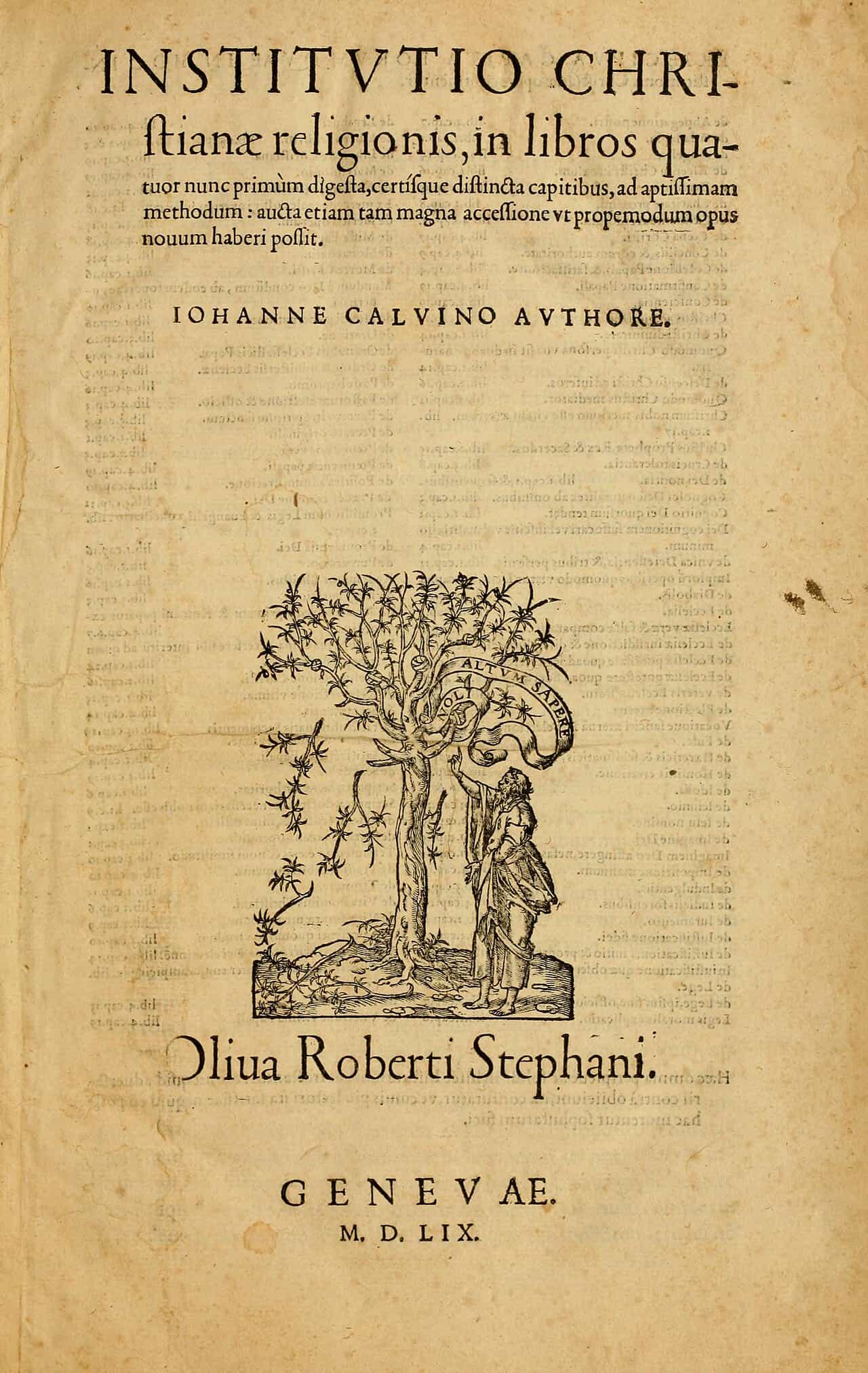
The Institutes of the Christian Religion began in 1536 as a short handbook of six chapters, intended partly as a defence of persecuted French Protestants addressed to Francis I. Calvin kept enlarging it: seventeen chapters in 1539, further revisions in 1543 and 1550, and a final version in 1559 running to four books and eighty chapters. What distinguishes it from Luther's output is the architecture. Luther wrote brilliantly and occasionally, responding to controversies as they arrived; Calvin set out to give the whole of Christian doctrine an order - knowledge of God, knowledge of humanity, Christ, the church - with everything argued from scripture and cross-referenced with a lawyer's care. It became the textbook of Reformed Protestantism across Europe, was translated into French by Calvin himself, and did as much for the development of French prose as Luther's Bible did for German.
Michael Servetus was a Spanish physician and theologian - the first European to describe the pulmonary circulation of the blood - who denied the Trinity and infant baptism, and who had been condemned by the Catholic Inquisition in France before escaping. He arrived in Geneva in August 1553, was recognised at a sermon, arrested, tried by the city council and burned at the stake on 27 October. Calvin's role is not in doubt: he had corresponded with Servetus for years, had written that if Servetus came to Geneva he would not let him leave alive, supplied evidence to the prosecution, and testified. He asked that the sentence be commuted to beheading and was refused. The execution was approved by other Protestant cities and by most reformers of the period, and it was legally the act of the council rather than of Calvin, who held no civil office. None of that makes it anything other than what it was, and it has attached to his name ever since - Voltaire and the Enlightenment made sure of it, and Geneva erected an expiatory monument in 1903.
What Calvinism Actually Holds
The five points usually summarised as TULIP were formulated at the Synod of Dort in 1619, after his death, in response to critics - but they are a fair précis of positions he argued.
- Total depravity: Human nature is corrupted throughout by the fall, so that no part of a person, including the will, is capable of turning to God unaided.
- Unconditional election: God chooses who is saved, before creation, on no basis in the person chosen. Calvin himself called the doctrine a horrible decree, and taught it anyway because he believed scripture required it.
- Limited atonement: Christ's death is effective for the elect rather than for everyone - the most contested of the five, and the one Calvin himself stated least sharply.
- Irresistible grace: Those God calls are effectually brought to faith; grace is not an offer that can finally be declined.
- Perseverance of the saints: The elect cannot ultimately fall away. Combined with the previous points, it produces the anxious question of how one knows - the psychology Weber later built his thesis on.
- The sovereignty of God over everything: Underneath all five is the claim that nothing whatever falls outside God's decree, which is the actual centre of Calvin's thought and from which the rest follows.
1541-1564
The City as a Demonstration
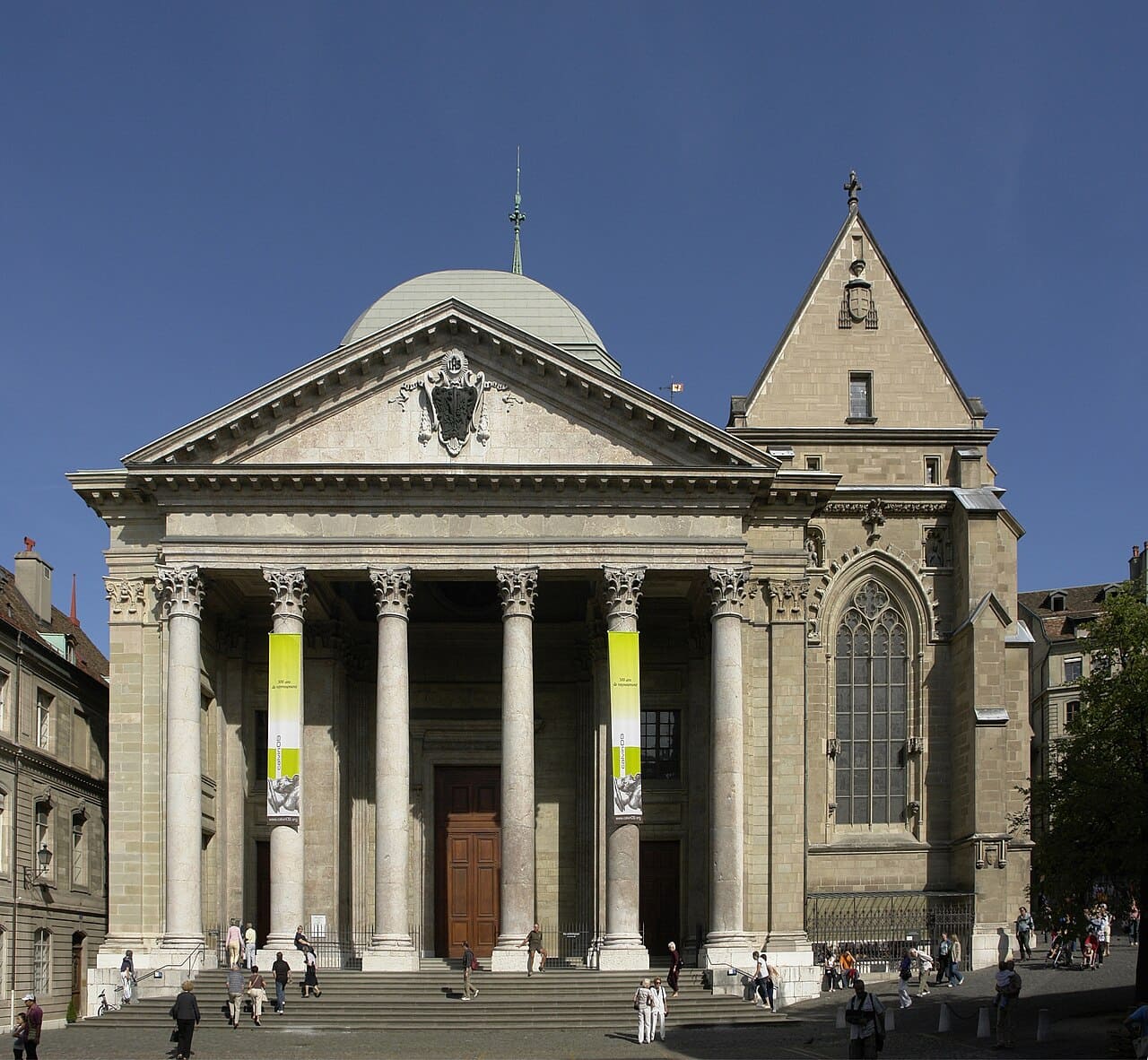
Calvin never held civil office in Geneva and was not a citizen until 1559, but the Ecclesiastical Ordinances he drafted in 1541 restructured the church into four offices - pastors, teachers, elders and deacons - and created the Consistory, a body of ministers and lay elders that supervised the moral conduct of the population. It summoned people for adultery, drunkenness, dancing, blasphemy, absence from sermons and gambling, and could excommunicate. Its records survive and are less lurid than the reputation: most cases ended in admonition rather than punishment. Geneva nonetheless became a byword for discipline, and equally a refuge - John Knox called it the most perfect school of Christ since the apostles, and he was there because Marian England had made staying home fatal. The Academy founded in 1559 trained ministers who went back to France, Scotland, the Netherlands and Hungary, which is the mechanism by which a city of some thirteen thousand people reshaped European religion.
Further Reading
Books By and About Calvin
He was a compulsive writer: commentaries on most of the Bible, thousands of letters, and over two thousand recorded sermons.
Legacy
Why Number Fifty-Seven
Michael Hart ranked Calvin 57th, thirty-two places below Luther, and the ordering is about priority rather than reach. Luther made the break; Calvin gave the result a doctrine, a constitution and a working example. The organisational contribution may be the more durable: presbyterian church government - authority resting in elected assemblies of elders rather than in bishops - was a genuinely novel institution, and it trained large populations in representative procedure at a time when almost nothing else did. Historians have long argued about how much modern democratic practice owes to that, and the honest answer is some but not all.
The geographical spread is easier to state. Calvinism became the established form of Protestantism in Scotland through Knox, in the Netherlands, in parts of Switzerland, Hungary and the Rhineland, among the French Huguenots, and among the English Puritans who carried it to New England - where it shaped the political culture of the American colonies more than any other single influence. Weber's thesis connecting the doctrine to the development of capitalism remains contested a century after he wrote it, which is a fair indication of how large a shadow a lawyer from Picardy managed to cast.
Related Publications