John F. Kennedy

John F. Kennedy
Born 29 May 1917 • Died 22 November 1963
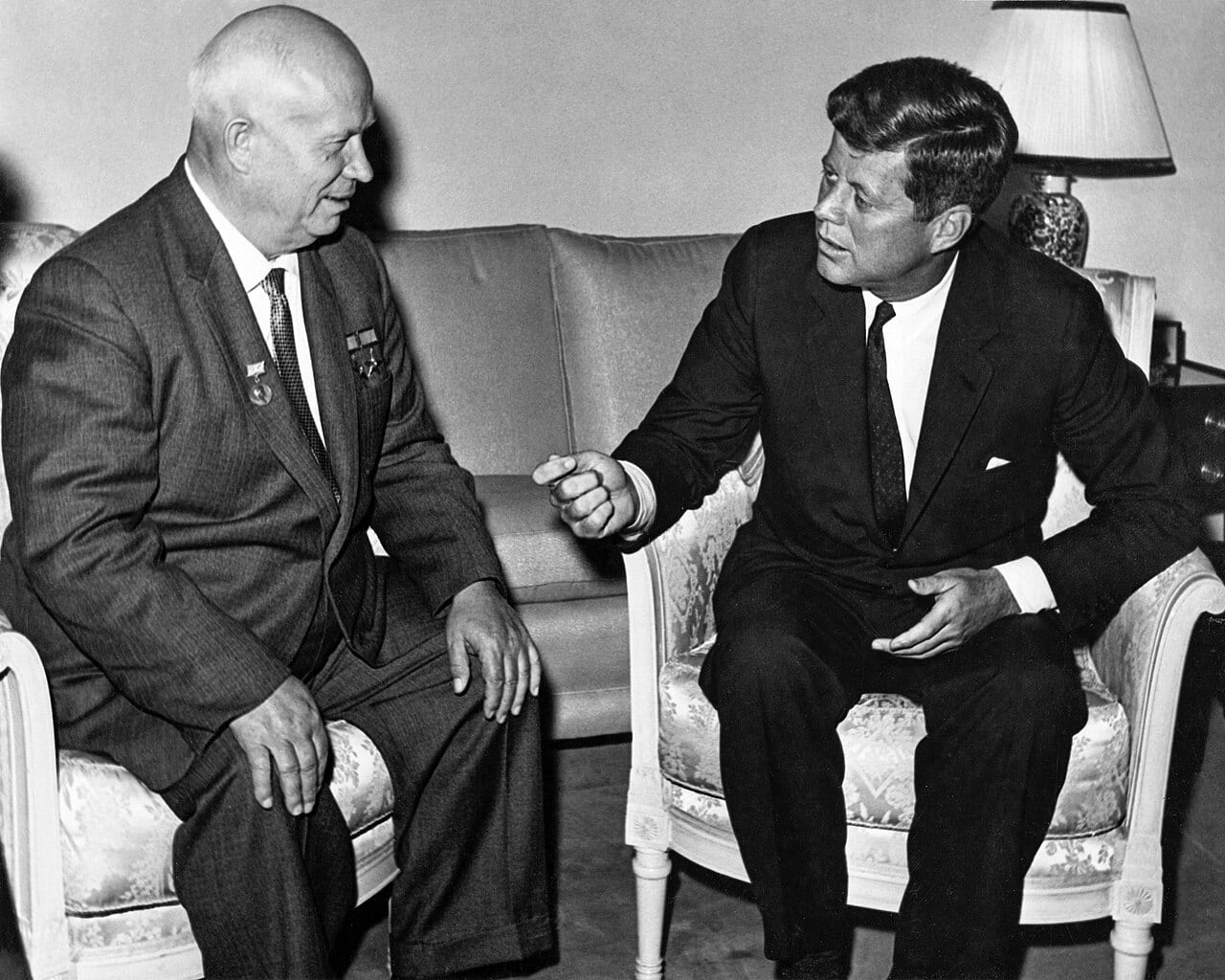
In October 1962 the Joint Chiefs of Staff pressed the president to bomb the Soviet missile sites in Cuba and then invade. Kennedy refused, chose a naval blockade instead, and negotiated a settlement that included a secret undertaking to remove American missiles from Turkey. It was later discovered that Soviet forces on the island already had tactical nuclear weapons and local authority to use them against an invasion. The judgement he made in that room over thirteen days is the strongest single item on his record.
Rank
#81
Influence
75
Field
President of the United States
Historical Perspective
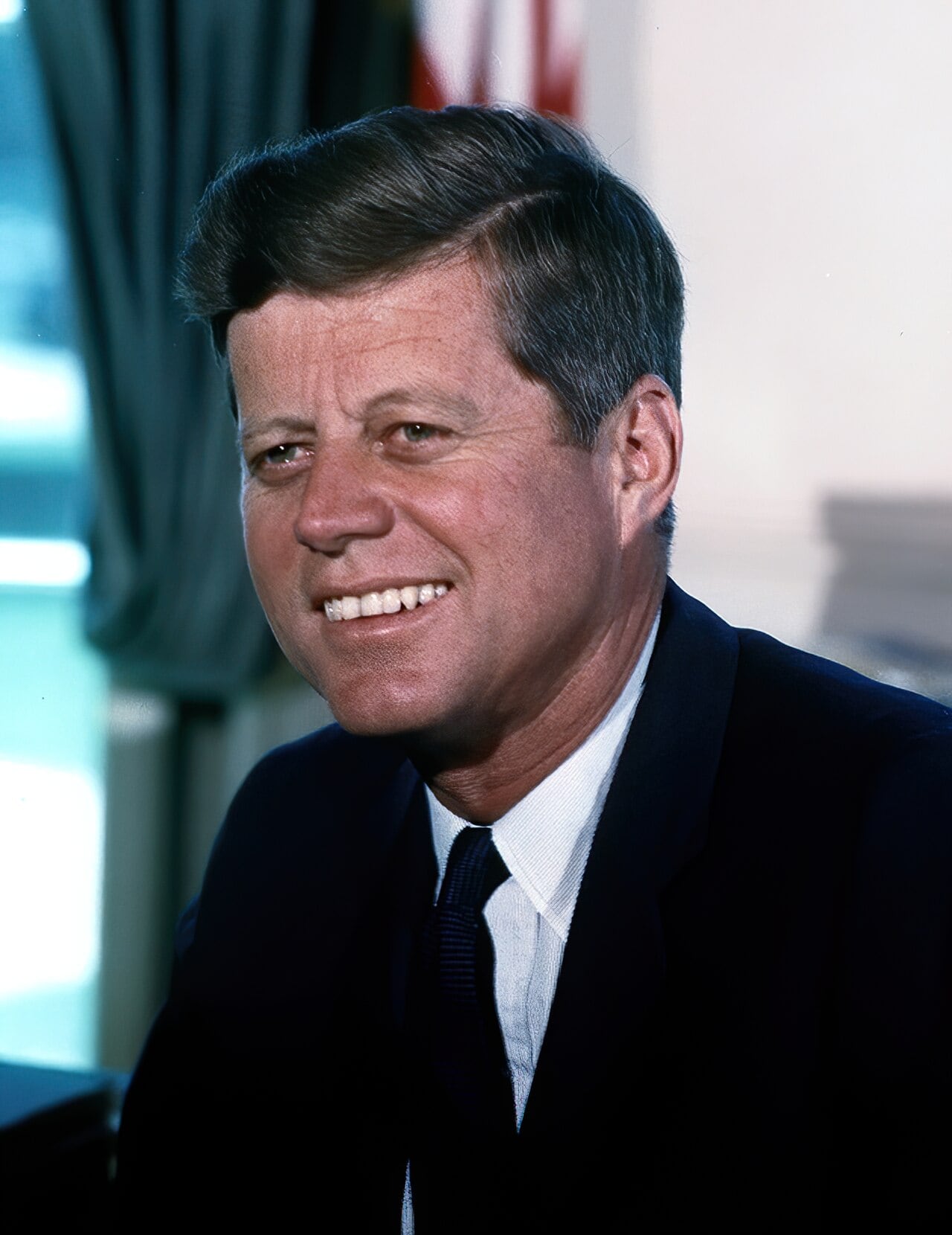
John Fitzgerald Kennedy was born at Brookline, Massachusetts on 29 May 1917, the second son of Joseph Kennedy, a financier and later ambassador to Britain who had determined that one of his sons would be president. He was chronically ill for most of his life - back problems, colitis, and Addison's disease, all concealed - and commanded a patrol torpedo boat in the Pacific, swimming an injured crewman to safety after PT-109 was cut in half by a destroyer in August 1943. He entered the House in 1947, the Senate in 1953, and won the presidency narrowly over Richard Nixon in 1960 after the first televised debates, becoming at forty-three the youngest man elected to the office. His inauguration was on 20 January 1961. The Bay of Pigs failed that April; the Berlin Wall went up in August; the Cuban Missile Crisis came in October 1962. He committed the country to the Moon in May 1961, delivered a landmark civil rights address in June 1963 and sent Congress the bill that became the Civil Rights Act, and signed the Partial Test Ban Treaty that October. He was assassinated in Dallas on 22 November 1963. Michael Hart ranked him 81st in The 100.
Influence Meter
75
Measured on a 100-point scale
Thirteen days that avoided a nuclear war, and a decade-defining commitment to the Moon
16-28 October 1962
Thirteen Days
American reconnaissance photographed Soviet medium-range ballistic missile sites under construction in Cuba on 14 October 1962. The Joint Chiefs, almost unanimously, recommended air strikes followed by invasion. Kennedy - who had been badly burned by taking military advice at the Bay of Pigs eighteen months earlier - convened an executive committee that argued for a week and chose a naval quarantine instead, buying time for negotiation. The resolution came through a public agreement not to invade Cuba and a private undertaking, kept secret for decades, to withdraw American Jupiter missiles from Turkey. Later disclosures made the margin look far narrower than it seemed at the time: Soviet commanders in Cuba possessed tactical nuclear weapons and pre-delegated authority to use them against a landing, and a Soviet submarine officer named Vasili Arkhipov refused consent to launch a nuclear torpedo when his boat was being depth-charged. An invasion would very probably have gone nuclear.
On 25 May 1961, six weeks after the Bay of Pigs and a month after Gagarin became the first human in space, Kennedy told a joint session of Congress that the nation should commit itself to landing a man on the Moon and returning him safely to Earth before the decade was out. At the time the United States had accumulated about fifteen minutes of manned spaceflight. The commitment was made for Cold War reasons - to demonstrate technological superiority after a run of Soviet firsts - and it worked: Apollo 11 landed on 20 July 1969, five months inside the deadline and six years after Kennedy's death. At its peak the programme employed some four hundred thousand people and consumed over four per cent of the federal budget. It remains the clearest modern example of a political commitment to a specific technical goal on a specific timetable being met.
The Record
A Thousand Days, Assessed
Kennedy's reputation rests heavily on style, rhetoric and the manner of his death. The record itself is genuinely mixed and worth separating from the myth.
| Bay of Pigs, April 1961 | A CIA-organised invasion by Cuban exiles, approved by Kennedy, collapsed in three days | Failure, and he accepted responsibility publicly |
| Cuban Missile Crisis, 1962 | Rejected military advice to invade; resolved by blockade and a secret concession | His strongest achievement |
| The Moon, 1961 | Committed the country to a landing before 1970 | Delivered, in 1969 |
| Civil rights | Slow for two years, then a decisive June 1963 address and a bill sent to Congress | Late, then substantial; enacted under Johnson |
| Partial Test Ban Treaty, 1963 | Ended atmospheric nuclear testing by the US, USSR and UK | A real and durable arms-control achievement |
| Vietnam | Advisers increased from around 900 to over 16,000; acquiesced in the coup against Diem | Escalation, whatever he intended next |
| Domestic legislation | Tax cuts, Medicare and education bills largely stalled in Congress | Passed after his death, under Johnson |
Whether he would have withdrawn from Vietnam is the most argued counterfactual in modern American history, and the documentary evidence supports both readings.
22 November 1963
Dallas
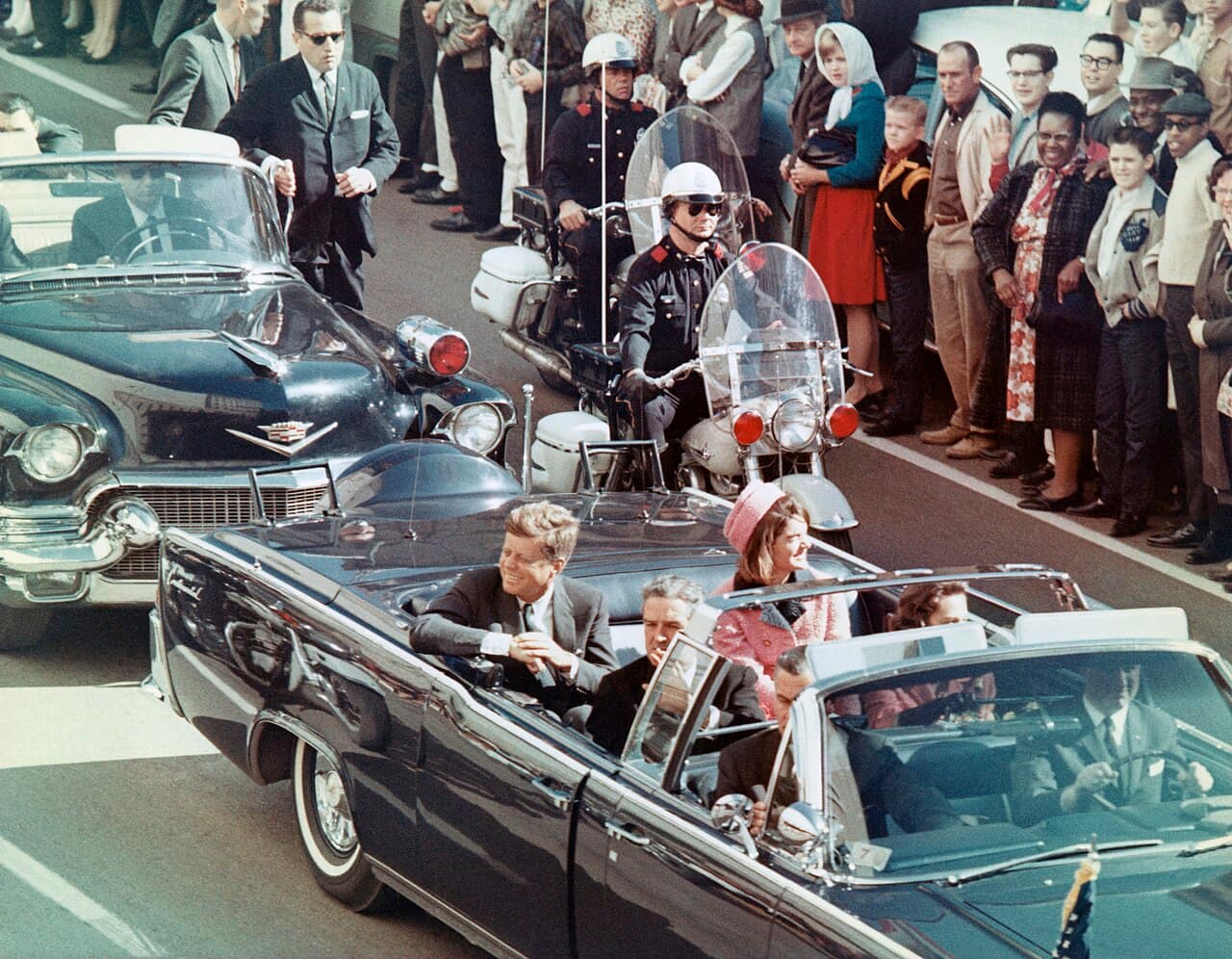
Kennedy was shot at 12.30 in the afternoon while riding in an open car through Dealey Plaza in Dallas, and was pronounced dead half an hour later. Lee Harvey Oswald, a former Marine who had defected to the Soviet Union and returned, was arrested within ninety minutes and shot dead two days later by Jack Ruby in a police basement, on live television, before any trial. The Warren Commission concluded in 1964 that Oswald acted alone; a House committee in 1979 concluded that there was probably a conspiracy, on acoustic evidence later discredited. Polls have consistently shown that a majority of Americans do not accept the lone-gunman finding. The killing did something unusual to his reputation: it froze the presidency at its most promising point, converted an unfinished record into an interrupted one, and made the counterfactual - what he would have done about Vietnam, about civil rights, about the Soviets - permanently unresolvable and therefore permanently arguable.
Further Reading
Books About Kennedy
The early accounts were written by his own aides and are correspondingly warm; the revisionist wave came in the 1970s with the disclosures about his health and private life.
Legacy
Why Number Eighty-One
Michael Hart ranked Kennedy 81st, and the ranking is best read as a judgement about a single fortnight. The presidency was short and its legislative record thin; most of what is credited to it - the Civil Rights Act, the Voting Rights Act, Medicare - was passed by Lyndon Johnson, who was considerably better at Congress and used the martyrdom to get it done. Vietnam escalated under him and escalated far more afterwards. On any conventional accounting of achievement, a thousand days is not much.
The exception is October 1962, and it may be enough. A president who had taken the military advice on offer would probably have started a nuclear war; the disclosures of the 1990s about Soviet tactical weapons on the island make that judgement stronger rather than weaker. Beyond that there is the Apollo commitment, which was met, and something harder to measure: he was the first president of the television age and the first Catholic, and the rhetoric of asking what you can do for your country entered the language. The myth of Camelot was largely constructed by his widow within a week of the funeral, and it has proved more durable than most of the policies.
Related Publications