Mani

Mani
Born c. 216 • Died c. 274
Mani set out to found a world religion deliberately, which nobody had done before. He argued that previous revelations had failed because their founders wrote nothing and left their teaching to be garbled by disciples and confined to one language and one country. So he wrote his own scriptures, had them illustrated, arranged for translation, and sent missionaries east and west with instructions to adapt the vocabulary to local faiths. It worked spectacularly for a thousand years, and then it was extinguished so completely that until the twentieth century almost everything known about it came from its enemies.
Rank
#83
Influence
72
Field
Prophet and Religious Founder
Historical Perspective
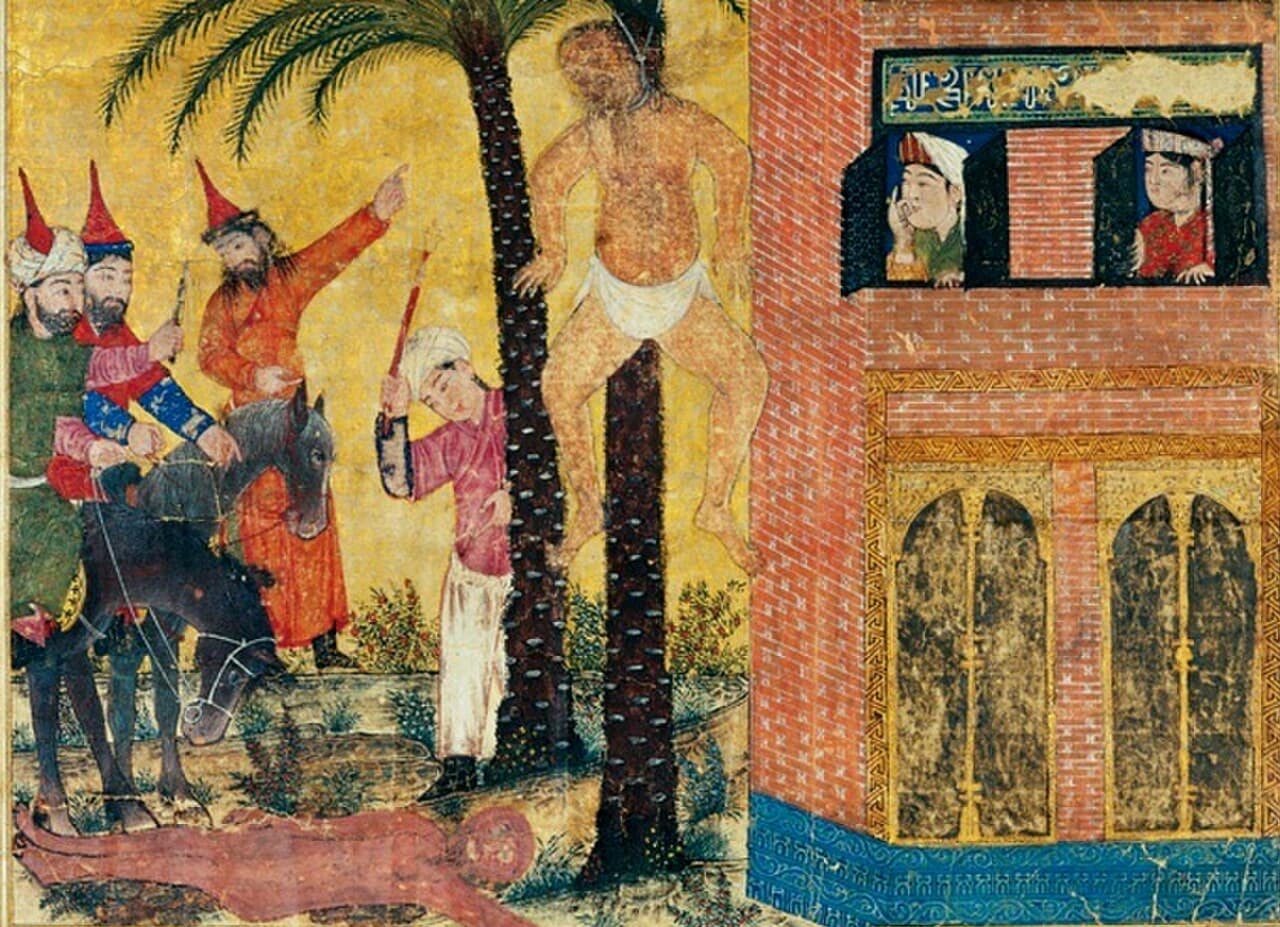
Mani was born around 216 in Mesopotamia, then under Parthian and shortly Sasanian rule, and was raised in the Elchasaites, a Jewish-Christian baptising sect. According to the Cologne Mani-Codex, a tiny parchment book discovered in 1969 and the most reliable source on his life, he received visits from a divine Twin at twelve and again at twenty-four, instructing him to leave the sect and preach. He travelled to India, encountered Buddhism, and returned to present his teaching at the court of the Sasanian king Shapur I, who gave him permission to preach throughout the empire and a personal welcome, without converting. Mani's cosmology was radically dualist: a realm of Light and a realm of Darkness, eternally distinct, whose accidental mixing produced the material world, with particles of light trapped in matter and awaiting release. Under Shapur's successor Bahram I, and under pressure from the Zoroastrian priesthood, he was arrested, imprisoned in chains and died in custody around 274. Michael Hart ranked him 83rd in The 100.
Influence Meter
72
Measured on a 100-point scale
A deliberately universal religion that spanned Eurasia and left a word behind
The Religion
What Manichaeism Taught
The system is elaborate and its cosmology reads as strange to modern eyes, but its central intuition is one many people still hold without knowing where it came from.
Radical dualism
Light and Darkness are two eternal, uncreated principles. Evil is not a privation or a fall but a substance with its own reality - which is precisely the position Augustine later spent his career refuting.
- Opposed by: Augustine
Light trapped in matter
The material world was formed from the mixture of the two realms, and particles of light are imprisoned in it - most abundantly in plants. Salvation is the process of liberating that light.
- Goal: Release the light
Two grades of adherent
The Elect kept strict celibacy, vegetarianism and poverty, and their digestion was held to release light. The Hearers supported them, could marry and work, and gained merit by feeding them.
- Structure: Elect and Hearers
A succession of prophets
Adam, Zoroaster, the Buddha and Jesus had each brought the same truth to one region; Mani brought it complete and for everyone, and called himself the seal of the prophets - a phrase Islam later used of Muhammad.
- Claim: The final prophet
Scripture written by the founder
Seven works in Syriac plus one in Middle Persian, and a book of paintings called the Ardhang. No other founder of a major religion wrote his own canon, and Mani said explicitly that this was to prevent the corruption that befell the others.
- Unique: Among religious founders
Deliberate translation
Missionaries were instructed to render the teaching into local religious vocabulary - Buddhist terms in the east, Christian in the west. It made the religion portable and also made it look, to hostile observers, like a parasite on whatever faith it met.
- Strategy: Translate into local terms
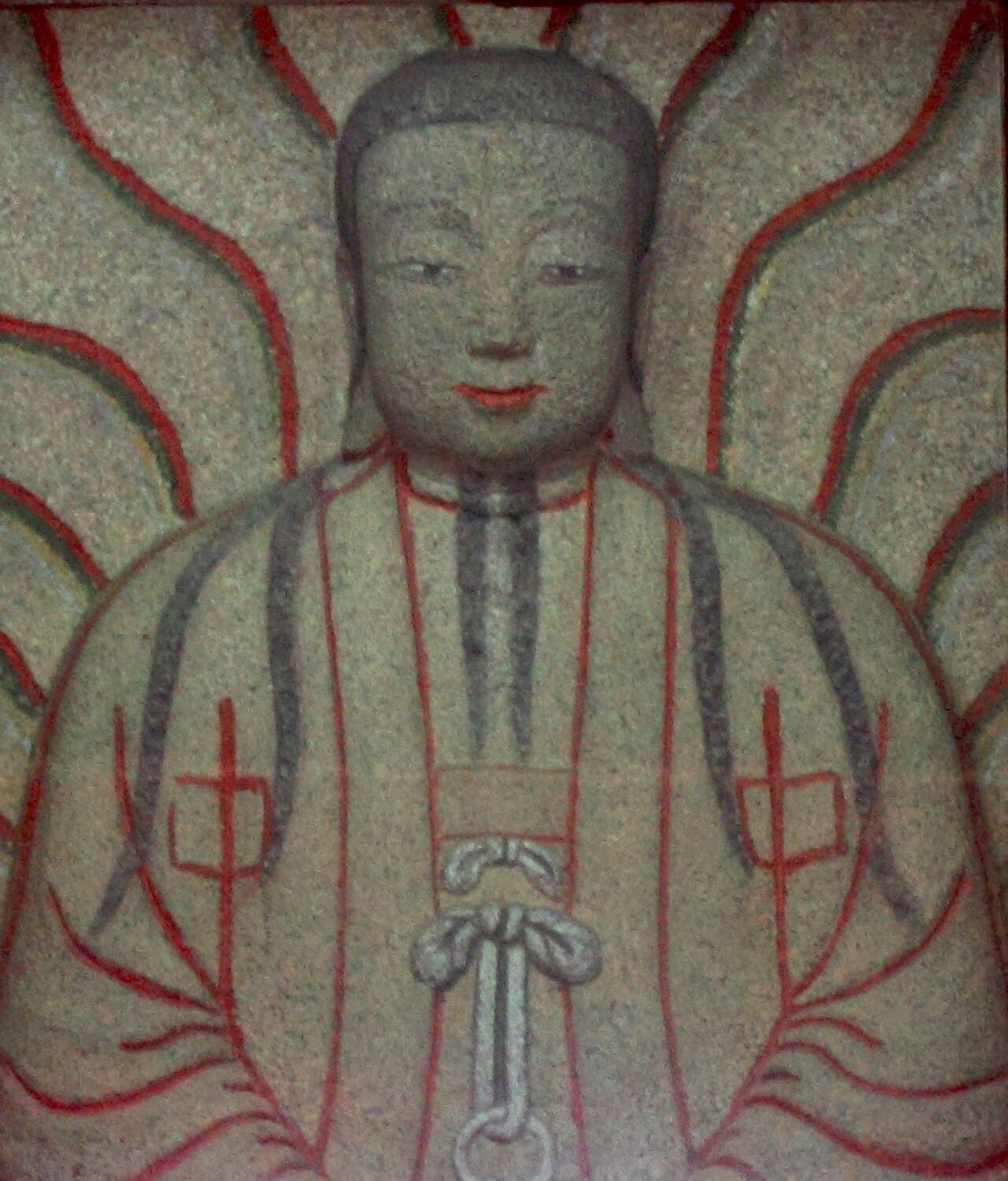
Manichaeism achieved a geographical spread that almost no other religion of late antiquity managed. It reached Roman North Africa and Spain in the west and Central Asia and China in the east, was persecuted by Roman emperors from Diocletian onward, by the Sasanians, by the Christian church and eventually by Islam. It nonetheless became the state religion of the Uyghur Khaganate in Central Asia in 763, survived in China as a distinct faith into the fourteenth century and possibly later - a temple at Cao'an in Fujian still stands, now reclassified as Buddhist - and left traces in the dualist movements of medieval Europe, the Bogomils and the Cathars, though direct descent is disputed. Its scriptures were destroyed so thoroughly that until manuscripts began emerging from Turfan in the early twentieth century, and the Cologne Codex in 1969, virtually everything known about it came from the writings of people trying to refute it.
373-382
Augustine's Ten Years
The single most consequential Manichaean convert was a young North African rhetorician who spent roughly a decade as a Hearer before rejecting the faith and becoming, as bishop of Hippo, its most effective opponent. Augustine's attraction to it is easy to understand: it offered an intellectually confident answer to the problem of evil - evil is a real substance, opposed to God, and not God's responsibility - and it did so without requiring belief in the Old Testament stories he found crude. His eventual rejection came partly from disappointment with a Manichaean bishop who could not answer his astronomical questions, and partly from Neoplatonism, which gave him the alternative he needed: that evil is not a substance at all but a privation of good. Much of Augustine's mature theology, and therefore much of Western Christianity, was worked out in argument against Mani, which is a considerable posthumous influence for a man whose own books were all burned.
Legacy
The Adjective That Outlived the Religion
Manichaeism as a living religion is gone; the last communities in China faded by the seventeenth century at the latest. What survives is the word. To describe a view of the world as Manichaean is to say that it divides everything into absolute good and absolute evil with nothing in between, and it is used constantly in political and cultural commentary by people who have never heard of Mani. It is applied to Cold War rhetoric, to fundamentalisms of every kind, to the framing of wars as struggles between light and darkness, and generally as a criticism.
The recovery of the actual religion is one of the more remarkable stories in the study of late antiquity. German expeditions to Turfan in Chinese Turkestan between 1902 and 1914 found thousands of manuscript fragments in a dozen languages; Coptic Manichaean codices surfaced in Egypt in 1929; and in 1969 the Cologne Mani-Codex, a parchment book about the size of a matchbox, turned out to contain an account of Mani's early life from within his own community. Two thousand years after a church tried to erase a rival, the rival can be read in its own words again.
Further Reading
Books About Mani
The field changed completely with the twentieth-century manuscript discoveries, so anything written before about 1930 is largely a study of what his enemies said.
Legacy
Why Number Eighty-Three
Michael Hart ranked Mani 83rd, and the entry is unusual because his religion is extinct. The case rests on scale and duration rather than survival: for something like a thousand years Manichaeism was a genuine world religion, spread across the whole of Eurasia, at various points the state faith of a Central Asian empire and a serious rival to Christianity in the Roman west. Very few individuals have founded something that large.
The second argument is about what the failure left behind. Manichaeism shaped Western Christianity negatively, by forcing Augustine to construct an answer to the problem of evil that the Church has used ever since. It carried religious and artistic material along the Silk Road in both directions. And it bequeathed a way of describing a certain cast of mind - the world as a battlefield between absolute light and absolute dark - that is invoked daily in political argument. Mani was probably the first person to set out deliberately to found a universal religion with its own written canon, translated for every audience. The method worked. The religion did not survive it.
Related Publications