John Locke

John Locke
Born 29 August 1632 • Died 28 October 1704
When Jefferson wrote that all men are created equal and endowed with unalienable rights to life, liberty and the pursuit of happiness, he was paraphrasing a book published eighty-seven years earlier by an English doctor who had spent five years hiding in Holland. Locke's argument was that a government exists only by the agreement of the people it governs, holds power in trust, and may be dissolved by them when it breaks the trust. In 1689 that was close to treason. It is now the ordinary assumption of about half the planet.
Rank
#44
Influence
83
Field
Philosopher and Physician
Historical Perspective
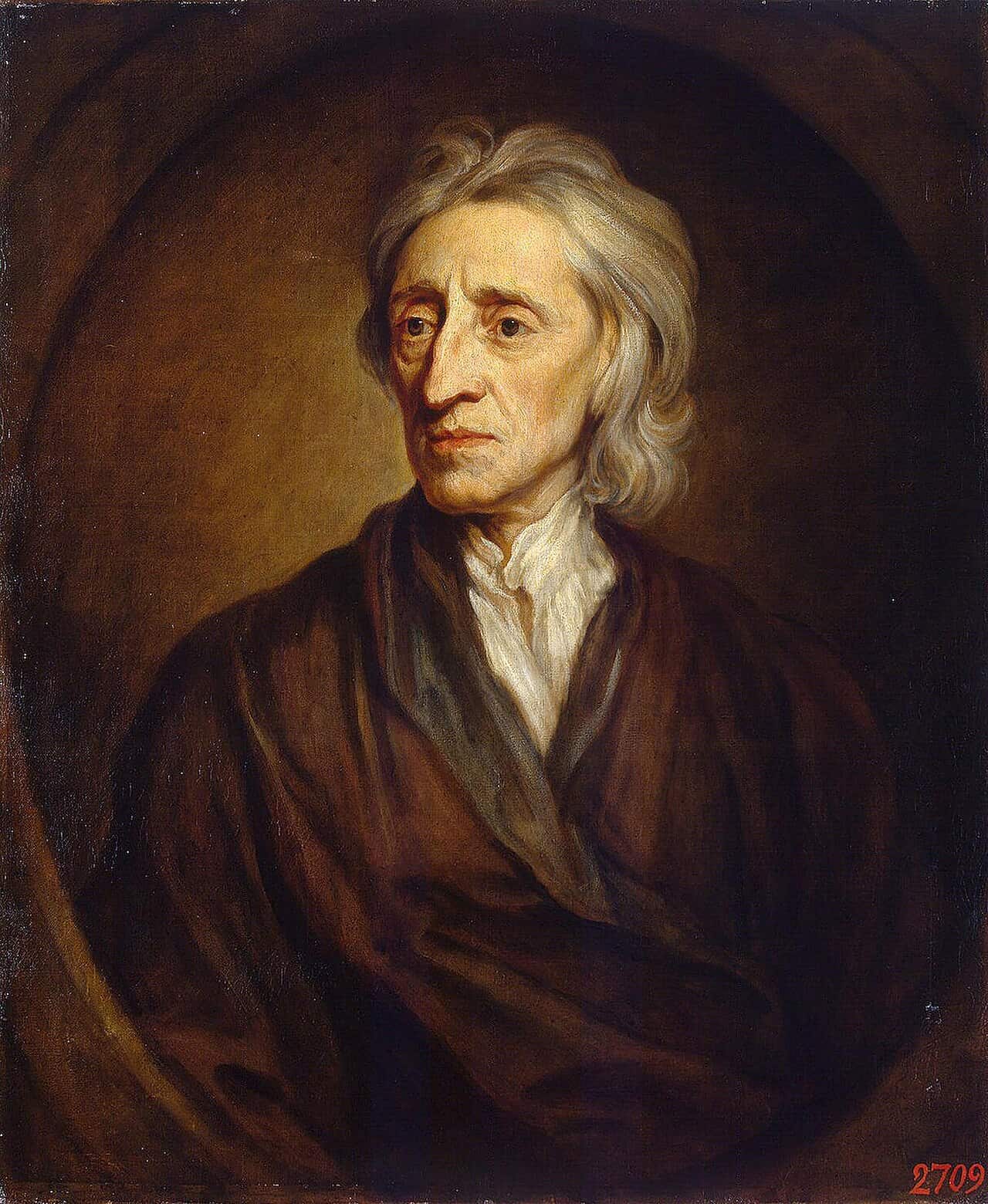
John Locke was born at Wrington in Somerset on 29 August 1632, the son of a country lawyer who fought for Parliament in the Civil War. He went to Westminster School and Christ Church, Oxford, where he found the scholastic curriculum tedious and turned to medicine and experimental philosophy, working with Robert Boyle and Thomas Sydenham. In 1666 he met Anthony Ashley Cooper, later first Earl of Shaftesbury, and became his physician, adviser and household intellectual - an association that took Locke into government service and, when Shaftesbury fell from favour over attempts to exclude the Catholic James from the succession, into danger. He fled to the Dutch Republic in 1683 and stayed five years, returning in February 1689 on the same ship as the future Queen Mary after the Glorious Revolution. In the eighteen months that followed he published almost everything he is remembered for: A Letter Concerning Toleration, Two Treatises of Government and An Essay Concerning Human Understanding, the first two anonymously. He died at Oates in Essex on 28 October 1704. Michael Hart ranked him 44th in The 100.
Influence Meter
83
Measured on a 100-point scale
Supplied the arguments for consent, natural rights, toleration and revolution
TL;DR
Two books, two revolutions in thought
Locke did the same thing twice: took an authority everyone assumed - innate ideas in the mind, divine right in the state - and asked what it actually rested on.
! Why This Matters:
- • In the mind: No innate ideas. The mind at birth is white paper, and everything in it arrives through sensation and reflection.
- • In the state: No divine right. People in a state of nature possess rights to life, liberty and property, and government exists only by their consent, to protect those rights.
- • The consequence: A government that violates the trust dissolves itself, and the people may replace it. The right of revolution, stated plainly, in 1689.
- • On religion: The magistrate has no business coercing belief, because belief cannot be compelled and salvation is not the state's concern.
? Key Data:
- • Years in exile: 5 (1683-1689)
- • Books published in 1689: 3, two of them anonymously
- • Years before the Declaration of Independence: 87
- • Hart's rank: 44th of 100
Continue reading below for the full detailed article →
1689
White Paper
An Essay Concerning Human Understanding took Locke roughly twenty years and asks a question nobody had made central before: not what is true, but what the mind is capable of knowing and how it comes by anything at all. His answer was that there are no innate ideas - no principles stamped on the soul at birth, as Descartes and the scholastics held - and that the mind begins as white paper void of all characters. Everything written on it comes from experience, either sensation of the external world or reflection on the mind's own operations. From those simple ideas the understanding compounds everything else. The argument founded British empiricism, was pushed further by Berkeley and Hume, and provoked Kant into the work that answered it. It also had a political edge that his contemporaries did not miss: if nothing is innate, then no belief, hierarchy or authority can claim to be written into human nature, and all of them have to justify themselves by evidence.
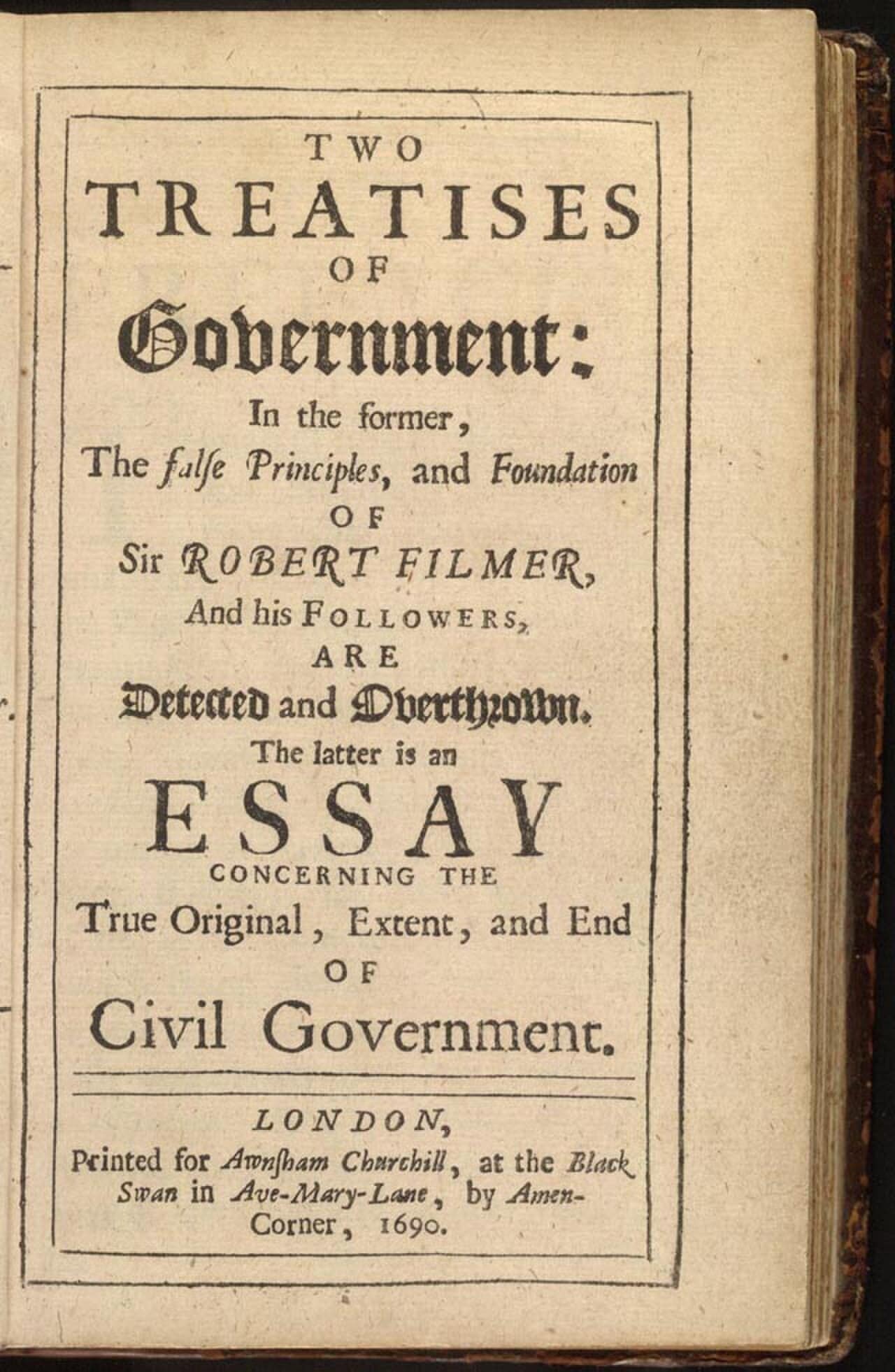
The Two Treatises of Government was published anonymously in 1689 and is usually read as a justification of the Glorious Revolution that had just happened. It was in fact written years earlier, during the Exclusion Crisis, when Locke and Shaftesbury were plotting against a king who was still on the throne - which makes it not a defence of a completed revolution but an argument for making one. The first treatise demolishes Robert Filmer's case for the divine right of kings descending from Adam. The second builds the alternative: people in a state of nature are free and equal and possess natural rights; they form governments by consent to secure those rights, particularly property; political power is therefore a trust rather than a possession; and when a government acts against the ends for which it was entrusted, it forfeits the trust and power devolves back to the people, who may erect a new one. Locke was careful to say this was not a licence for constant upheaval, but the principle is unambiguous, and it was read exactly as written in Boston and Philadelphia a lifetime later.
The Contradiction
The Author of Natural Liberty and the Royal African Company
Locke wrote that slavery is so vile and miserable an estate of man that it is hardly to be conceived that an Englishman, much less a gentleman, should plead for it. He also held stock in the Royal African Company, which transported enslaved Africans across the Atlantic, and in the Bahama Adventurers; he served as secretary to the Lords Proprietors of Carolina; and he had a hand in the Fundamental Constitutions of Carolina of 1669, which granted every freeman absolute power and authority over his negro slaves. The extent of his authorship of that clause is disputed - he was a young secretary transcribing for Shaftesbury, and the document went through several hands - but he was involved in the drafting and revised the text later without removing it.
The various attempts to reconcile this are not very convincing. Locke's own theory permits enslavement only as the lawful continuation of a just war against an aggressor who has forfeited his life, which cannot be stretched to cover the Atlantic trade in any honest reading. The more useful conclusion is the uncomfortable one: the doctrine of universal natural rights was formulated by men who did not apply it universally, and a great deal of subsequent political history consists of people taking the doctrine more seriously than its authors did and insisting it be extended - a process that ran through abolition, suffrage and decolonisation and used Locke's own arguments to do it.
Where the Arguments Ended Up
Locke is one of the few philosophers whose sentences can be traced almost verbatim into founding documents.
- The American Declaration of Independence: Life, liberty and the pursuit of happiness is Locke's life, liberty and property with one substitution, and the passage on the right to alter or abolish a destructive government paraphrases the Second Treatise closely.
- Separation of powers: Locke distinguished legislative from executive power and insisted the legislature was supreme but bounded. Montesquieu developed it into the three-branch scheme the American constitution adopted.
- Religious toleration: The Letter Concerning Toleration argued the magistrate cannot save souls by force. It shaped the First Amendment and the general Western settlement on church and state - though Locke himself excluded atheists and, on political grounds, Catholics.
- Property as a natural right: His labour theory - that mixing your work with something makes it yours - underlies both liberal property law and, by a different route, the labour theory of value Marx later used against it.
- Empiricism and education: If the mind is white paper, education makes the person. Some Thoughts Concerning Education argued for reason over rote and beating, and was read across Europe for a century.
- The French Revolution and after: Voltaire and the philosophes carried him into France; the Declaration of the Rights of Man and the constitutional movements of the nineteenth century worked in his vocabulary whether or not they cited him.
Written Works
Books by John Locke
He published nothing of consequence until he was fifty-seven, and then almost everything at once.
Further Reading
Books About Locke
Recent scholarship has spent considerable effort on the colonial and slavery material earlier accounts passed over.
John Locke: A Biography
The standard life, based on the Lovelace papers, and still the fullest account of the exile years and the Shaftesbury connection.
- Published: 1957
Locke: A Very Short Introduction
By the scholar who did most to place the Two Treatises back in their seventeenth-century religious and political context rather than reading them as timeless liberalism.
- Published: 2003
John Locke and America
Examines the colonial writings and the relationship between his property theory and the dispossession of indigenous peoples.
- Published: 1996
The Political Thought of John Locke
The influential 1969 study arguing that Locke's politics is inseparable from his Calvinist theology, which changed how the field reads him.
- Published: 1969
Legacy
Why Number Forty-Four
Michael Hart ranked Locke 44th, and the ranking measures a diffusion rather than an event. Locke commanded no army and held no high office; he was a physician and civil servant who published anonymously and lived quietly. But the propositions he set out - that political authority derives from the consent of the governed, that individuals hold rights the state did not grant and cannot remove, that religion is not the magistrate's business, and that a government which betrays its trust may lawfully be replaced - became the working assumptions of the modern democratic state. Written constitutions, bills of rights, judicial limits on executive power and the entire twentieth-century apparatus of human rights are downstream of them.
The measure of a successful philosopher is that their conclusions stop looking like philosophy and start looking like common sense, and Locke passed that point long ago. It is worth remembering how radical the material was when it was written: divine right was the official doctrine of most European states, religious dissent was a criminal matter, and arguing that subjects could depose a monarch was a hanging offence, which is why two of the three books appeared without his name on them and why he denied authorship of the Treatises until his will.
Related Publications