Werner Heisenberg

Werner Heisenberg
Born 5 December 1901 • Died 1 February 1976
In June 1925 a twenty-three-year-old with hay fever so bad he could barely see went to a treeless island in the North Sea to recover, and worked out the mathematics of the atom. Two years later he demonstrated something stranger and more disturbing: that the more precisely you fix a particle's position, the less you can know about its momentum, and not because your instruments are crude. The limit is in nature. Einstein never accepted it. Every experiment since has confirmed it.
Rank
#46
Influence
78
Field
Theoretical Physicist
Historical Perspective
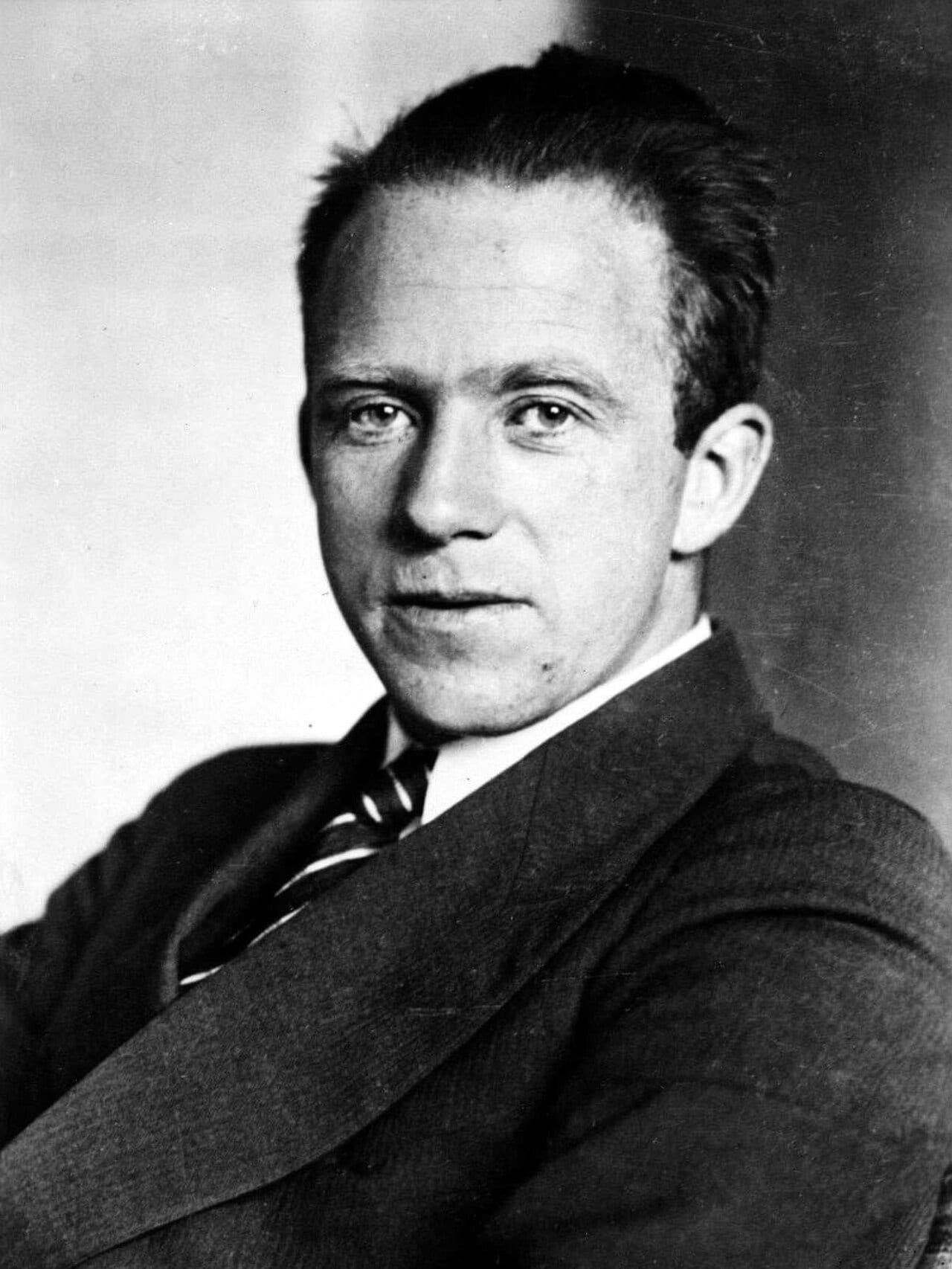
Werner Heisenberg was born at Würzburg on 5 December 1901, the son of a professor of Byzantine studies, and studied theoretical physics under Arnold Sommerfeld at Munich and Max Born at Göttingen, taking his doctorate in 1923 on turbulence - and nearly failing the oral because he could not answer a question about the resolving power of a microscope, an irony given what came later. In June 1925, on Helgoland, he wrote the paper that reinterpreted atomic theory in terms of observable quantities alone, which Born and Pascual Jordan developed into matrix mechanics. In 1927 he published the uncertainty principle, and with Niels Bohr formulated what became the Copenhagen interpretation. He was professor at Leipzig at twenty-five and took the Nobel Prize in 1932. He stayed in Germany through the Nazi period, was attacked by Deutsche Physik ideologues as a White Jew for teaching relativity, and from 1939 worked on the German nuclear programme, becoming director of the Kaiser Wilhelm Institute in 1942. He was interned at Farm Hall in 1945 and rebuilt West German physics afterwards, dying in Munich on 1 February 1976. Michael Hart ranked him 46th in The 100.
Influence Meter
78
Measured on a 100-point scale
Formulated quantum mechanics, and proved that some knowledge is not merely hard but unavailable
June 1925
Helgoland
Heisenberg's hay fever was severe enough that his face swelled, and Born gave him two weeks off. He took the ferry to Helgoland, a rocky island with almost no vegetation, walked, swam, memorised Goethe, and worked at night on the problem that had defeated everyone: how to describe what an atom does when nobody can observe an electron's orbit. His decision was to stop trying. If the orbits cannot be seen, he reasoned, they should not appear in the theory; only quantities that can actually be measured - the frequencies and intensities of the light an atom emits - should be in the equations. Building a scheme from those alone, he found the energy conservation worked out, and at around three in the morning became too excited to sleep, climbed a rock at the southern tip of the island and waited for the sun. The resulting mathematics turned out to be matrix multiplication, which he did not recognise because he had not been taught it; Born identified it when he read the draft.
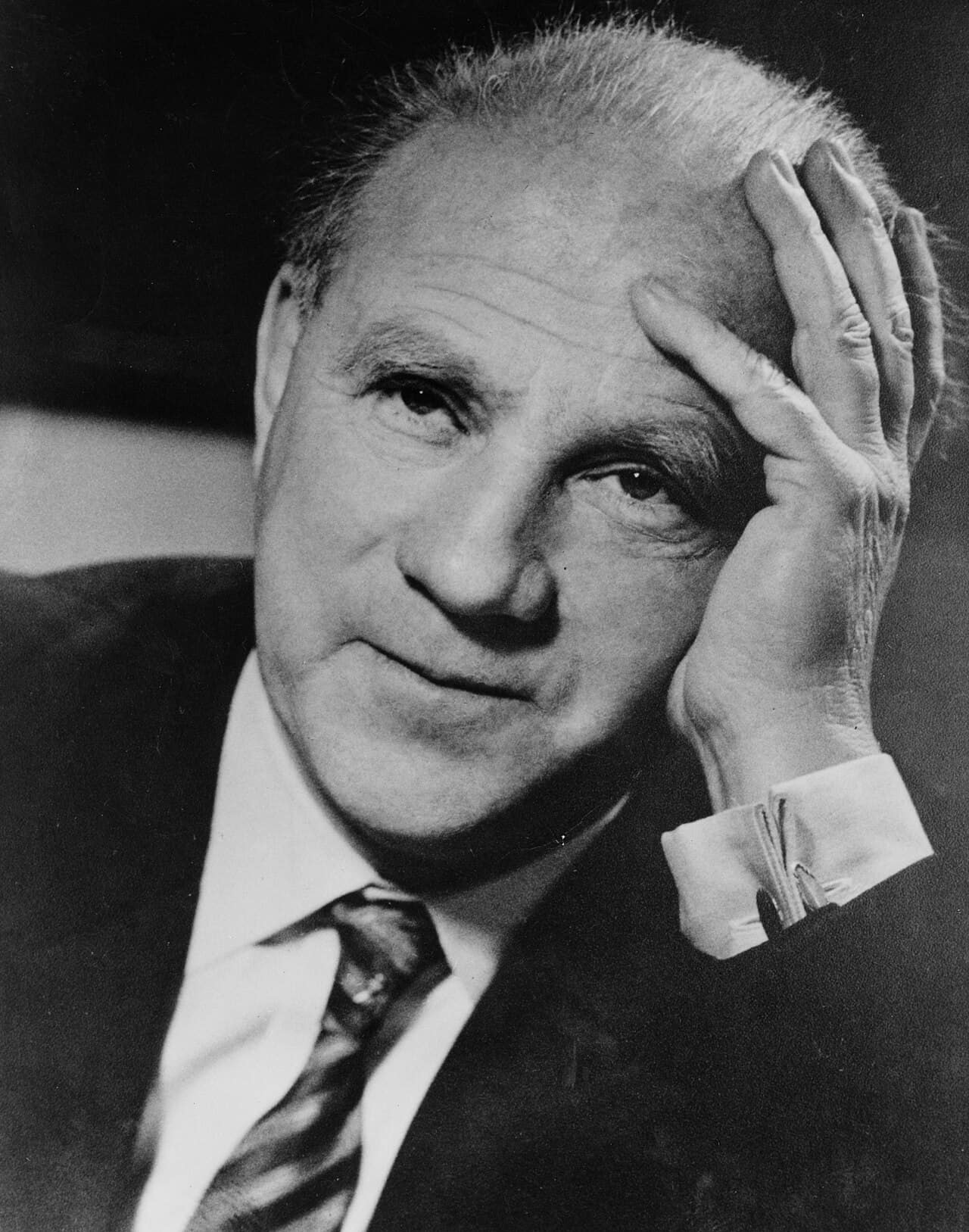
The uncertainty principle, published in 1927, states that the product of the uncertainties in a particle's position and its momentum cannot fall below a fixed quantity related to Planck's constant. The common gloss - that measuring something disturbs it - is Heisenberg's own original framing and is not quite right. The deeper reading, established since, is that a quantum object simply does not possess a precise position and a precise momentum at the same time; the limitation is in what there is, not in what we can detect. The consequences reach past physics. Strict determinism, the eighteenth-century picture in which a sufficiently informed intelligence could compute the entire future from the present state of every particle, is not merely impractical but incoherent at the level of the very small. That is why the principle escaped the laboratory and became one of the few pieces of twentieth-century physics that philosophers, novelists and ordinary readers all argue about.
1933-1945
The Part That Has Never Been Settled
Heisenberg did not leave Germany when most of his colleagues did, and his stated reason was that someone had to preserve German science through the regime for what came after. He paid for the choice: the Deutsche Physik movement, which held relativity and quantum theory to be Jewish physics, attacked him in the SS newspaper as a White Jew, and he was cleared only after his mother approached Himmler's mother personally - an intervention that saved his career and left him obligated. From 1939 he worked on the Uranverein, the German nuclear project, and in June 1942 told Albert Speer that a weapon could not be built in time to affect the war, after which the programme was funded only at a modest level and never approached a bomb.
Whether that outcome reflects moral restraint or scientific error is the longest-running argument about any twentieth-century physicist. Heisenberg maintained after the war that he and his colleagues had deliberately not pursued a weapon. The secretly recorded conversations at Farm Hall, where the interned German scientists learned of Hiroshima, complicate that: their first reaction was disbelief that the Allies had done it, and Heisenberg's initial estimate of the critical mass was wrong by orders of magnitude, which suggests he had not worked the problem through. His 1941 visit to Bohr in occupied Copenhagen - which ended their friendship and about which the two men gave irreconcilable accounts - is the crux, and Michael Frayn's play Copenhagen built an entire drama out of the fact that it cannot be resolved.
What He Contributed to Physics
The Nobel citation credits him simply with the creation of quantum mechanics, which for a single scientist is an unusually large claim.
- Matrix mechanics, 1925: The first complete and consistent formulation of quantum mechanics, built only from observable quantities. Schrödinger's wave mechanics followed months later and proved mathematically equivalent.
- The uncertainty principle, 1927: A fundamental limit on simultaneous knowledge of conjugate quantities, and the clearest single break with classical physics.
- The Copenhagen interpretation: Developed with Bohr: the wave function describes what we can know rather than what exists independently, and measurement is not a passive act. Still the working default in most physics teaching.
- The neutron-proton model of the nucleus: Within months of Chadwick's discovery of the neutron in 1932, he proposed that nuclei are built from protons and neutrons bound by an exchange force - the basis of nuclear physics.
- Isospin: Treating the proton and neutron as two states of one particle introduced a symmetry concept that became central to particle physics.
- S-matrix theory: Proposed during the war as a way to describe scattering without a detailed spacetime picture, and revived decades later in the study of the strong interaction.
Further Reading
Books About Heisenberg
The literature divides fairly cleanly into accounts of the physics and arguments about the war.
Legacy
Why Number Forty-Six
Michael Hart ranked Heisenberg 46th, and the case is that quantum mechanics is the most successful physical theory ever devised and he wrote the first working version of it. The practical yield is not abstract: semiconductors, transistors, lasers, LEDs, magnetic resonance imaging, nuclear power and the entire computing industry rest on quantum behaviour that classical physics cannot describe. A large share of the developed world's economic output depends on devices that could not have been designed without the theory he started.
The philosophical yield is at least as large and considerably more contested. Uncertainty and the Copenhagen interpretation ended the Newtonian picture of a determinate clockwork universe, and Einstein spent his last thirty years objecting - God does not play dice was aimed at exactly this - while losing the argument experimentally. Heisenberg's own life is a harder ledger. He gave physics its most fundamental limit and then spent six years working for a regime that murdered his colleagues' families, and the question of what he was actually doing in that laboratory has never been closed. It is a useful reminder that scientific greatness and moral clarity are entirely separate quantities.
Related Publications