Lao Tzu

Lao Tzu
Born traditionally 6th century BC • Died traditionally 6th century BC
Lao Tzu may never have existed. The name means Old Master, the biography comes from a historian writing four centuries later who admitted he could not establish the facts, and most scholars now treat the Tao Te Ching as an anthology assembled over generations. What is not in doubt is the book: about five thousand characters, eighty-one short chapters, arguing that the way to accomplish things is largely to stop interfering with them. It has been translated into English alone more than two hundred and fifty times.
Rank
#73
Influence
79
Field
Philosopher
Historical Perspective
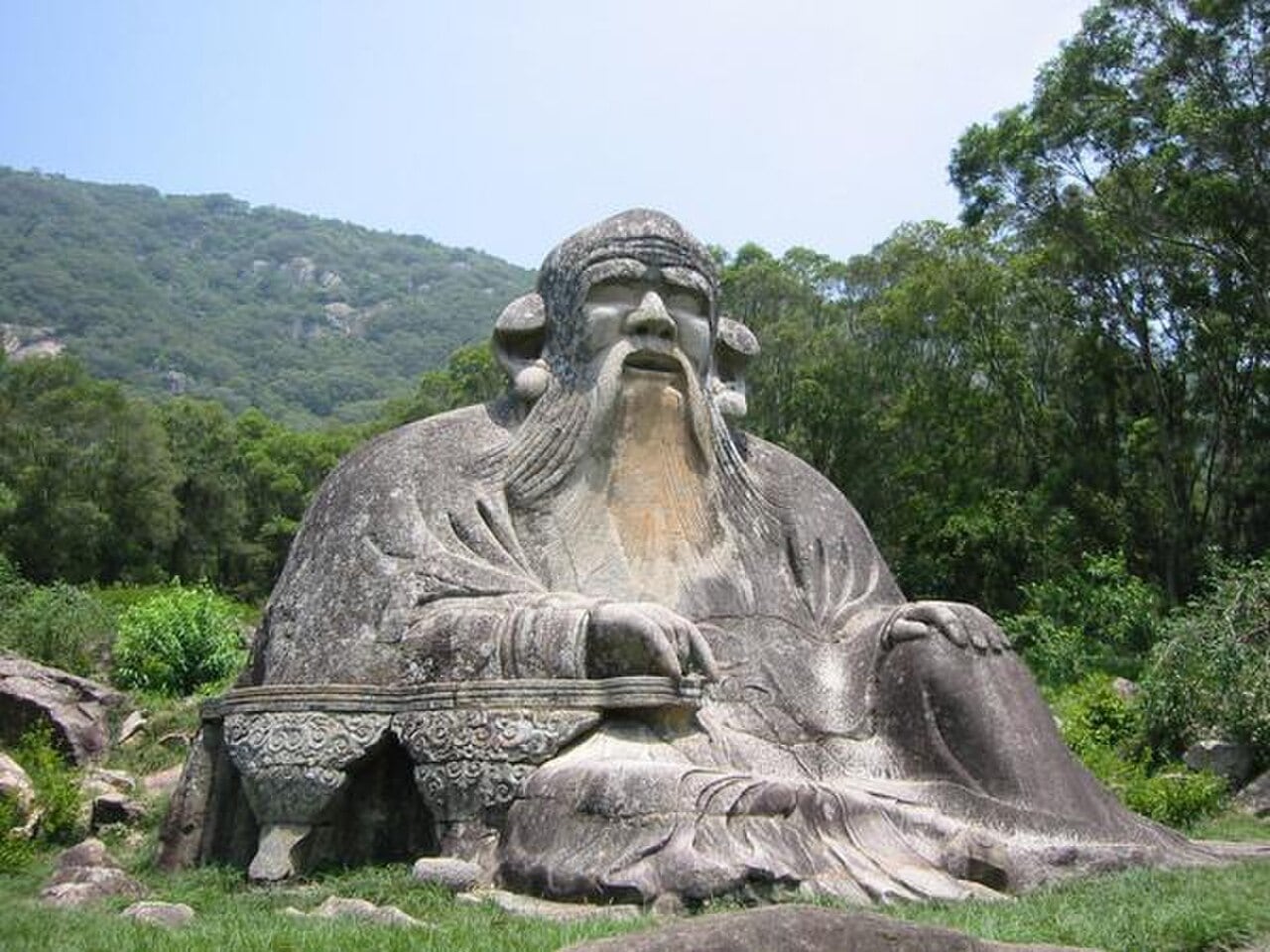
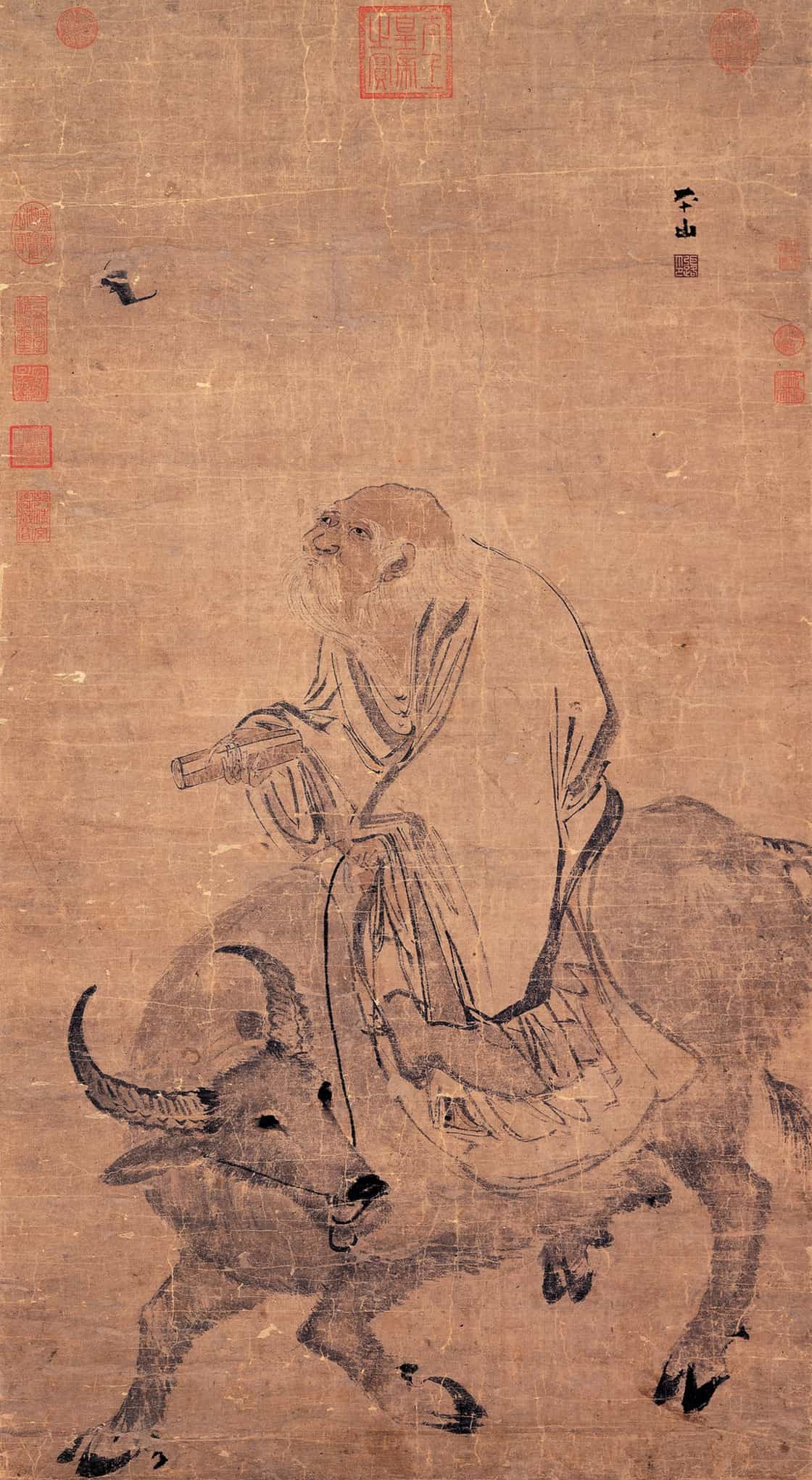
The traditional account comes from Sima Qian's Records of the Grand Historian, written around 100 BC. It says that Lao Tzu was born Li Er in the state of Chu, served as keeper of the archives at the Zhou court, was consulted by a younger Confucius who afterwards compared him to a dragon, and eventually left the declining Zhou state riding an ox toward the western pass. There the gatekeeper Yinxi asked him to set down his teaching before he vanished, and he wrote the Tao Te Ching in two parts and departed, never to be heard of again. Sima Qian himself offers several alternative identifications and concedes uncertainty. The manuscript evidence puts the text firmly in the ancient world regardless of authorship: bamboo slips found at Guodian in 1993 date to around 300 BC, and silk manuscripts from Mawangdui to the early second century BC. Michael Hart ranked him 73rd in The 100.
Influence Meter
79
Measured on a 100-point scale
The founding text of Daoism, and one of the most translated books ever written
TL;DR
A book whose author is the least certain thing about it
The Tao Te Ching is real, ancient and enormously influential. Whether one man wrote it is another matter.
! Why This Matters:
- • The claim: An archivist named Li Er wrote it in one sitting at a border pass and rode west out of history.
- • The source: Sima Qian, writing around 100 BC - four centuries later - who offers three candidate identities and admits he cannot decide.
- • The evidence: Bamboo slips from Guodian dated around 300 BC contain about a third of the text; style and vocabulary suggest multiple hands.
- • Why it matters anyway: Whoever assembled it, the book founded Daoism, shaped Chan and then Zen Buddhism, and is the most translated work after the Bible.
? Key Data:
- • Length: About 5,000 characters, 81 chapters
- • Oldest manuscript: Guodian bamboo slips, c. 300 BC
- • English translations: Over 250
- • Hart's rank: 73rd of 100
Continue reading below for the full detailed article →
What the Tao Te Ching Argues
It opens by saying that the Tao that can be spoken is not the eternal Tao, which is a difficult beginning for a book, and is characteristic of the whole.
- The Tao: The way - the underlying pattern and source of everything, prior to and beyond naming. It is not a god and not a law but something closer to the grain of reality, which can be followed or fought.
- Wu wei: Usually rendered non-action, and better understood as action without forcing - doing what the situation affords rather than imposing a plan on it. Water is the recurring image: it yields, and it wears away stone.
- The uncarved block: Simplicity before elaboration. Learning, cleverness and refinement are treated with suspicion, on the ground that they take you further from what you already are.
- Government by not governing: The best ruler is one whose subjects barely know he exists. Laws multiply thieves; the more prohibitions, the poorer the people. It is the earliest sustained argument for minimal government in any tradition.
- The value of the empty: A wheel is useful because of the hole at its hub, a pot because of the space inside, a room because of the doors and windows. Usefulness resides in what is not there.
- Reversal: Opposites generate one another and things become their opposites at the extreme. The soft overcomes the hard, the weak overcomes the strong, and the highest good resembles water.
The scholarly position on Lao Tzu's existence has moved steadily toward scepticism. Sima Qian, writing four centuries after the supposed events, offers three candidates and says he does not know which is right. The text itself is inconsistent in style and vocabulary in ways that suggest multiple hands and a period of oral transmission; it addresses political conditions that fit the Warring States period better than the sixth century BC; and its arrangement varies between the earliest manuscripts, with the Mawangdui silk texts reversing the order of the two halves and the Guodian slips containing only about a third of the received text. The consensus among Western sinologists since the mid-twentieth century is that Lao Tzu is a legendary figure to whom a compiled body of sayings was attributed - which does not make the book less important, only its author less locatable.
After the text
A Philosophy That Became a Religion, and a God
Daoism developed along two tracks that are related but distinct. Philosophical Daoism - the Tao Te Ching and the Zhuangzi - is a body of thought about nature, government and the limits of language. Religious Daoism, which took organised form from the second century AD with the Celestial Masters movement, is a full religion with clergy, liturgy, monasteries, an enormous canon, alchemy, and a pantheon in which Lao Tzu himself is a deity: Taishang Laojun, one of the Three Pure Ones, an emanation of the Tao who has appeared in the world repeatedly as a teacher. The Tang emperors, whose family name was Li, claimed descent from him and promoted the cult accordingly. For most of Chinese history Daoism coexisted with Confucianism and Buddhism as one of the three teachings, and Chinese people have generally seen no difficulty in drawing on all three.
Reach
Where the Book Went
Inside China, Daoist thought shaped medicine, alchemy - which produced real chemistry and a great deal of mercury poisoning among emperors seeking immortality - landscape painting, poetry and the internal martial arts. Its encounter with Buddhism arriving from India produced Chan Buddhism, which travelled to Japan as Zen; the Chan emphasis on direct experience over doctrine and its suspicion of words owe a great deal to the Daoist side of the mixture.
Outside China the Tao Te Ching has had a strange second life. It was first translated into a European language in the eighteenth century and has since been rendered into English something over two hundred and fifty times, which makes it the most translated book in the world after the Bible. Its brevity, its aphoristic form and the genuine difficulty of the classical Chinese make it unusually open to interpretation, which is both why translators keep returning to it and why many versions say more about the translator than the text. It has been adopted by ecologists, anarchists, management writers, physicists writing about complementarity, and Ursula Le Guin, who produced a version after a lifetime of reading it.
Further Reading
Editions and Studies
Choosing a translation matters more here than for almost any other text, because they differ enormously.
Legacy
Why Number Seventy-Three
Michael Hart ranked Lao Tzu 73rd, and the entry sits oddly on a list of historical individuals given that most specialists doubt he was one. Hart's reasoning is that whoever wrote it, the text has been read, memorised and acted on by hundreds of millions of people across two and a half millennia, and that a founding scripture with an uncertain author is hardly unusual in the history of religion. Placing him well below Confucius at five is a judgement about scale: Confucianism organised Chinese government, education and family life for two thousand years in a way Daoism never attempted.
What Daoism offered instead was the counterweight, and Chinese culture has generally used both. A scholar-official served the state on Confucian principles and retired to the mountains to write Daoist-inflected poetry about the futility of it; the two are less rival systems than complementary moods. Outside China, the text's afterlife is out of all proportion to its length. Five thousand characters, no argument in the Greek sense, no author anyone can identify, and it is the second most translated book on Earth.
Related Publications