Lenin

Lenin
Born 22 April 1870 • Died 21 January 1924
In February 1917 Lenin was in Zurich telling an audience of young socialists that his generation would probably not live to see the decisive battles of the coming revolution. Weeks later the Tsar had abdicated. By November he governed Russia. His party had perhaps twenty-four thousand members at the start of that year and won under a quarter of the vote in the only free election held; it did not matter, because he had understood something the others had not about what a disciplined organisation can do in a collapsing state.
Rank
#84
Influence
84
Field
Revolutionary and Head of State
Historical Perspective
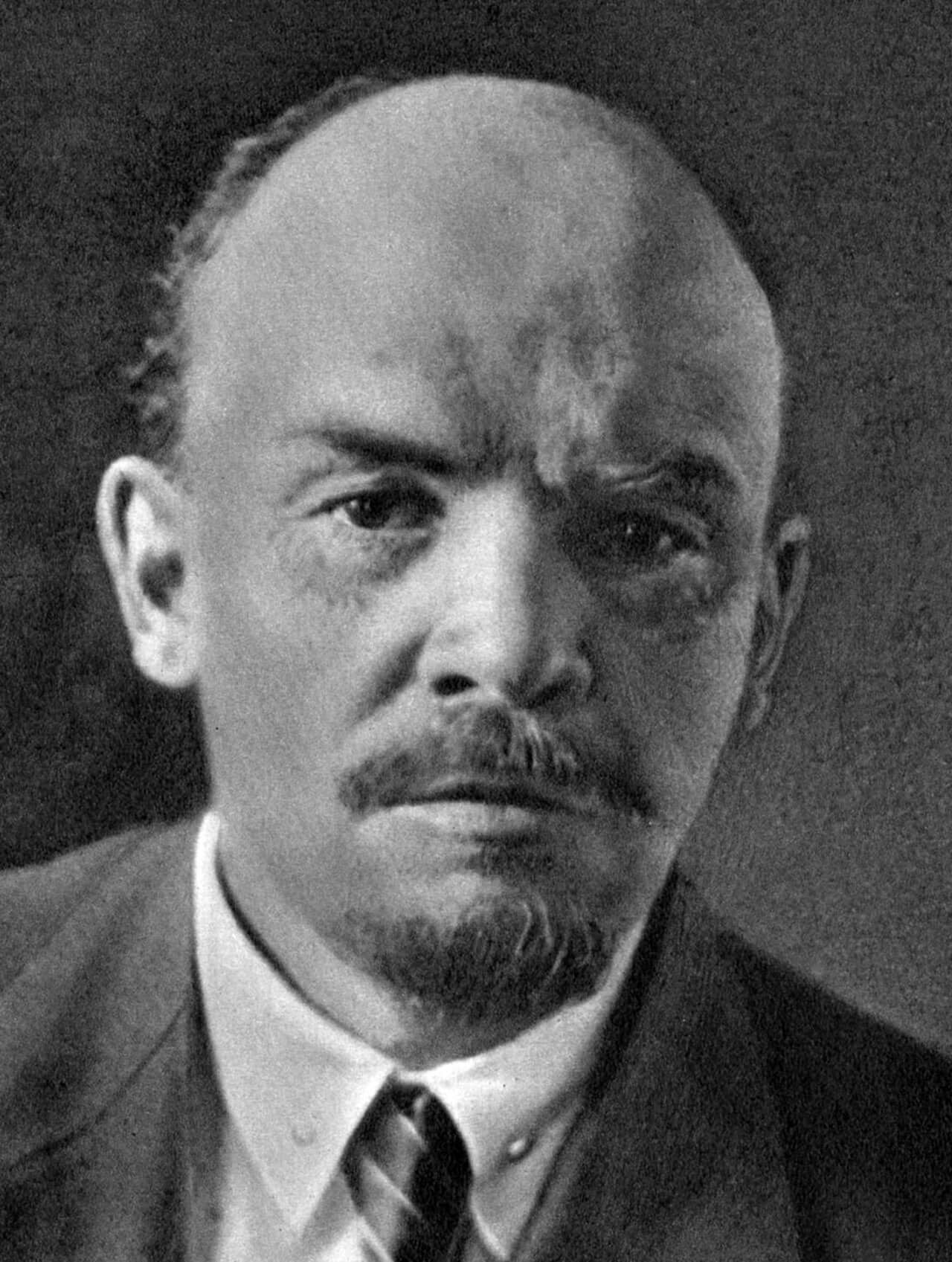
Vladimir Ilyich Ulyanov was born at Simbirsk on 22 April 1870 into a comfortable, educated family. In 1887 his elder brother Aleksandr was hanged for participating in a plot to assassinate Alexander III, an event that radicalised him and left the family socially ruined. He qualified in law, became a Marxist, was arrested for sedition in 1895 and exiled to Siberia for three years, and then spent most of the next seventeen years abroad - Munich, London, Geneva - writing, editing and quarrelling. What Is To Be Done in 1902 argued that the working class would not become revolutionary spontaneously and required a small, disciplined vanguard of professional revolutionaries; the dispute over that produced the Bolshevik-Menshevik split in 1903. In April 1917, after the February Revolution, the German government transported him across Europe in a sealed train in the hope that he would destabilise Russia and take it out of the war, which is exactly what he did. The Bolsheviks seized power on 25 October, dissolved the Constituent Assembly in January 1918 after losing the election, and won a civil war that killed millions. Lenin suffered strokes from 1922 and died at Gorki on 21 January 1924. Michael Hart ranked him 84th in The 100.
Influence Meter
84
Measured on a 100-point scale
Created the first communist state and the party model that was exported worldwide
What Lenin Added to Marx
Marx expected revolution in advanced industrial societies, driven by a majority working class. Russia in 1917 was neither. Lenin's contribution was a set of modifications that made a seizure of power possible anyway - and that every subsequent communist movement copied.
- The vanguard party: A small, disciplined, professional organisation leading the working class rather than emerging from it. Marx has nothing like this; it is Lenin's central innovation and the origin of the one-party state.
- Democratic centralism: Free debate before a decision, absolute unity in carrying it out. In practice the second half consumed the first, and the party became an instrument for transmitting orders downward.
- Revolution in a backward country: Imperialism, he argued, had displaced capitalism's contradictions onto the colonies, so the chain would break at its weakest link rather than its strongest. It is the theoretical licence for revolution in agrarian societies, and China, Vietnam and Cuba all used it.
- Seizing the moment: His April Theses of 1917 startled his own party by demanding no cooperation with the provisional government and all power to the soviets. He was almost alone in the leadership in pressing for an insurrection in October, and he was right about the opportunity.
- Dictatorship without apology: He was explicit that the dictatorship of the proletariat meant rule unrestricted by any law, and created the Cheka within weeks of taking power. The Red Terror was policy, announced as such.
- Tactical retreat: When War Communism produced famine and revolt - Kronstadt in 1921 - he introduced the New Economic Policy, restoring markets and small private trade. The willingness to reverse for a period without conceding the end state is characteristically Leninist.
Russia held its first and only free national election in November 1917, weeks after the Bolshevik seizure of power. The Socialist Revolutionaries, a peasant-based party, won around forty per cent of the vote; the Bolsheviks took roughly twenty-four per cent. The Constituent Assembly met on 5 January 1918, sat for a single day, and was dispersed the following morning by Bolshevik troops, with the sailor commanding the guard reportedly telling the delegates that the guard was tired. Lenin's justification was that a soviet republic represented a higher form of democracy than a bourgeois parliament, and that the electoral lists were out of date. Whatever the merits, the practical result was that the one occasion on which the Russian people voted freely for a national government produced a body that lasted thirteen hours, and no comparable election was held again until 1991.
1918-1922
The War That Made the State
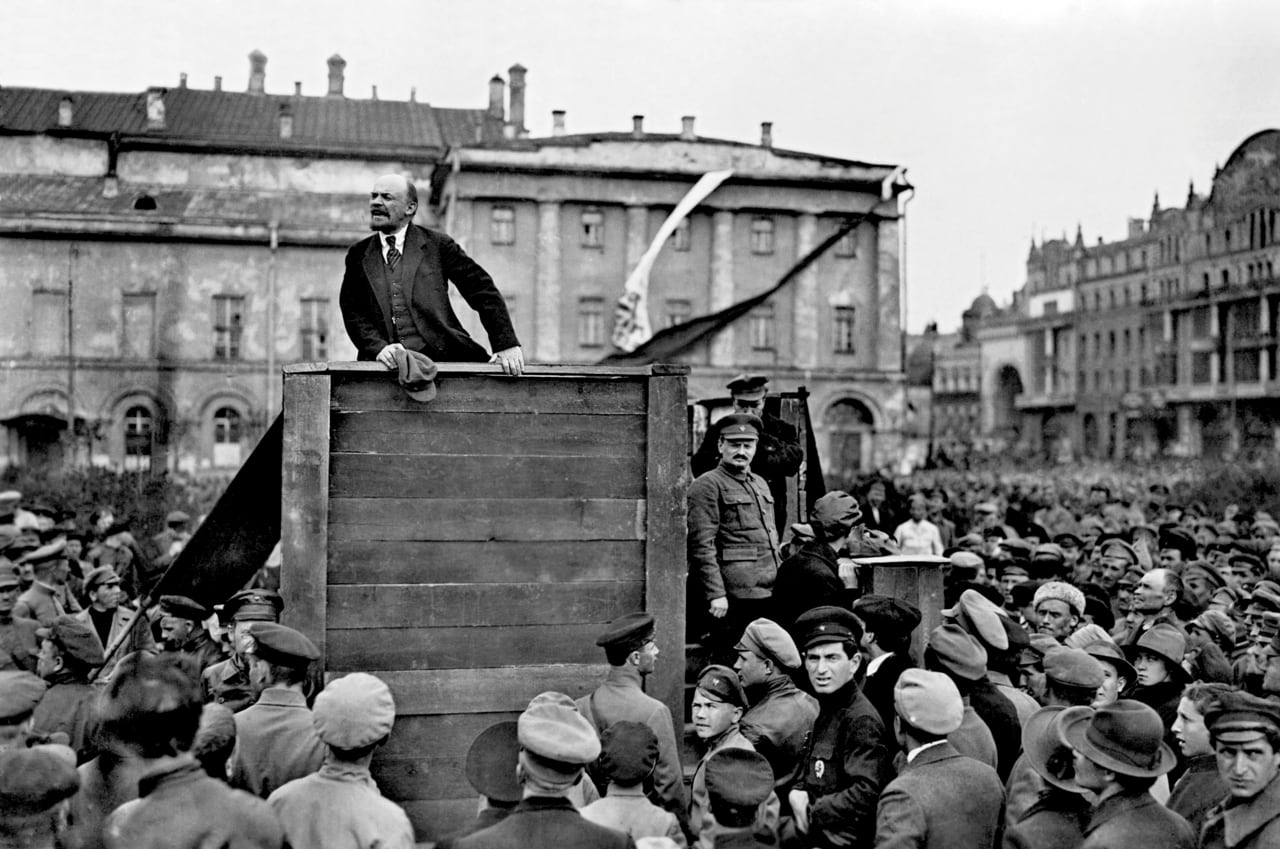
The Russian Civil War killed something between seven and twelve million people, the overwhelming majority of them civilians dying of disease and famine rather than combat. The Bolsheviks won it through control of the central rail network and the industrial core, Trotsky's construction of a Red Army from nothing, and a ruthlessness their opponents could not coordinate. War Communism requisitioned grain from the peasantry at gunpoint, nationalised industry and outlawed private trade, and the resulting collapse of agriculture combined with drought to produce the famine of 1921-22, in which perhaps five million died. The Cheka, founded in December 1917, conducted the Red Terror with executions running into the tens of thousands at minimum. The apparatus and the habits of that period - one party, secret police, censorship, terror as an instrument of policy - did not disappear when the fighting stopped. They were the state Lenin left to his successor.
1922-1924
The Warning Nobody Acted On
Lenin suffered his first stroke in May 1922 and was substantially incapacitated for much of his remaining twenty months. In notes dictated in December 1922 and January 1923, later known as his Testament, he assessed the leading figures of the party and warned that Stalin, as General Secretary, had concentrated unlimited authority in his hands and might not use it with sufficient caution. In a postscript of 4 January 1923 he went further and proposed removing him from the post, citing rudeness and intolerance. He had also been angered by Stalin's brutal handling of Georgia and by his abuse of Lenin's wife Krupskaya. The Testament was read to a small group at the Thirteenth Party Congress in 1924 and suppressed; the leadership judged Trotsky the greater danger.
He died at Gorki on 21 January 1924, aged fifty-three, probably of cerebral arteriosclerosis. Against the wishes of his widow, his body was embalmed and placed on permanent display in a mausoleum on Red Square, where it remains a century later - an outcome an atheist materialist revolutionary might have found difficult to explain. Petrograd was renamed Leningrad within days, and a cult of personality was constructed around him that Stalin then used as the source of his own legitimacy.
A Note on the Figures
Russian Civil War Russian famine of 1921-1922 Red Terror
Casualty estimates for the Russian Civil War and the famine that followed vary widely because the records are incomplete and the Soviet state had no interest in producing them. The ranges given here - seven to twelve million dead in the civil war, around five million in the famine of 1921-22 - are the ones most current scholarship works with, and the great majority of those deaths were from disease and starvation rather than fighting.
Execution figures for the Red Terror are firmer at the low end than the high: Cheka records account for tens of thousands, and historians differ on how many killings went unrecorded. Where a number is genuinely contested this profile gives the range rather than choosing.
Last verified: 22 Aug 2026
Further Reading
Books About Lenin
Soviet biography was hagiography and Cold War biography was often its mirror image; the archives opened after 1991 have produced better work.
Legacy
Why Number Eighty-Four
Michael Hart ranked Lenin 84th, below both Marx at twenty-seven and Stalin at sixty-six, and the ordering is arguable in both directions. Marx supplied the theory but died with no movement; Stalin built the superpower but inherited the state. Lenin is the one who converted an idea into a government - and the conversion required inventions that were entirely his own, chiefly the vanguard party and the justification for revolution in an agrarian country.
That model is the export. Every communist revolution that succeeded in the twentieth century - China, Vietnam, Cuba, and the states installed across eastern Europe - followed the Leninist template of a disciplined party seizing and monopolising state power, rather than anything Marx described. At its height that arrangement governed roughly a third of humanity. The question that has never been settled is whether Stalinism was a betrayal of Lenin or its logical continuation: the one-party state, the secret police, the suppression of factions and the terror as policy were all in place before Lenin's first stroke, and he defended them. He tried to remove Stalin at the end and failed, which is either a mitigation or an irony depending on how the rest is read.
Related Publications