Zoroaster

Zoroaster
Born c. 1500-1000 BCE (disputed) • Died c. 1400-900 BCE (disputed)
Heaven, hell, a judgement of the individual soul, a devil who is the adversary of a good god, angels, a final battle, a resurrection of the dead and a world made new at the end of time. Every one of these appears in Zoroastrian teaching before it appears in Jewish scripture, and the Jews who acquired them had spent two centuries under Persian rule. Whether that is borrowing or convergence has been argued for a hundred and fifty years. What is not arguable is the timing.
Rank
#93
Influence
75
Field
Prophet and Religious Founder
Historical Perspective
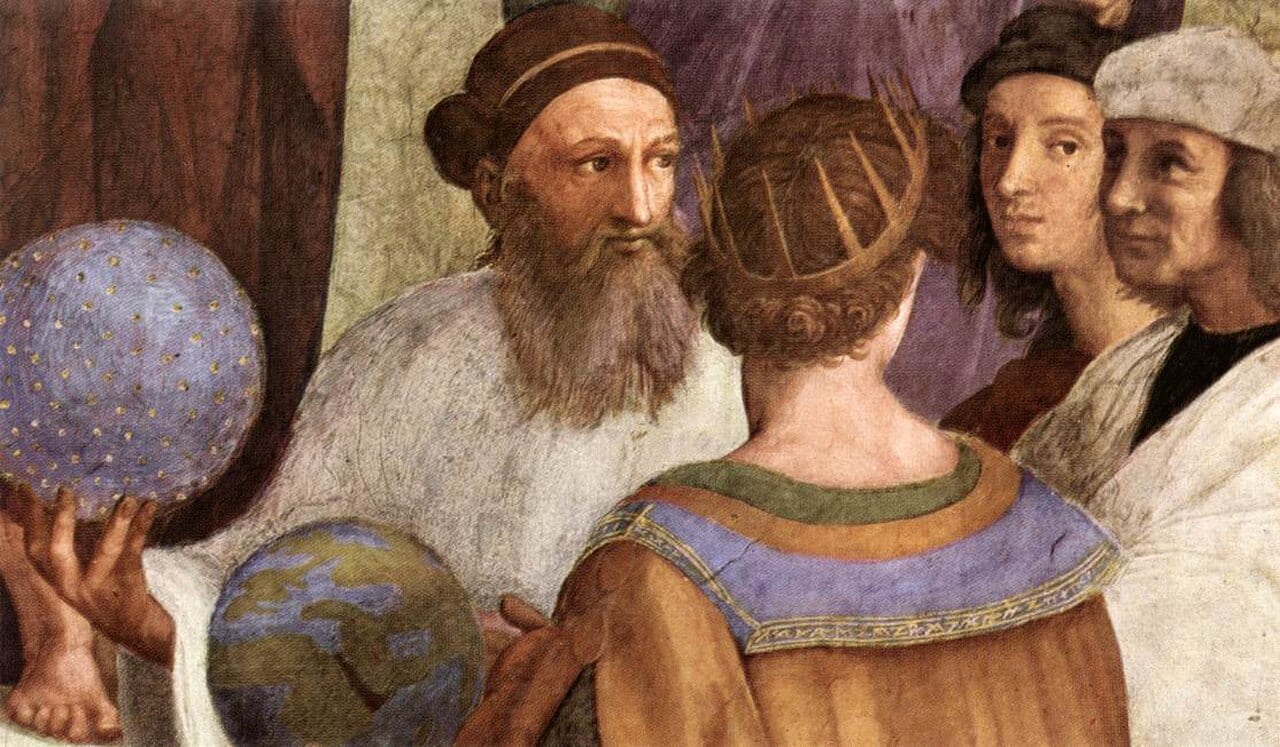
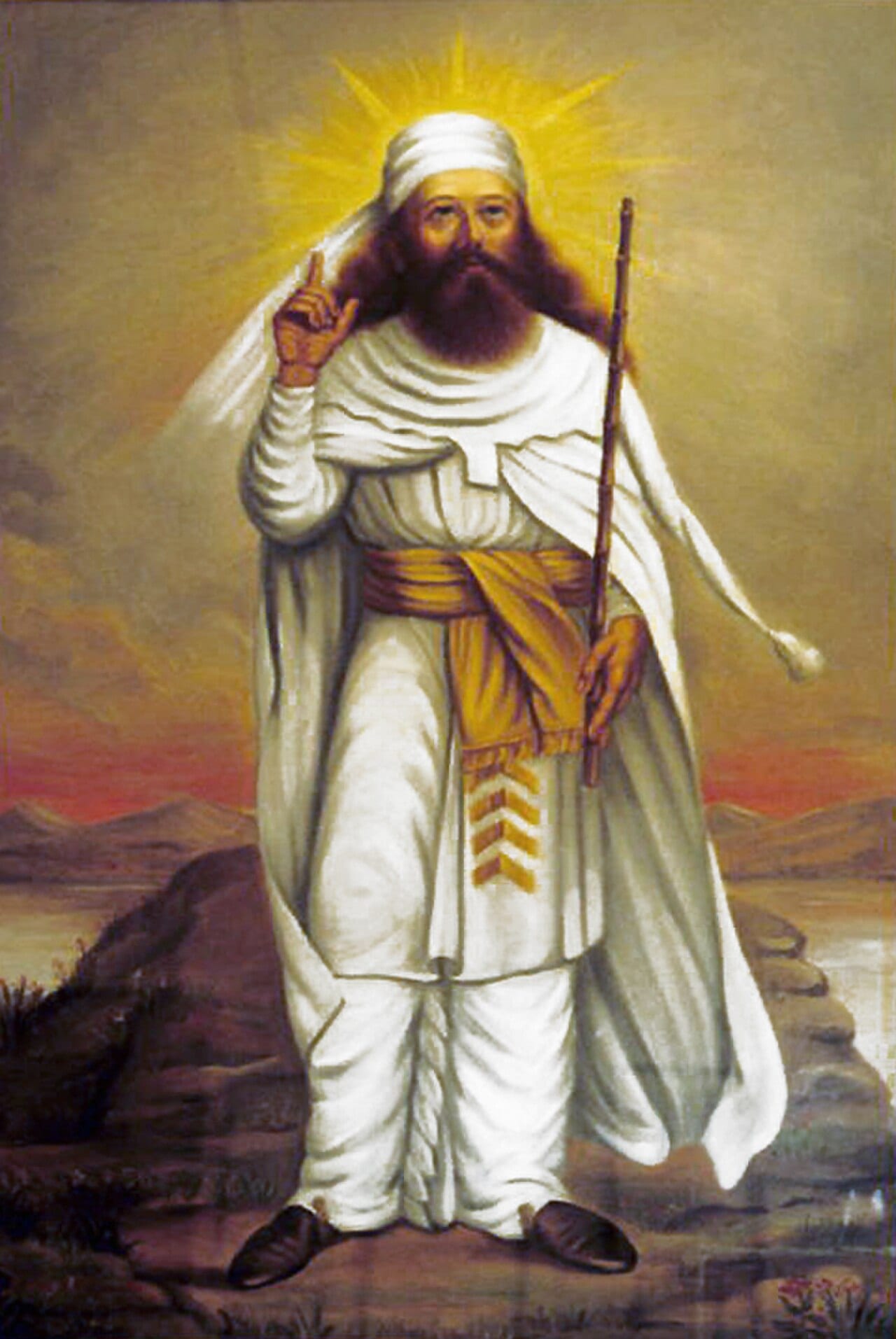
Almost every fact about Zoroaster's life is contested, including when he lived. Later Greek and Persian tradition placed him around 600 BCE, shortly before Cyrus; linguistic analysis of the Gathas - seventeen hymns in an archaic Iranian dialect, attributed to him personally and the only text with a serious claim to his own words - puts them close in age and form to the Rigveda, which pushes the date back toward 1500 or 1200 BCE. Most scholars now favour the earlier range. He seems to have lived in eastern Iran or Central Asia among cattle-herding people, to have been a trained priest of the existing polytheistic religion, and to have broken with it. His preaching was rejected at home and accepted by a chieftain called Vishtaspa, which is what allowed it to survive. The religion became the state faith of the Achaemenid, Parthian and Sasanian empires, in that last form organised and codified, until the Arab conquests of the seventh century CE displaced it. Michael Hart ranked him 93rd in The 100.
Influence Meter
75
Measured on a 100-point scale
Supplied the moral architecture that Judaism, Christianity and Islam later built on
What He Taught
The Gathas are difficult, allusive and short. What follows is the settled scholarly reading of them, together with what the later tradition made of it.
- One creator, called the Wise Lord: Ahura Mazda is the uncreated source of everything good - light, truth, order, life. This is close to monotheism, though not identical to it, and it appeared in a world of local gods and sacrifices.
- An adversary, not an equal: Angra Mainyu, the hostile spirit, chose destruction and the lie. He is opposed to the good but not co-eternal with it in the Gathas, and the tradition spent centuries arguing about how much power to grant him. This is where the idea of a devil - an adversary with a will, not merely an evil force - enters religious history.
- Every person chooses: The struggle is not conducted over people's heads. Each individual takes a side by what they think, say and do - the famous triad - and human choices materially affect the outcome. It is one of the earliest religious systems built around individual moral responsibility rather than ritual correctness.
- Judgement of the soul: After death the soul crosses the Bridge of the Separator, which widens for the righteous and narrows to a blade for the wicked. Reward and punishment are personal and follow from conduct in life.
- An end, and a renewal: History is going somewhere. Evil is finally defeated, the dead are raised, the world is purified by molten metal that the righteous feel as warm milk, and creation is made perfect - the Frashokereti. Linear time with a redemptive conclusion, rather than the endless cycles of most contemporary religions.
- Fire, and the pollution of the elements: Fire is the symbol of truth and tended perpetually in temples, though not worshipped. Because earth, water and fire must not be defiled, the dead are exposed rather than buried or burned - the practice that produced the towers of silence.
The mechanism of transmission is unusually easy to point at. Cyrus the Great took Babylon in 539 BCE and permitted the exiled Judaeans to return and rebuild the temple; Judaea remained a Persian province for the next two centuries. The Hebrew Bible has almost nothing to say about an afterlife, a personal Satan or a resurrection in the texts written before the exile. Afterwards - in Daniel, in the intertestamental literature, in the beliefs of the Pharisees - all of them are present and developed. Isaiah calls Cyrus the Lord's anointed, which is a striking thing to say about a foreign king, and passages in Second Isaiah insisting that God creates both light and darkness, both weal and woe, read naturally as an argument against a dualism the audience had heard. Specialists differ on how much was borrowed and how much developed independently under Persian conditions, and the dating of Zoroastrian texts - most of which survive only in much later manuscripts - keeps the question open. But Christianity and Islam inherited that post-exilic framework wholesale, which means several billion people hold a picture of the moral universe whose earliest known statement is in the Gathas.
After the Conquest
A Very Small Religion With a Very Long Reach
Zoroastrianism was the established religion of three Iranian empires across more than a thousand years. After the Arab conquest of Persia in the seventh century it declined through taxation, disadvantage and conversion rather than through any single catastrophe. A community migrated to Gujarat in western India, probably between the eighth and tenth centuries, and became the Parsis - a group that would produce, out of very small numbers, the Tata industrial dynasty, Homi Bhabha, Zubin Mehta and Freddie Mercury. Today there are perhaps a hundred to two hundred thousand Zoroastrians in the world, concentrated in India and Iran and declining, since the tradition has largely not accepted converts. It is among the smallest surviving religions and among the most consequential, which is an unusual combination and the reason it appears on a list like this at all.
Further Reading
Books on Zoroaster
Anyone reading in this area should be warned that the field is unusually contested, and that a confident date for Zoroaster is a sign of a book to be careful with.
Legacy
Why Number Ninety-Three
Michael Hart ranked Zoroaster 93rd, and the low placement reflects how little can be established about him rather than how little followed from what he taught. A prophet whose own religion now has fewer adherents than a mid-sized town, and whose dates cannot be fixed within nine centuries, is difficult to rank confidently. The influence has to be traced through other people's scriptures.
Traced that way it is enormous. The apocalyptic framework - a cosmic struggle, a judgement, a final victory, a renewed world - is the shape of Jewish, Christian and Muslim expectation, and it does not appear in the ancient Near East before him. Manichaeism, which for a time stretched from Spain to China, was built on a harder version of his dualism. Mithraism, which competed with early Christianity in the Roman army, drew on the same Iranian material. The specifically Zoroastrian community is tiny and shrinking; the ideas are held, in modified form, by more than half the people alive.
Related Publications