Queen Elizabeth I

Queen Elizabeth I
Born 7 September 1533 • Died 24 March 1603
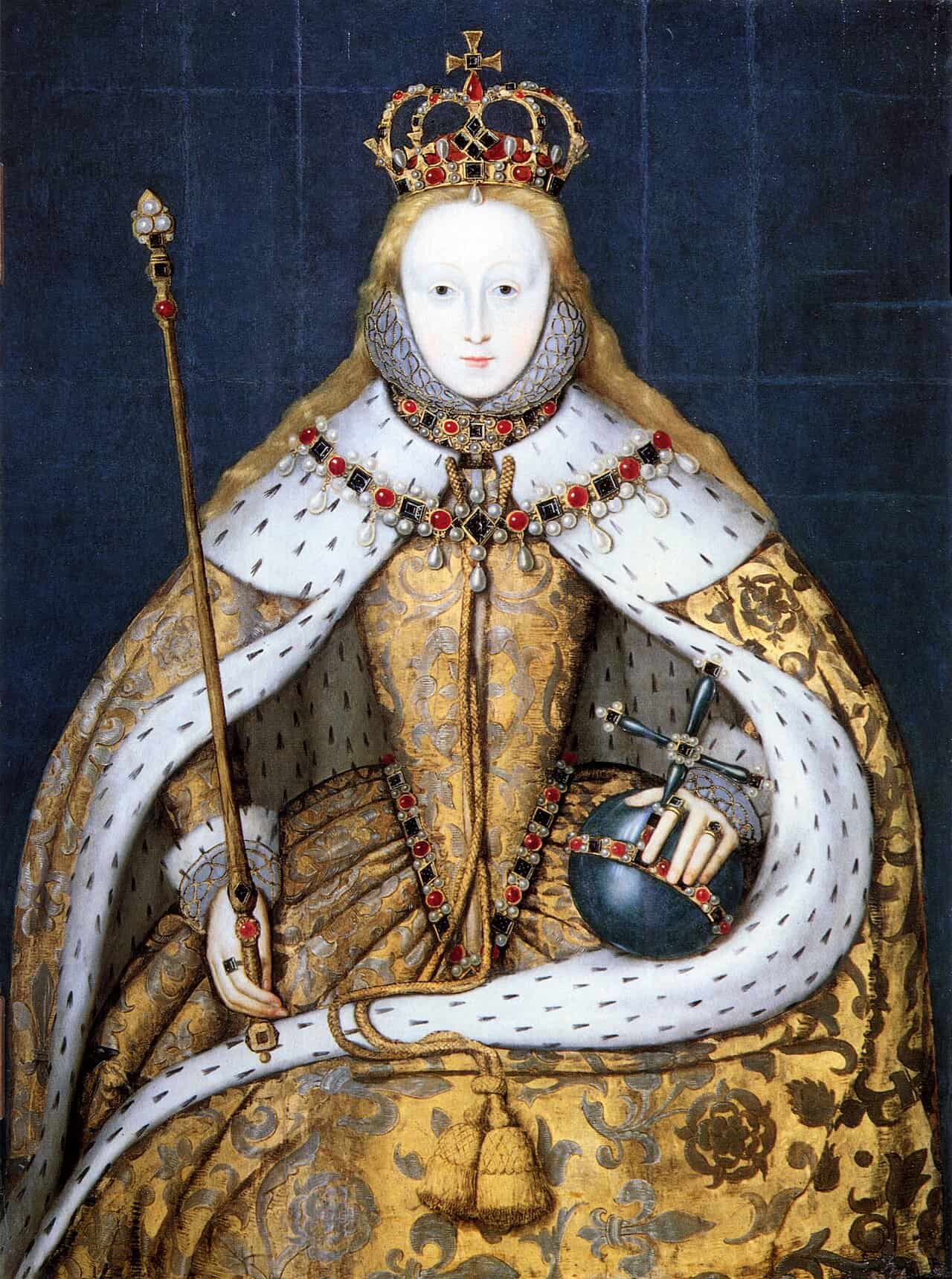
She was declared illegitimate at two, imprisoned in the Tower at twenty, and came to the throne at twenty-five over a country that had changed its official religion four times in twenty-five years and had just lost Calais. Every European power expected her to marry quickly and hand the actual governing to a husband. She did not marry at all, ruled for forty-five years, and by the end of it England was a Protestant state that had beaten Spain at sea.
Rank
#94
Influence
76
Field
Queen of England and Ireland
Historical Perspective
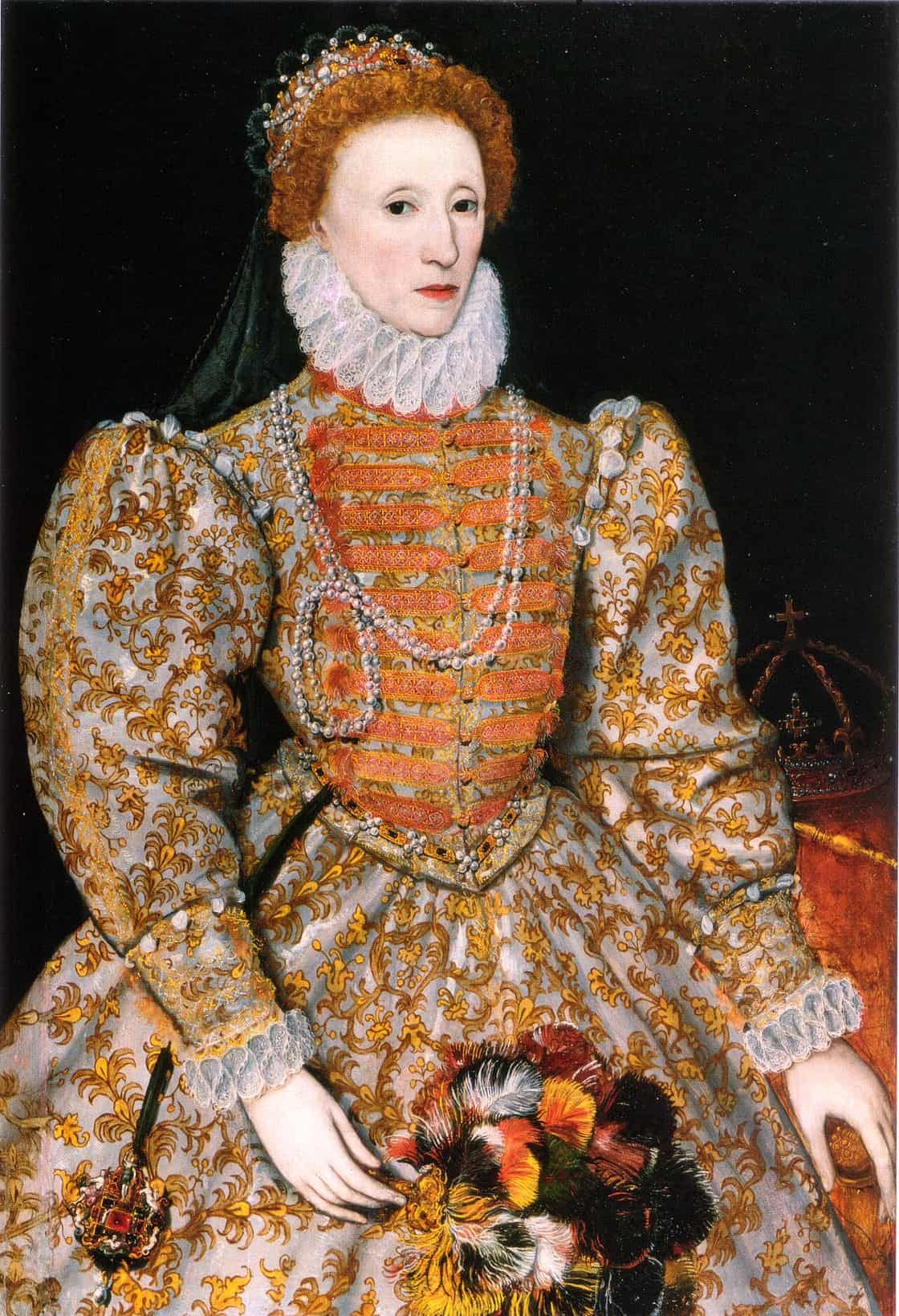
Elizabeth was born at Greenwich on 7 September 1533 to Henry VIII and Anne Boleyn, and was two years and eight months old when her mother was executed and she was declared a bastard. She was restored to the succession by statute in 1544, survived a dangerous entanglement with Thomas Seymour in her teens, and was imprisoned in the Tower in 1554 under her Catholic half-sister Mary on suspicion of complicity in Wyatt's rebellion. She became queen on 17 November 1558. The religious settlement of 1559 - the Act of Supremacy and the Act of Uniformity - established a Protestant church with a monarch as Supreme Governor and a liturgy deliberately worded to be bearable to as many people as possible. Mary, Queen of Scots was executed in 1587 after nineteen years in English custody, and Philip II's Armada was defeated in 1588. The last fifteen years brought war in Ireland, bad harvests, plague and rising discontent. She died at Richmond on 24 March 1603, the last Tudor, and the crown passed to the son of the queen she had executed. Michael Hart ranked her 94th in The 100.
Influence Meter
76
Measured on a 100-point scale
Fixed England as a Protestant power and made the Anglo-Spanish outcome go the other way
1559
The Settlement
England had been Catholic under Henry until 1534, schismatic-but-Catholic in doctrine until his death, aggressively Protestant under Edward, and violently Catholic again under Mary, who burned nearly three hundred people. Elizabeth's settlement was designed less to be theologically satisfying than to be survivable. The monarch became Supreme Governor rather than Supreme Head, a formula that let people who thought a woman could not head a church accept it. The Book of Common Prayer of 1559 combined the words of the 1549 and 1552 versions at the administration of communion, so that a worshipper could understand the sacrament as they wished. Fines for not attending church were modest and for two decades barely enforced. Elizabeth is reported to have said she had no desire to make windows into men's souls, and whether or not the phrase is hers the policy was. It held. The Church of England that resulted - Protestant in doctrine, traditional in structure and ceremony, deliberately ambiguous at the joins - still exists, and its unusual character is the direct residue of a political calculation made in 1559 by a twenty-five-year-old with a very weak hand.
The Reign
Forty-Five Years, in Order
A reign long enough that the crises of its first decade and its last were faced by effectively different countries.
| 1558 | Accession | An insolvent treasury, a lost war with France, and a country legally Catholic |
| 1559 | Religious settlement | Protestant doctrine, traditional structure, deliberately elastic wording |
| 1570 | Excommunicated by Pius V | Released English Catholics from allegiance in principle, and made every Catholic a suspect in practice |
| 1587 | Execution of Mary, Queen of Scots | Removed the Catholic claimant, and set the precedent of a court killing an anointed sovereign |
| 1588 | Defeat of the Spanish Armada | Weather and English gunnery; the invasion never landed and English confidence never quite came back down |
| 1600 | East India Company chartered | The commercial instrument through which England would eventually reach India |
| 1603 | Death | The Scottish and English crowns united under James VI and I, without a war |
Dates follow the modern calendar convention for the start of the year.
The Armada of 1588 is remembered in England as a naval victory and was, in fact, closer to a narrow escape. Philip II's plan required a fleet of about a hundred and thirty ships to sail up the Channel, rendezvous with the Duke of Parma's veteran army in the Netherlands, and escort it across to Kent - and the plan failed at the rendezvous, because Parma had no deep-water port and could not embark while the Dutch flyboats blockaded the shallows. English fireships broke the Spanish anchorage at Calais, the running fight off Gravelines did real damage, and then the wind drove the Armada north into a circuit of Scotland and Ireland where storms wrecked perhaps a third of it. English losses in ships were negligible; thousands of English sailors died of typhus and dysentery afterwards, unpaid, in port. Spain rebuilt and sent further armadas in 1596 and 1597, both of which also failed on weather, and the war went on until 1604 without a clear victor. But the strategic fact stood: the invasion of England had been attempted with the full weight of the greatest power in Europe and had not worked.
Further Reading
Books About Elizabeth
She was the most self-consciously image-managed monarch before photography, which makes the portraits primary sources about policy rather than decoration.
Legacy
Why Number Ninety-Four
Michael Hart ranked Elizabeth 94th on the counterfactual: had she failed - had she been assassinated, deposed, or succeeded by a Catholic - England would probably have returned to Rome, and a Catholic England would have made a different North America, a different Ireland, and a different balance in the European wars of religion. The English-speaking Protestant world that shaped so much of the following four centuries rests on the survival of a regime that spent its first decade expecting not to survive.
The reign's other legacies are mixed. Shakespeare, Marlowe, Spenser, Byrd and Hilliard belong to it, though attributing them to the queen is generous. The East India Company was chartered in its last years and the first colonial attempts at Roanoke failed in them. Ireland was subjected to a nine-year war of conquest whose brutality and confiscations set the pattern for centuries of what followed. And by refusing to marry or name an heir she gambled the country's stability on her own life for forty-five years; the gamble came off, and the peaceful accession of James in 1603 was as much a piece of luck as a piece of statecraft.
Related Publications