Simon Bolivar

Simon Bolivar
Born 24 July 1783 • Died 17 December 1830
Simón Bolívar liberated an area roughly the size of continental Europe, was made president or dictator of five countries, and had one of them named after him. He also died at forty-seven in a borrowed house, planning to sail for exile in Europe, having resigned everything and watched the union he built come apart. Weeks before the end he wrote that America is ungovernable, that those who serve a revolution plough the sea, and that the only thing to do there is emigrate. Six nations regard him as their founder.
Rank
#48
Influence
78
Field
General and Statesman
Historical Perspective
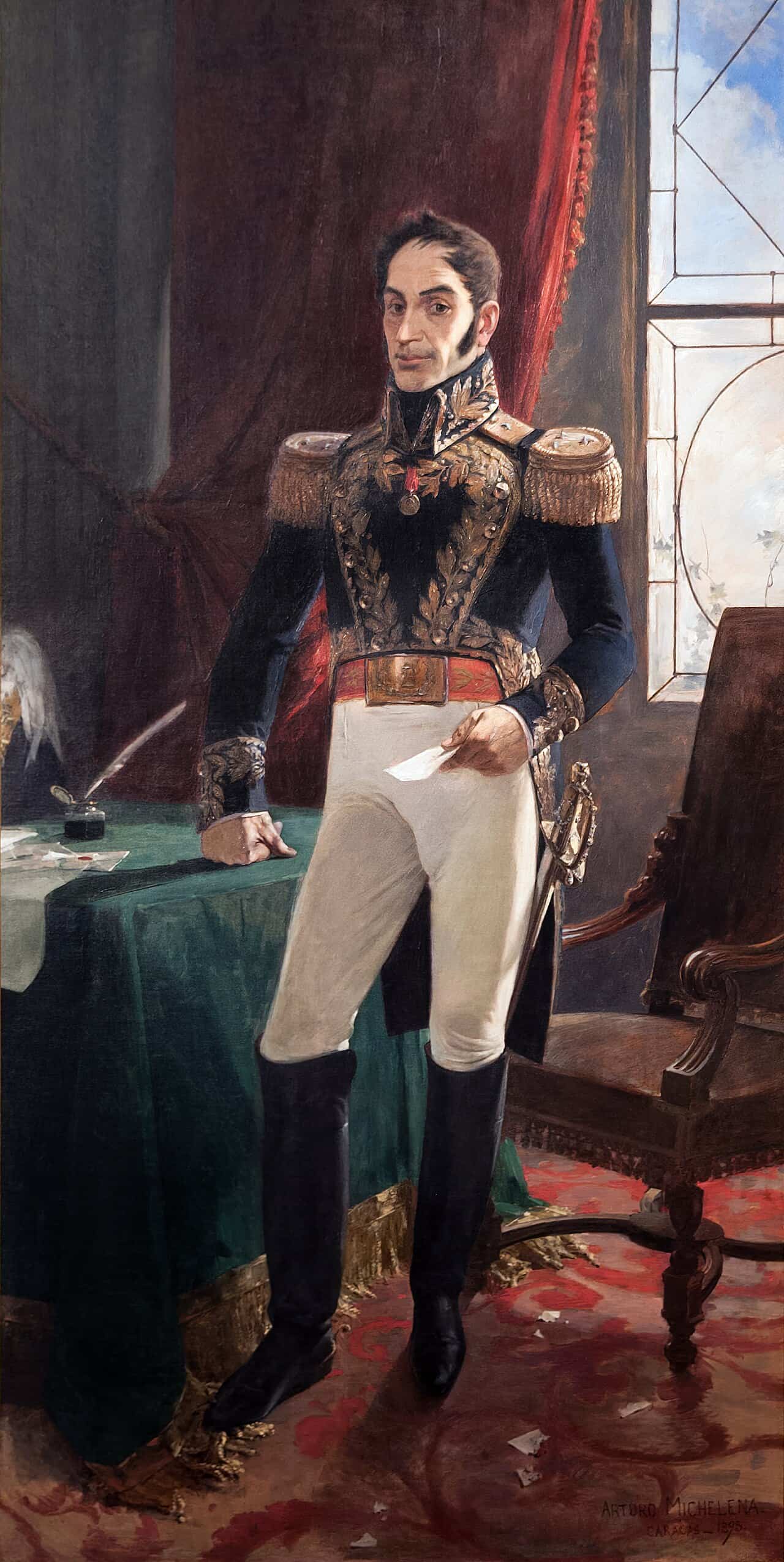
Simón Bolívar was born in Caracas on 24 July 1783 into a creole family of enormous landed wealth, orphaned early and raised substantially by an enslaved woman, Hipólita, and by the radical tutor Simón Rodríguez, who fed him Rousseau. He married in Madrid in 1802 and was widowed within a year by yellow fever, after which he never remarried; on a European tour in August 1805, standing on the Monte Sacro in Rome, he swore not to rest until the chains of Spanish rule were broken. Venezuela declared independence in 1811 and the first republic collapsed the following year after an earthquake and a royalist counteroffensive. What followed was two decades of campaigning, exile and return: the Admirable Campaign of 1813 that won him the title El Libertador, defeat and flight to Jamaica and Haiti, and then the extraordinary crossing of the flooded llanos and the Andes to take New Granada at Boyacá on 7 August 1819. Carabobo secured Venezuela in 1821; Ecuador followed in 1822, Peru in 1824, and Upper Peru became Bolivia in 1825. Gran Colombia fractured, he resigned in April 1830, and died near Santa Marta on 17 December. Michael Hart ranked him 48th in The 100.
Influence Meter
78
Measured on a 100-point scale
Six independent nations, and the political vocabulary of a continent
1819
Across the Andes in the Wet Season
The campaign that decided South America was a march everyone with local knowledge said was impossible. In May 1819 Bolívar took some two thousand four hundred men - Venezuelan llaneros, New Granadan exiles and a legion of British and Irish veterans discharged after Waterloo - east across the flooded plains of the Orinoco basin in the rainy season, wading for days in water to the waist, and then up over the Andes by the Páramo de Pisba at around four thousand metres. He chose that pass precisely because the Spanish considered it impassable and left it unguarded. Men and all the horses died of cold on the crossing; accounts suggest he lost a substantial part of the force before firing a shot. What came down the other side was still enough. On 7 August 1819 at the bridge over the Boyacá river he destroyed the royalist army in about two hours, and three days later entered Bogotá, where the viceroy had fled leaving the treasury behind.
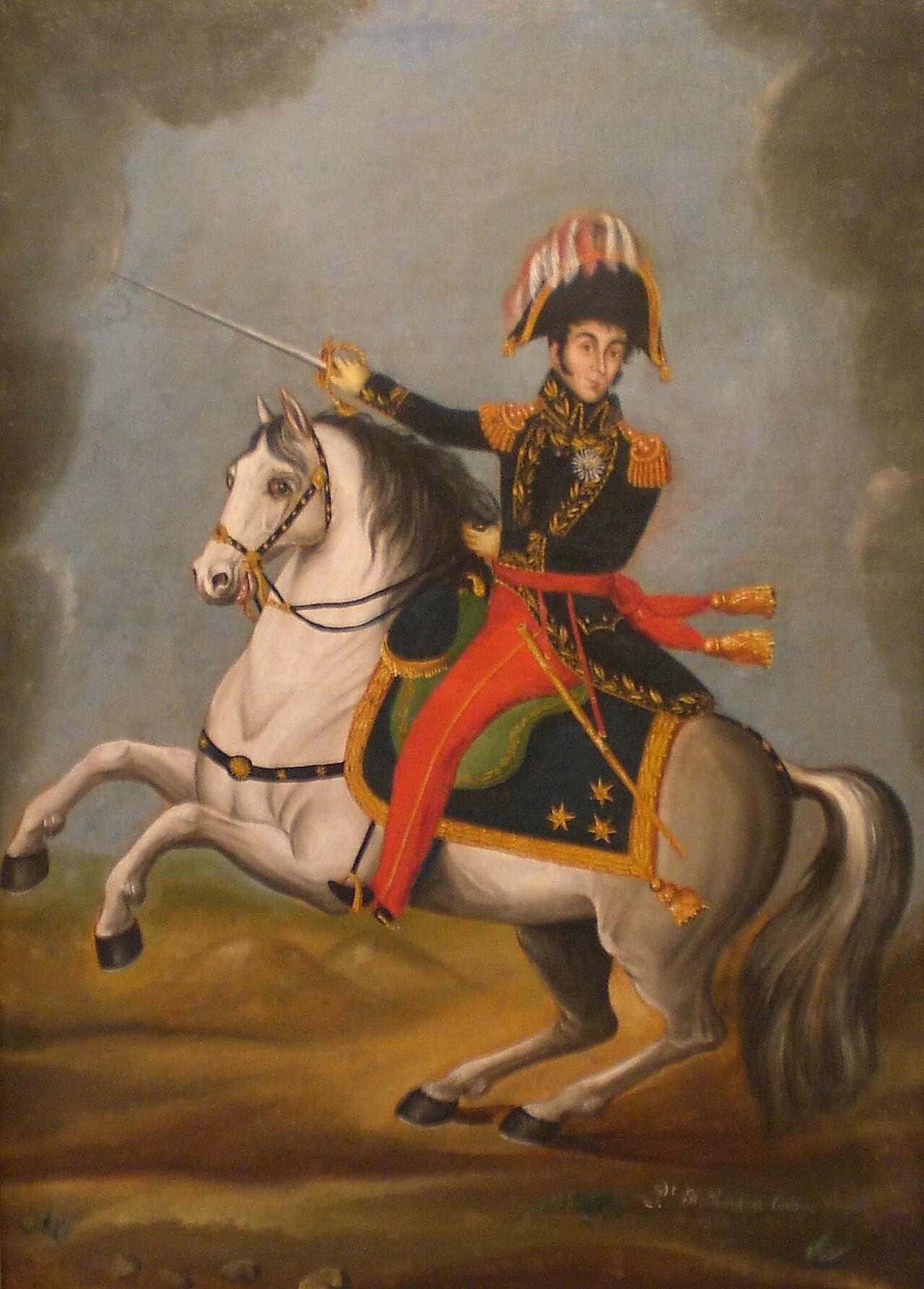
In June 1813 Bolívar issued the Decree of War to the Death, promising that Spaniards and Canary Islanders who did not actively join the American cause would be killed even if neutral, while Americans would be spared even if they had sided with Spain. It was a deliberate attempt to convert a civil war among subjects of the same crown into a national war between two peoples, and it was answered in kind by royalist commanders such as José Tomás Boves, whose llanero cavalry killed on the same terms. The independence wars in Venezuela were among the most destructive in the Americas: estimates suggest the population fell by something like a quarter to a third. Bolívar formally revoked the decree in 1820 in an armistice with Pablo Morillo that both sides regarded as a return to civilised war. It is among the most frequently omitted facts about him and among the most necessary.
The Result
Six Countries
Bolívar was directly responsible for the independence of territories now containing well over a hundred million people.
Venezuela
His own country, declared independent in 1811, lost twice, and secured at Carabobo on 24 June 1821 where his infantry and the British Legion broke the royalist line.
- Decided at: Carabobo
Colombia
Then New Granada. Won by the Andes crossing and Boyacá, and the base from which everything afterwards was funded and supplied.
- Decided at: Boyacá
Panama
Joined Gran Colombia voluntarily on separating from Spain, and remained part of Colombia until 1903.
- Method: Voluntary union
Ecuador
Secured by his general Antonio José de Sucre at Pichincha, on the slopes of the volcano above Quito. Bolívar met San Martín at Guayaquil weeks later.
- Won by: Sucre at Pichincha
Peru
The royalist stronghold. Bolívar won at Junín and Sucre finished it at Ayacucho on 9 December 1824, effectively ending Spanish rule on the American mainland.
- Ended at: Ayacucho
Bolivia
Upper Peru declared independence and named itself after him. He wrote its first constitution, which included a president for life - a provision that alarmed republicans everywhere.
- Named for: Him
1826-1830
Why the Union Fell Apart
Bolívar's political aim was never simply independence. He wanted a single large republic - Gran Colombia, covering modern Venezuela, Colombia, Panama and Ecuador - and beyond it a league of Spanish American states strong enough to matter, which he tried to convene at the Congress of Panama in 1826 with almost no attendance. He believed the region was not ready for the loose federalism of the United States, having no tradition of self-government, and argued for strong central authority, a life presidency and a hereditary senate. His vice-president Francisco de Paula Santander, a lawyer and a federalist, disagreed fundamentally, and the quarrel between them became the fault line of Colombian politics for a century.
The union lasted about eleven years. Regional elites in Caracas and Quito had no interest in being governed from Bogotá; the distances were enormous, the roads barely existed, and the wars had wrecked the economies. In 1828 Bolívar assumed dictatorial powers and survived an assassination attempt in Bogotá by escaping through a window while his mistress Manuela Sáenz delayed the conspirators - an episode that earned her the name Libertadora del Libertador. It bought nothing. Venezuela seceded in 1830, Ecuador followed, and Bolívar resigned in April. Sucre, the man he trusted most and had intended as his successor, was murdered on a mountain road that June.
17 December 1830
Ploughing the Sea
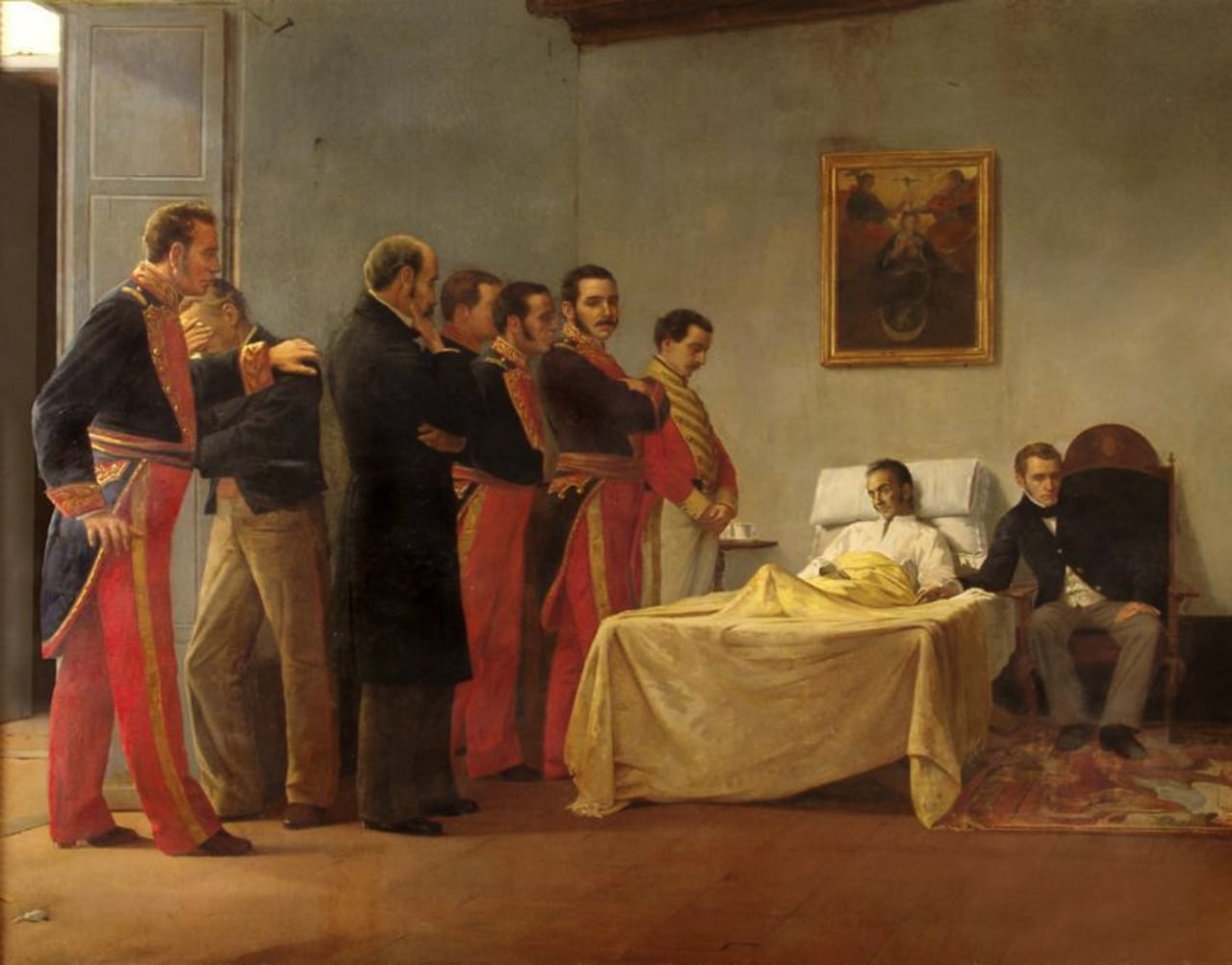
Bolívar left Bogotá in May 1830 intending to sail for Europe, and got no further than the Caribbean coast. Tuberculosis, which had been consuming him for years, made the crossing impossible, and a Spanish merchant lent him a house at San Pedro Alejandrino near Santa Marta, where he died on 17 December aged forty-seven. He had given away or spent almost his entire enormous inheritance on the wars and died with very little; he was reportedly buried in a borrowed shirt. Weeks earlier he had written to a general that he had ploughed the sea, that America was ungovernable, and that those who had served the revolution had laboured for nothing. Twelve years later Venezuela reclaimed his remains with elaborate ceremony, and the reputation began its long inversion into national foundation myth.
Further Reading
Books About Bolívar
He is a national saint in several countries, which makes the scholarly literature unusually careful about separating the man from the cult.
Legacy
Why Number Forty-Eight
Michael Hart ranked Bolívar 48th, below Washington at twenty-six, and the comparison is the one contemporaries made and Bolívar himself invited. Both led colonial revolts against a European empire; Washington operated in thirteen contiguous colonies with a shared language, a tradition of representative assemblies and a functioning merchant economy, and handed power back twice. Bolívar operated across a continent of mountains, jungle and enormous distances, in societies with no experience of self-government and deep racial and regional divisions, and ended by taking dictatorial powers. The results reflect the difference as much as the men.
His afterlife has been unusually active. Bolivia carries his name and Venezuela is formally the Bolivarian Republic; his writings are quoted by governments of nearly every political colour, and Hugo Chávez built an entire ideology on them, exhumed his remains in 2010 and had the constitution and currency renamed. That plasticity is possible because Bolívar wrote a great deal, changed his mind, and left arguments for liberty and for concentrated authority side by side. What is not disputable is the map. Six sovereign states exist in their present form because of what one man did between 1813 and 1825, and he died convinced it had all come to nothing.
Related Publications