William the Conqueror

William the Conqueror
Born c. 1028 • Died 9 September 1087
The Battle of Hastings lasted a single day and decided the next thousand years of English history. Had Harold Godwinson won - and he came close, having force-marched his army two hundred and fifty miles from another victory over a Norwegian invasion three weeks earlier - England would have remained a Scandinavian-facing Anglo-Saxon kingdom. He lost, and within twenty years the entire ruling class had been replaced by Frenchmen, the language had begun absorbing thousands of French words, and the country had been surveyed down to the last pig.
Rank
#68
Influence
77
Field
Duke and King
Historical Perspective
William was born at Falaise around 1028, the illegitimate son of Duke Robert I of Normandy and Herleva, a tanner's daughter - he was known as William the Bastard long before he was the Conqueror. He became duke at seven or eight when his father died on pilgrimage, and survived a minority in which several of his guardians were murdered, one reportedly in the room where he slept. By the 1050s he had mastered Normandy. His claim to England rested on a promise he said Edward the Confessor had made him and an oath he said Harold Godwinson had sworn; the English elected Harold king in January 1066 regardless. William landed at Pevensey on 28 September, and on 14 October at Senlac Hill destroyed Harold's army and killed him. He was crowned at Westminster on Christmas Day 1066. Resistance in the north was met with the Harrying of 1069-70, a deliberate devastation from which the region took generations to recover. He ordered the Domesday survey in 1086 and died at Rouen on 9 September 1087. Michael Hart ranked him 68th in The 100.
Influence Meter
77
Measured on a 100-point scale
Replaced England's ruling class and language, and surveyed the country to the last pig
14 October 1066
One Day, and the Luck in It
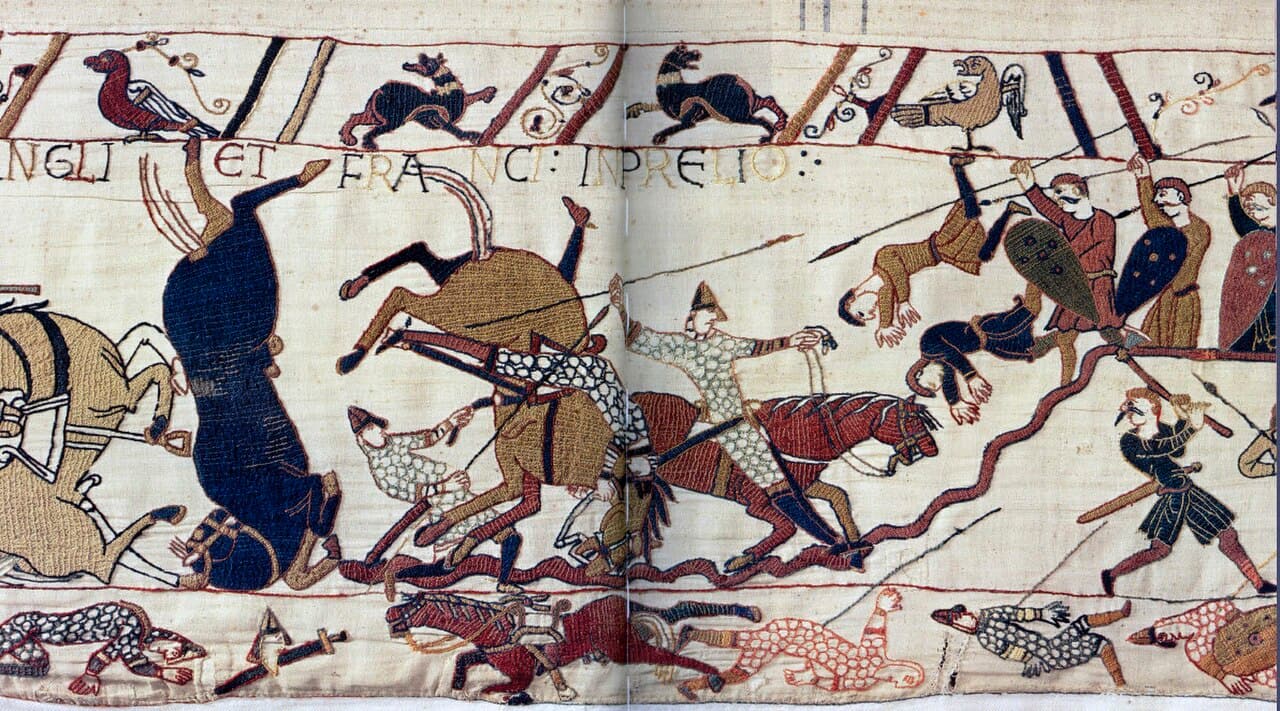
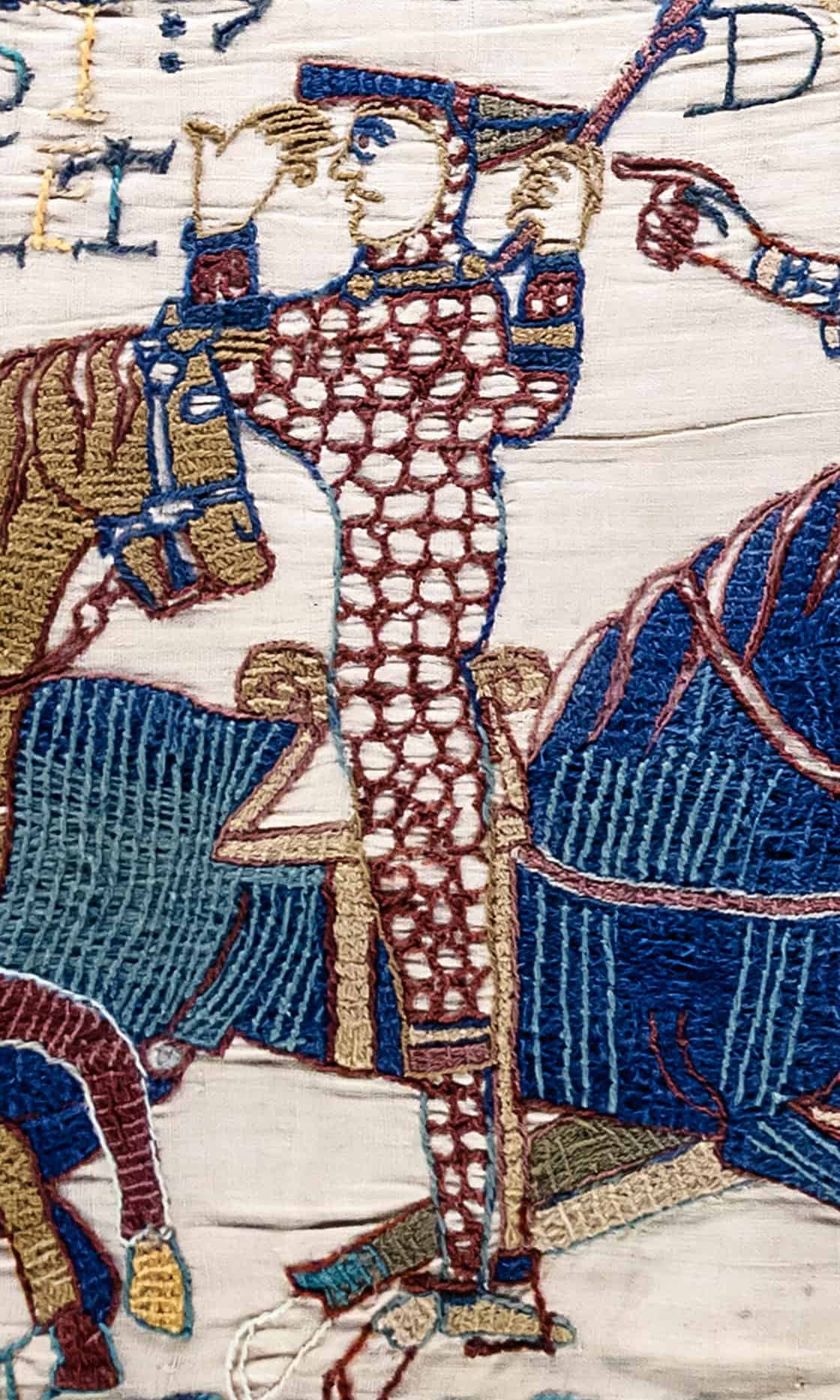
Harold's position in early 1066 was precarious and his handling of it was close to brilliant until the last afternoon. He faced two invasions; the Norwegian one came first, and he marched north and destroyed Harald Hardrada's army at Stamford Bridge on 25 September. Three days later William landed in the south. Harold marched back - some two hundred and fifty miles in about two weeks - and met him at Senlac Hill near Hastings with an exhausted army and without waiting for reinforcements. The English shield wall on the ridge held most of the day against Norman cavalry and archery. It broke when parts of it pursued a retreating Norman flank downhill, whether by feint or genuine rout, and were cut off. Harold died late in the day; the arrow in the eye comes from the Bayeux Tapestry and is contested. Had the weather in the Channel held a fortnight earlier, or the wind delayed William a fortnight more, the two invasions would not have arrived in sequence and the outcome would very likely have been different.
The Harrying of the North in the winter of 1069-70 was a deliberate policy of devastation across Yorkshire and the north-east in response to repeated rebellion and a Danish landing. William's forces destroyed food stores, livestock, seed corn and buildings across a wide area, with the explicit aim of removing the region's capacity to support an army. The chronicler Orderic Vitalis, himself half-Norman and generally sympathetic, described it as a crime that could not be defended and put the dead at a hundred thousand from starvation; modern historians regard that figure as unreliable but accept the devastation was severe and prolonged. The Domesday Book, compiled sixteen years later, still records large tracts of Yorkshire as waste. It is the single act that most complicates the image of a conquest that is otherwise often narrated as an administrative transfer.
What Actually Changed
The Norman Conquest is unusual among medieval conquests in how completely it replaced the existing order.
- The aristocracy was replaced wholesale: By 1086 almost no major English landholder remained. Of some two hundred substantial tenants-in-chief recorded in Domesday, only a couple were English. Very few conquests in European history are this complete.
- The church was reorganised: English bishops and abbots were replaced by Normans and Italians under Lanfranc, cathedrals were rebuilt on a vastly larger scale, and the church courts were separated from the secular ones.
- Castles appeared everywhere: England had almost none in 1066 and several hundred within twenty years - motte-and-bailey earthworks first, then stone keeps like the White Tower. They were instruments of occupation before they were defences.
- The language changed permanently: French became the language of the court, the law and the aristocracy for some three hundred years. English survived underneath and absorbed thousands of French words, which is why English has cow and beef, sheep and mutton, house and mansion.
- England turned toward France: For four centuries afterwards English kings held land in France and fought over it, culminating in the Hundred Years' War. The Anglo-Scandinavian orientation of the previous era ended abruptly.
- Feudal tenure was systematised: All land was held ultimately from the king in return for service. It was more centralised than in France, which is one reason the English crown remained comparatively strong.
1086
The Survey Nobody Could Argue With
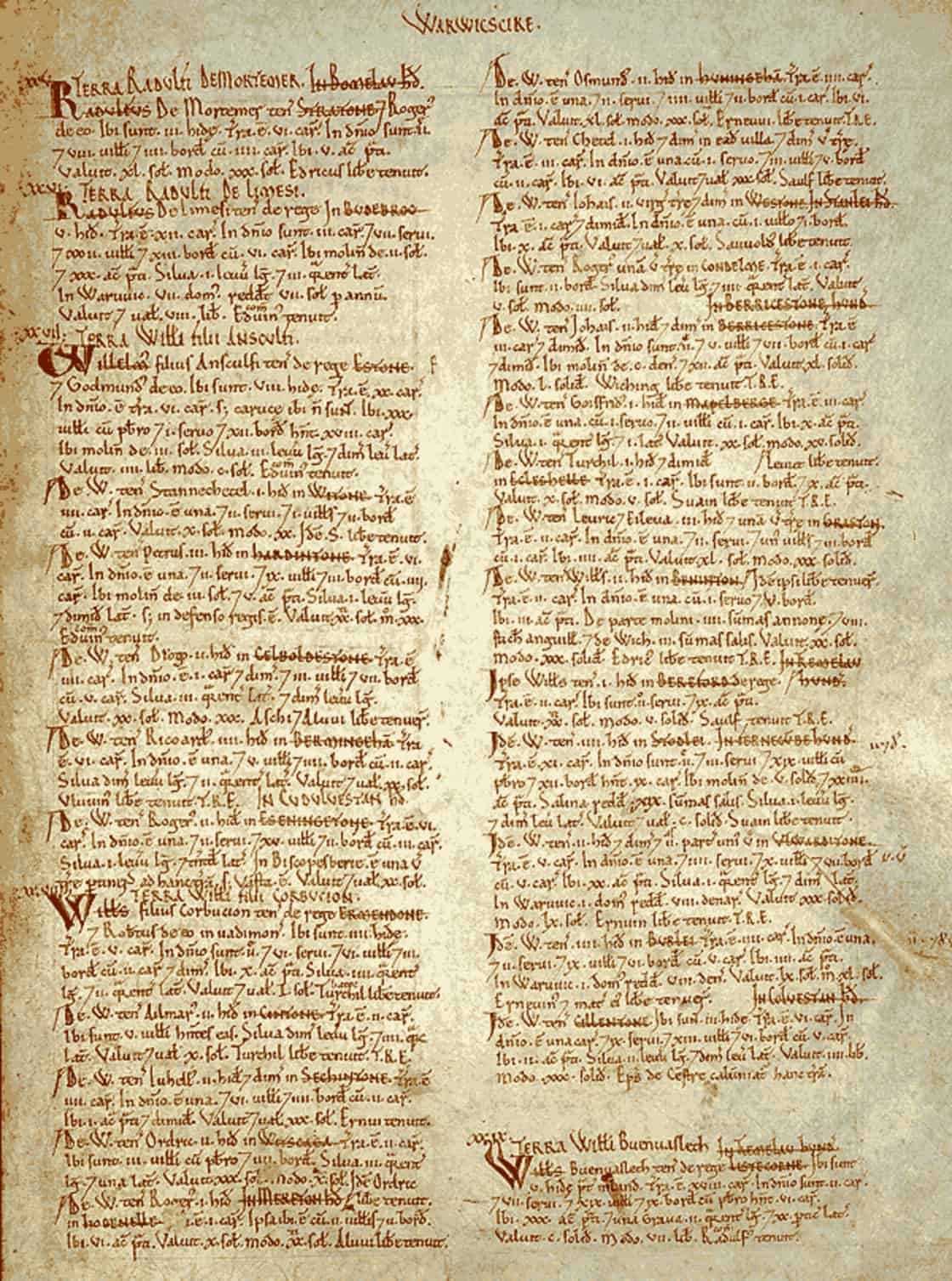
At Christmas 1085 William ordered a survey of England, and it was carried out with a speed and thoroughness that startled contemporaries. Commissioners went to every shire and recorded, under oath from local juries, who held each estate before the Conquest and now, how much it was worth, how many ploughs, how much woodland and meadow, how many mills and fishponds, and how many people of each rank. The Anglo-Saxon Chronicle complained with evident irritation that it was shameful to record but he did not think it shameful to do, and that not one ox nor one cow nor one pig escaped. It was called Domesday because there was no appeal from it, as there is none from the Last Judgement. Nothing comparable exists for any other eleventh-century kingdom, and it remains the foundation document of English land history, still occasionally cited in property disputes.
Language
Why English Has Two Words for Everything
The Anglo-Saxons kept the animals and the Normans ate them, which is the standard illustration and happens to be true. The pattern runs far beyond the farmyard: the plain word is usually English, the formal one usually French.
| cow, pig, sheep | beef, pork, mutton | Who raised it, and who ate it |
| house | mansion | Ordinary versus grand |
| begin | commence | Plain versus formal |
| kingly | royal, regal | Native, French, then Latin |
| ask | question, interrogate | Everyday, formal, legal |
| freedom | liberty | Both survive, with different weight |
Roughly a third of modern English vocabulary arrived from French, most of it after 1066. The grammar stayed Germanic, which is why English is structurally a cousin of Dutch wearing a great deal of French clothing.
Further Reading
Books About the Conquest
The Bayeux Tapestry is the most famous source and is Norman propaganda embroidered, probably in England, within a generation of the events.
Legacy
Why Number Sixty-Eight
Michael Hart ranked William 68th, and the argument runs through the language. English is now spoken by something like one and a half billion people, and it is the peculiar hybrid it is - Germanic in structure, enormously Latinate in vocabulary, with roughly a third of its words derived from French - because of what happened after 1066. Had Harold held the ridge, the English of Shakespeare and of the modern world would be a substantially different language, and the country that later built the largest empire in history would have had a different orientation entirely.
The institutional consequences are almost as large. The centralised English state, the common law that developed under his successors, the persistent entanglement with France that produced the Hundred Years' War, and a landholding pattern still legible in the countryside all follow from a single afternoon on a ridge in Sussex. 1066 is the one date in English history that essentially every English schoolchild knows, and the claim implicit in that is defensible: it is the last time the country was successfully invaded, and nothing since has changed it as much.
Related Publications