AI Data Center Electricity Use : Demand Explained

By Saif Ur Rahman Published 31 Aug 2026 Updated 31 Aug 2026
FactsFigs Data Story
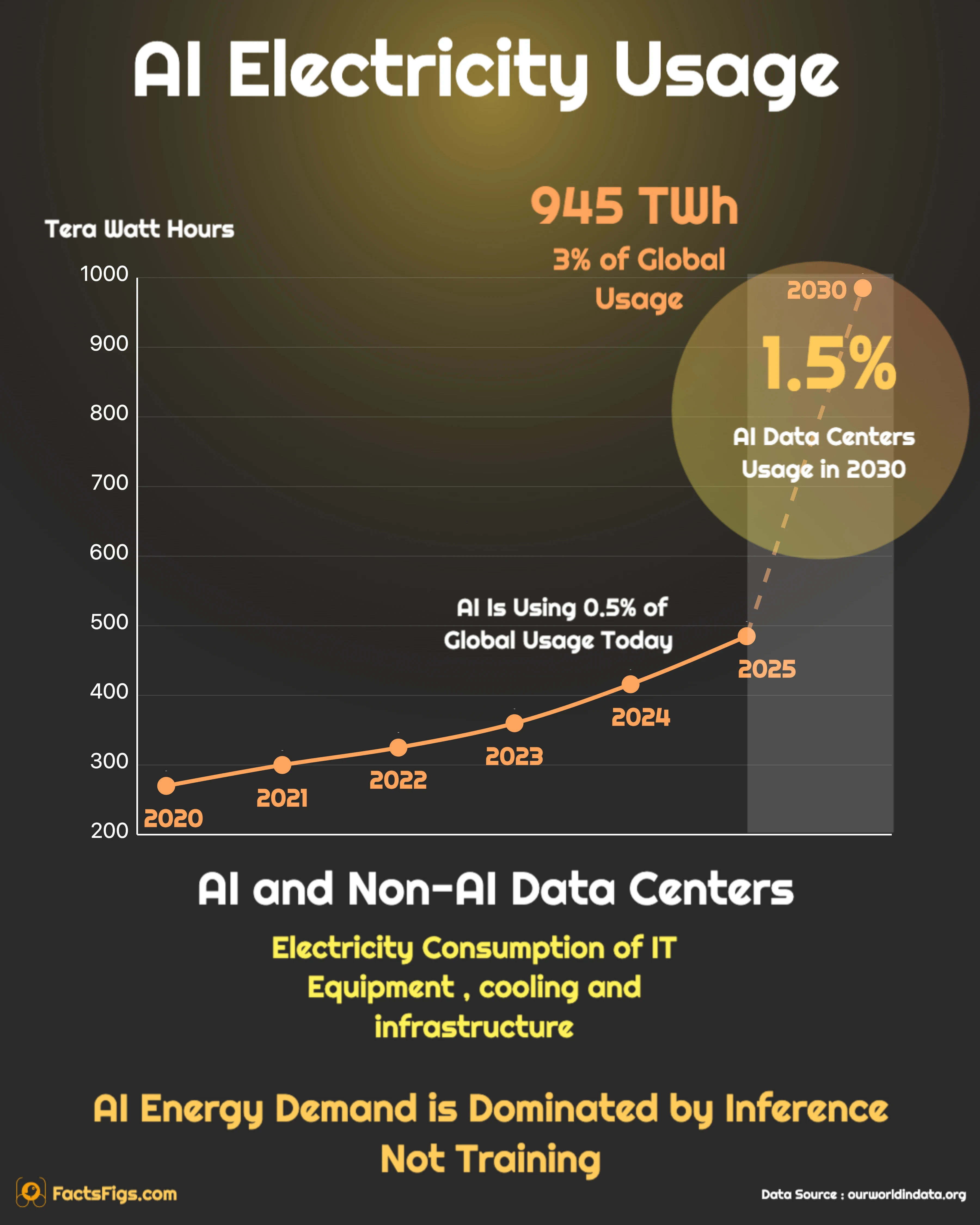
Global AI Data Center Electricity Demand, 2022–2030

TL;DR — Is AI Data Center Electricity Driving Up Your Bill?

Demand is set to nearly double by 2030, and where that growth concentrates, bills are climbing too — though the utility footing part of that bill denies any link

Global data center electricity demand grew 17% in 2025 alone, reaching 485 TWh, and the International Energy Agency projects it will nearly double again to about 945 TWh by 2030. In Virginia, home to the world's largest concentration of data centers, residential electricity bills are rising too, alongside an 833% spike in the regional PJM capacity auction that supplies the same grid. Dominion Energy, the utility serving most of that growth, says data centers aren't the cause of the increases — independent researchers, NPR, and a January 2026 Virginia voter survey say they are.

! What the Data Actually Shows:

  • The Demand Side: Global data center electricity use hit 485 TWh in 2025, up 17% year-over-year, with AI-focused data centers specifically growing 50% — more than three times faster than data center demand overall.
  • The Bill Side: In the PJM grid region covering Virginia, Maryland, and Ohio, a 2024 capacity auction driven by AI data-center demand rose 833%, and $4.3 billion in data-center connection costs were assigned to customers across seven states that same year.
  • The Unresolved Conflict: Dominion Energy says data centers 'pay their fair share' and blames residential bill increases on weather and a gas-plant rider. Independent energy researchers, NPR reporting, and a January 2026 Virginia voter survey (78% blame data centers) say otherwise — and neither side has settled it.
  • A Law That Might Shift Costs Back: Virginia signed a bill into law in spring 2026 authorizing its regulator to shift capacity and grid costs onto data centers instead of residents, which could cut average bills by $5.52 a month — but the State Corporation Commission still has to approve it.

? The Numbers Behind the Story:

  • 2025 Global Demand: 485 TWh, +17% YoY (AI-focused segment alone: +50%)
  • 2030 Projection: ~945 TWh, roughly double 2025's total (IEA Base Case)
  • PJM Capacity Auction Spike: 833% price increase, 2024 auction, driven by AI data-center demand
  • Virginia's Data Center Share: ~40% of state electricity consumption, ~600 data centers (2024)

AI data centers are pulling electricity demand onto a growth curve the grid hasn't seen in decades, and in the regions absorbing that growth first, residential bills are climbing alongside it. The data can't settle exactly how much of any single bill increase traces back to a data center rather than weather or a gas-plant rider — but the dollar figures moving through the system (an 833% capacity auction spike, $4.3 billion in reassigned connection costs) land on the side of the ledger that says there's a connection worth taking seriously.

Continue reading below for the full detailed article →

Overview

Why AI's Power Appetite Is Showing Up on Home Electric Bills

Data centers have used a meaningful share of the world's electricity for years, but AI changed the shape of the curve. Global data center electricity demand grew 17% in 2025 alone, reaching 485 TWh — and the International Energy Agency's own tracking shows the AI-focused slice of that demand grew 50% the same year, more than three times faster than data centers overall. By its Base Case, the IEA expects global demand to reach roughly 945 TWh by 2030, with the AI-specific share tripling over that stretch even as the broader data center category merely doubles. That growth isn't spread evenly: it concentrates hardest in a handful of regions, and Virginia — home to nearly 600 data centers and the world's densest cluster in Northern Virginia's 'Data Center Alley' — sits at the center of it. This piece traces both halves of that story: how fast the demand is actually growing, and what's happening to electricity bills in the places absorbing it first, including the one point neither side of the debate agrees on.

The Three Numbers That Frame This Story

Global electricity demand from data centers is climbing on a trajectory the grid hasn't handled before, and in the regions absorbing that growth, the price of power is moving too. These three figures anchor both halves of the story — how fast demand itself is growing, and how sharply the auction prices and bills tied to that demand have already moved in the regions hosting it.

485 TWh · Global Demand, 2025

485 TWh

Global data center electricity consumption reached about 485 terawatt-hours in 2025, a 17% jump from the year before, according to the International Energy Agency's Energy and AI report. The AI-focused slice of that demand grew even faster — roughly 50% year-over-year — more than three times the pace of data center demand as a whole, and far outpacing the roughly 3% growth rate of global electricity demand overall.

833% · PJM Capacity Auction Spike

833%

PJM's capacity auction for the 2025-2026 delivery year cleared 833% higher than the year before, an increase independent market monitors and multiple energy-market analyses attribute overwhelmingly to AI data-center demand. The Dominion Zone — the PJM sub-region covering most of Virginia's data centers — cleared even higher than the rest of PJM, now facing capacity fees roughly 65% above the wider grid's average.

267% · Five-Year Price Jump in Data Center Hotspots

267%

Areas with the heaviest concentration of data centers saw electricity prices climb 267% over five years, according to a Bloomberg analysis reported by Consumer Reports. That's a regional, not nationwide, figure — it describes the specific pockets of the grid where data-center buildout has been most intense, not a general trend across every electricity market.

AI Data Center Electricity by the Numbers

  • 50% AI-Focused Data Center Growth in 2025 50 % While data center electricity demand overall grew 17% in 2025, the IEA's AI-focused subset grew 50% — more than three times the pace, and the clearest sign that AI workloads specifically, not data centers generally, are driving the acceleration.
  • 40% of Virginia's Electricity Goes to Data Centers 40 % A 2024 Bloomberg analysis found data centers already consume about 40% of Virginia's total electricity — the highest concentration of any U.S. state, home to nearly 600 individual facilities.
  • 78% of Virginia Voters Blame Data Centers 78 % A January 2026 voter survey found 78% of Virginians blame data centers for their rising electricity bills — directly contradicting Dominion Energy's public position that data centers 'pay their fair share' and aren't the cause.
  • 15.8% Proposed Data Center Rate Increase 15.8 % Virginia's SB 253, signed into law in spring 2026, authorizes regulators to raise data-center electricity rates by roughly 15.8% while cutting average residential bills — pending State Corporation Commission approval.

The Demand Side

Why AI Data Centers Use So Much More Power Than the Old Ones

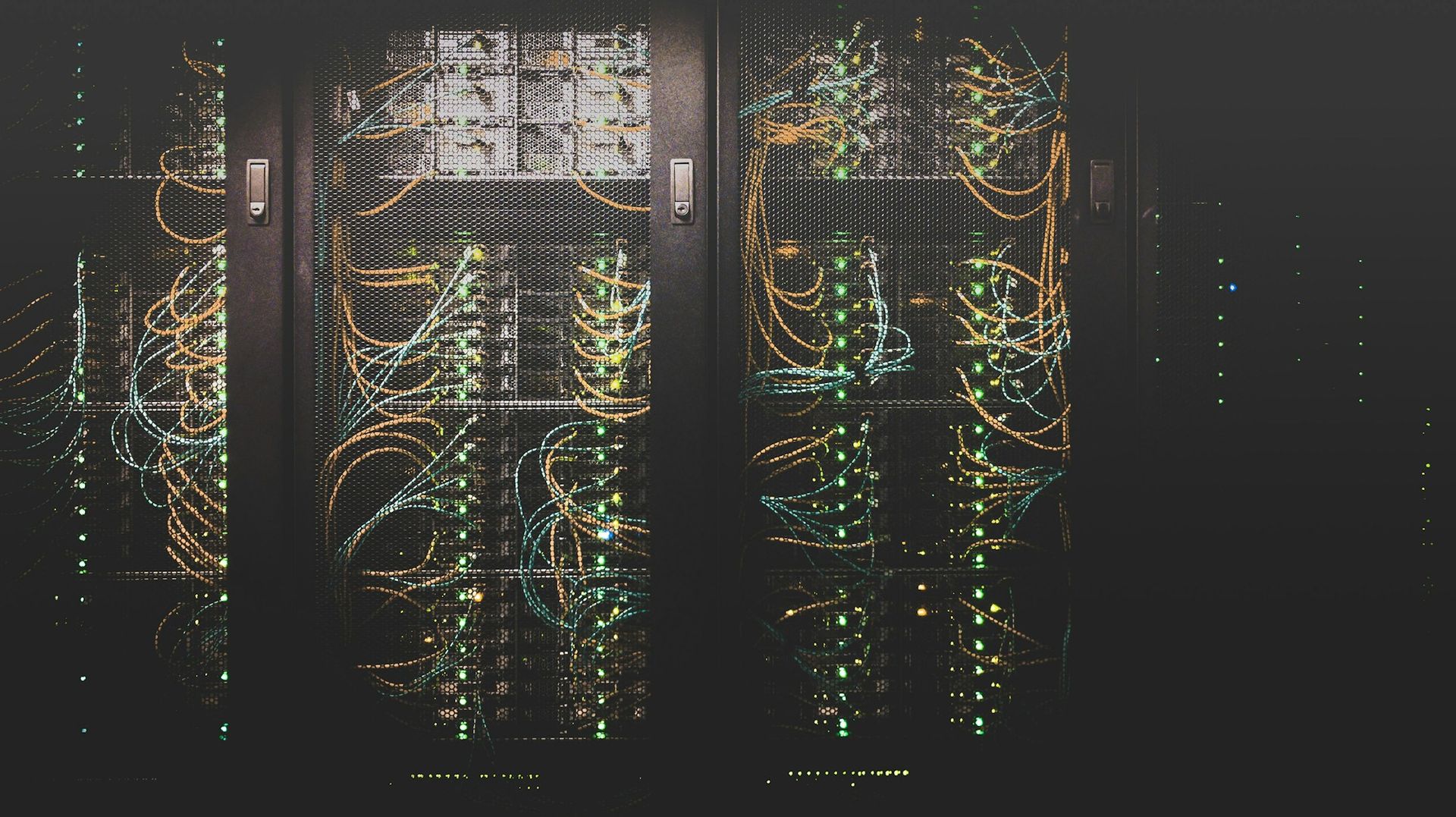
Bundled server and networking cables inside a data center rack.

Training and running large AI models is a fundamentally different computing load than the web servers and email systems that filled data centers for the previous two decades. The GPUs and specialized AI accelerators packed into modern racks run far hotter and far more continuously than the general-purpose servers they're replacing, a shift background research from Penn State's Institute of Energy and the Environment ties directly to the scale of power AI infrastructure now requires. That difference shows up in the growth numbers themselves: the IEA's own tracking shows data center electricity demand overall grew 17% in 2025, while the AI-focused subset of that same category grew 50% — more than three times faster, in the same year, inside the same broader category. By the IEA's Base Case, that gap widens further by 2030: AI-focused data center electricity consumption is projected to triple between 2025 and 2030, even as total data center demand across all workloads merely doubles. The result is that data centers, which have quietly used a meaningful slice of the world's electricity for years, are now the fastest-growing piece of global power demand — concentrated in the specific regions building out AI infrastructure first.

The Virginia Case

Where AI Data Centers Cluster, Bills Are Rising Too

Virginia hosts the world's largest concentration of data centers — nearly 600 of them, clustered most densely in Northern Virginia's so-called 'Data Center Alley.' By 2024, those facilities consumed roughly 40% of the state's total electricity, according to a Bloomberg analysis reported by Consumer Reports, a share no other U.S. state comes close to matching.

In 2026, Virginia's State Corporation Commission approved a new base rate case for Dominion Energy, the utility serving most of that growth, adding $11.24 a month to the average residential bill in 2026 and a further $2.36 a month in 2027 as the case phases in. The SCC's approved increase — $565.7 million in 2026 and $209.9 million in 2027 — was lower than Dominion's original request, and regulators also created a new large-load rate class specifically for customers demanding 25 megawatts or more, set to take effect in January 2027.

None of that proves the rate increase is caused by data centers specifically — Dominion's case covers its broader cost structure, not a single line item — but the timing and scale line up with a state where data centers now draw roughly four in every ten kilowatt-hours consumed.

The Shared Grid

How One Region's AI Boom Reaches Three Other States

Virginia's data centers don't draw power from an isolated grid — they sit inside PJM, the interconnection that coordinates electricity across 13 mid-Atlantic and Midwest states, including Maryland, Ohio, and West Virginia. When PJM ran its capacity auction for the 2025-2026 delivery year in 2024, prices cleared 833% higher than the year before, an increase independent market monitors and multiple energy-industry analyses attribute overwhelmingly to AI data-center demand. The Dominion Zone, the PJM sub-region covering most of Virginia's data centers, cleared even higher than the rest of PJM — its capacity fees now run roughly 65% above the wider grid's average.

That auction price doesn't stay in Virginia. PJM assigned $4.3 billion in data-center connection costs to customers across seven mid-Atlantic states in 2024, and residents in neighboring states are seeing it on their own bills: Maryland households are paying roughly $18 more a month, and Ohio households about $16 more, both tied directly to PJM capacity cost pass-through. West Virginia, which shares a utility — Appalachian Power — with parts of Virginia, is affected too. NPR reported in June 2026 that Virginia's data-center boom is raising West Virginia's electricity bills, though neither NPR's reporting nor any other source FactsFigs found gives a precise dollar figure for that specific impact.

The Central Conflict

Dominion Says It's Not Data Centers. Researchers Say It Is.

Dominion Energy's own public position is that data centers 'pay their fair share' of the grid costs they create, and that they are not the reason residential bills are rising. In reporting from Virginia public broadcaster WHRO in March 2026, the utility attributed recent increases instead to weather-driven demand and a rider tied to gas-plant costs — not to the data-center buildout happening across its own service territory.

Independent energy researchers, NPR's reporting, and Virginia's own electorate see it differently. A January 2026 voter survey found 78% of Virginians blame data centers for their rising electricity bills, and researchers interviewed by WHRO pointed to the scale of data-center-driven grid investment — the same PJM capacity costs and infrastructure buildout detailed above — as a direct driver of the increases Dominion attributes elsewhere.

Neither side has produced a single number that settles exactly how many dollars of any specific bill increase trace back to a data center rather than weather or a gas-plant rider — and this analysis doesn't resolve that either. What the data does show is that the dollar figures moving through the system during this period (the 833% capacity auction spike, the $4.3 billion in reassigned connection costs) are large enough, and timed closely enough to the data-center buildout, that dismissing a connection outright would require its own explanation.

The Policy Response

Could Virginia's New Law Shift Costs Back to Data Centers?

Virginia lawmakers introduced Senate Bill 253, the Fair and Affordable Electric Rates Reliability Act, to address exactly this imbalance — shifting capacity auction, distribution-line, and substation costs away from residential customers and onto large-load users like data centers instead. Governor Abigail Spanberger signed the bill into law in spring 2026, adding her own amendments; critics, including some of the bill's original backers, said those changes weakened its cost-shifting provisions.

The law authorizes Virginia's State Corporation Commission to approve a rate structure that would raise data-center electricity rates by roughly 15.8% while cutting average residential bills by about $5.52 a month — but signing the bill doesn't make that shift automatic. The SCC still has to actually approve the specific cost reallocation, a decision expected to take effect around January 1, 2027, for the same large-load customer class the 2026 Dominion rate case created.

If the SCC approves it, SB 253 would be the clearest evidence yet that Virginia's own regulators see data centers as a distinct cost driver worth separating from the rest of the grid — the opposite of Dominion's public position that no such separation is necessary.

Every entity shows growth

World wide electricity demand growth data

Africa (IEA)0.12%0.24%
Asia Pacific (IEA)0.71%1.06%
China0.79%1.1%
Europe (IEA)1.4%1.9%
Middle East (IEA)0.09%0.28%
North America (IEA)2.2%4.1%
United States2.6%4.9%

All world is showing growth in electricty usage in Data Centers after AI.

The Verdict

What the Data Settles, and What It Still Can't

Two things are true at once. Global AI data-center electricity demand is growing at a pace the grid hasn't handled before — 17% in 2025, with the AI-specific slice growing three times faster than that, and the IEA's own Base Case projecting a near-doubling to roughly 945 TWh by 2030. And in the specific regions absorbing that growth first — Virginia, Maryland, Ohio, and by NPR's reporting, West Virginia too — residential electricity bills are demonstrably rising alongside it, backed by an 833% capacity auction spike and $4.3 billion in reassigned connection costs that are hard to explain away as coincidence.

What the data doesn't settle is the exact dollar-for-dollar link Dominion Energy disputes. The utility's public position — that weather and a gas-plant rider, not data centers, explain the increases on its own bills — hasn't been directly disproven by anything in this dataset, even though independent researchers, NPR, and 78% of surveyed Virginia voters take the opposite view. Virginia's own legislature effectively sided with the researchers when it passed SB 253 in 2026, authorizing regulators to shift costs onto data centers specifically — a decision that only makes sense if lawmakers believed data centers were part of the cost story in the first place. Whether the State Corporation Commission actually approves that shift, and how much it moves the needle on any single household's bill, remains the one number this story can't yet report.

Data Source and Attribution

IEA — Energy and AI Consumer Reports — AI Data Centers' Impact on Bills

The global demand figures behind this story come from the International Energy Agency's Energy and AI and Key Questions on Energy and AI reports, cross-checked against Data Center Frontier's coverage of the IEA's earlier 2022 baseline. State and regional bill-impact figures were compiled from the American Action Forum's analysis of Virginia's SCC rate case, Introl's reporting on PJM capacity auction and connection-cost data, Consumer Reports' analysis of Bloomberg pricing data, and reporting from WHRO and NPR on the Dominion-versus-researchers dispute and West Virginia's shared-utility impact. Full credit for collecting and maintaining the underlying data goes to each of these sources.

FactsFigs reviews, cleans, and cross-checks every source dataset before shaping it into a data story. Each visualization is created and designed in FactsFigs Design Studio — an internal tool developed and owned by FactsFigs — and is the original work of a FactsFigs author, not an AI-generated copy of any existing graphic. Individual assets within a visual may or may not be produced with AI tools, but the design of the visual itself is solely FactsFigs' own.

Figures are estimates at the time of publication, provided for information only — nothing here is financial advice or a guarantee of accuracy.

Last verified: 25 Aug 2026

The charts in this article were built with our own publishing system. See what it does →